
Debt Settlement Crackdowns: Lessons from New York
How New York’s Attorney General targets abusive debt settlement practices and what consumers should know before signing up.
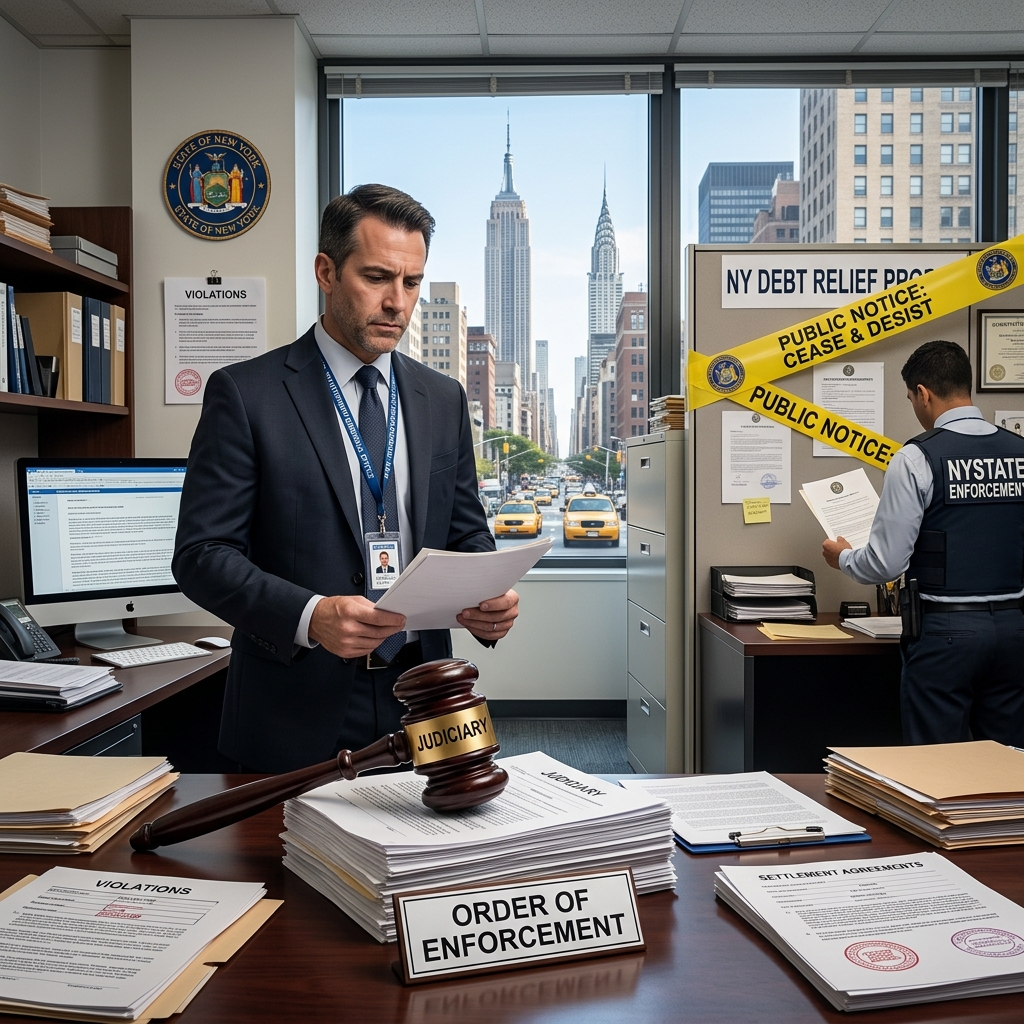
Debt settlement companies promise fast relief from overwhelming bills, but in many cases they deliver little more than fees, broken promises, and legal trouble. New York’s Attorney General has repeatedly taken action against abusive debt relief and debt collection businesses, offering a useful window into how regulators view this industry and what consumers should watch for when seeking help with their debts.[10]
This article uses enforcement activity in New York as inspiration to explain how problematic debt settlement operations work, which laws are commonly violated, and how consumers can evaluate legitimate options. It is not legal advice, but a practical guide rooted in public enforcement actions and official consumer protection materials.
Understanding Debt Settlement and Why It Attracts Enforcement
Debt settlement generally refers to for-profit companies that claim they can persuade creditors to accept a lump-sum payment that is significantly less than the total amount owed. These firms target individuals struggling with credit card balances, medical bills, personal loans, or other unsecured debts by advertising dramatic reductions and a clean financial slate.
Regulators often scrutinize debt settlement businesses because:
- They tend to market to financially distressed consumers who are highly vulnerable.
- They frequently collect significant fees before providing any measurable relief.
- They may misrepresent success rates, the size of typical reductions, or how quickly debts will disappear.
- Their plans can worsen credit scores and trigger collection lawsuits if consumers stop paying creditors while waiting for a settlement.
New York’s Attorney General (AG), along with federal agencies such as the Consumer Financial Protection Bureau (CFPB) and the Federal Trade Commission (FTC), has treated false or deceptive marketing and unlawful fee practices in this sector as serious consumer protection issues.[10]
How Abusive Debt Settlement Schemes Commonly Operate
While each case is different, enforcement records and official guidance reveal recurring patterns in problematic debt settlement and related debt relief schemes.[10]
Typical Elements of a Harmful Debt Settlement Model
- Bold promises of large reductions – Ads may suggest that most customers will pay only a fraction of what they owe, without clearly explaining that results vary widely and that many creditors refuse to negotiate.
- Upfront or early fees – Some businesses charge significant fees before any settlements are reached, despite federal rules that generally restrict advance fees for certain debt relief services.
- Advising consumers to stop paying creditors – Consumers may be told to halt payments and direct funds into a dedicated account instead, with the goal of later offering a lump-sum to creditors. During this time, creditors can still charge interest, fees, and may sue.
- Debt collection pressure continues – Enrollment in a debt settlement plan usually does not stop collection calls, letters, or lawsuits unless there is a separate legal arrangement or a bankruptcy filing.[10]
- Limited or no actual settlements – In some cases highlighted by enforcement actions, very few consumers receive the advertised relief, while fees continue to be deducted.
The New York AG’s educational materials emphasize that consumers should be cautious of companies that guarantee settlements for dramatically less than the amount owed or imply that they can quickly erase debts through negotiation alone.
Overlap with Abusive Debt Collection Practices
Some enforcement actions involve businesses that combine debt settlement-type offers with outright abusive debt collection tactics, such as harassment, false threats, and deceit.
- Using false identities or business names to appear like government agencies or law firms.
- Threatening arrest, imprisonment, or criminal charges over consumer debts, which is generally illegal.
- Communicating in ways that mimic official court documents or government notices to pressure payment.
- Frequent, aggressive contact with consumers and family members at unreasonable hours.
In one joint case, the CFPB and New York AG filed a proposed judgment to shut down a group of debt collection companies that systematically engaged in deception and harassment, requiring them to exit the market and pay millions in penalties. Although that case focused on collection, it illustrates the broader regulatory stance: debt-related businesses that rely on fear, misrepresentation, or abuse can expect strong enforcement.
Legal Framework: Key Laws Used Against Abusive Debt Relief Firms
New York and federal regulators rely on a combination of state and national laws to address problematic debt settlement, debt collection, and related financial services.[10]
| Law or Authority | Scope | Typical Violations in Debt Relief Cases |
|---|---|---|
| New York AG Consumer Protection Authority | State-level enforcement against unfair, deceptive, or abusive practices that harm New Yorkers.[10] | False advertising of debt relief outcomes, hidden fees, misleading contract terms. |
| New York Debt Collection Procedures Law | Regulates conduct of creditors and collection agents when pursuing debts. | Harassing or abusive contact, threats of actions not intended or allowed, false suggestions of government or judicial authority. |
| Federal Consumer Financial Laws (CFPB) | Applies nationwide to many financial products and services, including debt collection. | Unfair, deceptive, or abusive acts or practices (UDAAP), failure to follow disclosure and conduct rules. |
| FTC Debt Relief Orders | Federal court orders banning companies and individuals from certain debt relief activities. | Deceptive debt relief marketing, illegal advance fees, misrepresenting outcomes. |
Recent FTC enforcement has resulted in court orders permanently prohibiting some companies and individuals from operating in the debt relief space, demonstrating how serious violations can end a firm’s ability to remain in this business.
Recent Enforcement Themes Involving Debt and Settlement
Although each enforcement action is unique, several themes recur in New York and federal cases involving debt-related businesses.[10]
Misleading Marketing and Contract Terms
Regulators have targeted companies that present complex debt arrangements as standard financing or simple relief, without clearly disclosing costs and risks. For example, New York’s AG has pursued a financial services company that disguised costly lease agreements as conventional financing, causing consumers to pay dramatically more than the sticker price. While this case involved product leases rather than classic debt settlement, the underlying issue—misleading consumers about the nature and cost of their obligations—is similar.
Debt settlement and debt relief firms can face action if they:
- Fail to explain that consumers may pay more after fees and interest than if they had continued regular payments.
- Downplay the likelihood of continued collection efforts and lawsuits from creditors.
- Hide key terms in fine print or use confusing language that obscures real costs.
Illegal Advance Fees and Unlicensed Operations
Some cases involve companies collecting substantial payments in advance of providing the promised relief or operating without required licenses. A settlement reached by a state attorney general outside New York, for instance, involved a debt settlement business that allegedly demanded unlawful upfront payments while failing to deliver the services advertised. Similar patterns can trigger action in New York, especially where consumers are asked to pay large sums before any creditor agreements are documented.
Harassment, Deception, and Exit Orders from the Market
In the joint CFPB–New York enforcement described earlier, the proposed judgment would require a network of debt collection companies and their leaders to leave the market entirely after years of deceptive and abusive conduct. Penalties in that case include multimillion-dollar payments to both the CFPB and New York AG, reinforcing the message that harassment and deception in debt operations will have severe consequences.
The FTC’s list of companies and people banned from debt relief work after federal court orders further illustrates how repeated or serious violations can lead to permanent removal from the industry.
Consumer Risks of Debt Settlement Plans
When deciding whether to work with a debt settlement firm, consumers should weigh the potential costs and risks against the advertised benefits.[10]
- Credit score damage – Many plans involve stopping payments to creditors for months or longer, which typically leads to late payment reporting, charge-offs, and a lower credit score.
- Collection lawsuits – Creditors who do not agree to settlements may file lawsuits, resulting in judgments, wage garnishments, or bank account levies in some jurisdictions.[10]
- Ongoing interest and fees – Debt settlement plans do not automatically halt interest or late fees, so balances may continue to grow during negotiations.
- Tax implications – In some situations, forgiven debt may be treated as taxable income under federal tax rules, though exceptions can apply. Consumers should consult tax or legal professionals about their specific circumstances.
- No guaranteed outcome – There is no requirement that creditors accept settlement offers; some may refuse to negotiate at all.
State and federal consumer protection agencies emphasize that debt settlement is one option among many, and it may be less appropriate than credit counseling, direct negotiation with creditors, or considering bankruptcy in severe cases.[10]
Evaluating Debt Relief Options: Practical Guidance
New York’s official materials on credit, debt, and lending include guidance on how to assess debt settlement and other debt relief offerings.[10] While consumers should tailor decisions to their own circumstances, several general principles emerge.
Warning Signs of a Problematic Debt Settlement Company
- Guarantees of huge savings – Any company that promises to cut debts by a specific large percentage for most customers should be viewed skeptically.
- Pressure to pay upfront – Requests for substantial fees before a single creditor agreement is reached are a major red flag.
- Reluctance to provide written terms – A reputable firm should offer clear, written contracts and fee disclosures.
- Claims to stop all collection activities – Unless the company is providing a legal service such as bankruptcy representation, it cannot guarantee that creditors or collectors will stop contacting you.[10]
- Advising you to ignore legal notices – Ignoring court papers or collection lawsuits can result in default judgments, and consumers should be wary of any advice that downplays this risk.
Safer Alternatives and Additional Resources
Before committing to a debt settlement program, consumers can explore:
- Nonprofit credit counseling – Many nonprofit agencies offer budgeting help and may negotiate lower interest rates through debt management plans; fees and terms are generally more transparent.
- Direct negotiation with creditors – Consumers can contact creditors directly to request hardship arrangements, reduced interest, or temporary payment plans.
- Legal advice – An attorney can explain options such as bankruptcy, defending collection lawsuits, or seeking to vacate default judgments where appropriate under state law.
- State and federal consumer agencies – The New York AG, CFPB, and FTC publish educational materials and accept complaints about debt-related abuses.[10]
In New York, the AG’s office provides detailed information on credit, debt, lending, and debt settlement, including explanations of rights under the Debt Collection Procedures Law and guidance on disputing debts.[10]
Frequently Asked Questions (FAQs)
1. Does working with a debt settlement company stop collection calls?
Generally, no. Enrolling in a debt settlement plan does not, by itself, prevent creditors or collection agencies from contacting you, charging interest, or filing lawsuits. Only specific legal actions or agreements, such as a court-approved bankruptcy or negotiated settlements with individual creditors, may limit collection activities.[10]
2. Can a debt collector threaten to have me arrested if I do not pay?
No. Threatening arrest or imprisonment for consumer debt is widely prohibited, and New York law specifically bars collectors from falsely representing that a crime has been committed or that you will be arrested. Such threats can be grounds for enforcement actions and consumer complaints.
3. Are debt settlement companies allowed to charge upfront fees?
Federal and state rules restrict certain advance fees for debt relief services, and enforcement actions have targeted firms that collect substantial payments before delivering promised results. Consumers should be cautious of any company demanding large upfront fees and should review contracts carefully.
4. What should I do if I believe a debt settlement company misled me?
Consumers who suspect deception, unlawful fees, or abusive conduct can file complaints with state and federal agencies. In New York, the Attorney General’s office accepts consumer complaints regarding credit and debt services, and the CFPB and FTC also collect information on debt-related abuses for potential enforcement.[10]
5. Is debt settlement always worse than bankruptcy or credit counseling?
There is no single answer that fits every situation. Debt settlement may help some consumers resolve specific unsecured debts, but it carries risks, including credit damage and potential lawsuits. Nonprofit credit counseling or bankruptcy may be more appropriate for others. Each person should consider independent legal or financial advice before choosing a path.[10]
Key Takeaways for Consumers
- Debt settlement is not a guaranteed path to financial freedom. Outcomes depend on creditor cooperation, and plans may worsen credit and trigger legal action.
- Regulators are actively pursuing abusive debt relief and debt collection practices. New York’s AG, the CFPB, and the FTC have secured multimillion-dollar penalties and, in some cases, permanent bans for companies that mislead or harass consumers.[10]
- Careful review of fees, promises, and legal rights is essential. Consumers should read contracts thoroughly, ask questions, and seek independent advice before signing up for any debt relief program.
- Complaints can help drive enforcement and protect others. Reporting suspected misconduct to official agencies may lead to investigations, settlements, or refunds for affected consumers.[10]
New York’s enforcement history against abusive debt-related businesses underscores a broader lesson: when companies profit from financial distress by withholding clear information or using fear and deception, regulators may step in. Consumers who understand their rights and options are better positioned to avoid harmful arrangements and pursue more sustainable paths out of debt.
References
- Debt settlement — Office of the New York State Attorney General. 2024-02-26. https://ag.ny.gov/resources/individuals/credit-debt-lending/debt-settlement
- Credit, Debt, & Lending — Office of the New York State Attorney General. 2023-11-30. https://ag.ny.gov/resources/individuals/credit-debt-lending
- CFPB and New York Attorney General Shut Down Debt Collection Ring — Consumer Financial Protection Bureau. 2023-08-02. https://www.consumerfinance.gov/about-us/newsroom/cfpb-and-new-york-attorney-general-shut-down-debt-collection-ring/
- Attorney General James Secures $2.4 Million in Debt Relief for New Yorkers Misled by Monterey Finance — Office of the New York State Attorney General. 2025-01-17. https://ag.ny.gov/press-release/2025/attorney-general-james-secures-24-million-debt-relief-new-yorkers-misled
- Companies and People Banned From Debt Relief — Federal Trade Commission. 2024-05-10. https://www.ftc.gov/legal-library/browse/cases-proceedings/banned-debt-mortgage-relief-providers/list
- AG Sunday Secures More Than $500K in Refunds for Consumers From Debt Settlement Businesses — Pennsylvania Office of Attorney General. 2024-03-19. https://www.attorneygeneral.gov/taking-action/ag-sunday-secures-more-than-500k-in-refunds-for-consumers-from-debt-settlement-businesses-that-allegedly-operated-illegally-in-pa/
Similar Articles








Read full bio of medha deb




