
Debt Collectors on Social Media: Rights, Risks, and Real-World Lessons
How debt collectors use Facebook and other platforms, what the law allows, and how to protect yourself from harassment.
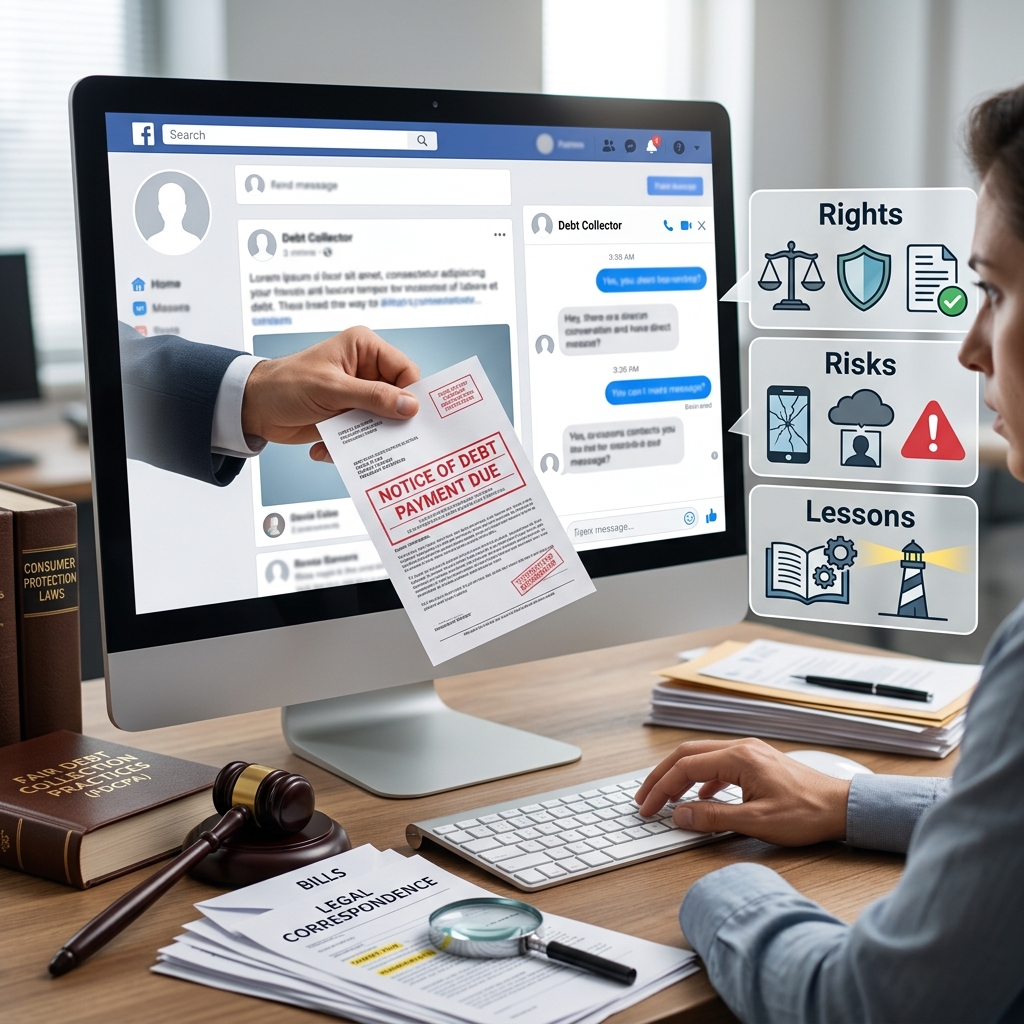
Debt collection has moved far beyond phone calls and letters. Today, it can arrive as a Facebook friend request, an Instagram direct message, or a private note on LinkedIn. What once would have been a knock at the door may now show up in your notifications. This shift has created new legal questions, including lawsuits where consumers claim that collection agencies crossed the line by trying to shame or harass them online.
This article explains how debt collectors use social media, what federal rules allow, where they can get into legal trouble, and how you can respond if a collector appears in your inbox or your friend requests.
From Phone Calls to Facebook Messages: How We Got Here
For decades, debt collection was governed mainly by the Fair Debt Collection Practices Act (FDCPA), a federal law passed in 1977 that set rules for how third-party collectors may contact consumers. The FDCPA focused on traditional communication methods like phone calls, letters, and in-person visits. Social media did not exist when the law was written, so it did not mention Facebook, Twitter, or any other online platforms.
As social networks became widely used, collectors began experimenting with new tactics:
- Finding people whose phone numbers or home addresses had changed.
- Looking at public posts and photos to see whether someone appeared able to pay a debt.
- Sending messages or friend requests to get a response when calls and letters were ignored.
In some cases, these tactics led to lawsuits claiming that collectors used social media to harass or publicly shame debtors, allegedly violating the FDCPA’s ban on abusive or deceptive practices. Courts have increasingly had to apply old rules to new technology, deciding when digital contact crosses the line.
What the Law Says About Social Media Debt Collection
To address modern communication tools, the Consumer Financial Protection Bureau (CFPB) issued new regulations under the FDCPA, sometimes referred to as Regulation F. These rules clarify how collectors may use email, text messages, and social media to collect debts while trying to limit harassment and protect privacy.
Key Legal Rules for Social Media Contact
Under current federal guidance and consumer protection rules:
- Debt collectors may contact you through private social media messages, such as a direct message or private inbox on platforms like Facebook and Instagram.
- They cannot post about your debt publicly where your friends, followers, or the general public can see it.
- If they send a friend request or similar connection request, they must identify themselves as a debt collector and not pretend to be someone else.
- All communications must include a clear and easy way for you to opt out of further messages on that platform.
These rules build on existing FDCPA protections, which prohibit collectors from using unfair, deceptive, or abusive practices, such as threats, public shaming, or repeatedly contacting you with the intent to harass.
Contact Frequency Limits
Regulation F also spells out how often a collector may contact you about a particular debt:
| Type of Rule | General Limitation |
|---|---|
| Phone calls | No more than 7 calls within 7 days about a specific debt, and no calls within 7 days after talking with you about that debt. |
| Time of day | No contact before 8 a.m. or after 9 p.m. (your local time), unless you agree otherwise. |
| Workplace | No contact at work if you tell them you are not allowed to receive such communications there. |
| Social media private messages | Permitted only privately and must stop if you request no further contact on that platform. |
While the rules do not impose a specific numeric limit on how many social media messages a collector can send, harassment remains unlawful. Repeated, aggressive digital messages can still violate the FDCPA if they are intended to annoy, abuse, or harass.
Why Collectors Use Social Media in the First Place
Social networks can be powerful tools for locating people and gathering information. According to legal commentary, collection agencies commonly use social media for several purposes:
- Skip tracing: Tracking down people whose contact details are outdated, including by reviewing friends lists, tagged locations, and employment information.
- Assessing ability to pay: Looking at lifestyle posts, such as photos of expensive trips or cars, to argue that a consumer has the means to pay a debt despite claims of financial hardship.
- Prompting a response: Sending a private message or connection request where phone calls and letters have been ignored.
The third, more problematic use is using social media to shame, pressure, or embarrass the debtor. If a collector posts about a person’s debt where friends or coworkers might see it, or uses mocking and threatening messages, it can cross into clear FDCPA violations and potentially lead to lawsuits.
When Social Media Collection Crosses the Legal Line
Although the FDCPA was not written with Facebook in mind, its core principles apply online just as they do offline. According to the Federal Trade Commission, collectors cannot:
- Threaten violence or harm.
- Use obscene or profane language.
- Publicly disclose your debts to others (with narrow exceptions).
- Misrepresent who they are or how much you owe.
- Repeatedly contact you with the intent to harass or abuse.
On social media, these rules mean that collectors must avoid:
- Posting comments about your debt on your public profile or in public groups.
- Tagging you in posts meant to shame you into paying.
- Sending misleading friend requests that hide their identity as debt collectors.
- Bombarding you with frequent, aggressive direct messages.
Cases have arisen where consumers claim that collectors used Facebook to pressure them, including through contact with family or friends, or by sending repeated private messages that felt harassing. Such behavior can form the basis of a federal or state lawsuit if it violates the FDCPA or similar state laws.
Your Rights When a Collector Contacts You Online
If a collector reaches out to you through Facebook, Instagram, or another platform, you still have all the rights granted by the FDCPA and related rules.
Right to Validation Information
A collector must provide certain basic information about the debt either in the first communication or within five days of the first contact. This includes:
- The collector’s name and mailing address.
- The amount of the debt.
- The name of the creditor to whom you allegedly owe the debt.
- How to dispute the debt if you believe it is not yours or the amount is wrong.
- Your right to obtain information about the original creditor if you request it within 30 days.
If the collector fails to provide this information, they may be violating federal law.
Right to Dispute the Debt
You have the right to dispute the debt in writing within 30 days after receiving validation information. Once you dispute it, the collector generally must:
- Stop collection efforts until they provide verification of the debt.
- Provide documentation showing that you owe the money and who currently owns the debt.
This right applies regardless of whether the initial communication came by phone, letter, email, or social media.
Right to Limit or Stop Contact
If you want a collector to stop contacting you on social media (or at all), you have several options:
- You can block the account that contacted you and use the platform’s tools to report misuse.
- You can send a written request telling the collector to stop contacting you entirely or stop using a particular communication channel, such as text or social media.
- After receiving a written request to cease contact, collectors generally may only contact you to confirm they will stop, or to inform you of a specific legal action such as a lawsuit.
Stopping contact does not erase the debt or prevent the collector or creditor from pursuing it in court, but it can prevent ongoing harassment.
Smart Steps to Take If a Collector Messages You on Facebook
When a debt-related message arrives in your social media inbox, acting calmly and methodically protects both your rights and your privacy.
1. Confirm Who You Are Dealing With
- Ask the sender to clearly state their full name, the collection agency’s name, and contact information.
- Do not share sensitive personal details (full Social Security number, full bank account numbers, etc.) through the platform.
- Independently look up the agency’s website or phone number to confirm it is a real business and not a scam.
Scammers sometimes pose as debt collectors to trick people into paying debts that either do not exist or are already paid. Verifying the agency through a trusted source is critical.
2. Request Debt Validation
- Ask the collector to send you a written validation notice by mail or another secure method.
- If you do not recognize the debt, say so and dispute it in writing within 30 days after receiving the required validation information.
- Keep copies of all messages and letters for your records.
Debt validation helps you verify that the debt is yours, that the amount is correct, and that the collector has the right to collect it.
3. Protect Your Privacy and Security
- Avoid sending documents or personal identifiers through social media.
- Check your account privacy settings and limit what strangers can see about your employment, location, or spending habits.
- Be cautious accepting friend requests from people you do not know, especially if you are behind on bills or in a dispute with a creditor.
Social media can reveal more about your life and finances than you might expect, and collectors may use that information to their advantage.
4. Consider Taking the Conversation Off Social Media
- Once you verify the collector’s identity, you may choose to continue communication by phone or mail, where it may be easier to document and control.
- If the messages feel aggressive or invasive, you can demand that they stop using social media and confirm this request in writing.
Potential Legal Remedies If You Are Harassed
If you believe a collector is violating your rights—online or offline—you are not powerless. According to the Federal Trade Commission, you can:
- Report the collector to:
- Your state attorney general’s office.
- The Federal Trade Commission (FTC).
- The Consumer Financial Protection Bureau (CFPB).
- Consult with a consumer law attorney about whether the collector’s behavior violates the FDCPA or state laws.
- File a lawsuit in state or federal court within one year of the alleged violation.
If you successfully sue under the FDCPA, you may be able to recover damages for harm you suffered, including emotional distress, medical expenses, or lost wages, as well as statutory damages and attorney’s fees in some cases.
Practical Tips to Prevent Problems Before They Start
Some issues can be avoided by planning ahead and managing your online presence thoughtfully.
- Limit personal details on public profiles. Avoid posting information that reveals your financial situation, employer, or daily routines to anyone who is not a trusted contact.
- Use privacy settings wisely. Many platforms allow you to make your friends list, photos, and posts visible only to selected people.
- Be cautious about friend requests. Do not accept requests from strangers or vague profiles, especially if you are already dealing with creditors or collectors.
- Keep good records. Save screenshots or copies of any messages you receive from collectors, including dates and usernames, in case you need evidence later.
- Address debts early when possible. If you can work directly with the original creditor before the account goes to a collection agency, you may have more flexibility in resolving it.
Frequently Asked Questions
Can a debt collector send me a friend request on Facebook?
Yes, under current rules a collector may send you a friend or connection request, but they must not mislead you about who they are. They should clearly identify themselves as a debt collector and cannot use the friend request to trick you into giving personal information.
Is it legal for a collector to post about my debt on my public timeline?
No. Public posts or comments about your debt that can be seen by your friends, followers, coworkers, or the general public generally violate FDCPA limits on disclosure and harassment. Collectors are restricted to private messages and cannot expose your debt to others.
What if I do not recognize the debt mentioned in a social media message?
If a message references a debt you do not recognize, do not assume it is valid. Ask the collector to send you written validation information and dispute the debt in writing within 30 days if you believe it is incorrect or not yours. Also consider checking your credit reports to see whether there are signs of identity theft.
Can I stop a collector from contacting me on social media only?
Yes. You can specifically request that a collector stop contacting you on a particular channel—such as social media or text messages—while still allowing contact by other means. They must honor such a request and give you an easy way to opt out in each message.
Will blocking a collector on Facebook make the debt disappear?
No. Blocking the account may stop messages on that platform, but it does not erase the debt or prevent other collection methods, including letters, calls, or lawsuits. If you receive collection messages, it is usually wise to request debt validation and consider speaking with a qualified attorney or nonprofit credit counselor.
Using Social Media Carefully in a World of Digital Collections
As social media becomes a standard part of debt collection, both consumers and agencies must adapt. For consumers, the most important steps are to understand your rights, treat every unexpected message with caution, and document all communications. For collectors, staying within the boundaries of the FDCPA and newer regulations is essential to avoid costly litigation and regulatory action.
You cannot control whether a collector decides to send you a Facebook message, but you can control how you respond—and how much they can see about your life. With the right information and a few practical safeguards, social media does not have to become a tool for harassment.
References
- Debt Collection FAQs — Federal Trade Commission. 2021-11-30. https://consumer.ftc.gov/articles/debt-collection-faqs
- Don’t Let a Debt Collector “Friend” You on Facebook – The Legal Issues Posed by Internet Debt Collection — FindLaw / Cornell Law School Legal Information Institute. 2011-06-16. https://supreme.findlaw.com/legal-commentary/dont-let-a-debt-collector-friend-you-on-facebook-the-legal-issues-posed-by-internet-debt-collection.html
- Debt Collectors Will Be Able to Contact You on Facebook, Instagram, Twitter — Consumer Reports. 2020-10-30. https://www.consumerreports.org/money/debt-collection/debt-collectors-will-be-able-to-contact-you-on-facebook-instagram-twitter-a5362170249/
- New Debt Collection Rule Allows Contact on Social Media — Experian. 2021-11-17. https://www.experian.com/blogs/ask-experian/can-a-debt-collector-contact-me-through-facebook/
- How To Protect Yourself From Debt Collection on Social Media — National Legal Center. 2022-01-05. https://nationallegal.com/how-to-protect-yourself-from-debt-collection-on-social-media/
Similar Articles








Read full bio of medha deb




