
Compensation for Inaccurate Credit Reports
Learn what you can recover, how FCRA damages work, and what to expect when suing over serious credit report errors.
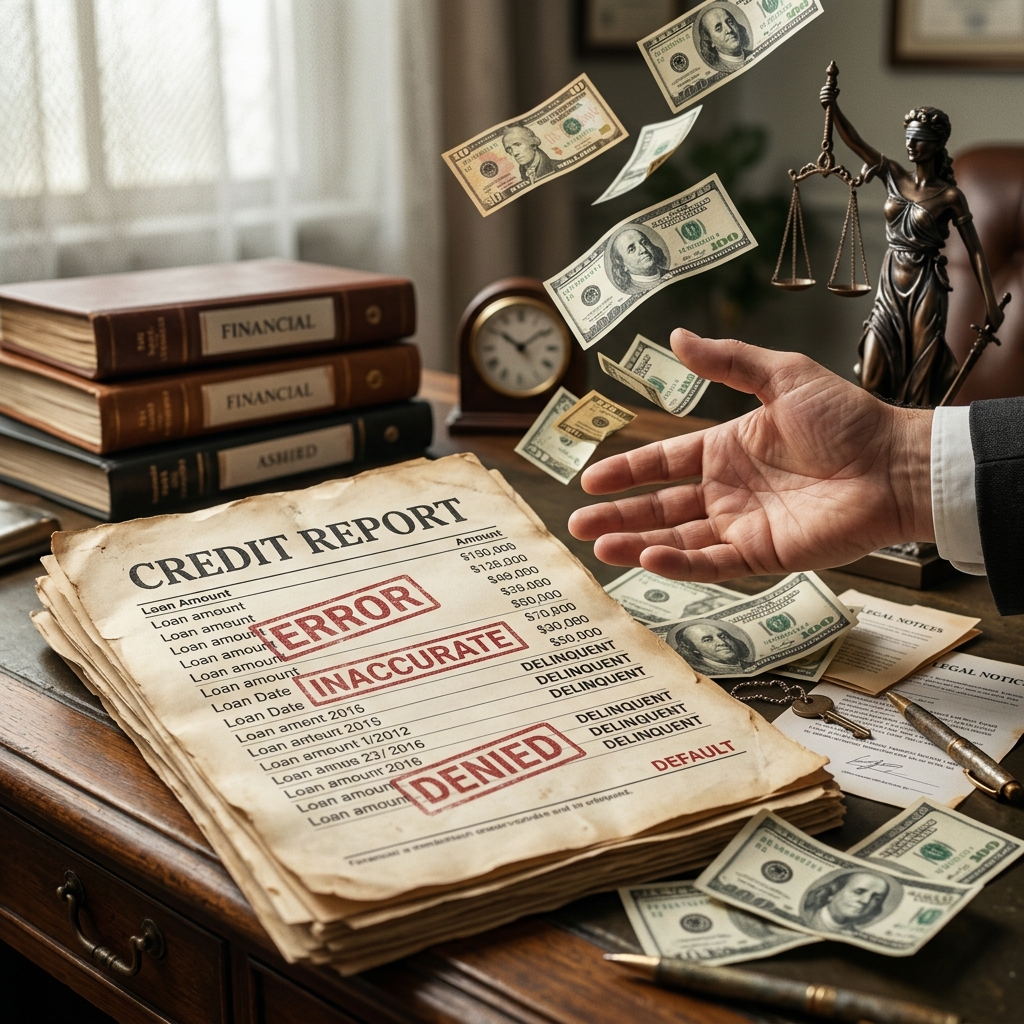
Errors in your credit report can cost you far more than a little inconvenience. They can lead to higher interest rates, denied loans, lost housing opportunities, and even job rejections. When credit reporting agencies or information furnishers fail to correct serious mistakes after you dispute them, federal law may allow you to pursue an inaccurate credit report lawsuit and obtain compensation.
This guide explains what you may be able to recover under the Fair Credit Reporting Act (FCRA), what courts look at when awarding damages, and how to position your case effectively.
1. The Legal Foundation: How the FCRA Protects You
The federal FCRA is the main law that governs how companies collect, report, and use your credit information. It imposes obligations on:
- Credit reporting agencies (CRAs), such as Equifax, Experian, and TransUnion
- Information furnishers, like banks, lenders, debt collectors, and some landlords
- Users of credit reports, such as creditors, employers, and insurers
Under the FCRA, you have the right to:
- Access your credit reports and review the information in them
- Dispute inaccurate or incomplete data with the credit reporting company
- Have the CRA conduct a reasonable investigation, typically within about 30 days
- Have verified errors corrected or removed from your file
- Seek compensation in court when CRAs or furnishers negligently or willfully violate these duties
A lawsuit is usually not the first step. It becomes an option when you have disputed errors and the CRA or furnisher still fails to comply with the law.
2. When a Lawsuit Becomes Viable
Not every mistake justifies litigation. Courts generally expect to see that:
- You discovered an error in your credit report
- You disputed the error with the credit reporting company, and often with the furnisher as well
- The CRA or furnisher failed to reasonably investigate or accurately correct the information
- You experienced a concrete harm or legal damage as a result of the violation
The United States Supreme Court has emphasized that a successful lawsuit typically requires a real, tangible injury, not just a technical violation. This might include being denied a mortgage, paying a higher auto loan rate, or suffering significant emotional distress from repeated denials.
Common Situations That Lead to FCRA Lawsuits
- Accounts that do not belong to you (identity theft or mixed files)
- Debts that were discharged in bankruptcy still showing as active or past due
- Old negative information that remains on your report beyond the permitted reporting period
- Incorrect payment histories or balances after you submit proof
- Failure to mark an account as disputed after you notify the furnisher of an error
3. Types of Damages Available in an Inaccurate Credit Report Lawsuit
If you prove that a CRA or furnisher violated the FCRA, you may be entitled to different categories of damages depending on whether the violation was considered negligent or willful.
| Type of Damages | When Available | What They Cover |
|---|---|---|
| Actual damages | Negligent or willful violations | Financial loss, emotional distress, and other provable harm |
| Statutory damages | Willful violations only | Fixed amount per violation, typically within a statutory range |
| Punitive damages | Willful or reckless misconduct | Additional sums meant to punish and deter bad behavior |
| Attorney’s fees and costs | Successful claims | Reasonable legal fees and litigation expenses |
3.1 Actual Damages: Making You Whole
Actual damages are intended to restore you to the position you would have been in if the violation had not occurred. They can include:
- Higher interest paid on loans because of a lower credit score
- Loss of a mortgage or other financing opportunity
- Costs of securing alternative housing or transportation
- Out-of-pocket expenses spent trying to fix the errors (e.g., postage, copying, travel to the bank)
- Wages lost because you were denied a job or promotion after a bad background or credit check
- Emotional distress that is serious and supported by evidence, especially when linked to specific denials or collection activity
Documenting these damages carefully is critical. Keep rejection letters, loan offers showing higher rates, and any written communication that connects the inaccurate report to your loss.
3.2 Statutory Damages: For Willful Violations
When a CRA or furnisher willfully violates the FCRA, the law allows for statutory damages, which are fixed amounts set by statute. These can be awarded even when it is difficult to calculate specific monetary loss, as long as the violation is proven willful. The purpose is to ensure that consumers can still enforce their rights when the harm is real but hard to quantify.
3.3 Punitive Damages: Punishing Egregious Conduct
Punitive damages are designed not just to compensate you, but to punish particularly reckless or intentional misconduct and deter similar behavior in the future. Courts may award punitive damages when, for example:
- A CRA refuses to correct clearly inaccurate data after multiple disputes
- A furnisher continues reporting a debt it knows is erroneous or discharged
- Internal policies show a deliberate disregard of FCRA obligations
Punitive awards can be substantial, but they are reserved for the most serious violations and require strong evidence of reckless or intentional wrongdoing.
3.4 Attorney’s Fees and Litigation Costs
The FCRA allows successful consumers to recover reasonable attorney’s fees and court costs. This fee-shifting provision is significant because it makes it possible to bring a case even if your out-of-pocket losses are relatively modest.
In practice, this often means:
- Lawyers may agree to represent you on a contingency basis, expecting to recover fees if the case succeeds
- You are not necessarily required to pay hourly legal fees upfront
- The defendant (CRA or furnisher) may be ordered to pay your legal fees in addition to damages
4. Establishing Negligent vs. Willful Violations
The nature of the defendant’s conduct strongly influences the damages available. Courts generally distinguish between:
- Negligent violations: The defendant failed to exercise reasonable care in following the FCRA’s requirements, such as conducting a perfunctory investigation or overlooking clear evidence when you dispute an error.
- Willful violations: The defendant knowingly or recklessly disregarded its legal obligations—for example, ignoring established procedures to correct errors or having policies that prioritize speed over accuracy.
Negligent violations allow you to seek actual damages, while willful violations open the door to statutory and punitive damages as well.
5. The Role of Evidence in Maximizing Recovery
Courts look closely at the evidence you present to determine whether your damages are supported. Strong evidence can significantly increase the value of your case.
5.1 Key Documents to Preserve
- Copies of all credit reports that show the inaccurate information (from each CRA with the error)
- Dispute letters sent to CRAs and furnishers, along with certified mail receipts and responses
- Loan or credit applications, denial letters, or offers reflecting higher interest rates
- Bank statements and financial records showing increased costs or missed opportunities
- Emails, letters, or notes documenting phone calls with creditors or collection agencies
- Medical or counseling records if emotional distress is a key part of your damages
5.2 Demonstrating Concrete Harm
Because courts often require a concrete injury for standing in federal court, you and your attorney will need to connect the inaccurate credit report to specific consequences. Examples include:
- A denied mortgage application because of an erroneous delinquent account
- A higher auto loan interest rate tied to a depressed credit score
- Loss of an apartment after the landlord reviewed a report containing false judgments
- Employer withdrawal of a conditional job offer based on a faulty background report
6. How Disputing Errors Sets Up a Strong Lawsuit
The dispute process is not only a way to fix mistakes; it is also critical for building a viable claim.
6.1 Step-by-Step Dispute Process
Federal agencies recommend that you take the following steps when you find a credit report error:
- Get copies of your credit reports from each major CRA
- Identify each item you believe is inaccurate or incomplete
- Dispute the errors with the CRA in writing or using its online or phone system, clearly explaining why the information is wrong and including supporting documents
- Send a similar dispute directly to the furnisher (creditor, lender, or collector) when appropriate, using certified mail and keeping copies
- Maintain a complete file of everything you send and receive
CRAs generally have about 30 days to investigate and update your file, though that timeline can vary slightly depending on the circumstances.
6.2 When the Dispute Process Fails
If, after you have followed these steps, the CRA or furnisher still refuses to correct clear inaccuracies, you may:
- Ask the CRA to add a statement of dispute to your file and future reports
- File a complaint with the Consumer Financial Protection Bureau (CFPB)
- Consult a consumer law attorney about filing an FCRA lawsuit
By completing the dispute process first, you create a paper trail showing that the company knew about the issue and had an opportunity to fix it—evidence that can be crucial to proving negligence or willfulness.
7. Individual vs. Class Action Lawsuits
Credit reporting violations can affect one person or millions. Your attorney will evaluate whether your case should proceed as an individual lawsuit or as part of a broader class action.
- Individual lawsuits focus on your specific harms and can result in tailored compensation for your actual damages, plus statutory and punitive damages when appropriate.
- Class action lawsuits are typically used when a CRA or furnisher uses a flawed system or policy that harms large groups of consumers in a similar way. Damages are shared among class members, often emphasizing statutory and punitive awards.
Both approaches can be powerful tools to enforce consumer rights, and in either scenario, fee-shifting provisions can allow the court to require the defendant to pay attorney’s fees.
8. Practical Tips Before You Sue
Because litigation is a serious step, it is wise to prepare thoroughly.
- Gather your full credit history from all three major CRAs, not just one report
- Organize your dispute file in chronological order, including every letter, email, and response
- Track your financial losses carefully, including interest rate changes, fees, and lost opportunities
- Note emotional and practical impacts such as sleeplessness, embarrassment, or repeated denials, especially if they are severe and documented
- Consult a consumer law attorney with experience in FCRA cases to evaluate whether the facts support negligent or willful claims
This preparation not only strengthens your case but also helps your lawyer estimate potential damages and determine whether an early settlement is in your best interest.
9. FAQs About Inaccurate Credit Report Lawsuits
What if the error is small or did not cause visible harm?
Minor errors that do not affect your credit score or cause real-world harm may be harder to pursue in federal court because judges often require a concrete injury for standing. However, you can still dispute the information and seek corrections through the standard dispute and complaint processes.
Can I sue only the credit bureau, or also the creditor?
Depending on the facts, you may be able to sue both the credit reporting agency and the furnisher that supplied the inaccurate information if they each failed to meet their duties under the FCRA after you notified them.
Do I have to pay a lawyer upfront?
Many consumer attorneys handle FCRA cases on a contingency basis because the statute allows for recovery of reasonable attorney’s fees when you win. You should discuss fee structures with any attorney you consult.
How long does a case like this usually take?
Timelines vary widely. Some cases resolve in settlement within months, while others may take a year or more if they go to trial. The strength of your evidence and the complexity of the violations both affect the duration.
Will the lawsuit itself fix my credit report?
Often, part of any settlement or judgment includes correcting the inaccurate information or ensuring that the offending data is removed. Your attorney can make this a specific objective of the litigation, in addition to financial compensation.
References
- Disputing Errors on Your Credit Reports — Federal Trade Commission. 2023-04-01. https://consumer.ftc.gov/articles/disputing-errors-your-credit-reports-0
- How do I dispute an error on my credit report? — Consumer Financial Protection Bureau. 2024-01-10. https://www.consumerfinance.gov/ask-cfpb/how-do-i-dispute-an-error-on-my-credit-report-en-314/
- Disputing Errors in a Credit Report — National Consumer Law Center. 2022-09-01. https://www.nclc.org/wp-content/uploads/2022/09/cf_disputing-errors-in-a-credit-report.pdf
- Disputing Credit Errors — Texas State Law Library. 2023-06-15. https://guides.sll.texas.gov/credit-reports/disputing-credit-errors
- Credit Report Errors — Berger Montague. 2023-05-05. https://bergermontague.com/practice-areas/credit-reporting-background-checks/credit-report-errors/
Similar Articles








Read full bio of medha deb




