
Common Construction Injuries and Legal Options
A practical guide to the most frequent construction injuries, their causes, and the claims they may support.
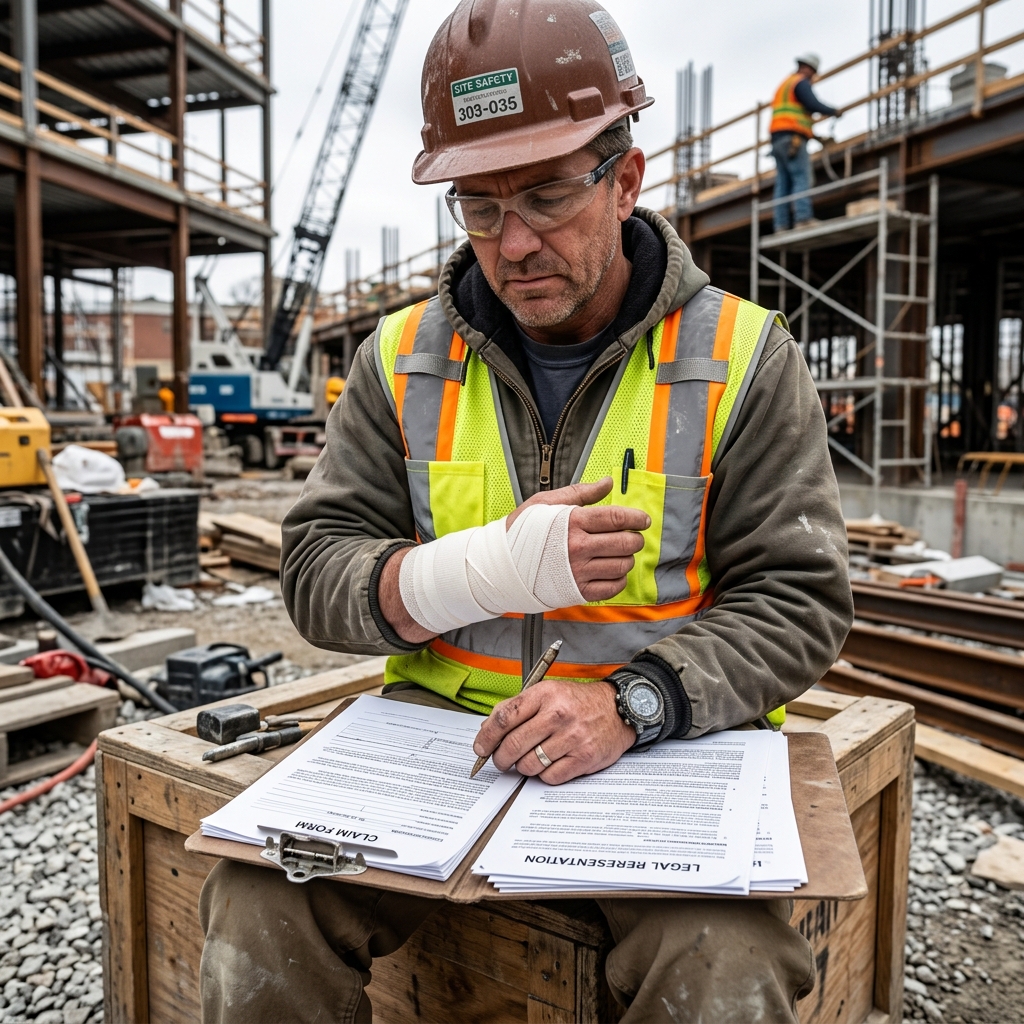
Construction work is physically demanding, fast-paced, and often performed around heavy equipment, elevated surfaces, live electricity, and moving materials. Those conditions make job sites especially vulnerable to serious injuries, including falls, struck-by incidents, electrocution, and caught-in or between accidents. Federal safety guidance identifies those categories as the major drivers of construction fatalities, and they also help explain many of the non-fatal injuries that send workers to the hospital or keep them off the job for weeks or months.12
Understanding the types of injuries that happen most often on construction sites can help injured workers recognize the seriousness of their condition, document what happened, and think about the compensation systems that may apply. In many cases, a construction injury may lead to a workers’ compensation claim; in some situations, a separate claim against a third party may also be available if someone other than the employer contributed to the accident.3
Why construction sites create so many injury risks
Unlike many workplaces, construction sites change constantly. Crews may work at different heights, near open edges, in trenches, around cranes and forklifts, or in areas with unfinished wiring and scattered debris. That combination increases the chance of falls, crushing incidents, exposure to electricity, and injuries caused by tools or equipment. OSHA and state safety agencies repeatedly warn that the most severe construction accidents are often preventable when proper guardrails, lockout procedures, training, and equipment controls are used.14
Many injuries also worsen because construction work often continues under pressure to meet deadlines. Workers may lift heavy materials repeatedly, move quickly in cramped spaces, or operate near hazardous machinery for long shifts. Over time, those conditions can produce both sudden trauma and repetitive-use injuries. The result is a broad range of harm, from minor cuts to permanent disability.
Falls remain the most common and most serious hazard
Falls are one of the best-known dangers in construction, and for good reason. Workers can fall from roofs, ladders, scaffolding, cranes, and unfinished structures, or they may slip into holes, trenches, or unguarded openings. These incidents can cause broken bones, spinal injuries, internal injuries, and traumatic brain injuries. In severe cases, a fall can lead to paralysis or death.125
Not every fall looks dramatic from the outside, but that does not make it less serious. A worker who lands on a shoulder, hip, back, or head may suffer damage that becomes worse over time. Head trauma can lead to persistent headaches, confusion, memory problems, or longer-term cognitive issues. Back injuries may interfere with lifting, bending, or standing for extended periods. Because of these possibilities, every fall should be documented and evaluated by a medical professional promptly.
Struck-by incidents can cause sudden, severe trauma
Another major category of construction injury happens when a worker is hit by a moving object, falling material, tool, or vehicle. A struck-by incident may involve a dropped tool, shifting load, airborne debris, nail-gun mishap, or equipment that moves unexpectedly. OSHA and safety-focused legal sources consistently identify struck-by injuries as one of the core dangers on construction sites.134
The injuries from these incidents vary widely. A direct impact to the head can produce a concussion or other traumatic brain injury. A blow to the arm or leg can lead to fractures, deep bruising, nerve damage, or joint trauma. Eye injuries are also common when workers are hit by particles, fasteners, sparks, or fragments of material. In some cases, the force of the impact may not look extreme at first but still produce lasting medical complications.
Electrical injuries can affect the whole body
Construction sites often contain temporary wiring, unfinished electrical systems, portable power tools, and exposed conductors. When workers contact live wires or faulty equipment, the result may be electrocution, shock, burns, muscle contractions, or cardiac complications. Electrical accidents are consistently listed among the most dangerous types of construction incidents because the harm can be immediate and life-threatening.134
Electrical injuries are especially dangerous because the visible damage may underestimate the underlying trauma. A worker may appear alert after a shock but later develop pain, nerve injury, irregular heartbeat, or internal tissue damage. Burns may also require extensive treatment and may leave permanent scarring. When electrical work or energized equipment is involved, safety procedures such as lockout and tagout, insulating gear, and de-energizing equipment are critical risk controls.34
Caught-in or between accidents often produce crushing injuries
Caught-in or between injuries happen when a worker becomes trapped, pinned, or crushed between objects, vehicles, machinery parts, or collapsing structures. These incidents may involve trench walls, compacting equipment, moving machinery, or materials that shift unexpectedly. OSHA classifies these events among the central causes of construction deaths, and they also produce many non-fatal but life-altering injuries.146
The consequences can include crushing injuries, broken bones, amputations, internal trauma, and spinal cord damage. If a worker is pinned long enough, oxygen deprivation and shock can become additional medical emergencies. These cases often require rescue operations, surgery, rehabilitation, and time away from work. In the most severe cases, the injury may permanently limit mobility or dexterity.
Heavy lifting and repetitive motion can also harm workers
Not every construction injury comes from a dramatic event. Many workers suffer overexertion injuries caused by repetitive lifting, carrying, kneeling, climbing, twisting, or overhead work. These injuries may involve muscle strain, tendon irritation, joint damage, and long-term wear on the back, shoulder, knee, or ankle. Construction workers may also develop repetitive stress injuries that slowly build over time and reduce strength and range of motion.134
Cold-weather work can introduce another layer of risk. Some sources note that overexertion and environmental exposure can contribute to conditions such as hypothermia and frostbite, especially when workers spend long periods in harsh climates without enough protection.1 These injuries may not seem directly related to a single accident, but they can still be serious enough to support a workplace injury claim.
Head, spine, and limb injuries can change a worker’s life
Several of the most serious construction injuries share one thing in common: they can permanently change how a person works, moves, or lives. Head injuries may cause brain trauma that affects thinking, speech, memory, or balance. Spinal cord injuries can lead to chronic pain, partial paralysis, or total loss of movement below the injury site. Amputations, whether from machinery, crushing events, or severe trauma, may require prosthetics and long rehabilitation.245
Broken bones are more common than catastrophic injury, but they still matter. Fractures can keep workers out of work for months and may lead to lingering stiffness, nerve irritation, or deformity. Shoulder, knee, and ankle injuries can also take a long time to heal, especially when the job requires lifting, climbing, or balance. The practical effect of even a “moderate” injury can be a major loss of income and physical ability.
Eyes, ears, skin, and lungs are also at risk
Construction hazards do not stop at falls and crush injuries. Workers may suffer cuts, lacerations, burns, eye damage, hearing loss, and chemical exposure. Flying fragments, sparks, dust, and unsecured tools can injure the eyes or reduce vision. Constant exposure to loud equipment may damage hearing over time. Welding fumes, solvents, and other substances can also irritate the skin, eyes, or respiratory system.124
Some injuries develop slowly rather than instantly. Toxic exposure may produce symptoms only after repeated contact, and hearing loss may become noticeable only after months or years of noisy work. That does not make the injury any less real. A worker should report symptoms early, especially if the job involves chemicals, grinding, cutting, sanding, or other activities that generate harmful particles or fumes.
Mental health injuries can follow traumatic accidents
Construction injuries are not only physical. A serious accident may leave a worker with anxiety, flashbacks, sleep problems, or post-traumatic stress disorder. PTSD is especially likely after frightening events such as a collapse, electrocution, severe fall, or near-fatal rescue. Some workers also develop depression or fear of returning to the job site after a major injury.12
Mental health effects matter because they can affect recovery, daily functioning, and the ability to work safely. In some cases, psychological injuries are part of a broader workers’ compensation claim. Documentation from medical and mental health providers can be important when the emotional impact is significant and tied to the workplace event.
What workers’ compensation may cover
Workers’ compensation is often the first benefits system available after a construction injury. In general, it is designed to provide medical treatment and wage-replacement benefits for work-related injuries and illnesses, without requiring the employee to prove employer fault. Depending on the state and the facts of the case, benefits may include emergency treatment, ongoing care, temporary disability payments, permanent impairment payments, and vocational rehabilitation.3
Workers’ compensation does not usually pay for pain and suffering, but it can still provide important financial support while an injured worker recovers. Prompt reporting, accurate medical records, and a clear account of how the accident happened can help protect the claim. If the injury developed over time, such as a repetitive stress condition or toxic exposure, medical evidence linking the condition to the work environment becomes especially important.
When a third-party claim may also exist
Some construction accidents involve more than one responsible party. If a subcontractor, equipment manufacturer, property owner, architect, engineer, or another outside company contributed to the accident, the injured worker may have a separate third-party claim in addition to workers’ compensation.3
That distinction matters because a third-party claim may allow recovery for losses that workers’ compensation does not cover, such as pain and suffering. Examples can include defective equipment, unsafe site design, or negligence by another contractor working on the same project. These claims depend heavily on the facts, so accident reports, witness statements, photos, and equipment records can play a major role.
| Injury type | Common cause | Possible effects |
|---|---|---|
| Fall injury | Ladder, roof, scaffolding, or trench fall | Broken bones, head trauma, spinal damage |
| Struck-by injury | Falling tools, moving vehicles, debris | Eye injury, fractures, brain injury |
| Electrical injury | Live wires, faulty equipment | Burns, shock, nerve damage, cardiac issues |
| Caught-in/between injury | Collapse, machinery, trench wall | Crushing injury, amputation, internal trauma |
What to do after a construction accident
After a construction injury, the best next steps are usually straightforward: get medical care, report the incident, preserve evidence, and follow all treatment instructions. If possible, a worker should note the date, time, location, equipment involved, and names of witnesses. Photos of the scene and injuries can also be valuable. If a claim may involve a defective tool, falling object, or unsafe site condition, preserving physical evidence can become critical.
- Seek medical attention immediately, even if symptoms seem mild.
- Report the injury to a supervisor or employer as soon as possible.
- Keep copies of medical records, incident reports, and time-off documentation.
- Document witnesses, equipment involved, and site conditions.
- Consider whether a third party besides the employer may have contributed to the accident.
Frequently asked questions
Are construction injuries always covered by workers’ compensation? Most work-related injuries can qualify for workers’ compensation, but eligibility depends on state law and the facts of the accident. Injuries from repetitive motion or exposure may also be covered if they are tied to the job.3
Can a worker sue after a construction accident? A worker usually cannot sue the employer directly for a workplace injury, but a separate lawsuit may be possible against a third party whose negligence contributed to the accident.3
Why are fall injuries so dangerous? Falls can produce multiple serious injuries at once, including fractures, head trauma, spinal cord damage, and internal injuries. Even a fall from a relatively modest height can have lasting consequences.12
Do symptoms that appear later still matter? Yes. Some injuries, especially brain, spine, hearing, and toxic exposure cases, do not fully show up right away. Delayed symptoms should still be reported and evaluated.
References
- Workplace Injuries and Job Requirements for Construction Laborers — U.S. Bureau of Labor Statistics. 2022-02-02. https://www.bls.gov/spotlight/2022/workplace-injuries-and-job-requirements-for-construction-laborers/home.htm
- OSHA’s “Fatal Four” — Texas Department of Insurance, Division of Workers’ Compensation. 2024-01-01. https://www.tdi.texas.gov/tips/safety/oshafatal4.html
- The Most Common Construction Injuries and How to Avoid Them — Concentra. 2024-01-01. https://www.concentra.com/resource-center/articles/the-most-common-construction-injuries-and-how-to-avoid-them
- Most Common Construction Injuries — Greenberg & Ruby, LLP. 2024-01-01. https://www.greenbergrubylaw.com/common-injuries-construction-workers
- Common Injuries with Construction Workers — Hardison & Cochran. 2024-01-01. https://www.lawyernc.com/workers-compensation-lawyer/common-workplace-injuries/construction/
- Construction and Job Site Serious Injuries — Schneider Wallace Cottrell Konecky LLP. 2024-01-01. https://www.schneiderwallace.com/practice-areas/serious-personal-injury/construction-and-job-site-serious-injuries/
Similar Articles








Read full bio of medha deb




