Colorado maintains specific regulations under its Dram Shop Act to address accountability for alcohol service that leads to harm. These rules target licensed sellers and private individuals who provide drinks to those clearly impaired or too young, aiming to curb risks like vehicle crashes and personal injuries. The framework balances business operations with public safety, allowing injured parties to pursue remedies beyond just the intoxicated person.
Core Principles of Colorado’s Dram Shop Regulations
The foundation lies in Colorado Revised Statutes § 44-3-801, which generally shields alcohol providers from automatic blame for consumer actions but creates targeted exceptions. Licensed entities cannot be held civilly liable for intoxication-related damages unless they deliberately serve alcohol to someone visibly intoxicated or under 21 years old. This ‘willful and knowing’ standard demands proof of awareness, distinguishing careless from intentional overservice.
Visibly intoxicated means obvious signs like slurred speech, unsteady gait, or bloodshot eyes that a reasonable observer would notice. Courts interpret this objectively, often relying on witness accounts or video evidence. For minors, service is prohibited outright, with liability attaching if the provider knew or should have known the person’s age.
Who Falls Under These Liability Rules?
Affected parties span commercial and private settings:
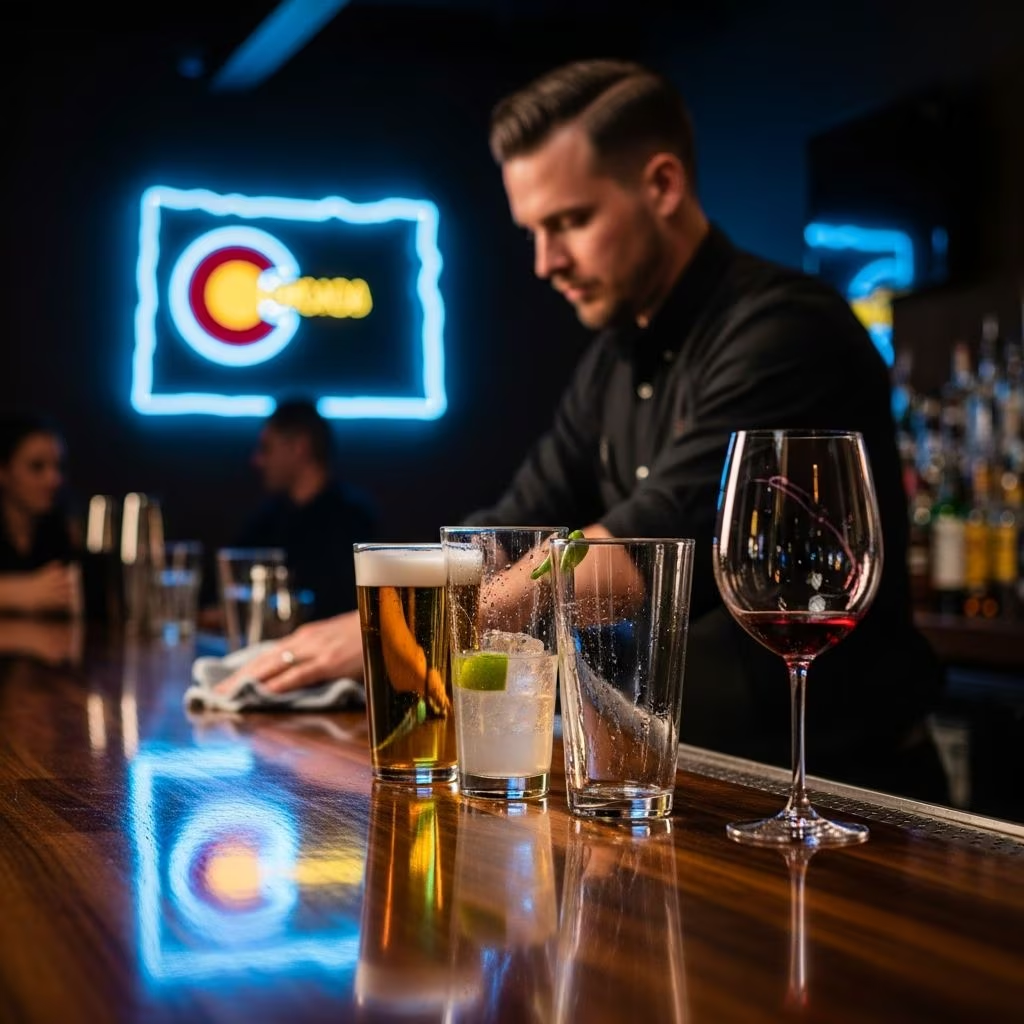
- Licensed Commercial Providers: Bars, restaurants, liquor stores, convenience outlets, hotels, and clubs with state liquor licenses. These ‘dram shops’ face claims if they sell or serve to prohibited individuals, leading to off-premises harm like car accidents.
- Social Hosts: Private homeowners or event organizers supplying alcohol at gatherings. Liability applies if they knowingly give drinks to minors (with age awareness) or visibly intoxicated guests who then cause injury.
Businesses must train staff on intoxication cues and ID checks to mitigate risks. Social hosts bear similar duties in casual settings, promoting responsible hosting.
Essential Elements to Prove in a Claim
Success requires demonstrating key facts:
- The provider willfully served alcohol to a visibly intoxicated person or known minor.
- The recipient caused the injury or damage after consuming that alcohol.
- A direct link exists between the service and the harm, often via timelines, receipts, or toxicology.
Evidence might include security footage, eyewitness statements, purchase records, police reports, and blood alcohol tests. Cases falter without clear proof of ‘visible’ intoxication at service time, not just later impairment.
| Element | Proof Examples | Challenges |
|---|---|---|
| Willful Service | Witness testimony, videos | Subjective staff judgment |
| Intoxication/Minor Status | ID absence, behavior descriptions | Post-service worsening |
| Causation | Accident timing, BAC levels | Multiple drinking locations |
This table outlines common hurdles, emphasizing the need for robust documentation.
Potential Compensation from Successful Claims
Victims can seek broad recovery, though capped for dram shops (adjusted periodically for inflation under § 44-3-801(3)(c)). Available damages include:
- Economic Losses: Medical bills, lost income, property repairs, funeral expenses.
- Non-Economic Losses: Pain, emotional trauma, lifestyle impacts, loss of companionship.
Social host claims lack statutory caps but follow general tort limits. Attorney fees may also recover if specified. Payouts hinge on case strength and shared fault rules.
Time Limits for Filing Dram Shop Actions
Claims must launch within one year from the alcohol sale or service date, a strict statute of limitations. Delays bar recovery, underscoring prompt action post-incident. Complex proofs demand expert legal navigation within this window.
Criminal Consequences Alongside Civil Suits
Beyond lawsuits, violations trigger misdemeanors: fines, license suspensions, or jail for providers serving prohibited persons. Social hosts face similar charges for underage service with knowledge. These penalties reinforce civil deterrence.
Navigating Defenses and Limitations
Providers counter with arguments like no visible intoxication, multiple consumption sites, or victim comparative fault. The Act abolishes common-law claims, funneling all to its framework—no negligence suits for mere overservice without the exceptions. Caps limit dram shop exposure, encouraging insurance.
Recent rulings stress proximate cause: alcohol must intoxicate at or near purchase, not just be bought earlier.
Practical Steps After an Alcohol-Related Incident
If harmed:
- Seek medical care and report to police.
- Gather evidence: photos, contacts, records.
- Contact attorneys specializing in these claims promptly.
- Avoid settling hastily with insurers.
Businesses should implement server training, ID scanners, and refusal policies.
Frequently Asked Questions
Can a liquor store be liable under Dram Shop laws?
Yes, if they knowingly sell to a visibly intoxicated or underage buyer who then causes harm.
Do social hosts need liquor licenses for liability?
No, unlicensed private providers qualify if they knowingly serve minors or intoxicated guests.
What is the damages cap for dram shops?
Capped and inflation-adjusted per statute; social hosts follow uncapped tort rules.
How to prove visible intoxication?
Via witnesses, videos, or behavior descriptions showing obvious impairment.
Is there a time limit for suits?
One year from service date.
Broader Implications for Public Safety
These laws foster safer environments by incentivizing vigilance. Statistics from state reports show reduced incidents where compliance is high, though enforcement challenges persist. Education on limits and refusals cuts risks, protecting communities from preventable tragedies. Ongoing legislative tweaks address evolving concerns like delivery services.
In sum, Colorado’s system promotes accountability without stifling hospitality, prioritizing harm prevention through clear rules and remedies.
References
- Colorado’s Dram Shop & Social Host Liability Laws — Trial Proven Law. 2023. https://www.trialproven.com/colorado-law/colorados-dram-shop-social-host-liability-laws/
- Understanding Colorado’s Dram Shop Statute — Mintz Law Firm. 2024. https://www.mintzlawfirm.com/understanding-colorados-dram-shop-statute/
- What Are the Dram Shop Laws In Colorado? — Dolan Dacey Zimmerman. 2023-06. https://www.dolanzimmerman.com/blog/2023/06/what-are-the-dram-shop-laws-in-colorado/
- Colorado Dram Shop Liability – Colorado Court Says Connection Required — Clark Hill. 2022. https://www.clarkhill.com/news-events/news/colorado-dram-shop-liability-colorado-court-says-connection-between-alcohol-sold-and-intoxication-required/
- Dram Shop Claims — Cook Injury Law. 2024. https://www.cookinjurylaw.com/practice-areas/dram-shop-claims/
- Does Colorado Have a Dram Shop Law? — The Wilhite Law Firm. 2023. https://www.wilhitelawfirm.com/colorado-dram-shop-law/
- Colorado Dram Shop and Social Host Liability Laws — Nolo. 2025. https://www.nolo.com/legal-encyclopedia/dram-shop-laws-social-host-liability-alcohol-related-accidents-colorado.html