
Cold Weather Work Injuries: Legal Rights
Discover your legal options for injuries from cold weather exposure at work and how to hold employers accountable.
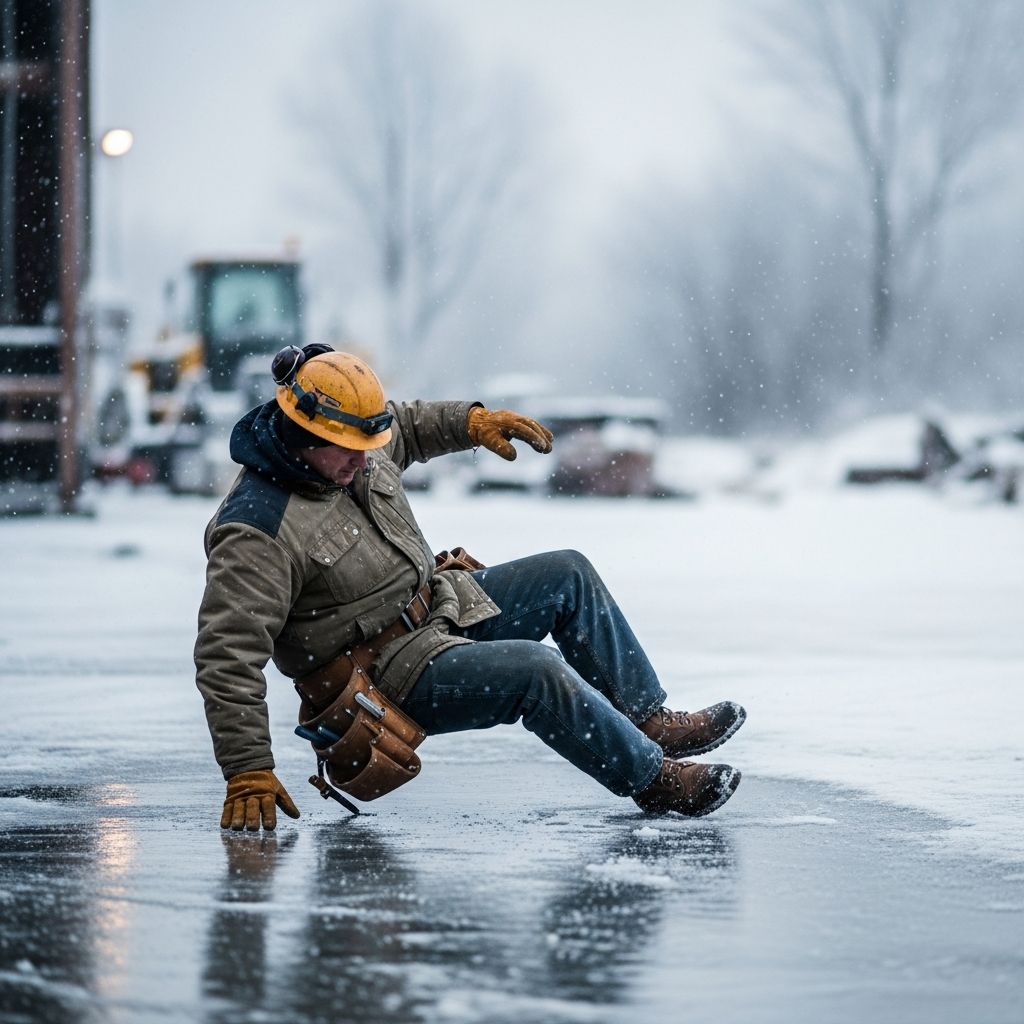
Workers exposed to extreme cold face serious risks of injury, from frostbite to hypothermia, and understanding legal protections is crucial for seeking justice.
Understanding Cold Stress Hazards in the Workplace
Cold stress occurs when the body can no longer maintain its core temperature, leading to potentially life-threatening conditions. Outdoor workers such as construction crews, delivery drivers, and utility crews, along with those in non-heated indoor spaces like warehouses, are particularly vulnerable. Wind chill exacerbates the danger by accelerating heat loss from the skin, making temperatures feel much colder than actual readings.
Hazards extend beyond temperature: ice and snow create slip risks on walkways, parking lots, and job sites. Prolonged exposure without breaks or proper gear heightens the chance of trench foot, where feet become numb and swollen from cold and wetness, or chilblains, painful inflammation of small blood vessels.
- Key factors increasing risk: High winds, wet conditions, and physical exertion that causes sweating, leading to rapid cooling.
- Indoor threats include uninsulated facilities near open doors or drafty areas without heating.
- Commuting dangers: Black ice on roads can cause vehicle accidents for employees driving to sites.
Common Injuries from Freezing Conditions
The spectrum of cold-related injuries ranges from mild discomfort to severe medical emergencies requiring hospitalization.
| Injury Type | Symptoms | Potential Long-term Effects |
|---|---|---|
| Frostbite | Numbness, white or grayish skin, blisters upon thawing | Tissue damage, amputation in severe cases |
| Hypothermia | Shivering, confusion, slowed heart rate, unconsciousness | Organ failure, death if untreated |
| Trench Foot | Swelling, blisters, pain in extremities | Chronic pain, infection risk |
| Slips and Falls | Bruises, fractures from ice | Concussions, spinal injuries |
These injuries often result from inadequate preparation, such as insufficient breaks or lacking wind-resistant clothing. Statistics from safety agencies highlight that cold stress contributes to thousands of workplace incidents annually, underscoring the need for proactive measures.
Employer Responsibilities Under Safety Regulations
While OSHA lacks a dedicated cold weather standard, the General Duty Clause mandates employers to furnish a workplace free from recognized hazards likely to cause serious harm. This broad authority allows citations for failures in cold protection.
Employers must conduct hazard assessments tailored to job tasks, evaluating exposure based on location, duration, and worker acclimatization. For instance, new hires or those returning from warm climates are at higher risk and require closer monitoring.
- Develop a comprehensive cold weather safety plan outlining protocols for monitoring weather, PPE distribution, and emergency responses.
- Implement engineering solutions like wind barriers, radiant heaters, or heated enclosures.
- Provide training on recognizing symptoms and first aid procedures.
State agencies like Cal/OSHA offer additional frameworks, though primarily for heat, their principles of acclimatization and planning apply inversely to cold scenarios.
Protective Gear and Engineering Solutions
Personal protective equipment (PPE) forms the first line of defense. OSHA recommends layered clothing: moisture-wicking base layers, insulating mid-layers, and waterproof outer shells. Insulated, waterproof boots with aggressive treads prevent slips, while face masks, hats, and gloves shield extremities.
Unlike specialized PPE, ordinary winter clothing isn’t required to be employer-provided, but if job-specific gear like high-visibility vests is needed, winterized versions must be supplied at no cost.
Engineering controls prioritize minimizing exposure:
- Mobile warming stations or designated indoor break areas for field workers.
- De-icing agents, traction mats, and snow removal on pathways.
- Reliable communication devices for remote teams to report issues promptly.
For indoor settings, plastic strip curtains at doors and targeted heating reduce drafts effectively.
Administrative Measures and Daily Protocols
Administrative strategies focus on work organization to limit cold exposure. Scheduling heavy tasks for midday when temperatures peak, using buddy systems for mutual monitoring, and providing warm beverages like hot tea (avoiding caffeine or alcohol) sustain energy levels.
Frequent breaks in heated areas become essential as wind chill drops below certain thresholds. Supervisors should track weather apps and adjust shifts, perhaps shortening outdoor time or rotating crews.
- Buddy system: Workers watch for signs like excessive shivering or disorientation in each other.
- Hydration and nutrition: Encourage warm, sugary drinks and calorie-dense snacks to fuel the body.
- Acclimatization periods: Gradually introduce workers to cold over days.
Training Programs for Cold Weather Preparedness
Effective training equips employees to protect themselves and respond to incidents. Sessions should cover cold stress physiology, symptom identification (e.g., frostnip as early warning), proper layering techniques, and emergency protocols like calling 911 for hypothermia.
Employers train on self-monitoring and peer checks, emphasizing that new or unfit workers need extra vigilance. Hands-on demos with PPE and first aid practice enhance retention.
First Aid Essentials for Cold Emergencies
Immediate action saves limbs and lives. For hypothermia, move the person to warmth, remove wet clothes, wrap in blankets (avoid rubbing skin), and offer warm fluids if conscious. Frostbite demands no thawing in the field—warm the area only in medical settings.
- Call emergency services for severe symptoms: Uncontrollable shivering, slurred speech, or loss of coordination.
- Use chemical heat packs cautiously on extremities.
- Prevent further exposure while awaiting help.
Navigating Legal Recourse After Injury
Injured workers typically pursue remedies through workers’ compensation systems, which cover medical bills, lost wages, and disability without proving fault. However, if negligence is evident—like ignored safety complaints—third-party lawsuits may supplement claims.
Document everything: Photos of icy sites, witness statements, medical reports linking injury to cold exposure. Consult attorneys specializing in occupational injuries to assess if employer violations strengthen the case.
Deadlines vary by state; file promptly to preserve rights. Successful claims often hinge on proving inadequate precautions despite known risks.
Preventive Strategies for High-Risk Industries
Construction, agriculture, and transportation sectors adapt uniquely. Construction sites use temporary shelters; farmers provide barn breaks; drivers get cab heaters and route adjustments.
Unionized workplaces often negotiate stronger protections, like paid warm-up time, setting precedents for others.
Frequently Asked Questions
Can my employer force me to work in dangerous cold without gear?
No, under OSHA’s General Duty Clause, they must mitigate known hazards. Refusal to work in unsafe conditions is protected if done reasonably.
What temperature is too cold for outdoor work?
No specific threshold exists, but wind chill below 0°F warrants extreme caution, frequent breaks, and monitoring.
Does workers’ comp cover frostbite?
Yes, as an occupational injury from work exposure, it qualifies for treatment and benefits.
Should I provide my own winter clothes?
Ordinary clothing is typically employee-supplied, but specialized PPE must be employer-provided.
How do I report cold safety violations?
Contact OSHA anonymously online or by phone; inspections may follow serious complaints.
References
- Turning Up the Heat on OSHA’s Winter Weather Guidelines — Ogletree Deakins. 2023. https://ogletree.com/insights-resources/blog-posts/turning-up-the-heat-on-oshas-winter-weather-guidelines/
- 6 Workplace Cold Weather Safety Tips — U.S. Compliance. 2023. https://www.uscompliance.com/blog/6-workplace-cold-weather-safety-tips/
- Winter Weather – Cold Stress — OSHA. 2024-01-17. http://www.osha.gov/winter-weather/cold-stress
- Working in the Cold | Cold Stress — CDC/NIOSH. 2024. https://www.cdc.gov/niosh/cold-stress/about/index.html
- Cal/OSHA Heat Illness Prevention Guidance — California Department of Industrial Relations. 2024. https://www.dir.ca.gov/dosh/heatillnessinfo.html
- What Are The 2025 OSHA Cold Weather Safety Rules? — Kestrel Instruments. 2025. https://kestrelinstruments.com/blog/what-are-the-2025-osha-cold-weather-safety-rules
Similar Articles








Read full bio of Sneha Tete


