
Click-Quick Credit Fixes: Avoiding Repair Scams
Online credit repair promises can be tempting, but understanding the law and common scam tactics is essential to protect your money and your identity.
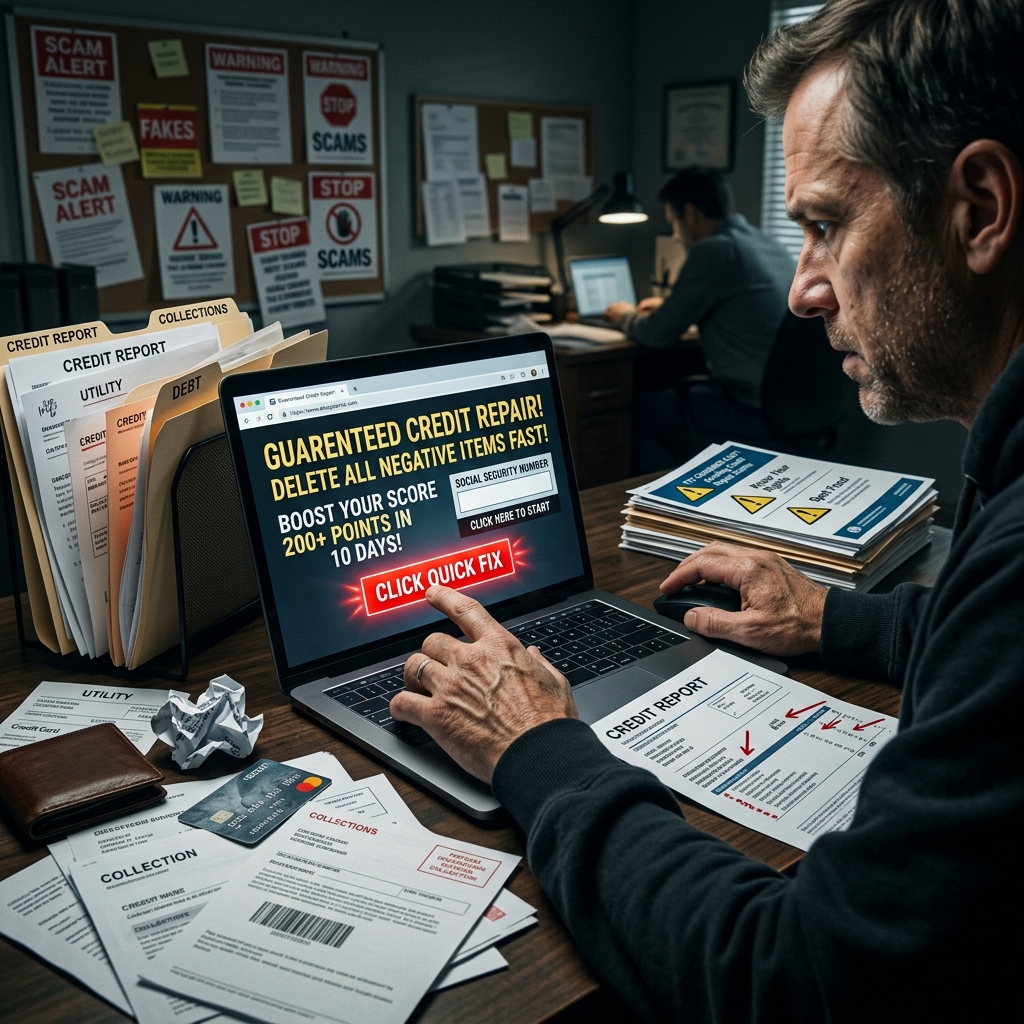
When your credit score is low and bills feel overwhelming, the promise to “fix bad credit with a click” can sound irresistible. Slick websites and social media ads often claim they can erase negative items, boost your score overnight, or even give you a new credit identity. In reality, many of these offers are illegal, misleading, or simply a waste of money.
This article explains how credit repair scams work, the laws that protect you, and safer ways to rebuild your credit. You will learn how to recognize red flags, what legitimate help looks like, and how to take practical steps on your own without paying for empty promises.
Why Quick-Fix Credit Offers Are So Tempting
Bad credit affects more than your ability to get a loan. It can influence insurance premiums, rental applications, and sometimes job opportunities. That pressure makes fast solutions extremely attractive.
- Emotional stress: Collection calls, denial letters, and rising interest rates can push people to act quickly, not carefully.
- Complex rules: Credit reporting and dispute processes can seem confusing, making paid shortcuts look easier.
- Online convenience: Click-to-sign contracts and instant quotes give the impression of legitimacy.
- Misunderstanding of the law: Many consumers do not realize that their rights to dispute information and access reports are already free.
Scammers take advantage of these vulnerabilities, using aggressive marketing to sell services that either repeat what you can legally do yourself or encourage you to break the law.
What Credit Repair Companies Claim They Can Do
Credit repair companies typically advertise that they can analyze your credit report, dispute negative items, and improve your score. Some services are lawful when performed honestly, but many advertisements exaggerate or misrepresent what is possible.
| Common Claim | Reality |
|---|---|
| “We can remove every negative item from your report.” | Accurate and current negative information generally cannot be legally removed until it ages off your report. |
| “We guarantee a score increase within days.” | Credit changes typically appear after investigations and reporting cycles, often taking at least one billing cycle or more. |
| “Get a brand-new credit identity.” | Creating or using a false identity or misusing identification numbers can involve serious federal crimes. |
| “We’ll handle everything; don’t contact the credit bureaus.” | You have the right to contact nationwide credit reporting companies directly, and you can dispute inaccuracies yourself for free. |
Understanding the gap between marketing and reality is the first step to avoiding online credit repair traps.
Key Warning Signs of a Credit Repair Scam
Federal and state regulators have identified common patterns among fraudulent or abusive credit repair operations. If you encounter any of the following behaviors, treat them as serious red flags.
1. Pressure to Pay Before Any Work Is Done
Under the Credit Repair Organizations Act (CROA), companies that offer to improve your credit cannot require or receive payment until services they promised are fully performed. Any demand for large upfront fees or enrollment charges for future work violates this rule.
- Demands for a setup fee or several months of fees in advance.
- Statements like “We won’t start until you pay” or “Your results are guaranteed once you pay today.”
- Complex monthly plans that are structured to function like upfront payment.
If a company insists on paying first, it is safer to walk away.
2. Promises to Erase Accurate Negative Information
No one can legally delete accurate, timely negative information from your credit report just because you pay them. Most negative entries remain for up to seven years, and certain bankruptcies may remain up to ten years, as long as they are reported correctly.
- Claims that they can “clean” your history regardless of the facts.
- Guarantees that collections, late payments, or judgments will vanish overnight.
- Advertising phrases such as “erase your past” or “wipe your slate clean” for a fee.
Legitimate disputes focus on inaccurate or unverifiable information, not rewriting true payment history.
3. Instructions to Dispute Information You Know Is Correct
Some companies tell clients to dispute every negative item, including debts they clearly recognize. Encouraging you to mislead credit reporting companies or submit false claims is unlawful and can expose you to penalties.
- Advice to challenge all accounts, even ones you know you opened.
- Suggestions to file false identity theft reports for debts you legitimately owe.
- Scripts or letters that intentionally misstate facts.
Disputes should be targeted and honest. Misusing the dispute process can harm you more than the original negative entry.
4. Offers of a “New” or “Clean” Credit Identity
Some scams promote a fresh start using a new number, often marketed as a “credit profile number” or by instructing you to obtain an Employer Identification Number (EIN) to use instead of your Social Security number.
- Claims that using a new number for credit applications is legal and routine.
- Assurances that lenders will treat the new number as a replacement identity.
- Minimization of risks related to fraud or misrepresentation.
Misrepresenting your identity or using an identification number under false pretenses can violate federal criminal laws, including those governing identity fraud and tax identification misuse.
5. Telling You Not to Contact Credit Reporting Companies
Scammers often try to isolate you from the three nationwide credit reporting companies (Equifax, Experian, and TransUnion) by claiming they will “handle everything” or that contacting them will interfere with their work.
- Instructions to avoid viewing your own credit reports.
- Warnings that you might “mess up” their strategy by calling the bureaus.
- Refusal to explain how they communicate with reporting companies.
In reality, you have a direct right to obtain your reports and raise disputes yourself. Keeping you in the dark allows them to hide ineffective or illegal tactics.
6. Vague Contracts and Evasive Answers
CROA requires that credit repair companies provide clear written contracts describing services, timelines, costs, and your rights, including your three-day right to cancel.
- Refusal to provide a detailed written contract before payment.
- Brush-off responses when you ask about your right to cancel.
- Contracts that leave out fees, expected outcomes, or deadlines.
When a business hesitates to explain its obligations, you should reconsider giving it access to your financial information.
Your Legal Protections Under Federal Law
The United States has specific rules governing credit repair companies to reduce abuse and fraud. Knowing these protections helps you recognize lawful behavior and challenge violations.
- No payment before completion: Credit repair organizations cannot request or receive payment until they have fully delivered the promised services.
- Written contract requirement: Companies must provide a clear written contract detailing services, cost, and terms, including your right to cancel within three business days.
- Ban on deceptive claims: They are prohibited from making false or misleading statements about their capabilities or your rights.
- No waiver of rights: Any agreement that attempts to waive your protections under CROA is unenforceable.
- Free report access: Consumers can obtain credit reports from each nationwide credit bureau at no cost through authorized channels and dispute inaccuracies without paying a third party.
If a company breaks these rules, you can complain to consumer protection authorities and may have legal remedies.
Safe Alternatives: Reputable Credit Counseling vs. Repair Scams
It is important to distinguish between questionable credit repair operations and legitimate credit counseling agencies. The latter focus on budgeting, debt management plans, and education, not magical score changes.
- Nonprofit orientation: Many reputable counselors are nonprofit and focus on long-term financial health.
- Transparent fees: They disclose costs clearly and often offer low-cost or free sessions.
- Education-first approach: They explain your rights, how credit works, and practical strategies you can apply yourself.
- No illegal tactics: They do not ask you to mislead lenders or reporting companies.
Consumer regulators advise checking agencies with your state attorney general and local consumer protection office, and requesting free information about services before sharing personal data.
How to Repair Your Credit Safely on Your Own
You do not need to pay a company to exercise rights you already have. The nationwide credit bureaus and federal law give you tools to address inaccurate or incomplete information.
Step 1: Obtain Your Credit Reports
Request a copy of your credit report from each of the major bureaus. Authorized access channels allow you to receive reports for free and are endorsed by regulators.
- Review each report for accounts you do not recognize.
- Check dates, balances, and statuses for accuracy.
- Note any duplicated or inconsistent entries across reports.
Step 2: Identify and Document Inaccuracies
Make a list of entries you believe are incorrect or incomplete. Gather supporting documents such as payment records, correspondence with creditors, or statements.
- Focus on errors, such as accounts listed as late despite timely payments.
- Investigate unfamiliar accounts, which may signal identity theft.
- Confirm any closed accounts that appear as open with balances.
Step 3: File Disputes Directly With Credit Reporting Companies
You can submit disputes online, by mail, or by phone to each nationwide credit bureau. They are required to investigate disputes, generally within about a month, and correct confirmed inaccuracies.
- Provide specific details about the information you believe is wrong.
- Attach copies of supporting documents, not originals.
- Keep records of the dispute submission and responses.
Step 4: Work With Creditors on Current Debts
Even accurate negative information can become less harmful over time as you improve your payment behavior. Consider communicating directly with creditors or collectors to negotiate manageable arrangements.
- Ask about hardship programs, modified payment plans, or settlement options.
- Request that any agreement be confirmed in writing.
- Focus on paying at least minimums on all accounts and more on high-interest debts when possible.
Step 5: Build Better Habits Going Forward
Credit scores reflect patterns, not just individual events. Consistent positive behavior will gradually outweigh past mistakes.
- Pay bills on time; payment history is a major score factor.
- Keep credit utilization (balance relative to limit) as low as you reasonably can.
- Avoid opening multiple new accounts quickly, which can signal risk.
- Monitor your reports regularly to catch issues early.
Where to Report Credit Repair Fraud or Abuse
If you think you have dealt with a fraudulent credit repair company or suspect illegal behavior, you can file complaints with government agencies that oversee these businesses.
- Federal Trade Commission (FTC): Handles complaints related to deceptive practices, including credit repair scams.
- Consumer Financial Protection Bureau (CFPB): Accepts complaints about credit reporting, credit scores, and related services.
- State Attorney General: Enforces state consumer protection laws and may investigate local companies.
- Local consumer protection or affairs offices: Provide guidance and sometimes mediation at the municipal or regional level.
When you report a scam, you help protect not only yourself but also other consumers facing similar pressures and promises.
Frequently Asked Questions About Credit Repair Scams
Can a legitimate company ever charge me before I see results?
No. Under federal law governing credit repair organizations, they cannot request or receive payment until they have completed the services they promised. Any form of upfront fee is a warning sign.
Is it legal to remove negative items from my report?
It is legal to remove information that is inaccurate, incomplete, or unverifiable. However, accurately reported negative information that is still within the allowed reporting period generally cannot be erased just because you or a company want a cleaner history.
What should I do if a company tells me to use an EIN instead of my Social Security number for credit?
You should decline and treat that advice as a serious red flag. Using an identification number under false pretenses can constitute fraud and may violate federal law, exposing you to criminal and civil consequences.
Are all credit repair services scams?
Not all. Some businesses follow the law and offer administrative support for disputes. However, they cannot legally do anything you do not have the right to do yourself. If they pressure you to pay upfront, promise guaranteed removals, or suggest misleading tactics, avoid them.
How can I safely find a reputable credit counselor?
Start by looking for agencies approved or recognized by government programs, and verify them with your state attorney general and local consumer protection office. Request free information about their services before sharing personal details or signing agreements.
References
- Credit Repair Scams: 4 Red Flags to Watch For — APG Federal Credit Union. 2023-06-01. https://www.apgfcu.com/post/credit_repair_scams_4_red_flags_to_watch_for.html
- How can I tell a credit repair scam from a reputable credit counselor? — Consumer Financial Protection Bureau. 2023-03-20. https://www.consumerfinance.gov/ask-cfpb/how-can-i-tell-a-credit-repair-scam-from-a-reputable-credit-counselor-en-1343/
- How to Spot a Credit Repair Scam — Hudson Valley Credit Union. 2022-09-15. https://www.hvcu.org/learning-center/how-to-spot-a-credit-repair-scam-1a7d73878d8e2ecb5772b14cbf4d96e5/
- Credit Repair Scams — Consumer Data Industry Association. 2023-05-10. https://www.cdiaonline.org/creditrepair/
- Credit Repair Scams – DCWP — NYC Department of Consumer and Worker Protection. 2022-07-01. https://www.nyc.gov/site/dca/consumers/credit-repair-scams.page
- Debt Relief and Credit Repair Scams — Federal Trade Commission. 2023-04-18. https://www.ftc.gov/news-events/topics/consumer-finance/debt-relief-credit-repair-scams
- How To Avoid Credit Repair Scams — Federal Trade Commission (YouTube). 2013-02-28. https://www.youtube.com/watch?v=9o-lFh0Asso
Similar Articles








Read full bio of Sneha Tete




