
Can Social Media Ban Hate Speech? Law, Rights and Responsibility
How free speech, platform policies, and global human rights standards shape the way social media companies deal with hate speech online.
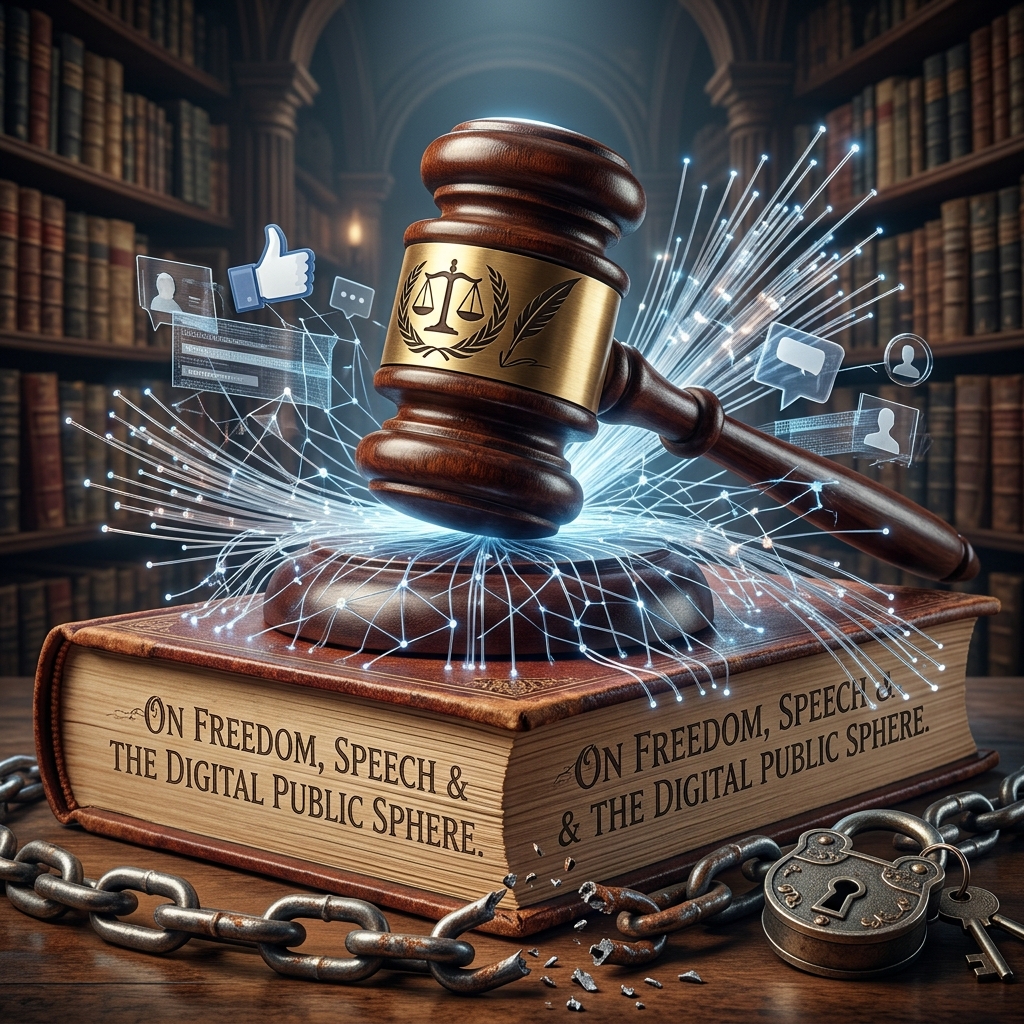
Debates about hate speech on social media combine legal rules, platform policies, and deeper questions about democracy and human rights. Many users assume that any removal of content violates “free speech,” but in most jurisdictions, especially in the United States, the law treats government censorship very differently from decisions made by private platforms.
This article explains how the law regulates hate speech, why social media companies enjoy broad freedom to moderate content, and what ethical and policy choices are involved when platforms decide whether to ban hateful expression.
Understanding Hate Speech in the Online Context
There is no single, universal legal definition of hate speech, but most discussions focus on expression that attacks or demeans people based on protected characteristics such as race, ethnicity, national origin, religion, gender, sexual orientation, disability, or similar traits.
- Identity-based targeting – Speech that singles out individuals or groups because of who they are, not what they believe or do.
- Hostility and dehumanization – Language that portrays groups as less than human, dangerous, or unworthy of equal rights.
- Potential for harm – Hate speech is often linked to discrimination, exclusion, and sometimes violence against targeted communities.
Social media amplifies these risks. Posts can spread rapidly, cross borders, and reach vulnerable audiences, making the question of whether platforms should or can restrict such speech especially pressing.
Free Speech Basics: Government vs. Private Platforms
To understand whether social media sites may ban hate speech, it is essential to separate constitutional free speech rights from private platform rules.
The First Amendment and Government Power
In the United States, the First Amendment limits what the government can do. It generally prohibits public authorities from censoring speech, including speech that is offensive or hateful, unless it falls into a narrow set of exceptions such as incitement to imminent lawless action, true threats, or defamation.
- Government cannot broadly ban hate speech simply because it is offensive or discriminatory.
- Specific exceptions exist for incitement to violence, serious threats of harm, and certain targeted harassment.
- Courts have repeatedly held that hateful expression is protected if it does not cross these lines.
Private Platforms Have Their Own Speech Rights
Social media companies such as Facebook, X (Twitter), YouTube, and TikTok are private entities. They are not legally required to carry all viewpoints, and in fact they have their own expressive rights to decide which messages appear on their services.
- Platforms are generally not bound by the First Amendment in the way governments are.
- Court decisions recognize that forcing platforms to host all speech could violate the platforms’ own free speech rights.
- As private actors, companies can design community standards that prohibit hate speech, misinformation, or other content.
Legally, this means social media sites may ban hate speech if they choose to, without violating users’ constitutional rights in the U.S., because those rights apply primarily against the state, not against private businesses.
Section 230 and Platform Liability
In the United States, a key statute called Section 230 of the Communications Decency Act plays a central role in debates about online speech. It shields platforms from being treated as the publisher or speaker of user content, with some exceptions.
| Aspect | Implication for Hate Speech |
|---|---|
| Liability protection | Platforms are generally not liable for most user-generated content, including hate speech, libel, or other harmful expression posted by users. |
| Moderation “safe harbor” | Section 230 encourages platforms to remove “objectionable” material in good faith without increasing their legal risk, supporting active moderation. |
| Editorial discretion | Companies gain flexibility to set and enforce policies about hateful or abusive content while retaining protection from being sued over individual posts. |
Because of Section 230, social media firms generally face no legal requirement to ban hate speech, but they also have broad legal space to do so if they believe it is necessary. This legal design leaves most decisions about hate speech to platform policy rather than direct government regulation.
Platform Community Standards on Hateful Conduct
Major platforms have developed detailed community standards addressing hateful conduct. These rules go beyond the minimal constitutional requirements and reflect business, ethical, and safety concerns.
For example, Meta (which operates Facebook, Instagram, and Threads) explains that it does not allow hate speech because it creates an environment of intimidation and exclusion and can be linked to offline violence.
- Dehumanizing speech – Comparing people to animals, diseases, or subhuman entities, especially in connection with historical patterns of oppression.
- Allegations of serious immorality or criminality tied to protected characteristics, such as claiming an entire group is inherently criminal or diseased.
- Slurs and serious insults directed at protected groups, including profane expressions of contempt or disgust.
- Calls for exclusion or segregation from civic life, employment, or services based on identity.
These rules show that platforms often choose to draw a stricter line than constitutional law does, aiming not just to avoid legal liability but to reduce harm and foster a sense of safety for users.
International Human Rights Standards and Hate Speech
Outside the U.S. constitutional framework, international human rights law offers another lens. The United Nations emphasizes that responding to hate speech should protect freedom of expression as the norm while preventing serious harm.
- The UN highlights that addressing hate speech is not primarily about banning all offensive speech, but about preventing escalation into incitement to discrimination, hostility, or violence, which is prohibited under international law.
- The Rabat Plan of Action provides guidance on when expression becomes severe enough to justify criminal sanctions, focusing on context, intent, and likelihood of harm.
- States are encouraged to use non-criminal tools, such as education and counter-messaging, for much of the spectrum of hateful expression.
Social media companies increasingly refer to these global standards when drafting policies, especially when operating in jurisdictions that impose stricter limits on hate speech than the United States.
Can Platforms Ban Hate Speech? Legal and Practical Answer
Bringing these elements together, the answer to whether social media sites can ban hate speech is both legally clear and practically complex.
Legal Capacity to Ban Hate Speech
- In the U.S., platforms may ban hate speech as part of their community standards without violating the First Amendment, because they are private actors with their own speech rights.
- Section 230 provides strong protection against liability for user content and encourages moderation, meaning companies can remove hateful posts without increasing their legal risk.
- Internationally, many legal systems allow or even require some restrictions on hate speech, so platforms may be compelled to remove specific categories of unlawful content depending on local law.
Absence of a Legal Duty (in Many Jurisdictions)
- In contrast, most U.S. law does not require platforms to ban hate speech. Legally, they are permitted—but typically not obligated—to act.
- Exceptions arise when speech crosses into illegal threats, harassment, or other criminal conduct, which can trigger legal responsibilities for removal or cooperation with authorities.
Thus, the key question shifts from “Can platforms ban hate speech?” to “How should they exercise the power they clearly have?”
Balancing Free Expression, Safety, and Inclusion
Content moderation decisions require platforms to balance multiple values:
- Free expression – Allowing a wide range of views, including controversial and unpopular opinions, is central to democratic discourse.
- Safety and dignity – Protecting users from harassment, dehumanization, and targeted hostility is important for mental health, participation, and equality.
- Trust and business interests – Advertisers, investors, and users often expect platforms to reduce harmful content to maintain a trustworthy environment.
Overly aggressive moderation can risk deleting legitimate political or artistic expression, particularly for minority or dissenting voices. On the other hand, minimal intervention can allow hate speech to flourish, pushing marginalized users away and undermining public debate.
Typical Tools Platforms Use to Address Hate Speech
Rather than relying on a single strategy, social media companies generally employ a mix of complementary tools.
- Clear policies – Public guidelines defining hateful conduct, providing examples, and explaining enforcement actions.
- Human and automated moderation – Content review teams and algorithms that detect and act on violations, with systems for appeal and review.
- User reporting mechanisms – Tools that allow users to flag hate speech and other policy-violating content for platform review.
- Downranking or warning labels – Measures that reduce visibility of borderline content or attach contextual information.
- Suspensions and bans – Temporary or permanent removal of accounts that repeatedly engage in hateful or abusive behavior.
These tools are constantly evolving. Platforms adjust thresholds, introduce new enforcement categories, and sometimes roll back policies in response to public pressure, regulatory changes, or shifts in political climate.
Global Regulatory Trends
Beyond company policies, regulators in many regions are considering or adopting rules that affect how platforms handle hate speech.
- The European Union and some member states have explored frameworks that require rapid removal of certain illegal content, including incitement to hatred, once platforms are notified.
- These approaches differ from the U.S. model by treating platforms as key actors in enforcing legal limits on harmful speech, sometimes backed by significant fines for non-compliance.
- Debate continues about how to strike a balance between preventing harm and preserving robust political debate online.
As regulatory landscapes change, social media companies must reconcile their global policies with varying national standards, leading to complex, region-specific practices.
FAQs: Hate Speech and Social Media Moderation
Is hate speech always illegal?
No. In the U.S., hate speech is generally protected by the First Amendment unless it qualifies as incitement to imminent lawless action, true threats, or falls within other narrow exceptions. However, private platforms may still choose to ban it under their own rules.
Does removing hate speech violate free speech rights?
When a private platform removes hate speech under its community standards, it usually does not violate constitutional free speech rights, because those rights apply primarily against government censorship. Platforms also have their own rights to decide what content they host.
Why do some platforms allow more offensive content than others?
Different platforms make different choices about how to balance expression, safety, business models, and regulatory pressures. Some emphasize minimal interference; others prioritize reducing harm and protecting vulnerable users, leading to stricter enforcement.
Can governments force platforms to keep all content up?
In the U.S., courts have found that requiring platforms to host all viewpoints can conflict with the platforms’ own First Amendment rights. In other regions, laws may impose certain obligations, but they usually focus on unlawful content rather than forcing companies to carry every lawful message.
What role can users play in addressing hate speech online?
Users can report abusive content, support counter-speech that challenges hateful narratives, and engage in respectful dialogue. The United Nations encourages more positive speech and education as key tools to counter hate rather than relying on censorship alone.
References
- Can We End Hate Speech on Social Media? — Greater Good Science Center, University of California, Berkeley. 2019-06-13. https://greatergood.berkeley.edu/article/item/can_we_end_hate_speech_on_social_media
- How Can Social Media Firms Tackle Hate Speech? — Knowledge at Wharton, University of Pennsylvania. 2018-10-02. https://knowledge.wharton.upenn.edu/podcast/knowledge-at-wharton-podcast/can-social-media-firms-tackle-hate-speech/
- Free Speech on Social Media: The Complete Guide — Freedom Forum. 2023-05-01 (updated). https://www.freedomforum.org/free-speech-on-social-media/
- Hateful Conduct – Community Standards — Meta Transparency Center. 2024-02-20 (updated). https://transparency.meta.com/policies/community-standards/hateful-conduct/
- Free Speech and Social Media: Maintaining the Right Balance — American Public University System. 2022-03-10. https://www.apu.apus.edu/area-of-study/arts-and-humanities/resources/free-speech-and-social-media/
- Hate Speech versus Freedom of Speech — United Nations. 2022-06-01 (updated). https://www.un.org/en/hate-speech/understanding-hate-speech/hate-speech-versus-freedom-of-speech
- Regulating Freedom of Speech on Social Media: Comparing the EU and the U.S. Approach — Stanford Law School. 2020-12-01. https://law.stanford.edu/projects/regulating-freedom-of-speech-on-social-media-comparing-the-eu-and-the-u-s-approach/
Similar Articles








Read full bio of Sneha Tete


