
Can a Will Change After Death in California?
How California courts can correct or reinterpret a will after someone dies, and what that means for families and executors.
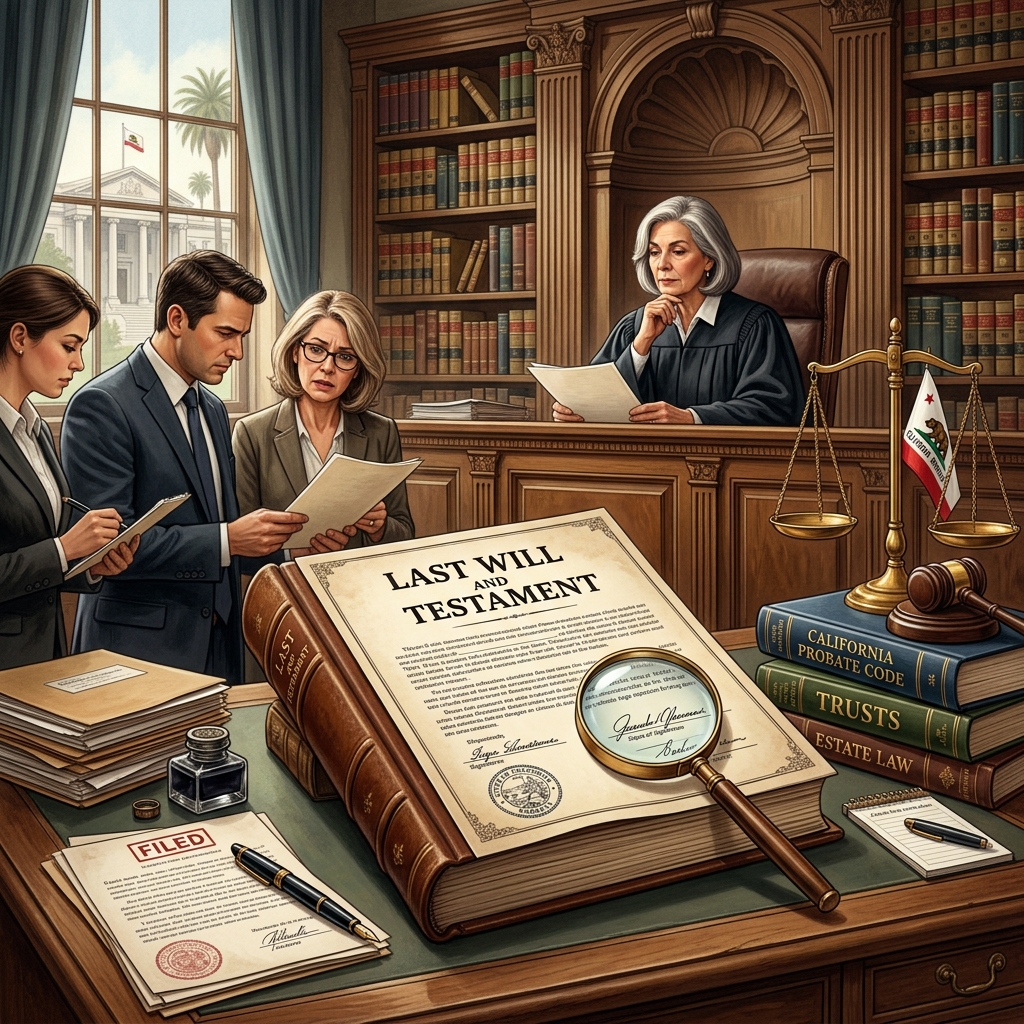
Most people assume that once a person dies, their last will and testament is final and cannot be altered. In California, the reality is more nuanced. While no private individual may simply rewrite a deceased person’s will, courts can, in limited circumstances, reform or interpret the document to correct errors and carry out the decedent’s true intent.
This article explains how California law treats attempts to change a will after death, what legal tools courts use to address mistakes, and how recent trends in trust and estate cases are reshaping the balance between strict formality and honoring a person’s actual wishes.
Key Takeaways at a Glance
- Executors and beneficiaries cannot themselves change a will after the testator (the person who made the will) dies.
- California courts may reform a will in rare cases when there is strong evidence the written document does not reflect the testator’s true intent.
- Probate remains the primary process for validating a will, appointing a personal representative, and distributing assets according to law.
- Trust and estate cases show a trend toward focusing more on probable intent and less on rigid technicalities, especially for trusts.
- Careful planning, clear drafting, and timely updates during life are still the best way to avoid post‑death disputes.
What “Changing a Will After Death” Really Means
When people ask whether a will can be changed after death, they typically have one of three situations in mind:
- A family member wants to adjust who receives what because circumstances have changed.
- Someone believes the will contains a drafting error or typo that clearly conflicts with what the deceased person intended.
- The will is challenged as a whole due to fraud, undue influence, or lack of capacity.
It is crucial to distinguish between these scenarios:
- Voluntary changes by the family: Parties can sometimes agree among themselves to share property differently, but that does not legally “change” the will; it is simply a private arrangement or a settlement of a dispute.
- Judicial reformation: A court may correct or reinterpret a will to fix a proven mistake, while still treating the corrected document as the decedent’s will.
- Will contests: If the will itself is invalid, courts may refuse to enforce it and instead apply prior documents or intestacy rules (the default laws for dying without a valid will).
Who Has Authority Over a Will After Death?
After a person dies, their will is not self‑executing. It must go through the probate process, which is overseen by the California probate court.
The Role of the Executor or Personal Representative
The person nominated in the will to manage the estate is often called an executor; if the court appoints someone where there is no will, that person is usually called an administrator. Both are personal representatives of the estate.
Key duties include:
- Filing the will and petitioning the court to open probate.
- Notifying heirs, beneficiaries, and known creditors.
- Gathering and inventorying estate assets.
- Paying valid debts and taxes.
- Distributing remaining property according to the will or state law.
Critically, the executor’s task is to follow the will as written. They do not have personal authority to change beneficiaries, add new gifts, or disregard provisions that they find unfair.
What the Court Can – and Cannot – Do
The probate court has power to:
- Determine whether the will is valid.
- Interpret ambiguous language.
- Resolve disputes among beneficiaries and heirs.
- In limited situations, correct mistakes through judicial reformation.
The court cannot simply substitute its own opinion about what is “fair” or “reasonable” for the terms of a valid will. Any reformation must be grounded in evidence of the testator’s true intent, not the preferences of the surviving family.
How Wills Are Normally Changed During Life
To understand why post‑death changes are so constrained, it helps to review how Californians are expected to update their estate plans while alive.
Codicils: Formal Amendments to a Will
A codicil is a written amendment that modifies, adds to, or revokes specific provisions in an existing will, while leaving the rest of the will intact. Under California law, codicils must be executed with the same formalities as a will, including proper signing and witnessing.
Typical uses for a codicil include:
- Changing the named executor.
- Updating a specific bequest (for example, leaving a particular asset to a different beneficiary).
- Adding or removing a relatively minor gift.
Executing a New Will
For more substantial changes, attorneys often advise clients to execute an entirely new will that replaces all prior wills and codicils.
A new will commonly includes:
- A clear revocation clause canceling all previous wills and codicils.
- Updated beneficiary designations and distribution plans.
- Revised executor and guardian appointments.
By updating the will during life, the testator minimizes the need for courts to interpret or correct the document later.
Judicial Reformation: Correcting a Will After Death
The core legal development underlying the question “Can a will be amended after death?” is the concept of judicial reformation. This is a court‑ordered correction of a written instrument to align it with the drafter’s actual intent when the document, because of mistake, fails to do so.
Why Courts May Reform a Will
California courts have long interpreted wills to resolve ambiguity, but historically they were reluctant to rewrite clear language, even if it seemed inconsistent with likely intent. Over time, particularly in the context of trusts, courts have shown more willingness to consider extrinsic evidence to prevent obvious injustice caused by drafting errors.
Key reasons courts might consider reformation include:
- A provision that clearly contradicts the testator’s documented instructions to their lawyer.
- An omitted beneficiary when all contemporaneous evidence shows the omission was accidental.
- Mistakes in names, property descriptions, or allocation percentages that make the plan unworkable or illogical.
The High Evidentiary Standard
Because the testator is no longer alive to clarify their wishes, courts impose a high burden of proof before reforming a will. Although specific standards depend on the legal theory raised, courts generally require clear and convincing evidence that:
- The written will contains a mistake of expression (for example, a drafting error or clerical mistake), and
- The testator’s actual intent at the time of execution was different from what the document says.
Evidence might include attorney notes, earlier drafts, correspondence, or consistent statements the testator made to multiple people about how they wanted their estate divided.
Lessons from Modern Trust Cases
Much of the modern shift toward honoring probable intent comes from cases involving revocable living trusts, which often function as will substitutes. In these cases, California courts have allowed amendments that did not strictly track the amendment procedures set out in the trust, so long as the statutory requirements for modification were satisfied and the trustor’s intent was clear.
Flexible Approaches to Trust Amendments
Recent decisions have upheld trust amendments where:
- The trust described one method of amendment but did not clearly make it the exclusive method.
- The trustor used an informal document (for example, a handwritten note or spreadsheet) to change distribution terms.
- The informal document met statutory requirements, such as being signed by the trustor and delivered to the trustee during the trustor’s lifetime.
These cases signal that when the governing instrument does not strictly limit methods of modification, courts will avoid technical traps that frustrate a clearly expressed intent.
Implications for Wills
Although trusts and wills are distinct, they serve similar functions in estate planning. The trend toward valuing substance over form in trust cases supports the idea that courts may be more open to reformation arguments in will disputes, provided there is high‑quality evidence and the requested correction is consistent with established legal principles.
Probate and Post‑Death Changes: How the Process Interacts
Any request to reform a will will typically arise within, or alongside, a probate proceeding. Understanding the basic probate structure helps explain where and how such issues are litigated.
| Stage of Probate | What Happens | Relevance to Will Changes |
|---|---|---|
| Opening the estate | Will is filed, petition for probate is submitted, court considers initial validity. | Potential will contests or reformation claims may be raised. |
| Appointment of representative | Court appoints executor or administrator to manage estate. | Representative must follow will as interpreted by the court, not personal opinion. |
| Administration | Assets are collected, creditors notified, debts and taxes paid. | Disputes about specific gifts, shares, or ambiguities may surface. |
| Distribution and closing | Remaining property distributed and estate closed. | Final court orders reflect any reformation or interpretation rulings. |
Practical Effects on Executors and Beneficiaries
When courts recognize the possibility of reformation, it affects how executors and beneficiaries should approach questionable provisions.
Guidance for Executors
If you are serving as executor or administrator and you discover a potential error or conflict in the will:
- Do not unilaterally “fix” the problem by ignoring the written terms.
- Consult legal counsel and share any documents or communications that indicate possible drafting mistakes.
- Seek court instructions when necessary by filing appropriate petitions and giving notice to interested parties.
- Maintain neutrality among beneficiaries and focus on carrying out the court’s orders.
Guidance for Beneficiaries and Heirs
If you are a beneficiary or heir who believes the will does not reflect what the deceased person truly wanted:
- Gather relevant evidence, such as letters, emails, or prior drafts of estate documents.
- Speak with the attorney who prepared the will, if possible, to understand the drafting history.
- Ask a probate attorney about the feasibility of a reformation petition or other legal challenges.
- Consider negotiation and mediation; many disputes are resolved through agreed‑upon settlements rather than full trials.
Planning Strategies to Avoid Post‑Death Litigation
Even though courts can sometimes correct mistakes, litigation is costly, stressful, and uncertain. Good estate planning aims to reduce the likelihood that anyone will need to ask a court to reform a will after death.
Best Practices for Testators
- Use experienced estate planning counsel. Lawyers with a probate focus are more familiar with California’s formalities and common pitfalls.
- Review your plan regularly. Major life events like marriage, divorce, birth of children, or significant financial changes may warrant a new will or codicil.
- Keep instructions consistent. Avoid creating multiple, conflicting documents (letters, emails, handwritten notes) that could confuse your intent.
- Follow execution requirements. Ensure proper witnesses or notarization where required so that documents are admissible and enforceable.
- Coordinate wills and trusts. If you use both, make sure they work together rather than contradict one another.
Communicating With Family
Transparent communication can be just as important as sound drafting:
- Explain the broad outline of your estate plan to key family members.
- Let your chosen executor or trustee know where to find your documents and how to contact your attorney.
- Consider writing a non‑binding letter of intent to accompany your will or trust, clarifying the reasons for certain decisions.
Frequently Asked Questions
Can an executor in California change the will after death?
No. An executor has a fiduciary duty to carry out the will as written. They cannot legally change beneficiaries or redistribute assets on their own initiative.
Is it ever possible to change how an estate is distributed without changing the will?
Yes, but not by altering the will itself. Beneficiaries may voluntarily agree to share assets differently (for example, through disclaimers or settlement agreements), but the will remains unchanged as a legal document. Any such agreement should be carefully documented and evaluated with legal advice.
What is the difference between reformation and a will contest?
A will contest challenges the validity of the will (for example, alleging undue influence or lack of capacity). If successful, the will may be set aside entirely and replaced by a prior will or intestacy rules. Reformation, by contrast, assumes the will is generally valid but contains a specific mistake that the court corrects.
Does the recent trend in trust cases mean courts will be flexible with all estate documents?
Not automatically. Each case depends on the nature of the document, the statutory requirements, and the quality of the evidence of intent. Trust cases showing more flexibility do, however, reinforce the principle that courts aim to honor genuine intent when the law allows.
How long does probate typically take in California?
While timelines vary, California law generally anticipates that probate will be completed within about a year of the personal representative’s appointment, or up to 18 months when an estate tax return is required. Complex disputes, including reformation or contests, can extend this timeline.
What if there is no will at all?
If someone dies without a will (dies intestate), California’s intestacy statutes determine who inherits. The court appoints an administrator as personal representative, and the estate is distributed according to the default rules, not personal preference. In that situation, there is no will to reform, although other documents (like a trust) may still be relevant.
Summary: Final Words on Post‑Death Changes to Wills
In California, a deceased person’s will cannot simply be re‑written by family members or even by the executor. However, the law recognizes that documents can contain mistakes and that rigid formalism should not always defeat clear intent. Through judicial reformation and careful interpretation, courts can, in appropriate cases, adjust the text of a will so that the final distribution of an estate better matches what the testator truly wanted.
For individuals planning their estates, this underscores two lessons: first, take the time to draft and update your documents correctly; and second, understand that if something does go wrong, the probate court provides a structured forum to address errors and disputes. For families navigating a loved one’s estate, it is essential to separate what the law allows from what might feel fair and to seek qualified legal advice before assuming that a will can—or cannot—be changed after death.
References
- Guide to property after someone dies — California Courts, Self-Help Center. 2023-05-01. https://selfhelp.courts.ca.gov/probate
- Wills, Estates and Trusts – Probate — Superior Court of California, County of Orange. 2022-11-10. https://www.occourts.org/divisions/probate/wills-estates-and-trusts
- Wills, estates, and advance care planning — California Courts, Self-Help Center. 2023-04-15. https://selfhelp.courts.ca.gov/wills-estates-probate/legal-documents
- What You Need to Do to Change a California Will — Frisella Neilson, APC. 2026-01-05. https://frisellalaw.com/blog/2026/01/what-you-need-to-do-to-change-a-california-will/
- Courts Allowing More Flexible Trust Amendments — American Academy of Estate Planning Attorneys. 2024-05-20. https://www.aaepa.com/2024/05/courts-allowing-more-flexible-trust-amendments/
- Can an executor change a will after the testator’s passing in CA? — Justia Ask a Lawyer. 2025-08-13. https://answers.justia.com/question/2025/08/13/can-an-executor-change-a-will-after-the-1072278
Similar Articles








Read full bio of medha deb


