
California’s Police Transparency Shift: Understanding SB 1421 and Beyond
A clear, practical guide to California’s new police transparency regime, public records access, and accountability reforms.
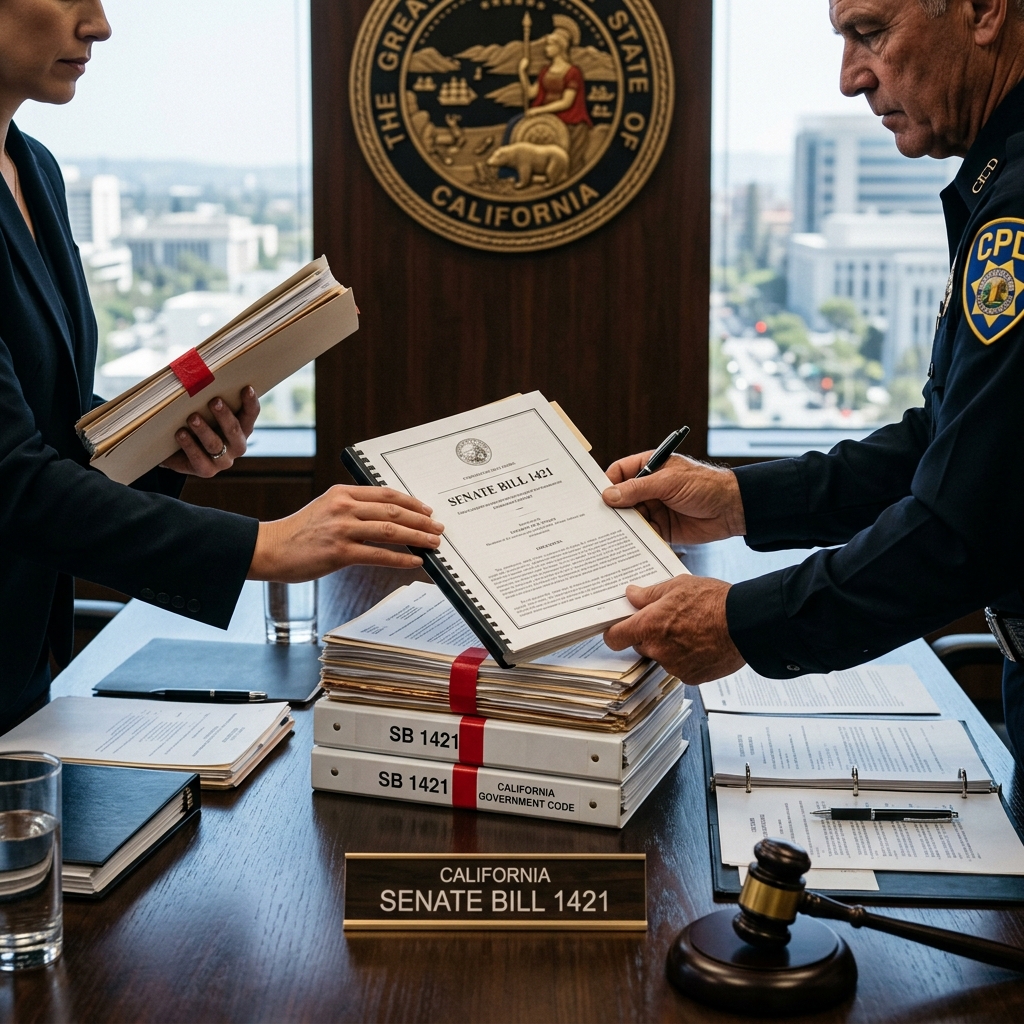
For decades, California kept most police misconduct records sealed from public view. Disciplinary files, findings of excessive force, and internal investigations were often inaccessible even to victims and journalists, leaving communities with limited insight into how serious allegations were handled. Recent reforms, centered on Senate Bill 1421 (SB 1421) and subsequent legislation, have significantly changed that landscape by making key categories of records subject to disclosure under the California Public Records Act (CPRA).
This article offers a comprehensive, original overview of California’s new transparency framework. It explains what kinds of records must be released, how privacy and investigative concerns are balanced, and how these reforms connect to broader efforts to strengthen police accountability, including decertification and complaint procedures.
From Secrecy to Transparency: Why California Changed Course
Historically, California was considered one of the most restrictive states when it came to public access to law enforcement disciplinary records. Statutes and court decisions had created a system where personnel files, internal affairs investigations, and sustained findings were generally confidential. Families of people killed or injured by police, researchers, and news organizations often had to rely on partial information, such as court files or civil settlements, to piece together what happened.
Several developments pushed the state toward reform:
- High-profile incidents of police violence, including controversial shootings and recorded episodes of excessive force, raised public concern about accountability.
- Journalistic investigations and advocacy efforts documented the difficulty of accessing even basic misconduct information, strengthening calls for greater transparency.
- National scrutiny of policing practices, especially after incidents such as the murder of George Floyd, intensified demands for structural change and public oversight.
In this environment, SB 1421 emerged as a landmark statute that opened up defined categories of police records and significantly altered how misconduct information can be obtained.
Core Features of SB 1421: What Must Be Disclosed
SB 1421 amended California law to require disclosure of specified peace officer records when requested under the CPRA. In practical terms, this means that certain types of serious misconduct and use-of-force incidents are now presumptively public, subject to narrow exceptions and redactions.
The law focuses on records relating to:
- Officer-involved shootings and discharges of a firearm at a person.
- Use of force resulting in death or great bodily injury to an individual.
- Sustained findings of sexual assault by a peace officer involving a member of the public.
- Sustained findings of dishonesty by an officer in connection with their official duties, such as perjury or falsifying reports.
These categories reflect a policy judgment that the public has a particularly strong interest in transparency when force is severe or when misconduct undermines the integrity of the justice system.
How the California Public Records Act Applies
The California Public Records Act is the main legal mechanism for accessing government information. SB 1421 did not create a new access system; instead, it carved out exceptions to existing confidentiality rules so that CPRA requests will now reach specified police records.
Under the CPRA framework:
- Any member of the public can request records from law enforcement agencies, including personnel and investigative files covered by SB 1421.
- Agencies must respond within defined timelines, either providing the records, explaining delays, or citing specific legal exemptions.
- If records are withheld, requesters can seek judicial review to test whether the agency’s reliance on an exemption is legally valid.
Protecting Privacy While Releasing Misconduct Records
Although SB 1421 increases transparency, it does not eliminate privacy protections. The statute and related laws recognize that public disclosure must balance accountability with legitimate personal and safety concerns.
Common privacy safeguards include:
- Redaction of personal identifiers for complainants, witnesses, and, in some circumstances, officers.
- Removal of information that would cause an unwarranted invasion of privacy disproportionate to the public interest in disclosure.
- Protection of medical details or sensitive personal information not necessary to understand the nature of the misconduct or use of force.
Agencies must make case-by-case judgments about what can be released. When disputes arise, courts can consider both the statutory requirements and the broader constitutional and policy issues involved.
Audio and Video Evidence: Body Cameras and Use of Force
Alongside SB 1421, California has adopted rules that affect access to audio and video recordings related to serious use-of-force incidents. These rules apply to materials such as body-worn camera footage and other law enforcement recordings that document shootings or uses of deadly force leading to death or serious injury.
Key features include:
- Recordings involving a discharge of a firearm at a person or a deadly use of force must, in many cases, be produced in response to CPRA requests.
- Agencies may delay release if disclosure would interfere with an active investigation, but they must justify and time-limit such delays.
- Redaction is permitted to safeguard privacy, especially for victims or bystanders captured in the footage.
These rules acknowledge the unique evidentiary value of videos and audio: they can provide direct insight into what occurred, but they also raise intense privacy and safety issues.
Beyond SB 1421: Decertification and Serious Misconduct Tracking
Transparency reforms have not stopped with SB 1421. Additional legislation, including SB 2, has reshaped how California monitors and responds to serious police misconduct, focusing on certification and decertification of officers.
Under SB 2, the Commission on Peace Officer Standards and Training (POST) now plays a central role in tracking and acting on serious misconduct allegations:
- Law enforcement agencies must report complaints, charges, and allegations of serious misconduct to POST.
- Agencies must also report when an officer leaves employment, reducing the risk of officers moving quietly to a new agency after serious allegations.
- POST can investigate and decertify officers who have committed certain acts, effectively preventing them from serving as peace officers in California.
What Counts as Serious Misconduct for Decertification?
SB 2 and related provisions define a set of serious misconduct categories that can lead to decertification.
| Misconduct Category | Examples |
|---|---|
| Dishonesty | Perjury, falsifying reports, misleading investigators. |
| Abuse of power | Unlawful arrest, unlawful search, intimidation of witnesses. |
| Physical abuse / excessive force | Unreasonable or excessive force, officer-involved shootings. |
| Sexual assault | Sexual misconduct involving members of the public. |
| Bias or unlawful discrimination | Prejudicial conduct based on protected classifications. |
When POST confirms serious misconduct, it can revoke an officer’s certification or accept a voluntary surrender of certification. Since full implementation of SB 2, POST has received tens of thousands of misconduct allegations, leading to numerous revocations, suspensions, and determinations that certain officers are ineligible to serve.
Public Complaints and the Role of State and Local Agencies
Transparency laws are complemented by procedures that allow members of the public to file complaints against law enforcement officers. California law requires each local agency to maintain a structured process for receiving and investigating such complaints.
According to the Office of the Attorney General:
- Complaints should generally be filed first with the local law enforcement agency, whether the allegation is criminal or non-criminal.
- Agencies must have written procedures that describe how complaints are investigated and resolved.
- If the complaint alleges a crime and is not resolved locally, individuals can contact the county district attorney for further action.
- In cases where local remedies have been exhausted without adequate response, individuals may submit a complaint to the Attorney General’s Office, which reviews substantive allegations for possible investigation.
These pathways intersect with transparency reforms: sustained findings and serious incidents may trigger both internal discipline and the release of records under SB 1421, as well as potential decertification actions under SB 2.
How Agencies Balance Transparency with Operational Needs
In practice, law enforcement agencies must navigate multiple obligations: protecting investigations, respecting privacy, complying with CPRA, and responding to new statutory requirements. Several common challenges arise:
- Timing of disclosures: Agencies may delay release of certain records or recordings if they can show that earlier disclosure would materially interfere with active investigations or prosecutions.
- Scope of redactions: Redaction decisions can be contested, especially when the public believes that essential details have been withheld.
- Administrative capacity: Processing increased record requests, preparing redactions, and coordinating with POST can require substantial resources and legal expertise.
New laws, such as SB 400, further refine how terminations and serious misconduct records can be disclosed, sometimes allowing agencies to proactively release information about officer terminations for specified causes without waiting for a formal CPRA request.
Implications for Communities, Journalists, and Advocates
California’s transparency reforms have practical consequences for a wide range of stakeholders.
- Families and victims can access more detailed information about investigations into incidents that caused injury or death, helping them understand agency decisions and pursue civil or criminal remedies.
- Journalists can conduct more thorough reporting on patterns of force, repeat offenders, and systemic issues, leading to more informed public debate.
- Advocacy groups and researchers can analyze newly available data to evaluate policies, training practices, and racial or geographic disparities in enforcement.
- Law enforcement agencies face pressure to improve investigations and documentation, knowing that serious misconduct findings may become public and can affect certification status.
While these reforms do not resolve all concerns about policing, they provide a clearer window into how serious incidents are handled and create mechanisms for independent scrutiny.
Practical Tips: Using California’s Transparency Tools
Individuals who want to access police misconduct records or pursue complaints can take several practical steps:
- Identify the relevant agency (city police department, county sheriff, or state-level body) involved in the incident.
- Submit a CPRA request specifying the type of records sought, such as officer-involved shooting files or sustained findings of sexual assault or dishonesty.
- Request audio or video recordings if the incident involved use of deadly force or discharge of a firearm, understanding that some delay or redaction may occur.
- Follow complaint procedures laid out by the local agency and, if necessary, escalate to the district attorney or Attorney General when local remedies are exhausted.
- Document communications, including request dates and agency responses, to support any future appeal or legal challenge.
Frequently Asked Questions (FAQs)
1. Does SB 1421 make all police personnel records public?
No. SB 1421 opens access only to specific categories of records: certain shootings and serious uses of force, sustained findings of sexual assault against members of the public, and sustained findings of dishonesty related to official duties. Other personnel files may remain confidential or be subject to different disclosure standards.
2. Can agencies refuse to release records because an investigation is ongoing?
Agencies can delay release of some records and recordings if they demonstrate that disclosure would interfere with an active investigation. However, such delays must be grounded in legal exemptions, and agencies may be required to release the records once the investigative risk has diminished.
3. Are victims’ names and personal details made public?
Not necessarily. Laws and policies allow redaction of complainant and witness information, and agencies must avoid unwarranted invasions of privacy. Agencies often remove or obscure identifying details that are not essential to understanding the incident.
4. How does SB 2 relate to SB 1421?
SB 1421 focuses on record transparency, while SB 2 centers on officer certification and decertification. Together, they help reveal serious misconduct and create consequences by allowing POST to revoke the ability of officers to serve when misconduct is confirmed.
5. Where should I start if I want to file a complaint?
You should begin by filing a complaint with the local law enforcement agency involved, using the procedures required under California Penal Code section 832.5. If the matter is not resolved and involves potential criminal conduct, you can contact the county district attorney and, ultimately, the Attorney General’s Office once local remedies are exhausted.
References
- New California Laws Increase Transparency in Police Misconduct — Wilber Law Offices. 2018-12-01. https://www.wilberlawoffices.com/blog/2018/december/new-california-laws-increase-transparency-in-pol/
- California’s new transparency law increases police visibility and amplifies reporting; state still resisting it — Freedom of the Press Foundation. 2019-04-23. https://freedom.press/issues/californias-new-transparency-law-increases-police-visibility-and-amplifies-reporting-state-still-resisting-it/
- How Is California Handling Allegations of Police Misconduct? — Public Policy Institute of California. 2024-03-27. https://www.ppic.org/blog/how-is-california-handling-allegations-of-police-misconduct/
- California Police Misconduct Laws – All You Need to Know — Greg Peacock Law. 2023-01-10. https://gregpeacocklaw.com/blog/california-police-misconduct-laws/
- Local Law Enforcement Agency Complaints — California Office of the Attorney General. (last updated date not specified). https://oag.ca.gov/police-complaints
Similar Articles








Read full bio of medha deb




