
Breach of Insurance Contract vs. Bad Faith: A Practical Guide
Understand how breach of contract differs from insurance bad faith, what each claim can recover, and when it makes sense to pursue both.
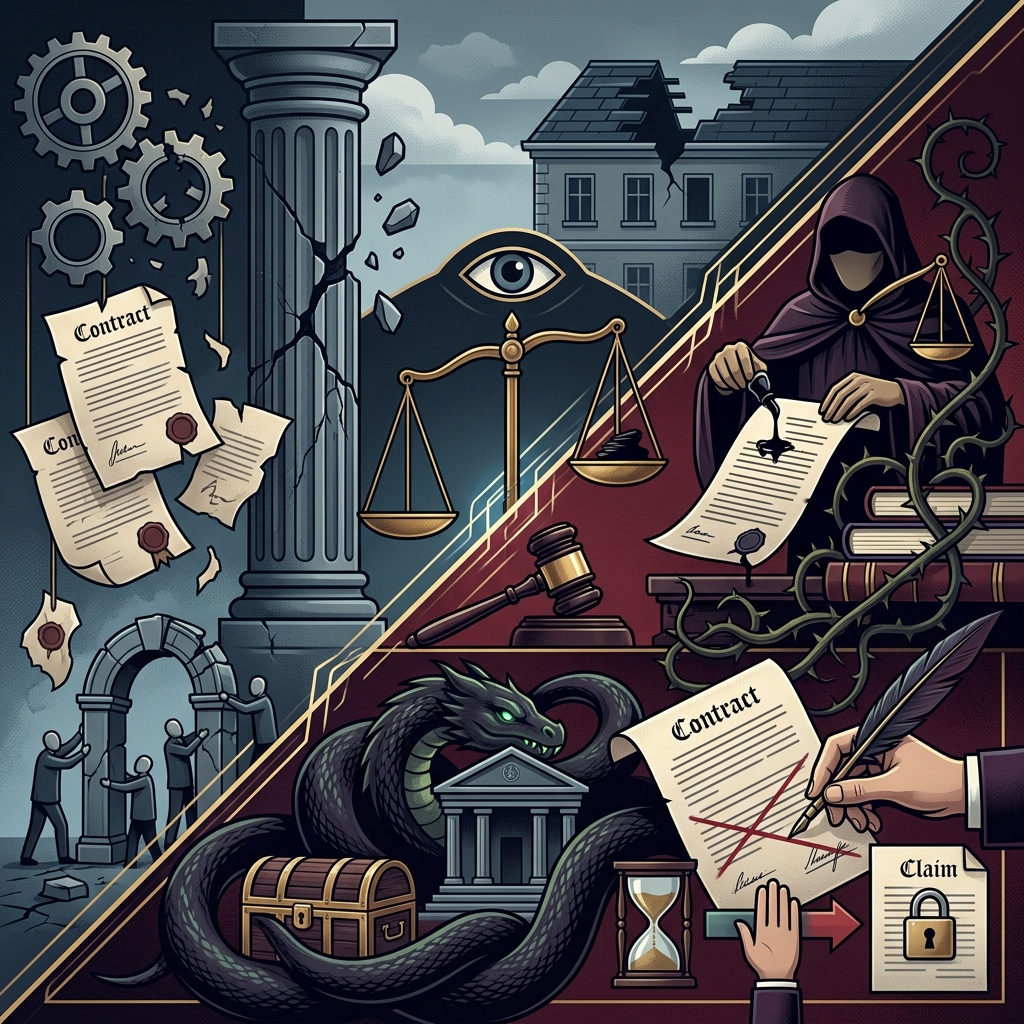
When an insurance company refuses to pay a valid claim, delays payment, or treats you unfairly, you may have more than one legal option. Two of the most important are a breach of contract claim and an insurance bad faith claim. Understanding the difference between them is critical to deciding how to respond, what evidence you need, and what compensation you might recover.
This guide explains in clear, practical terms how contract and bad faith claims work in the insurance context, what each requires, and how they can be used together to protect your rights as a policyholder.
Why the Distinction Matters for Policyholders
Insurance disputes often start the same way: you suffer a loss, submit a claim, and the insurer either denies it, underpays it, or delays unreasonably. The legal path you choose—breach of contract, bad faith, or both—can dramatically affect:
- The scope of damages you can recover (only what the policy promised, or additional compensation and possibly punitive damages).
- The type of wrongdoing you must prove (simple nonperformance versus unreasonable or dishonest conduct).
- The complexity of the case, including the evidence, experts, and litigation strategy needed.
- Leverage in settlement negotiations, since bad faith exposure can increase the insurer’s risk substantially.
Many policyholder lawsuits include both theories: breach of contract for failing to pay as promised, and bad faith for the way the insurer handled the claim.
Core Concepts: What Each Claim Really Means
Breach of Insurance Contract: Enforcing the Written Deal
An insurance policy is a contract. A breach of contract occurs when one party fails to perform a specific obligation created by that written agreement. In the insurance context, examples include:
- Refusing to pay benefits that are clearly covered by the policy.
- Paying less than the amount required under the policy terms.
- Failing to defend you in a lawsuit when the policy provides a duty to defend.
- Ignoring time limits or conditions expressly stated in the policy.
With a contract claim, the focus is on whether the insurer complied with the policy language. The typical remedy is to obtain the benefit of the bargain—the money or defense the insurer promised, plus any consequential damages allowed under contract law.
Insurance Bad Faith: Violating the Duty of Good Faith and Fair Dealing
Every insurance contract carries an implied covenant of good faith and fair dealing—a legal duty requiring the insurer to act honestly, reasonably, and in good faith toward its policyholder. Bad faith arises when the insurer’s conduct goes beyond a simple mistake and crosses into unreasonable or oppressive behavior, such as:
- Undue delay in investigating or paying a claim.
- Adopting an unreasonable interpretation of policy language solely to avoid payment.
- Lowballing valid claims or refusing to make a fair settlement offer when liability is clear.
- Misrepresenting facts or coverage to discourage you from pursuing benefits.
- Failing to respond, investigate, or explain decisions in a timely, transparent way.
In many U.S. jurisdictions, insurance bad faith is treated as a tort—a civil wrong separate from the underlying contract breach. Because of that classification, the available damages can be significantly broader than in a pure contract action.
Side‑by‑Side Comparison: Breach of Contract vs. Bad Faith
| Feature | Breach of Insurance Contract | Insurance Bad Faith |
|---|---|---|
| Legal nature | Contract claim based on written policy obligations. | Tort claim based on violation of the implied covenant of good faith and fair dealing. |
| Primary focus | Did the insurer perform the specific promises in the policy? | Was the insurer’s conduct in handling the claim unreasonable, dishonest, or oppressive? |
| Typical damages | Unpaid policy benefits and limited consequential damages. | Policy benefits, extra‑contractual damages (e.g., emotional distress, economic loss), and potentially punitive damages. |
| Evidentiary standard | Usually preponderance of the evidence (more likely than not). | In many states, clear and convincing evidence of unreasonable conduct or malice. |
| Public policy role | Enforces the contract; focused on compensating the insured. | Deters abusive claim practices and punishes egregious misconduct. |
What You Must Prove in Each Type of Claim
Elements of a Breach of Insurance Contract Claim
Though details vary by state, a typical breach of contract claim in the insurance setting requires the policyholder to show:
- Existence of a valid policy providing coverage for the type of loss suffered.
- Compliance with policy conditions, such as notice requirements and cooperation in the investigation.
- Breach by the insurer, such as refusal to defend, delay in payment, or denial of covered benefits.
- Resulting damages, including unpaid benefits and, where allowed, foreseeable consequential losses.
In many states, if you cannot show that coverage existed in the first place, you typically cannot succeed on a bad faith claim, because there is no underlying obligation the insurer failed to honor.
Elements of an Insurance Bad Faith Claim
To establish bad faith, policyholders generally must prove more than just an incorrect coverage decision. Courts often require proof that:
- The insurer lacked a reasonable basis for denying, delaying, or underpaying the claim.
- The insurer knew or recklessly disregarded the fact that its position was unreasonable.
- The insurer’s conduct violated its duty of good faith and fair dealing, harming the policyholder beyond the mere nonpayment of benefits.
Some jurisdictions require a showing of intent or malice for punitive damages, while others allow negligence accompanied by unfair practices to suffice for bad faith liability.
Examples of Conduct That May Indicate Bad Faith
Courts and statutes have identified numerous practices that may qualify as bad faith, especially when part of a broader pattern of unreasonable behavior. Common red flags include:
- Unreasonable claim denials without adequate factual or legal support.
- Failure to investigate the claim thoroughly or promptly.
- Prolonged delays in approving or denying a claim after necessary information has been submitted.
- Low settlement offers that ignore clear evidence of the claim’s value.
- Misrepresentation of policy terms to discourage claim submission or continuation.
- Lack of communication, such as ignoring inquiries or failing to explain a denial.
- Coercive tactics, like threatening the insured or advising them not to seek legal counsel.
Not every mistake or disagreement equals bad faith. Insurers are permitted to contest doubtful claims. The key question is whether they acted reasonably and in good faith while exploring and resolving the dispute.
Damages: What You Can Recover Under Each Theory
Damages in Breach of Contract Claims
Contract law is largely compensatory. In a basic breach of insurance contract action, available damages tend to focus on:
- Unpaid policy benefits—the amount the insurer should have paid under the policy.
- Prejudgment interest on overdue amounts, where permitted.
- Limited consequential damages for losses that were reasonably foreseeable at the time of contracting, subject to traditional constraints (e.g., principles derived from cases like Hadley v. Baxendale).
Punitive damages are generally not available for ordinary breach of contract claims as a matter of public policy.
Damages in Bad Faith Claims
Because bad faith is treated as a tort, the damages picture changes substantially. Depending on the jurisdiction, a successful bad faith claim may allow recovery of:
- Contract damages (the same benefits owed under the policy).
- Extra‑contractual damages, including emotional distress, additional economic loss, and other harms proximately caused by the insurer’s misconduct.
- Attorney’s fees for work required to obtain policy benefits, in some states, especially where statutes or case law authorize fee-shifting.
- Punitive damages designed to punish and deter egregious behavior, subject to different multipliers or caps depending on state law.
In certain situations, if an insurer fails in bad faith to defend or settle a claim, it may be held liable for the entire amount of a judgment against the policyholder, even when that amount exceeds the policy limits. This potential exposure underscores why insurers have a powerful incentive to handle claims fairly.
How State Law Differences Affect Your Options
Bad faith law is largely state‑specific. While many states recognize insurance bad faith as a tort, the details—including damage caps, evidentiary standards, and available remedies—vary widely. For example:
- Some states allow treble damages (three times actual damages) under certain bad faith statutes.
- Others permit punitive awards up to a multiple of compensatory damages, subject to constitutional limits on excessive punishments.
- Certain jurisdictions emphasize statutory remedies, while others rely primarily on judicially created common‑law standards.
Because of these variations, analysis of a bad faith claim almost always requires advice from a lawyer familiar with the law of the state where the policy was issued and the claim arose.
Strategic Considerations: When to Assert Bad Faith Alongside Breach of Contract
Policyholders and their attorneys often consider both breach of contract and bad faith theories in the same lawsuit. Some strategic factors include:
- Severity of the insurer’s conduct: Routine claim disputes may support only a contract claim; systemic delay, misrepresentation, or coercion may justify bad faith allegations.
- Impact on the policyholder: If the insurer’s behavior caused significant financial or emotional harm beyond unpaid benefits, extra‑contractual damages through bad faith may be important.
- Settlement leverage: The possibility of punitive damages and broader liability can encourage insurers to negotiate more seriously.
- Proof issues: Bad faith claims require detailed evidence about the insurer’s internal decision‑making, including claim handling guidelines, communications, and investigation methods.
It is also important to recognize that alleging bad faith does not automatically convert every denied claim into a tort case. Courts frequently dismiss bad faith counts where the dispute amounts to an honest, reasonable disagreement over coverage.
Protecting Yourself: Practical Steps for Policyholders
Whether you are pursuing breach of contract, bad faith, or simply trying to avoid litigation, good documentation and proactive communication can make a significant difference. Consider the following:
- Preserve all written materials: Keep copies of your policy, endorsements, claim forms, letters, emails, and any explanations of benefits.
- Maintain a claim diary: Record dates, names, and summaries of every phone call or conversation with the insurer.
- Respond promptly to information requests: Provide requested documents and cooperate with reasonable investigations.
- Ask for written explanations: If a claim is delayed, underpaid, or denied, request a clear written explanation of the reasons.
- Consult legal counsel early: An attorney experienced in insurance disputes can help evaluate whether the facts support only a contract claim or also bad faith.
Common Misconceptions About Bad Faith and Contract Claims
- “Every denial is bad faith.” In reality, insurers can lawfully deny claims that are not covered or are reasonably disputed. Bad faith requires proof of unreasonable or dishonest conduct.
- “You must win the contract claim to have bad faith.” Many states require underlying coverage, but some recognize bad faith based on handling of defense or settlement duties even when coverage debates remain complex.
- “Bad faith automatically means huge punitive damages.” Punitive awards depend on jurisdiction, evidence of malice or oppression, and judicial scrutiny, and they are far from guaranteed.
- “Bad faith only helps in large commercial claims.” Bad faith doctrines protect individual consumers as well, particularly in areas like health, disability, auto, and homeowners’ insurance.
FAQs About Breach of Contract and Insurance Bad Faith
1. Can I sue for both breach of contract and bad faith at the same time?
In many jurisdictions, yes. Policyholders often assert a breach of contract claim for unpaid benefits and a bad faith claim for the insurer’s handling of the claim. The court will evaluate each theory separately based on the evidence and applicable law.
2. Do I need clear evidence of dishonesty to prove bad faith?
Not always. While intentional deception can support bad faith, many courts focus on whether the insurer lacked a reasonable basis for its decisions and whether it knew or recklessly ignored that lack of reasonableness. The standard is often framed as unreasonable conduct rather than outright fraud.
3. Is a simple delay in paying a claim enough to constitute bad faith?
A short delay with good cause usually is not bad faith. However, prolonged or unexplained delays, especially after the insurer has sufficient information, can be evidence of bad faith when combined with other unfair practices such as poor communication or lowball offers.
4. Why are punitive damages more available in bad faith cases than in contract cases?
Because bad faith is treated as a tort in many states, it fits within the category of wrongs for which punitive damages are allowed to deter and punish egregious misconduct. By contrast, public policy generally bars punitive damages for ordinary breaches of contract, which are viewed as economic disputes over promises rather than moral wrongs.
5. What should I do if I believe my insurer is acting in bad faith?
Document every interaction, request written explanations, and consider consulting a lawyer experienced in insurance disputes. An attorney can help assess whether the facts support merely a contract claim or rise to the level of bad faith, and can advise you on the specific remedies available under your state’s law.
References
- Insurance bad faith — Various courts and secondary analysis summarized. 2023-01-01. https://en.wikipedia.org/wiki/Insurance_bad_faith
- The Difference Between Bad Faith and Breach of Contract in Pennsylvania Insurance Cases — Lenahan & Dempsey, P.C. 2022-05-10. https://www.lenahandempsey.com/bad-faith-vs-breach-of-contract-in-pennsylvania-insurance-cases/
- How Do You Win a Bad Faith Lawsuit? — Kantor & Kantor, LLP. 2023-03-15. https://www.kantorlaw.net/how-do-you-win-a-bad-faith-lawsuit/
- What Does “Bad Faith” Mean in a Contract? — Green Mistretta Law. 2021-11-08. https://greenmistrettalaw.com/what-does-bad-faith-mean-in-a-contract/
- Insurance Bad Faith — Kabateck LLP. 2022-09-20. https://www.kbklawyers.com/practice-areas/insurance/insurance-bad-faith/
Similar Articles








Read full bio of Sneha Tete




