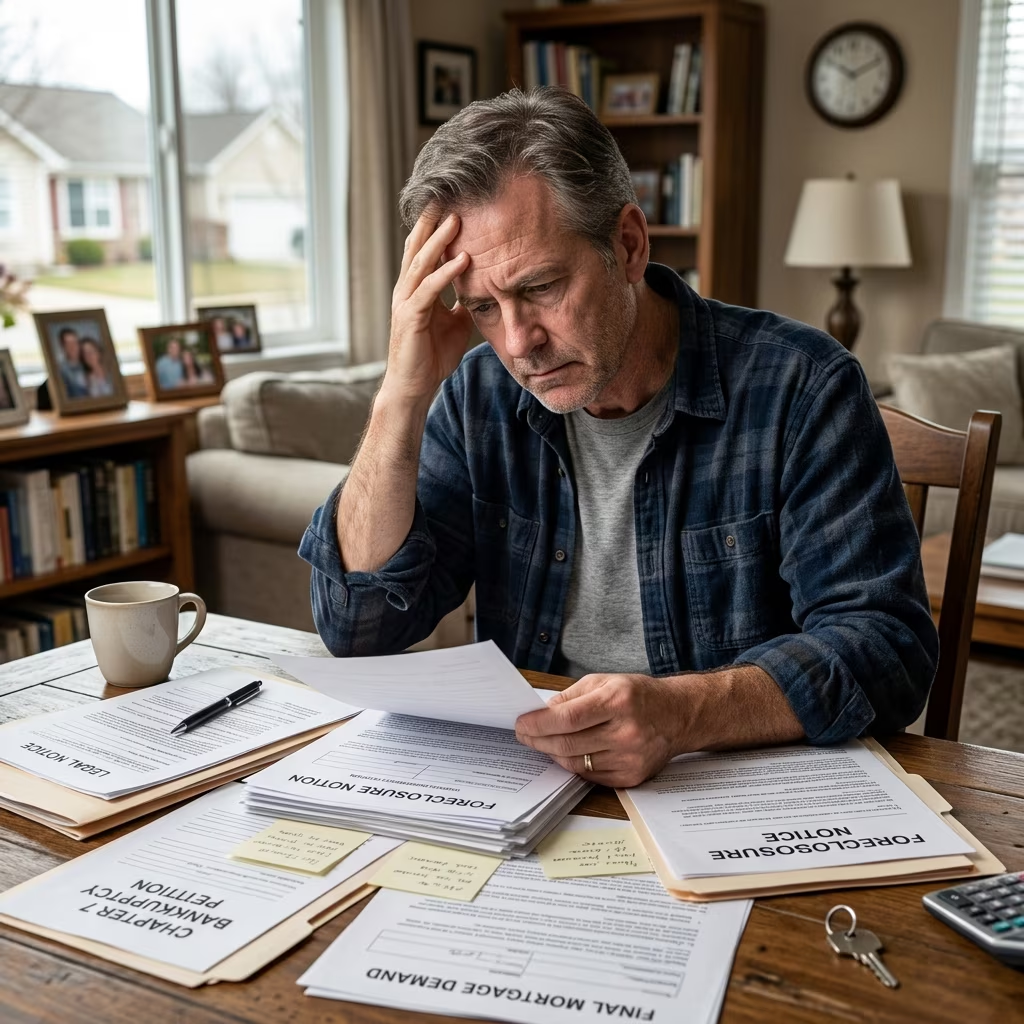
Facing the possibility of losing your home is emotionally and financially overwhelming. When mortgage payments fall behind and foreclosure threatens, many people consider bankruptcy as a way to buy time or save their property. Understanding how these two legal processes interact is critical before you make any major decision.
This guide explains, in clear terms, how bankruptcy affects foreclosure, what the automatic stay does, key differences between Chapter 7 and Chapter 13, and how these choices can shape your financial life for years. It is educational in nature and not a substitute for individualized legal advice.
1. Foreclosure and Bankruptcy: Two Separate Legal Processes
Although foreclosure and bankruptcy often occur around the same time, they are governed by different laws and handled in different courts.
Foreclosure is the process a mortgage lender uses to take and sell a property after the homeowner stops making payments. The goal is for the lender to recover as much of the unpaid loan as possible. Depending on the state, foreclosure may be handled through the court system (judicial foreclosure) or primarily through legal notices and sale procedures (non‑judicial foreclosure).
Bankruptcy, on the other hand, is a federal court process designed to help people and businesses who cannot pay their debts. It can either wipe out certain debts or reorganize them into a payment plan. Bankruptcy does not automatically cancel your mortgage or guarantee that you will keep your house. Instead, it reshapes your overall debt situation and temporarily limits collection efforts.
- Foreclosure focuses on one debt: your mortgage, backed by your home as collateral.
- Bankruptcy addresses many debts at once (credit cards, medical bills, personal loans, sometimes tax debts), under federal law.
- The foreclosure case may proceed in state court, while the bankruptcy case is handled in federal bankruptcy court.
Because these are separate, a foreclosure can move forward before, during, or after a bankruptcy depending on timing, type of bankruptcy, and court orders.
2. The Automatic Stay: Why Filing Can Pause Foreclosure
One of the most powerful features of bankruptcy is the automatic stay. This is a court‑ordered protection that goes into effect immediately when you file your bankruptcy petition.
The automatic stay generally prohibits creditors from continuing collection actions, including:
- Starting or continuing foreclosure proceedings on your home
- Sending collection letters or making collection phone calls
- Garnishing wages or bank accounts
- Filing or continuing certain lawsuits to collect debts
For homeowners, the immediate effect is often a temporary halt of foreclosure activity. This pause can provide critical time to:
- Evaluate options for keeping or surrendering the home
- Negotiate with the lender
- Organize a repayment strategy in Chapter 13
- Plan a move if saving the home is not realistic
However, the automatic stay is not a permanent solution. Mortgage lenders can ask the bankruptcy court to lift the stay if you are not making payments or do not have a viable plan to catch up on arrears. If the judge grants this request, the lender may resume foreclosure while the bankruptcy case is still active.
3. Chapter 7 vs. Chapter 13: Different Paths, Different Outcomes
In consumer bankruptcy, the two most commonly used chapters are Chapter 7 and Chapter 13. They treat your debts and your home differently, which strongly affects what happens with foreclosure.
| Feature | Chapter 7 Bankruptcy | Chapter 13 Bankruptcy |
|---|---|---|
| Basic purpose | Liquidation and discharge of many debts | Repayment plan over 3–5 years |
| Effect on foreclosure | Usually pauses foreclosure, but rarely stops it permanently | Can halt foreclosure and allow cure of missed payments over time |
| Keeping the home | You must stay current and catch up arrears quickly, often outside bankruptcy | Structured plan to catch up on arrears while keeping the home, if affordable |
| Length on credit report | Up to 10 years from filing date | Typically 7 years from filing date |
| Best suited for | Unsecured debt relief when home is not realistically savable | Homeowners with steady income who want and can afford to keep their house |
3.1 Chapter 7: Short‑Term Relief, Limited Home Protection
Chapter 7 is often called liquidation bankruptcy. The court may sell non‑exempt assets to pay creditors, and most remaining eligible debts are discharged, meaning you no longer owe them.
Regarding foreclosure, Chapter 7 typically:
- Triggers the automatic stay and stops foreclosure activity for a limited time
- Does not provide a structured way to catch up on past‑due mortgage payments
- May end with the lender continuing foreclosure if payments and arrears are not fully brought current
Importantly, even if Chapter 7 discharges your personal responsibility for the mortgage debt, the lender still has a lien on the property and can foreclose to recover the house. This means:
- You may no longer be personally liable for the mortgage balance after discharge.
- The bank can still take and sell the home to satisfy the secured debt.
Chapter 7 can be useful for homeowners who:
- Can no longer afford the property and plan to move anyway
- Need time to arrange new housing
- Want to eliminate other unsecured debts to ease the financial burden
3.2 Chapter 13: A Tool to Save Your Home
Chapter 13, often called a wage earner’s plan, is designed for individuals with regular income who can afford to repay part or all of their debts over three to five years. One of its key advantages is the ability to structure a plan to cure mortgage delinquencies.
When you file Chapter 13:
- The automatic stay stops foreclosure immediately.
- You propose a repayment plan that includes catching up on past‑due mortgage amounts over the life of the plan.
- You continue to make current mortgage payments going forward while also paying amounts toward arrears.
If you successfully complete the plan and stay current on ongoing mortgage obligations, Chapter 13 can permanently prevent foreclosure and allow you to keep your home. This makes it especially valuable for homeowners who fell behind due to temporary hardship but now have stable income.
However, Chapter 13 requires discipline and realistic budgeting. If you miss plan payments or new mortgage payments, the lender may seek permission to continue foreclosure, or the case may be dismissed.
4. Will Bankruptcy Really Stop Foreclosure? What It Can and Cannot Do
Bankruptcy interacts with foreclosure in complex ways. It is helpful to distinguish what it can do from what it cannot do.
4.1 What Bankruptcy Can Do About Foreclosure
- Temporarily halt foreclosure through the automatic stay once you file.
- Provide a long‑term cure mechanism for mortgage arrears through a Chapter 13 repayment plan.
- Eliminate many unsecured debts (such as credit cards and medical bills), freeing up income that can be used for housing costs.
- Stop wage garnishments and certain judgments, which may improve your ability to pay ongoing mortgage payments.
4.2 What Bankruptcy Cannot Do
- It does not automatically erase your mortgage or guarantee that you can stay in the home.
- It cannot permanently stop foreclosure if you cannot afford payments even with a Chapter 13 plan.
- It does not discharge certain debts, such as child support, alimony, and some taxes, which still must be paid.
- It cannot force a lender to modify your loan terms beyond what bankruptcy law allows; negotiations may still be necessary.
In practice, bankruptcy is most successful at preventing foreclosure when:
- You have a realistic plan to catch up on missed payments.
- Your income is steady enough to support ongoing mortgage payments plus plan obligations.
- You act early, before the foreclosure sale date is too close.
5. Long‑Term Credit Impact and Future Homeownership
Whether you choose bankruptcy, foreclosure, or both occur, the consequences for your credit and ability to buy another home are significant.
A Chapter 7 bankruptcy can remain on your credit report for up to 10 years from the date of filing, while a Chapter 13 bankruptcy usually appears for around 7 years. A foreclosure is also typically reported for about 7 years.
During the first several years after a bankruptcy or foreclosure, many people experience:
- Difficulty qualifying for new mortgages or major loans
- Higher interest rates if credit is approved
- Reduced access to certain types of credit cards or lines of credit
That said, it is possible to rebuild credit over time. Consistently paying bills on time, keeping balances low relative to available credit, and avoiding new delinquencies can gradually improve your credit profile. Lenders often look at both your score and your recent financial behavior when considering future home loans.
6. Practical Considerations Before You File
Before deciding to file bankruptcy to address foreclosure, take time to examine your overall situation. Consider the following questions:
- Do you truly want to keep the home? Emotional attachment is important, but the property also needs to be financially sustainable.
- Can you afford the mortgage going forward? If your income has permanently decreased, keeping the home may not be realistic.
- Are there other significant debts? Large unsecured debts can make bankruptcy more useful, as it addresses multiple problems at once.
- Is Chapter 13 feasible? Do you have regular income and a budget that allows for both current payments and arrears over three to five years?
- Have you explored non‑bankruptcy options? Such as loan modifications, repayment plans with the lender, selling the home, or seeking housing counseling.
Because state laws and individual circumstances vary widely, speaking with a qualified attorney or housing counselor can help you understand your rights and options before you file.
7. Frequently Asked Questions
Q1: If I file bankruptcy, will the bank instantly stop the foreclosure?
In most cases, the foreclosure process must stop as soon as the bankruptcy is filed because of the automatic stay. However, the lender may later ask the bankruptcy court to lift the stay if you cannot make payments or cure arrears.
Q2: Can Chapter 7 bankruptcy permanently save my home?
Generally, Chapter 7 only pauses foreclosure. If you remain behind on mortgage payments and have no plan to catch up, the lender can resume foreclosure after the case or if the court lifts the stay.
Q3: How can Chapter 13 help me keep my house?
Under Chapter 13, you propose a repayment plan that includes paying off past‑due amounts over three to five years while keeping up with current payments. If you complete this plan successfully, you can often avoid foreclosure permanently.
Q4: Will bankruptcy erase child support or alimony, freeing up money for my mortgage?
No. Domestic support obligations like child support and alimony are not discharged in bankruptcy and must be paid in full. These ongoing obligations should be factored into your budget when assessing whether you can afford a Chapter 13 plan.
Q5: Can I buy another home after bankruptcy and foreclosure?
It is possible, but lenders may require you to wait several years and demonstrate improved credit behavior before approving a new mortgage. The exact waiting period depends on the lender, loan type, and your overall financial profile.
Q6: Does bankruptcy affect only my mortgage?
No. Bankruptcy addresses many types of debts at once, including credit cards, medical bills, and some other obligations. Foreclosure, by contrast, specifically concerns your mortgage and home.
8. Key Takeaways for Homeowners
- Bankruptcy and foreclosure are separate legal processes, but they often intersect when mortgage payments are past due.
- The automatic stay provides powerful, but usually temporary, protection from foreclosure.
- Chapter 7 can pause foreclosure and discharge many debts but rarely saves a home long‑term unless you can quickly become current.
- Chapter 13 offers a structured way to catch up on mortgage arrears and may allow you to keep your home if the plan is affordable and completed.
- Both bankruptcy and foreclosure have serious credit and long‑term financial consequences, but may also offer a path toward a more sustainable future.
Careful planning, honest evaluation of your finances, and professional guidance can help you choose the option that best aligns with your goals—whether that is saving your home, relocating, or obtaining broader debt relief.
References
- Chapter 13 – Bankruptcy Basics — United States Courts. 2023-01-01. https://www.uscourts.gov/court-programs/bankruptcy/bankruptcy-basics/chapter-13-bankruptcy-basics
- Bankruptcy in New York — Legal Assistance of Western New York. 2023-01-01. https://www.lawny.org/page/80/bankruptcy-new-york
- Does Bankruptcy Stop Foreclosure? — Experian. 2023-06-05. https://www.experian.com/blogs/ask-experian/does-bankruptcy-stop-foreclosure/
- Frequently Asked Questions About Chapter 7 Bankruptcy and Home — LawHelp.org DC. 2022-01-01. https://www.lawhelp.org/dc/resource/frequently-asked-questions-about-chapter-7-ba
- Considering Foreclosure and Bankruptcy — University of Wisconsin-Madison Extension. 2022-01-01. https://finances.extension.wisc.edu/articles/considering-foreclosure-and-bankruptcy/
- Bankruptcy: What It Is, How It Works, & Types — Debt.org. 2023-01-01. https://www.debt.org/bankruptcy/
- A Chapter 13 Bankruptcy May Stop a Foreclosure Permanently — National Consumer Law Center. 2021-01-01. https://library.nclc.org/book/surviving-debt/chapter-13-bankruptcy-may-stop-foreclosure-permanently