
Autonomous Vehicle Crashes: Key Legal Insights
Unraveling liability, safety stats, and claims in self-driving car accidents for informed protection.
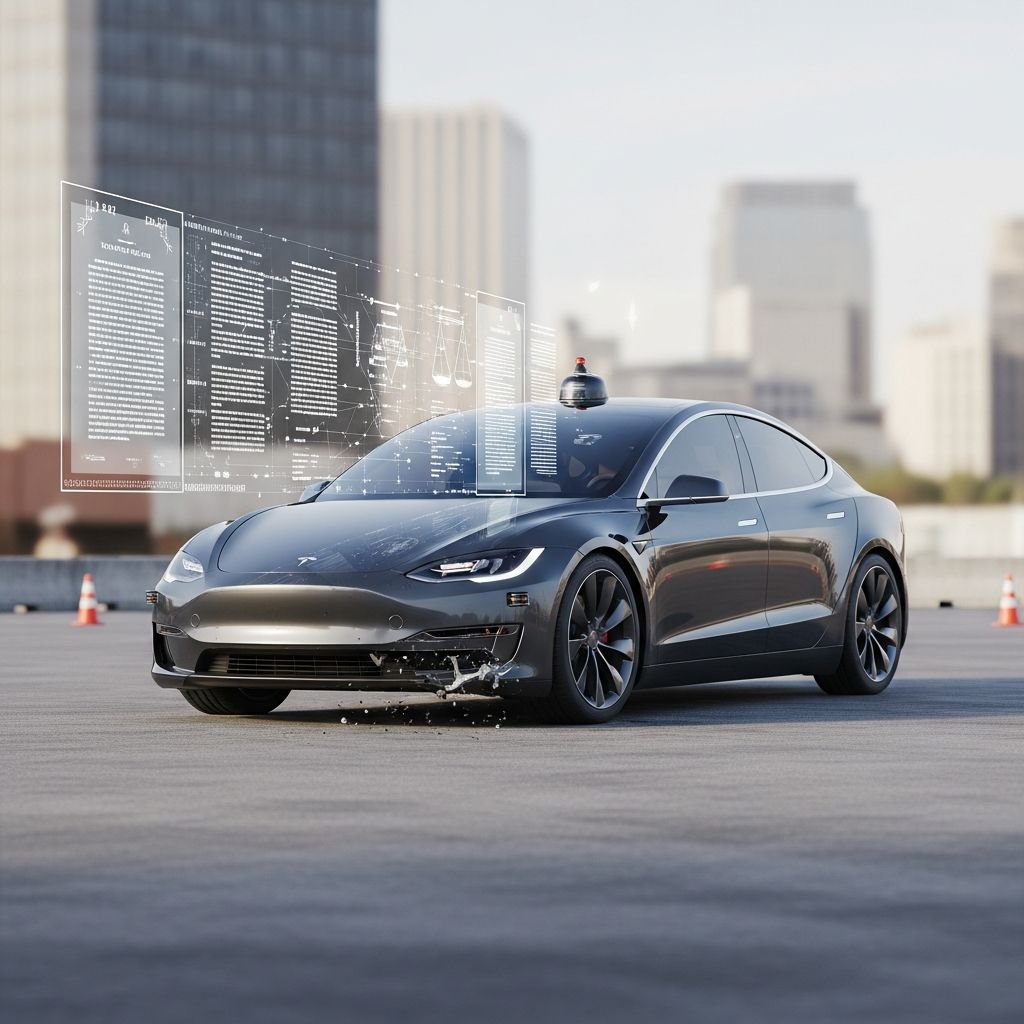
Autonomous vehicles, equipped with advanced sensors and artificial intelligence, are transforming roadways but also introducing novel legal challenges when accidents occur. As deployment expands, understanding crash dynamics, fault attribution, and recovery options becomes essential for drivers, passengers, and pedestrians alike.
Understanding Autonomous Driving Technology Levels
Self-driving cars operate across a spectrum of automation levels defined by the Society of Automotive Engineers (SAE). Level 0 offers no automation, relying entirely on human control. Level 1 provides basic assistance like adaptive cruise control. Level 2, common in many modern vehicles, combines steering and acceleration but demands constant human supervision. Levels 3 and 4 allow conditional or high automation in specific environments, with Level 5 representing full autonomy without human input. Currently, no consumer vehicles reach Level 5, meaning a human operator remains legally responsible in most scenarios.
This hierarchy influences accident investigations. For instance, in Level 2 systems like Tesla’s Autopilot, overreliance by drivers often leads to human-error classifications, complicating claims.
Current Statistics on Self-Driving Car Incidents
Federal data from the National Highway Traffic Safety Administration (NHTSA) reveals a rising trend in crashes involving automated driving systems (ADS). In 2023, incidents peaked in summer months, with 52 reported in August alone. By 2024, monthly figures fluctuated between 22 and 84. Early 2025 data showed even higher volumes, up to 110 in May and at least 72 in June. In Arizona, Waymo vehicles logged 202 crashes from 2021 to 2024, including 31 injury cases.
These numbers reflect increased adoption rather than inherent danger. NHTSA emphasizes that greater mileage logged by ADS-equipped fleets naturally yields more reported events. However, investigations highlight persistent issues like sensor misreads in adverse weather or complex urban settings.
Primary Causes Behind Autonomous Vehicle Collisions
Accidents stem from both technological shortcomings and human factors. Sensor failures—such as lidar or radar misinterpreting distances—rank high, especially in fog, rain, or glare. Software glitches, including algorithmic errors in decision-making, can delay responses to pedestrians or erratic drivers. Advanced Driver Assistance Systems (ADAS) contribute when drivers become distracted, failing to intervene promptly.
- Sensor Malfunctions: Inaccurate detection of obstacles or road conditions.
- Software Bugs: Flawed programming leading to incorrect maneuvers.
- Human Overreliance: Distracted operators neglecting oversight duties.
- Environmental Challenges: Poor performance in low visibility or construction zones.
- Mapping Errors: Outdated digital maps causing navigation issues.
These factors often intersect, requiring forensic analysis of vehicle data logs to pinpoint responsibility.
Navigating Liability in Self-Driving Car Accidents
Determining fault diverges from traditional cases. No single “driver” exists in fully autonomous modes, shifting focus to multiple parties. Human operators bear primary responsibility in semi-autonomous setups if they ignore alerts or misuse features. Manufacturers face scrutiny for defective designs, inadequate testing, or misleading safety claims.
| Party | Potential Liability | Examples |
|---|---|---|
| Human Operator | Failure to monitor or intervene | Ignoring system warnings, distraction |
| Vehicle Manufacturer | Design or manufacturing defects | Faulty sensors, software flaws |
| Software Developer | Algorithmic errors | Decision-making bugs |
| Operator Company (e.g., Waymo) | Operational negligence | Poor maintenance, fleet mismanagement |
| Maintenance Provider | Inadequate servicing | Missed updates or calibrations |
States like Nebraska mandate $5 million insurance for test vehicles and require minimal risk conditions during failures. Traditional negligence rules apply, but product liability claims against tech firms are rising.
Common Injuries from Autonomous Vehicle Crashes
Injuries mirror conventional accidents but amplify due to high speeds and unexpected system behaviors. Whiplash from sudden stops, fractures from impacts, concussions, and spinal trauma are prevalent among occupants. Pedestrians risk severe outcomes like traumatic brain injuries or internal bleeding if detection fails.
- Soft tissue damage (whiplash, strains)
- Orthopedic injuries (broken bones)
- Neurological harm (concussions, TBIs)
- Spinal cord damage
- Fatalities in high-impact scenarios
Airbags and seatbelts mitigate some harm, but algorithmic delays can exacerbate severity. Victims often face long-term rehabilitation and lost wages.
Immediate Steps After an Autonomous Vehicle Collision
Prompt action preserves evidence and rights. Prioritize safety and health:
- Check for injuries and seek medical care immediately, even if symptoms are delayed.
- Move vehicles to safety if possible and activate hazard lights.
- Contact police to file a report; note the autonomous status.
- Document the scene: photos of damage, positions, road conditions, and vehicle identifiers.
- Exchange info with involved parties; for driverless cars, locate fleet operator contacts via decals or apps.
- Avoid admitting fault or discussing details with insurers prematurely.
- Consult a specialized attorney to analyze black box data and pursue claims.
These steps ensure comprehensive records for investigations.
Insurance and Compensation Challenges
Current policies often fall short for ADS crashes. Human-operated insurance covers operator negligence, while commercial fleets like Cruise carry robust policies. Victims may file under product liability for manufacturer defects, seeking damages for medical bills, lost income, pain, and punitive awards. NHTSA stresses ongoing evolution in coverage standards.
Multi-party litigation can yield higher settlements but demands expert reconstruction of events, including software audits.
Regulatory Landscape and Future Outlook
NHTSA oversees ADS safety, mandating incident reporting and promoting uniform standards. States vary: some permit testing with safeguards, others lag. As Level 4/5 vehicles emerge, laws will adapt, potentially creating no-fault systems or federal frameworks. Challenges persist in cybersecurity, ethical decision-making, and international harmonization.
Innovation promises fewer human-error crashes (94% of incidents), but rigorous validation is key.
Frequently Asked Questions About Self-Driving Car Accidents
Are self-driving cars safer than traditional vehicles?
Early data suggests potential for reduced crashes by eliminating human error, but current incidents reflect deployment scale. Long-term safety depends on tech maturity.
Who pays if an autonomous car hits a pedestrian?
The operating company or manufacturer typically assumes liability in driverless modes, subject to defect investigations.
Can I sue Tesla after an Autopilot crash?
Yes, if evidence shows design flaws or inadequate warnings; driver inattention may share blame.
How do investigators determine fault?
They review telemetry data, cameras, sensors, and witness accounts to assess system performance versus expectations.
Will insurance rates change with autonomous cars?
Likely, with shifts toward manufacturer-backed policies as autonomy advances.
This article spans emerging realities of autonomous transport, empowering readers with knowledge for an evolving automotive landscape. (Word count: 1782)
References
- Automated Vehicle Safety — NHTSA. 2025. https://www.nhtsa.gov/vehicle-safety/automated-vehicles-safety
- How Often Do Self-Driving Cars Crash — Lytal, Reiter, Smith, Ivey & Fronrath. 2025-06. https://www.foryourrights.com/faqs/how-often-do-self-driving-cars-crash/
- Self-Driving Car Accident: What Drivers and Pedestrians Should Know — Brad Johnson Injury Law. 2025. https://bradjohnsoninjurylaw.com/blog/self-driving-car-accident-what-drivers-and-pedestrians-should-know/
- Self-Driving Car Accidents — Law Office of Matthew A. Lathrop, PC, LLO. 2025. https://www.lathroplawomaha.com/blog/self-driving-car-accidents.cfm
- Who May Be Responsible for Car Accidents Involving Self-Driving Vehicles — JD Supra. 2025. https://www.jdsupra.com/legalnews/who-may-be-responsible-for-car-3736450/
- Why Are Self-Driving Cars Dangerous? — DLG Team. 2025. https://www.dlgteam.com/blog/why-are-self-driving-cars-dangerous/
- Crashes involving self-driving cars raise questions — InvestigateTV (YouTube). 2024. https://www.youtube.com/watch?v=G8acCloVn7c
Similar Articles








Read full bio of medha deb




