
Are Online Will Templates Legal in South Dakota?
Learn when an online will template is valid in South Dakota, and why careful drafting and proper execution are critical to protect your estate.
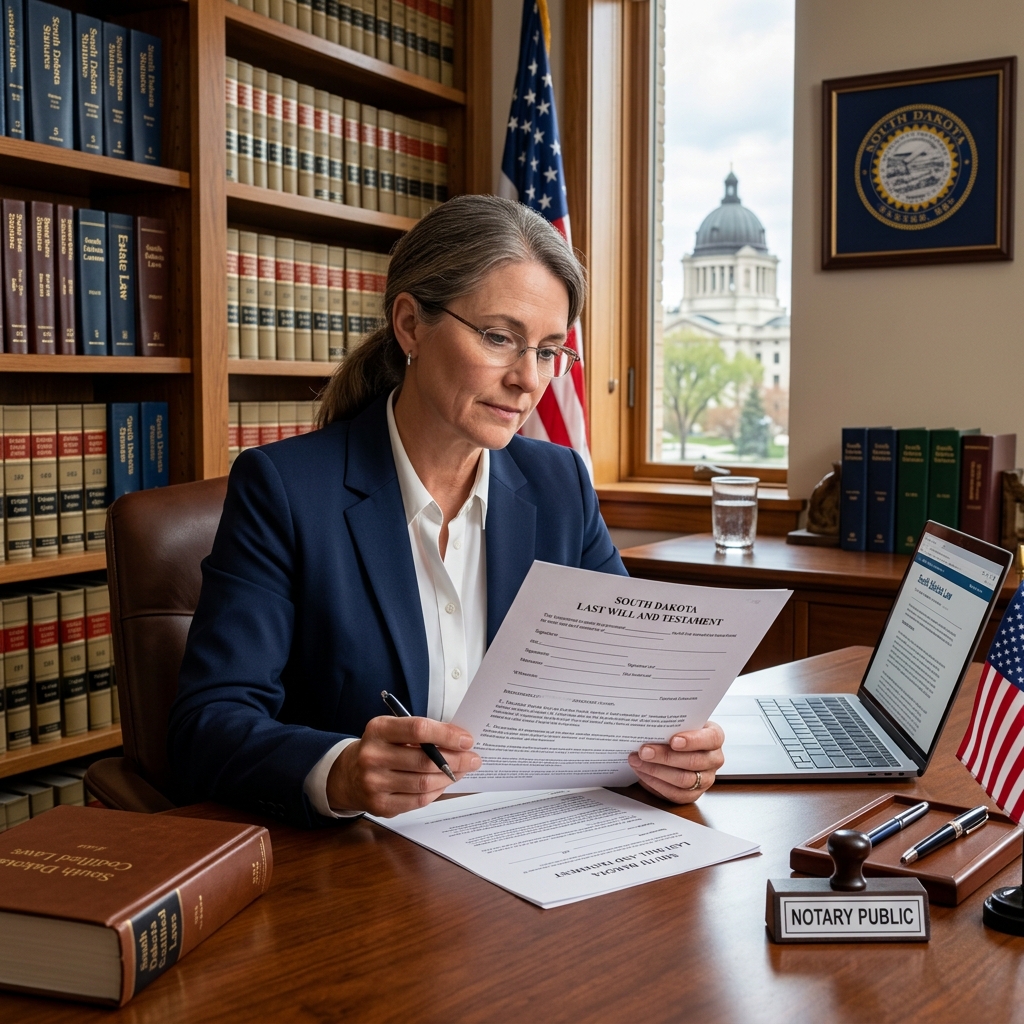
Online legal tools have made it far easier for South Dakota residents to draft basic estate planning documents on their own. Many people now wonder if using an online will template is enough to create a legally valid last will and testament in the state. The short answer is that a will created with an online form can be legal in South Dakota if it meets all state law requirements, but relying on a generic template carries significant risks that many users do not fully appreciate.
This article explains how South Dakota law treats do-it-yourself wills, what formal rules must be followed, where online templates tend to fall short, and how you can decide whether a DIY approach is appropriate for your situation.
South Dakota Law: Can You Make Your Own Will?
South Dakota does not require you to hire a lawyer or use any particular form to create a will. There is no official state-approved or statutory will template, and individuals have broad flexibility to write their own documents as long as they comply with basic legal rules.
In other words, a will that you draft using a computer program, a website, or even a handwritten document may be valid so long as it satisfies South Dakota’s formal requirements for wills and reflects your intent about what should happen to your property after death.
Who Can Make a Will in South Dakota?
- Minimum age: You must be at least 18 years old.
- Sound mind: You must be mentally capable of understanding the nature of your property, the people who might inherit from you, and the effect of signing a will.
- Voluntary decision: The will must reflect your own choices, free from coercion or undue influence.
If any of these elements are missing, the will can be challenged and potentially invalidated in probate court.
Core Legal Requirements for a Valid Will
Regardless of whether you use an online template or work with an attorney, the will must comply with South Dakota’s statutory rules. These rules are designed to create reliable evidence of your intent and reduce disputes among heirs.
Writing and Signature Rules
- Written document: South Dakota wills must be in writing. Typed documents are standard, though handwritten wills (known as holographic wills) may be recognized in limited circumstances when all requirements are met.
- Testator’s signature: You, as the person making the will (the testator), must sign the document, or you may direct someone else to sign in your presence at your direction.
Witness Requirements
- Two witnesses: At least two competent witnesses must sign the will in the presence of the testator.
- Competent witnesses: A competent witness is someone who could testify in court—typically an adult who understands what they are witnessing.
- Disinterested witnesses recommended: Although a witness who inherits under your will is not automatically disqualified, using such an “interested witness” can invite challenges based on undue influence. Neutral witnesses are strongly preferred.
Notarization and Self-Proving Affidavits
South Dakota law does not require your will to be notarized to be valid. However, you may add a self-proving affidavit, which is a sworn statement signed by you and your witnesses in front of a notary attesting that the will was properly executed.
- Benefit of a self-proving affidavit: This can streamline probate because your witnesses may not need to testify later about the circumstances of signing the will.
- Optional but useful: Many online will platforms include self-proving affidavit forms because they add an extra layer of reliability.
Online Will Templates: Why They Are Legal but Risky
Because South Dakota allows individuals to draft their own wills and does not mandate any official form, online templates are generally permissible sources for a will’s language. However, the fact that a template is legally usable does not mean it is the best choice for every estate.
How Online Templates Usually Work
Most online will tools ask you to answer a series of questions, then automatically generate a document based on your responses. Common input fields include:
- Your full legal name and address
- Your marital status and spouse’s name
- Names of children and other beneficiaries
- Lists of real estate, financial accounts, and personal property
- Selection of a personal representative (executor)
- Any specific gifts or charitable bequests
Once completed, the site provides a printable document that you must sign and witness according to South Dakota law. The platform itself typically does not handle signing or witnessing for you, so you remain responsible for final execution.
Key Advantages of Online Will Templates
- Cost savings: Templates are often significantly cheaper than hiring a private attorney for a full estate plan.
- Convenience: You can complete the form from home at your own pace and update it as your circumstances change.
- Basic guidance: Many tools provide simple explanations of terms and prompts that ensure you consider common estate planning issues.
Common Limitations and Hidden Risks
Despite those advantages, there are several reasons why a generic online will may not be sufficient for your situation:
- One-size-fits-all language: Templates are designed for broad use and may not address specific South Dakota rules, particularly around spousal rights and homestead property.
- Complex estates: If you own business interests, multiple properties, or have blended family members, you may need customized provisions that go beyond what a standard form can handle.
- Tax and creditor issues: Online tools rarely provide detailed advice about minimizing estate taxes or addressing creditor claims, leaving potential problems for your heirs to solve.
- Execution errors: Many DIY wills fail not because the language is wrong, but because the document was not properly signed or witnessed under state law.
- Ambiguous wording: Vague or poorly drafted clauses can lead to disputes, delays in probate, or unintended distributions.
South Dakota-Specific Issues Online Wills May Miss
South Dakota has several legal rules that can override or complicate the terms of a do-it-yourself will. Understanding these issues is essential before relying solely on an online template.
Spousal Rights and Disinheritance
Generally, you cannot simply disinherit your spouse in South Dakota without complying with specific legal procedures. State law provides surviving spouses with certain rights to an elective share of the estate, even when the will attempts to leave them little or nothing.
- If you try to cut your spouse out of the will using a basic template, your plan may be partially invalid.
- Pre-marital or post-marital agreements may be needed if you intend to alter spousal inheritance substantially.
Holographic and Unusual Wills
South Dakota recognizes handwritten wills and some unusual testamentary documents only in limited contexts. If you modify an online will by hand, or partially rely on handwritten instructions, you could unintentionally create a hybrid document that is difficult for a court to interpret.
Probate Process and Practical Challenges
Even when a DIY will is valid, someone still must navigate the probate process. A personal representative must file the will with the appropriate court, notify heirs and creditors, inventory assets, pay debts and taxes, and distribute property according to your instructions.
Vague or incomplete provisions in a template-based will can make the personal representative’s job much harder and increase legal fees later, offsetting the initial savings of the DIY approach.
Online Template vs. Attorney-Drafted Will: A Comparison
| Feature | Online Template | Attorney-Drafted Will |
|---|---|---|
| Cost | Low upfront cost, often flat fee | Higher initial cost, may vary with complexity |
| Customization | Limited to standard options and clauses | Highly customized to your family, assets, and goals |
| Legal advice | General information only; no tailored advice | Specific legal guidance, including tax and creditor issues |
| State-law precision | May not fully reflect South Dakota nuances | Drafted with detailed knowledge of South Dakota law |
| Risk of invalid execution | Higher, because user must manage signing and witnesses | Lower, as attorneys typically supervise execution |
| Support for complex estates | Generally designed for simple scenarios | Can address business interests, trusts, and special needs planning |
When a DIY Online Will Might Be Reasonable
Despite their limitations, online templates may be suitable for some South Dakota residents, particularly when the estate and family structure are relatively simple.
Situations Where Templates May Work
- You have modest assets, such as a bank account, vehicle, and household items.
- You are in a long-term, stable marriage and intend to leave everything to your spouse and then to your children.
- You do not own a business, rental properties, or complex investments.
- There are no estranged or contentious family relationships likely to challenge the will.
Even in these cases, it is crucial to follow South Dakota’s formal requirements carefully and consider whether a brief consultation with an attorney would be worthwhile to spot potential problems.
Best Practices for Using Online Will Templates in South Dakota
If you decide to use a template, treat it as a tool, not as complete legal advice. The following practices can help you reduce risk and improve the reliability of your will.
1. Choose a Reputable Provider
- Look for platforms that specifically mention compliance with South Dakota law.
- Prefer services that provide clear instructions for execution and optional self-proving affidavits.
2. Carefully Review and Customize the Language
- Ensure that beneficiary names, property descriptions, and percentages are accurate.
- Avoid vague terms such as “most of my property” without clarifying which assets are included.
- Add specific instructions for items that may have sentimental or high financial value.
3. Follow Execution Rules Strictly
- Print the final will and sign it in the presence of two competent witnesses.
- Have the witnesses sign immediately after you, in your presence.
- Consider using disinterested witnesses who are not beneficiaries.
- If provided, complete a self-proving affidavit and have it notarized.
4. Store the Will Safely
- Keep the original signed document in a secure but accessible location.
- Tell your personal representative and key family members where the will is stored.
- Avoid sealing it in a safety deposit box that others cannot access without court approval.
5. Revisit and Update Regularly
- Review your will after major life events, such as marriage, divorce, birth of a child, or significant changes in assets.
- Use the same or a new template to create updated versions, following execution rules each time.
- Destroy or clearly mark older versions so there is no confusion about which document is your current will.
When You Should Strongly Consider Hiring an Attorney
While DIY tools can be helpful, certain situations almost always benefit from professional legal guidance. South Dakota residents should seriously consider working with an estate planning attorney when any of the following apply:
- You own a business or have complex investment holdings.
- You are in a second marriage or blended family with children from different relationships.
- You want to set up trusts for minor children, relatives with disabilities, or long-term tax planning.
- Significant charitable giving is part of your estate plan.
- You are concerned about potential disputes among heirs or challenges to the will.
An attorney can ensure that your will integrates properly with other estate planning documents, such as trusts, powers of attorney, and living wills, which South Dakota also regulates.
Frequently Asked Questions (FAQ)
Is an online will automatically valid in South Dakota?
No. An online will is only valid if it meets South Dakota’s legal requirements for age, capacity, writing, signature, and witnesses. The origin of the template does not by itself determine legality.
Do I need a notary for my will?
Notarization is not required for a will to be valid in South Dakota. However, a notarized self-proving affidavit attached to the will can simplify probate by reducing the need for witness testimony.
Can I disinherit a child using an online will?
In general, you may choose not to leave property to an adult child, but careful drafting is important to avoid ambiguity and potential challenges. A lawyer can help ensure your intentions are clearly expressed.
What happens if my online will is poorly drafted?
If the language is unclear or conflicts with South Dakota law, the probate court may interpret the document in ways you did not intend, or parts of it may be deemed invalid. This can result in property being distributed under intestate succession rules instead.
Is there a standard form I must use in South Dakota?
No. South Dakota does not provide a statutory will form, and you may create your own will or use an online template, as long as it complies with the legal requirements for validity.
References
- Wills — South Dakota Office of Attorney General. 2023-02-01. https://atg.sd.gov/victim/seniors/wills.aspx
- WILLS-TRUSTS-LIVING WILLS — South Dakota Consumer Protection, SD.gov. 2022-06-15. https://consumer.sd.gov/docs/WillsTrustLivingWills.pdf
- How to Make a Will in South Dakota FAQ — FindLaw. 2024-01-10. https://www.findlaw.com/forms/resources/estate-planning/last-will-and-testament/how-to-make-a-will-in-south-dakota-faq.html
- Free South Dakota Last Will and Testament Form — Do Your Own Will. 2023-05-01. https://www.doyourownwill.com/templates/last-will/sd/
- Free South Dakota Last Will and Testament Template — eSign. 2023-09-20. https://esign.com/last-will-and-testament/sd/
- Free South Dakota Living Will Template — Rocket Lawyer. 2024-03-05. https://www.rocketlawyer.com/family-and-personal/health-and-medical/healthcare-decisions/document/living-will/sd
Similar Articles








Read full bio of Sneha Tete


