New Year’s Eve is one of the busiest nights of the year for alcohol-related enforcement, and many drivers wonder whether police can legally set up sobriety checkpoints during holiday celebrations. In most states that allow them, DUI checkpoints are lawful if officers follow specific constitutional rules and use neutral procedures rather than stopping vehicles at random.
The short answer is that holiday checkpoints are generally legal where state law permits them, but they are not free-form roadblocks. Police agencies must plan them in advance, use fair stopping methods, and keep the intrusion on drivers as limited as possible.
What a DUI Checkpoint Is Designed to Do
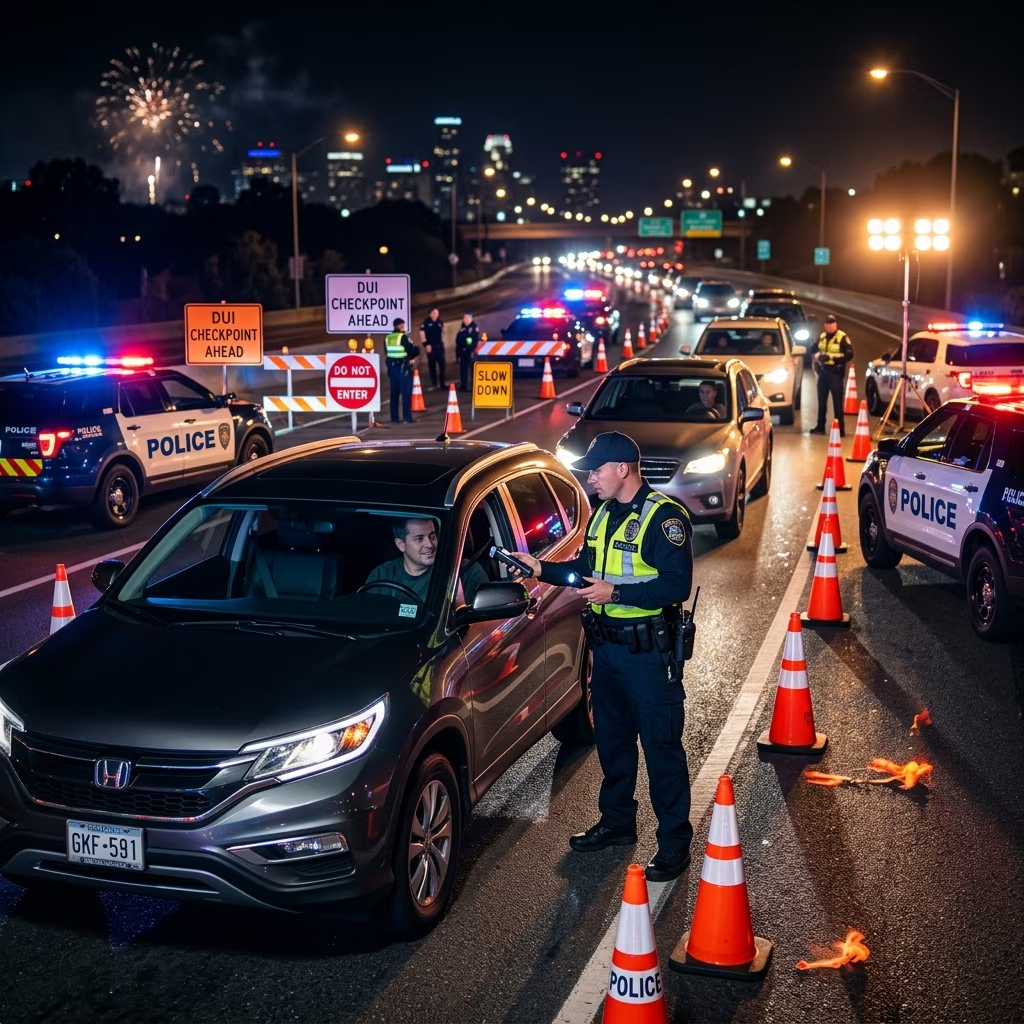
A DUI checkpoint, sometimes called a sobriety checkpoint or DWI checkpoint, is a temporary roadblock where officers briefly screen drivers for signs of impairment. The main goal is not only to catch impaired drivers, but also to discourage people from driving after drinking by increasing the visible risk of enforcement.
These operations usually rely on a predetermined pattern, such as stopping every vehicle or every third vehicle. That approach is important because it helps ensure that officers are not choosing cars based on appearance, personal judgment, or bias.
Law enforcement agencies often place checkpoints on nights when alcohol use is more likely, including New Year’s Eve, major sports events, and other holidays. The timing is strategic: public holidays can bring heavier traffic, more social gatherings, and a greater chance that drivers will have consumed alcohol or drugs.
Why Holiday Checkpoints Raise Legal Questions
Checkpoint stops differ from ordinary traffic stops because police do not need individualized reasonable suspicion before briefly stopping each vehicle. That makes them politically and constitutionally sensitive, since the Fourth Amendment generally protects people from unreasonable searches and seizures.
Court decisions and state rules have shaped the limits of these stops. The constitutional concern is not whether a checkpoint exists, but whether the government has balanced public safety against the privacy rights of drivers in a way that is fair and minimally intrusive.
That is why the legality of a holiday checkpoint often turns on the details: who approved it, how vehicles were selected, whether the site was visible, and whether the stop was brief.
When a Checkpoint Is Usually Considered Lawful
In states that authorize sobriety checkpoints, police departments generally must follow a neutral and structured process. The sources reviewed consistently describe several common legal safeguards: supervisory approval, a neutral stopping formula, advance notice or visible signs in some jurisdictions, and safety precautions such as lighting and clear warning markers.
New York sources, for example, explain that a checkpoint must stop drivers for only a reasonable time, use a predetermined pattern, and provide proper safety measures. New Jersey sources similarly describe requirements such as supervisory authorization, neutral stopping criteria, and clear signage and lighting.
NHTSA also emphasizes that checkpoints work best when they are highly visible, publicly known, and regularly used as part of an ongoing enforcement program. That visibility is part of the legal and practical design: it helps deter impaired driving while reducing the sense of arbitrary enforcement.
Where the Law Varies by State
Not every state treats sobriety checkpoints the same way. FindLaw reports that checkpoints are legal in 38 states plus Washington, D.C., while 12 states either prohibit them or do not use them. That means the first question is not just whether it is New Year’s Eve, but whether checkpoint enforcement is permitted in the state where you are driving.
Even in states that allow checkpoints, local procedures can differ. Some states require more formal notice than others, some require specific public announcements, and some place stricter limits on how officers may conduct the stop.
Because state law matters so much, a checkpoint that is lawful in one jurisdiction may be improper in another. Drivers should assume that the rules depend on the state, not just the holiday or the police department’s stated purpose.
What Drivers Are Usually Required to Do
At a lawful checkpoint, drivers are generally required to stop when directed and provide standard identification documents if asked. Sources reviewed identify the usual documents as a driver’s license, registration, and proof of insurance.
Drivers are not usually required to volunteer a conversation about where they were, whether they had been drinking, or what they were doing earlier in the evening. Silence alone is not the same thing as resistance, and it does not automatically create probable cause.
If officers observe signs of impairment, they may expand the encounter and investigate further. That can include asking a driver to step out of the vehicle or requesting additional testing depending on state law and the facts observed.
What You Do Not Have to Offer Voluntarily
A checkpoint stop does not give police unlimited authority. In general, drivers do not have to consent to a vehicle search without a warrant, consent, or probable cause. They also do not have to make unnecessary statements that could be used later in a criminal case.
Several sources note that motorists may decline to answer questions about drinking, and in many states they may also decline field sobriety tests, although refusing those tests can still have legal consequences under implied-consent rules or other state-specific laws. That distinction matters: the right to remain silent is not the same as immunity from administrative penalties.
If a driver is arrested, chemical testing rules may change. Some states make post-arrest breath or blood testing mandatory under implied-consent laws, and refusal can trigger license-related penalties. Those consequences are highly state dependent.
Can You Legally Avoid a Checkpoint?
In many states, a driver may lawfully turn away from a checkpoint if the maneuver is completed without breaking any traffic law. Avoidance by itself is not necessarily enough to justify a stop.
However, if the driver makes an illegal turn, fails to signal, speeds, or otherwise commits a traffic infraction while avoiding the roadblock, officers may have a separate basis to stop the vehicle. In other words, the act of avoiding the checkpoint may be lawful, but the manner of avoidance still matters.
For that reason, the safest approach is to obey all traffic rules. An otherwise legal decision to drive away from a checkpoint can turn into a valid traffic stop if the driver makes a mistake while leaving the area.
How Officers Keep Checkpoints Constitutionally Fair
Courts and enforcement guidelines emphasize fairness and predictability. A checkpoint that gives individual officers too much discretion can raise constitutional concerns, because it begins to look like arbitrary policing rather than a structured public-safety measure.
That is why a neutral formula is so important. When police stop every vehicle or follow a fixed pattern, the process is easier to defend as evenhanded and less intrusive.
Safety measures also matter. Visible signage, adequate lighting, and clear lane management help protect both motorists and officers while signaling that the checkpoint is official and not a surprise seizure.
Why Authorities Use Checkpoints on New Year’s Eve
New Year’s Eve is associated with late-night celebrations, alcohol consumption, and increased impaired-driving risk. That makes it a logical time for police to increase visible enforcement efforts.
NHTSA describes sobriety checkpoints as a deterrence tool as much as an enforcement tool. They are intended to change behavior before a crash happens by making the consequences of impaired driving more immediate and visible.
Research cited by NHTSA reports that checkpoints have been associated with reductions in alcohol-related fatal crashes and other alcohol-related crashes. Those findings are one reason many police departments view them as a valuable holiday safety measure.
What to Do If You Are Stopped
If you encounter a checkpoint, the best approach is to remain calm, follow instructions, and keep your responses brief. Cooperative behavior does not mean giving up your rights; it means avoiding unnecessary escalation.
Practical steps include the following:
- Stop when directed and keep your hands visible.
- Provide your license, registration, and proof of insurance if requested.
- Avoid volunteering information about alcohol use.
- Do not argue with officers at the scene.
- Ask for legal advice later if you believe the stop was improper.
These simple actions can help reduce confusion and preserve your ability to challenge the stop later if needed.
When a DUI Checkpoint May Be Challenged
A checkpoint stop may be challenged if it failed to follow the state’s rules or constitutional limits. Examples can include random officer selection, missing signage, unsafe placement, excessive delay, or the absence of required supervisory planning.
Another issue is whether the checkpoint was truly neutral. If officers appeared to pick cars based on appearance or behavior rather than a fixed formula, that can become a defense issue.
Evidence matters. A person who believes a checkpoint was unlawful should try to document what happened as soon as possible, including the location, officer behavior, signage, lighting, time delay, and any statements made during the stop.
Common Questions About Holiday DUI Checkpoints
Are DUI checkpoints legal everywhere? No. FindLaw reports that 38 states and Washington, D.C. allow them, while 12 states do not use them or prohibit them.
Do police need a reason to stop every car? No. Checkpoints rely on neutral, predetermined selection methods rather than individualized suspicion before the initial stop.
Can I refuse to answer questions? In many states, yes. Several sources explain that motorists are not required to discuss drinking or travel plans at the checkpoint.
Can I turn around before reaching the checkpoint? Often yes, if you do so lawfully and do not commit a traffic violation.
Can officers search my car during a checkpoint? Not automatically. A search generally still requires consent, a warrant, or probable cause.
What Drivers Should Remember Before Heading Out
On New Year’s Eve, the legal question is less about whether police can set up a checkpoint and more about whether the checkpoint follows the rules that make it constitutional and lawful in that state. Properly planned sobriety checkpoints are widely recognized as valid enforcement tools where state law allows them.
For drivers, the most useful approach is straightforward: plan ahead, avoid driving after drinking, know the required documents, and understand that a brief checkpoint stop does not erase your rights. If a stop seems irregular or overly intrusive, the details may matter later in a legal challenge.
References
- DUI Checkpoint Laws by State — FindLaw. 2025-10-01. https://www.findlaw.com/dui/arrests/dui-checkpoint-laws-by-state.html
- Are DWI Checkpoints Illegal in New York? — J. Bassett Law. 2025-10-01. https://jbassettlaw.com/are-dwi-checkpoints-illegal-in-new-york/
- Holiday Weekends and DUI Checkpoints — Mark T. Hurt Law. 2025-01-01. https://www.markhurtlawfirm.com/holiday-weekends-dui-checkpoints/
- Publicized Sobriety Checkpoints — National Highway Traffic Safety Administration. 2024-01-01. https://www.nhtsa.gov/book/countermeasures-that-work/alcohol-impaired-driving/countermeasures/enforcement/publicized
- New Year’s Eve DUI Checkpoints Explained — Cohen Criminal Law. 2025-01-01. https://www.greggcohenlaw.com/blog/are-dui-checkpoints-used-on-new-years-eve/