
Undefined Alabama Forgery Laws: What You Need To Know Explained
A practical guide to Alabama’s forgery, fraud, and related offenses.
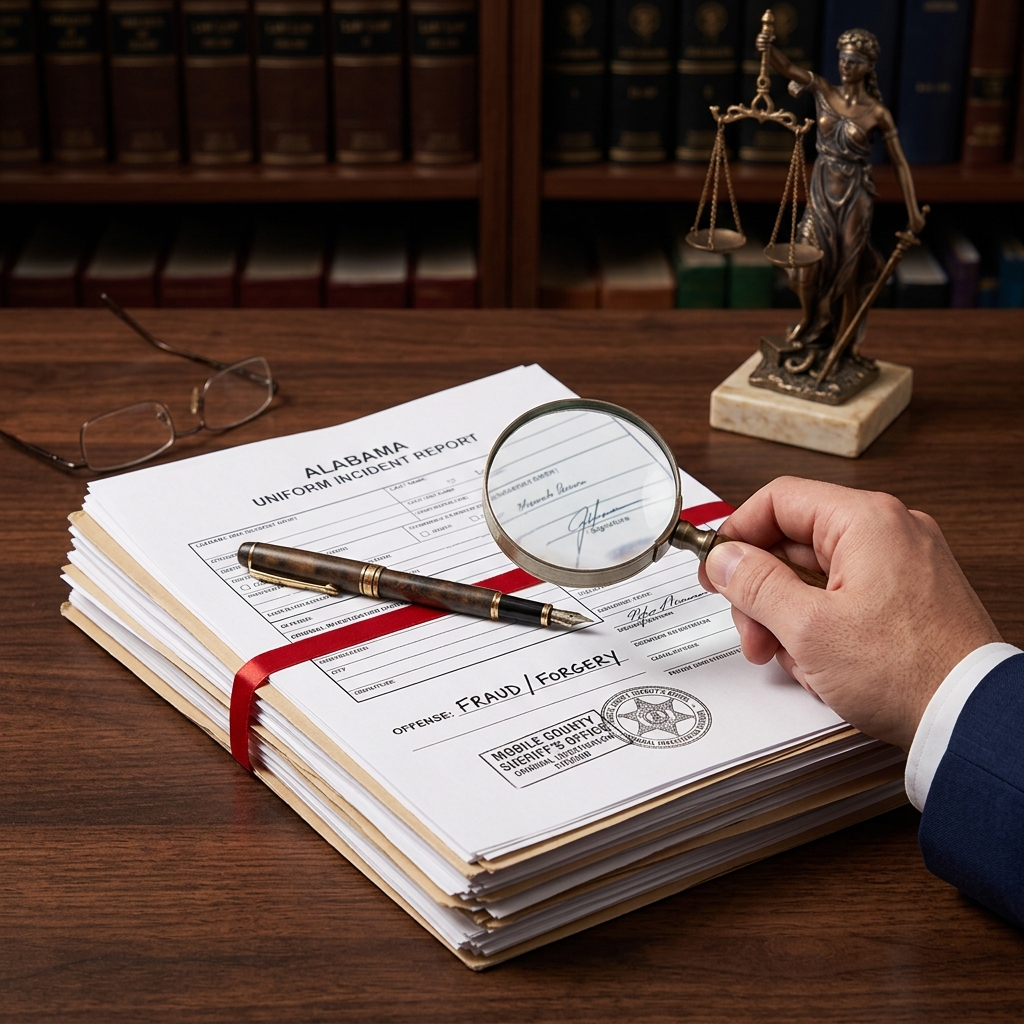
Alabama treats forgery and fraud as serious criminal offenses because they undermine trust in documents, signatures, records, and financial transactions. The state separates these crimes into different levels based on the type of document involved, the way the document was altered, and whether the person intended to deceive someone else.
In practical terms, the law does not only punish the person who creates a false document. It also reaches people who possess or use forged paperwork, as well as those who keep or adapt equipment for making counterfeit documents. That broader approach reflects the fact that fraud often happens through a chain of conduct rather than a single act.
What Alabama Means by Forgery
Forgery in Alabama generally involves falsely making, completing, or altering a written instrument with the intent to defraud. The key element is not just the false document itself, but the purpose behind it. If the paper, record, or form was changed or created to mislead another person, the conduct may qualify as forgery.
Alabama law also recognizes that forged documents can take many forms. A forged check is the most familiar example, but the statute reaches deeds, contracts, public records, government-issued documents, financial instruments, and other writings that can affect rights or obligations.
- False making means creating a document that appears genuine but is not.
- Completing a document means filling in missing information in a deceptive way.
- Altering a document means changing an existing instrument so it says something false.
- Intent to defraud means the person acted to deceive or gain an unfair advantage.
The Four Degrees of Forgery
Alabama uses a graduated system for forgery offenses. The seriousness of the charge depends largely on the importance of the instrument involved. A false government security is treated more harshly than a forged everyday writing, because the potential harm is greater.
| Forgery degree | Typical type of document | General felony level | Common penalty range |
|---|---|---|---|
| First degree | Government securities, stamps, stock, or bonds | Class B felony | 2 to 20 years in prison and up to $30,000 in fines |
| Second degree | Deeds, wills, contracts, public records, and similar documents | Class C felony | 1 to 10 years in prison and up to $15,000 in fines |
| Third degree | Other written instruments not covered above | Class D felony | More than 1 year up to 5 years in prison and up to $7,500 in fines |
| Fourth degree | Lower-level forged writings | Class A misdemeanor | Up to 1 year in jail and up to $6,000 in fines |
The main point of this structure is proportionality. The law distinguishes between a forged document that can affect public records or financial markets and a false writing that creates a smaller, though still serious, risk of harm.
Why Possession Can Be a Crime Too
People sometimes assume only the person who created a fake document can be charged. Alabama law says otherwise. It is also a crime to possess a forged instrument when the person knows it is forged and intends to use it to defraud someone.
This separate offense matters because criminal schemes often involve one person making a document and another person using it later. A defendant may never have printed the fake paper, yet still be liable if they knowingly held it or presented it as real.
- Knowledge means the person understood the document was forged.
- Intent means the person planned to deceive or cheat another party.
- Uttering means offering, presenting, or using the forged document as if it were authentic.
A common example is trying to cash a forged check. Even if the person did not create the check, presenting it to a bank as genuine can satisfy the law’s requirement for uttering a forged instrument.
Equipment Used for Forgery
Alabama also criminalizes possession of tools or devices designed or adapted for making forged documents when the person intends to use them for that purpose or allow someone else to use them. This rule helps law enforcement intervene before the forged paperwork is actually circulated.
This offense is treated as a Class C felony. The law recognizes that printers, plates, stamps, scanners, and similar equipment can be part of a forgery operation, especially when paired with fake identification or altered records.
Forgery Compared With Other Fraud Crimes
Forgery is only one part of Alabama’s broader fraud framework. The state also punishes conduct such as theft by deception, identity theft, and negotiating worthless instruments. These offenses overlap in some cases, but each has a distinct focus.
| Offense | Main concern | Typical example |
|---|---|---|
| Forgery | Creating or altering false written instruments | Changing a deed or check to mislead others |
| Possession of a forged instrument | Holding or using a forged document with intent to defraud | Presenting a fake contract as real |
| Theft by deception | Obtaining property through lies or deceptive statements | Tricking a victim into sending money |
| Identity theft | Misusing another person’s identifying information | Using someone else’s personal data to open accounts |
That distinction is important because prosecutors may choose charges based on the conduct they can prove. A case involving fake paperwork and stolen personal data may produce multiple charges from the same transaction.
How Prosecutors Prove Fraudulent Intent
Intent is often the hardest part of a forgery case. Prosecutors do not need to show that the defendant succeeded in causing a financial loss, but they do need evidence that the defendant acted with a deceptive purpose.
Evidence of intent may include altered signatures, inconsistent explanations, hidden transactions, possession of multiple fake documents, or attempts to use the document in a financial or legal setting. In some cases, surrounding circumstances matter more than the document itself.
- Using a document in a place where authenticity matters
- Providing conflicting stories about where the document came from
- Changing dates, names, amounts, or signatures
- Keeping several forms of suspicious paperwork together
Because forged documents are often discovered after the fact, prosecutors frequently rely on patterns of conduct rather than a single direct admission.
Penalties and Criminal Classifications
Forgery penalties in Alabama follow the state’s felony and misdemeanor classes. That means the punishment is determined not just by the offense label, but by the degree assigned to the document and the facts of the case.
First-degree forgery is the most serious because it involves instruments linked to government or major financial interests. Second-degree forgery usually covers documents that affect legal rights and ownership, such as deeds and wills. Third- and fourth-degree offenses cover lower-level writings, but they can still produce a criminal record, jail time, and financial penalties.
Even a misdemeanor forgery conviction can have lasting effects. A conviction may affect employment opportunities, licensing, financial credibility, and future sentencing if the person is charged again.
Examples of Conduct That Can Lead to Charges
Forgery allegations can arise in many everyday situations, not just in large-scale schemes. A person may face charges for altering a check, signing another person’s name without permission, changing a property document, or submitting a false contract in a business deal.
Real estate matters are especially sensitive because deeds and related records control ownership rights. A false transfer document can affect more than money; it can also disrupt title, possession, and future sales. Financial records are similarly vulnerable because banks and lenders rely on signatures and account information to make decisions quickly.
- Changing the amount on a check before depositing it
- Signing a landlord’s name on a lease without authorization
- Using a fake deed to claim property ownership
- Submitting altered loan paperwork to secure funding
Possible Defenses in a Forgery Case
Every case depends on its facts, but several defenses may be relevant in Alabama forgery prosecutions. The most common issue is whether the accused actually intended to defraud. Without that intent, the charge may fail.
Another defense is lack of knowledge. A person who unknowingly receives a forged document is not the same as someone who knowingly uses it. Disputes can also arise over whether the document was truly altered in a legally meaningful way or whether the prosecution can prove the defendant was responsible for the change.
- No intent to defraud
- No knowledge that the document was forged
- Mistake or authorization in signing or completing the document
- Insufficient proof that the defendant made or altered the writing
In some cases, the defense may also argue that the document does not fall into the degree charged by prosecutors, which can reduce the severity of the offense.
Why These Charges Matter Beyond the Criminal Case
Forgery and fraud cases often involve more than the courtroom. A person accused of altering a document may also face civil disputes, loss of business relationships, employment consequences, and damage to reputation. If the alleged conduct involves property or financial accounts, the victim may also seek restitution or other remedies.
That makes early legal analysis important. The degree of the charge, the wording of the document, and the proof of intent can all affect the outcome. In some situations, a charge that looks straightforward at first becomes more complicated once the document’s history and use are examined closely.
Frequently Asked Questions
Is forgery always a felony in Alabama?
No. Higher-degree forgery offenses are felonies, but fourth-degree forgery is a misdemeanor. The seriousness of the charge depends on the type of document and the alleged conduct.
Can someone be charged for using a forged document even if they did not create it?
Yes. Alabama law allows charges for possession or uttering of forged instruments when the person knows the document is forged and intends to defraud.
Does the state have to prove someone actually caused a loss?
Not necessarily. The law focuses on the intent to defraud and the false making, altering, possession, or use of the instrument.
Are checks the only documents covered by forgery laws?
No. Alabama forgery laws cover many types of writings, including deeds, wills, contracts, public records, and government-related instruments.
Can forged document tools lead to criminal charges?
Yes. Possessing equipment designed or adapted for forgery with the required intent can itself be a felony offense.
References
- Forgery and Possession of a Forged Instrument in Alabama — Criminal Defense Lawyer. 2025. https://www.criminaldefenselawyer.com/resources/forgery-laws-alabama.htm
- Alabama Code § 13A-9-2 (Forgery in the First Degree) — Justia. 2025. https://law.justia.com/codes/alabama/title-13a/chapter-9/article-1/section-13a-9-2/
- Alabama Code Title 13A, Chapter 9, Article 1 — Justia. 2025. https://law.justia.com/codes/alabama/title-13a/chapter-9/article-1/
- Alabama Code Title 13A, Criminal Code, Section 13A-9-3.1 — FindLaw. 2025. https://codes.findlaw.com/al/title-13a-criminal-code/al-code-sect-13a-9-3-1/
- Alabama Property Protection Act Overview — Greg Varner Law. 2026. https://www.gregvarnerlaw.com/alabamas-new-property-protection-act/
Similar Articles








Read full bio of Sneha Tete




