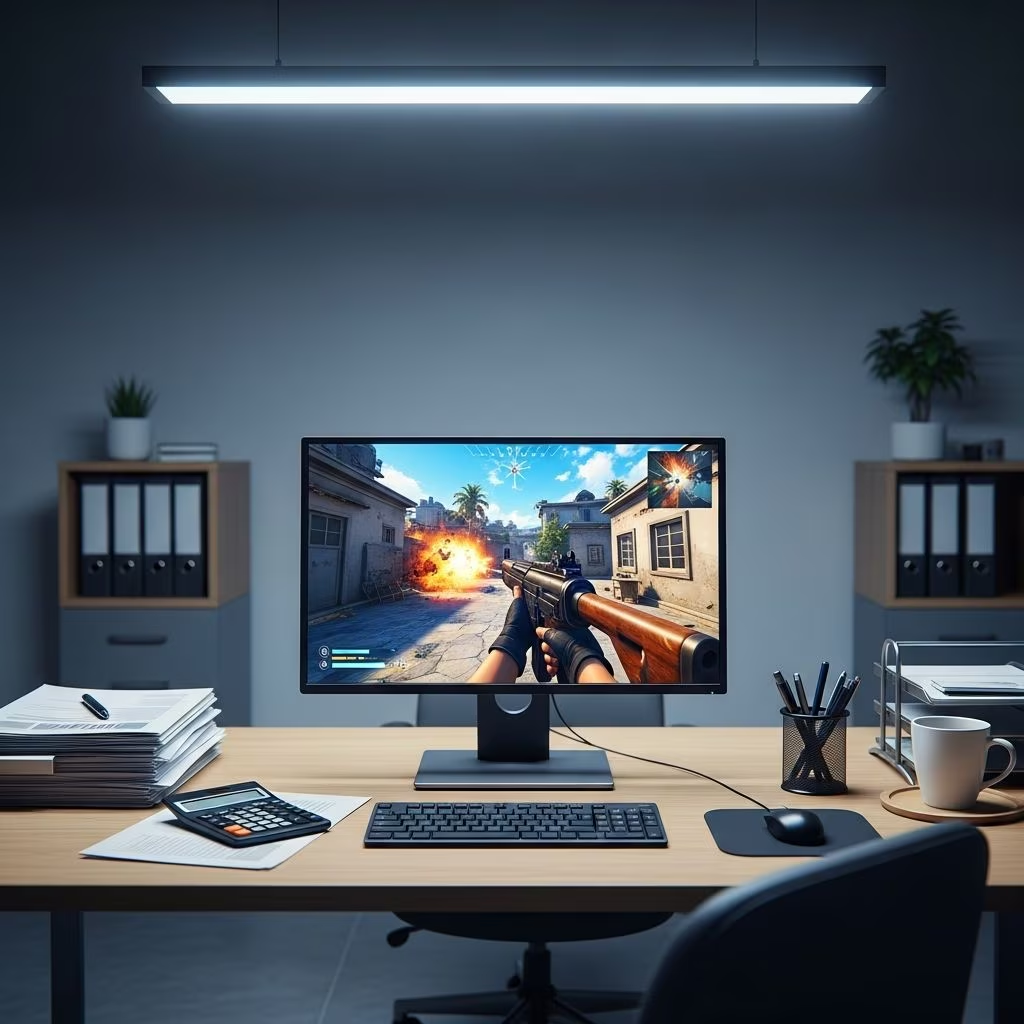
Engaging in video games during work hours might seem like a harmless diversion, but it poses significant threats to professional success and job security. This practice undermines core responsibilities and can trigger severe repercussions, from immediate dismissal to long-term career damage.
The Productivity Paradox: Gaming’s Hidden Costs
At its core, the workplace demands undivided attention to assigned tasks. Video games, by design, captivate users through immersive mechanics and reward systems that trigger dopamine releases, making it extraordinarily difficult to disengage promptly. What begins as a brief five-minute session often spirals into prolonged play, eroding hours of potential output.
Research indicates substantial prevalence: approximately 25% of white-collar workers confess to gaming on company time, with 35% of supervisors admitting the same behavior. More alarmingly, 58% of employees report witnessing bosses gaming, and 46% have been caught themselves. These figures highlight a pervasive issue that correlates directly with diminished performance metrics.
- Time Theft:** Even short bursts accumulate; a 10-minute game three times daily equates to over 30 lost hours monthly, equivalent to nearly a full workweek.
- Cognitive Drain:** Gaming shifts mental resources from analytical problem-solving to reactive entertainment, impairing subsequent task efficiency.
- Opportunity Loss:** Moments spent gaming forfeit chances for skill-building, networking, or innovation that propel career advancement.
Employers invest heavily in employee time, viewing it as a proprietary asset. Diverting it to personal amusement constitutes a breach of this implicit contract, fostering resentment among diligent colleagues who bear extra loads.
Disciplinary Pitfalls: From Warnings to Termination
Company policies universally prohibit non-work activities during paid hours, with gaming explicitly targeted in many employee handbooks. Violations invite progressive discipline: verbal reprimands escalate to written warnings, suspensions, and ultimately termination.
Consider real-world precedents. In numerous documented cases, employees discovered gaming via IT monitoring—standard in 70% of U.S. firms—faced swift action. One survey reveals 46% of caught gamers received formal penalties, underscoring the immediacy of consequences. Remote work amplifies risks, as screen-sharing tools and activity logs expose distractions effortlessly.
| Violation Level | Typical Response | Potential Outcome |
|---|---|---|
| First Offense | Verbal Warning | Policy Acknowledgment Required |
| Repeat Offense | Written Reprimand | Performance Improvement Plan |
| Third Offense | Suspension | Probationary Status |
| Persistent | Termination | Unemployment Denial |
Beyond internal measures, unemployment claims post-firing often fail if misconduct like gaming is proven, as states deny benefits for “misconduct” under labor laws. This leaves workers financially vulnerable during job transitions.
Legal Liabilities: Beyond the Obvious Risks
Gaming at work extends perils into legal territory. Primary among these is negligence exposure: engrossed players may neglect urgent communications, resulting in missed deadlines, client losses, or safety oversights in regulated industries.
For instance, a distracted employee failing to monitor systems could precipitate data breaches or operational failures, inviting lawsuits where personal gaming contributes to “failure to perform duties.” Courts have upheld employer defenses in such scenarios, holding individuals accountable.
Additionally, in shared environments, gaming raises harassment concerns. Loud gameplay, screen visibility of mature content, or competitive outbursts can offend coworkers, breaching anti-harassment policies enforced by the Equal Employment Opportunity Commission (EEOC). The EEOC mandates workplaces free from hostile elements, and frivolous activities exacerbating tensions qualify as violations.
- Privacy Breaches: Using company networks for games risks malware introduction, violating cybersecurity protocols under laws like the Computer Fraud and Abuse Act (CFAA).
- Resource Misuse: Bandwidth consumption slows networks, impairing collective productivity and potentially breaching IT acceptable use policies.
- Equity Issues: Perceived favoritism if managers game erodes morale, sparking grievances or union actions.
Legal experts emphasize documentation: screenshots, logs, and witness statements solidify cases against offenders, complicating appeals.
Reputational Damage: Long-Term Career Impacts
Professional image hinges on reliability and focus. Gaming incidents, once publicized internally or via references, brand individuals as uncommitted, hindering promotions and future hires. Recruiters scrutinize digital footprints; a termination for distraction tarnishes resumes indelibly.
Networking suffers too. Colleagues witnessing gaming lose trust, withholding collaborations or endorsements. In tight-knit fields, word spreads rapidly, confining opportunities.
Psychologically, habitual gaming fosters complacency, sapping ambition for high-impact contributions. Studies link excessive screen recreation to reduced motivation, mirroring sloth-like inertia that stagnates careers.
Alternatives for Breaks: Productive Downtime Strategies
Work demands balance, but gaming fails as a recharge method. Opt for evidence-backed alternatives enhancing rather than depleting energy.
- Physical Movement: Short walks boost circulation, improving focus per CDC guidelines on workplace wellness.
- Mindful Pauses: Meditation apps or breathing exercises restore clarity without distraction risks.
- Skill Sharpeners: Quick reads on industry trends or podcasts cultivate expertise.
- Social Interactions: Brief chats build rapport, outperforming solitary gaming.
Set boundaries: designate off-hours for gaming, using timers to prevent spillover. Employers increasingly offer wellness programs—leverage these for sanctioned breaks.
Frequently Asked Questions (FAQs)
Is casual gaming ever acceptable at work?
No, even brief sessions violate most policies and risk detection via monitoring tools. Prioritize tasks completion first.
What if my boss plays games?
Do not follow suit; emulate high performers. Report inequities discreetly if they impact fairness.
Can remote work change the rules?
On the contrary, remote setups heighten scrutiny through productivity trackers and video calls exposing distractions.
How common is getting caught gaming?
Highly prevalent: 46% of gamers face consequences, per employee surveys.
What steps rebuild reputation post-incident?
Demonstrate turnaround via over-delivery, seek feedback, and avoid repeats to restore trust gradually.
Maintaining Peak Professionalism in a Digital Age
In today’s competitive landscape, discipline separates achievers from also-rans. Reject gaming temptations to safeguard productivity, compliance, and growth. Cultivate habits aligning recreation with personal time, ensuring work remains a launchpad for success.
Expand on these principles: audit daily routines, align with company values, and invest in development. The payoff—advancement, stability, fulfillment—far eclipses fleeting game highs.
Workplace culture evolves, yet fundamentals endure: deliver value consistently. Shun distractions; embrace excellence.
References
- Is it Okay to Play Video Games at Work? — Meridian Magazine. 2010-07-20. https://latterdaysaintmag.com/article-1-9930/
- Is it appropriate to play video games at work? — DEV Community. 2023-10-15. https://dev.to/grepliz/is-it-appropriate-to-play-video-games-at-work-4n91
- Employee Monitoring Statistics (2025) — Time Doctor. 2025-01-10. https://www.timedoctor.com/blog/employee-monitoring-statistics/
- Workplace Wellness Guidelines — Centers for Disease Control and Prevention (CDC). 2024-06-12. https://www.cdc.gov/workplacehealthpromotion/index.html
- Computer Fraud and Abuse Act Overview — U.S. Department of Justice. 2023-11-05. https://www.justice.gov/criminal/criminal-ccips/computer-fraud-and-abuse-act-cfaa