
Police Badges: When Officers Must Show ID And What To Do Now
Understanding when officers must carry, wear, or show identification, and what you can do if a badge or ID is withheld.
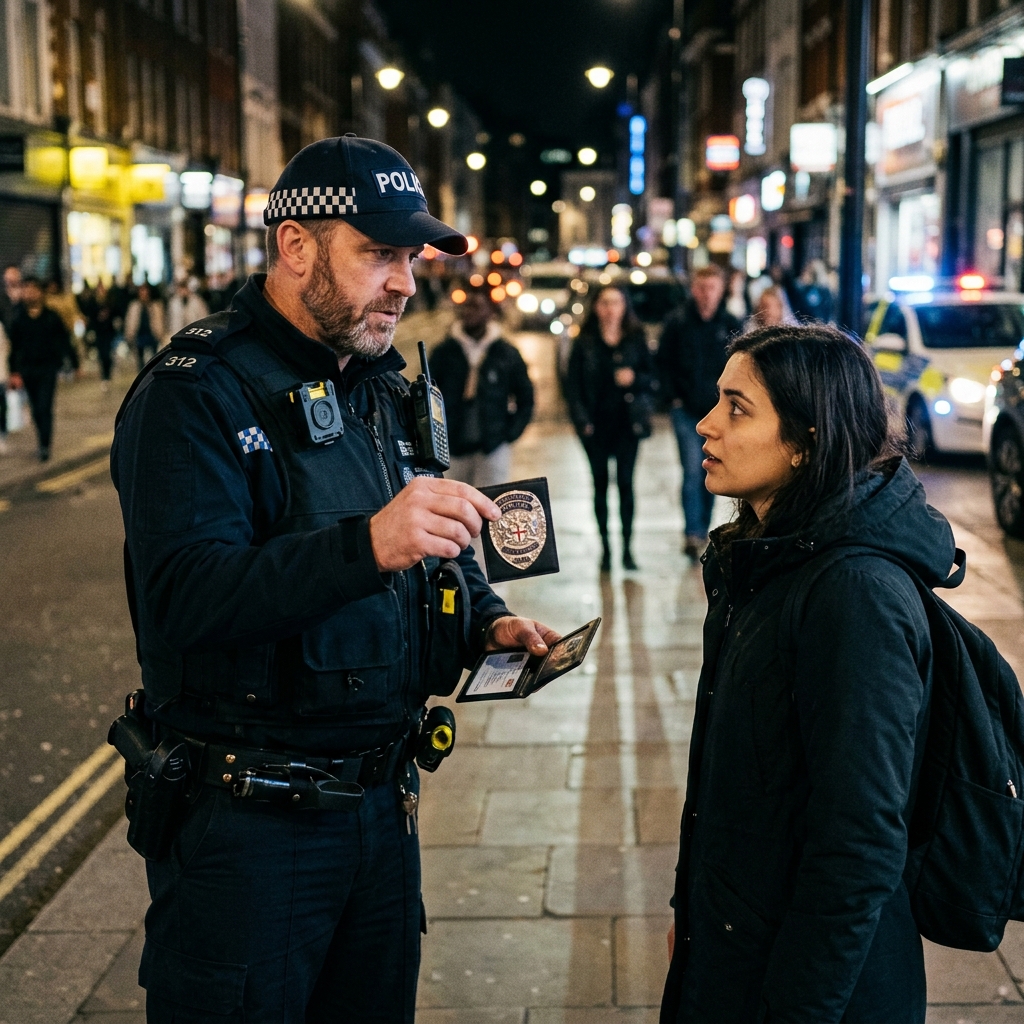
Police badges and identification cards are powerful symbols of legal authority. They do more than decorate a uniform; they signal to the public that the person wearing or displaying them has specific powers granted by law. At the same time, public expectations about badges often exceed what the law actually requires. This article explains when officers are required to carry, wear, or show badges and ID, how these rules vary by state and department, and what you can do if an officer refuses to identify themselves.
Why Police Badges Matter
A police badge in the United States is generally treated as an official symbol of office. For uniformed officers, it is typically worn prominently on the chest, and for plainclothes officers, it is carried on a chain or wallet for display during enforcement actions.
Badges and identification serve several core functions:
- Signaling authority: They show that the wearer is vested with police powers such as arrest and detention.
- Distinguishing officers from civilians: In chaotic or high-risk situations, badges help the public and other officers quickly recognize law enforcement personnel.
- Accountability: Name plates, badge numbers, and ID cards allow the public to track which officer handled a particular encounter.
- Legal protection against impersonation: Strict laws regulate who may possess or display police badges and similar insignia.
No Single National Rule on Badge Display
Many people assume that all police officers in the United States must display a badge at all times. In reality, there is no nationwide legal requirement that every officer wear or show a badge in every interaction.
Instead, several layers of rules interact:
- State laws: Some states require badges or ID cards by statute, while others leave the matter largely to local agencies.
- Local ordinances: Cities and counties may have specific rules about badges for their police departments.
- Department policies: Individual police departments often adopt internal rules requiring identification under certain circumstances, even when state law is silent.
Examples of State and Local Badge Requirements
State and local governments sometimes impose direct rules on how police badges must be worn or used. These rules can vary significantly from place to place.
| Jurisdiction | Type of Requirement | Key Features |
|---|---|---|
| Massachusetts | Identification and label requirement | Officers must carry identification cards and present them upon request, and they are required to wear a badge, tag, or label with a name or identifying number. |
| California | Numbered badge requirement | Uniformed officers are required to wear numbered badges while on duty, making it easier for the public to identify individual officers. |
| New York City | Department-level “Right to Know” policy | Under NYC’s Right to Know Act, officers must identify themselves at the beginning of certain encounters, including providing name, rank, command, and badge or shield number. |
| Dallas, Texas | City ordinance on wearing badges | The Dallas City Code designates a breast badge that must be worn by each member of the police department, making visible identification a local legal requirement. |
These examples illustrate how badge rules can arise from statutes, municipal codes, or internal policies. In jurisdictions without specific legal mandates, departments typically still have policy rules governing identification.
Uniformed vs. Plainclothes Officers
The law and policy around badges often differ depending on whether an officer is in full uniform or working in plain clothes.
Uniformed Officers
Uniformed officers are usually expected to display a badge, a name plate, or both on their uniforms. States such as Massachusetts and California specifically require badge or identification display for uniformed officers.
Common expectations for uniformed officers include:
- Wearing a visible badge or patch indicating their department.
- Displaying a name plate or badge number for accountability.
- Conforming to department dress codes and ordinance-based rules (for example, the Dallas breast badge requirement).
Plainclothes and Undercover Officers
Plainclothes officers, detectives, and undercover personnel are often exempt from wearing a visible badge while working, but they typically carry one for display when needed.
Key points about plainclothes officers:
- They may keep badges concealed for safety or operational reasons, revealing them only when asserting authority.
- Department policies usually require identification if they stop, detain, or arrest someone, unless doing so would compromise an ongoing operation.
- They still must comply with impersonation and badge misuse laws, just like uniformed officers.
Badge Numbers, Names, and Accountability
Not all police badges contain numbers, and not all jurisdictions mandate them. Some states require name plates, some require badge numbers, and others allow departments to choose their own systems.
Badge Numbers
Where badge numbers are used, they serve as unique identifiers for individual officers, similar to employee ID numbers. Design practices vary widely:
- Some agencies use badges without numbers, relying on names and other records for identification.
- Many local departments adopt badges with 3–4 digits to clearly distinguish individual officers.
- A few designs use limited digits to encode historical or jurisdictional information (such as founding year or unit code).
Name Plates and ID Cards
Even when badges do not have numbers, departments may rely on:
- Name plates: Metal or embroidered tags with an officer’s surname.
- Identification cards: Photo ID issued by the department or state, which officers are often required to carry and present upon request in some jurisdictions (for example, Massachusetts).
These elements support public complaints, lawsuits, or internal investigations by making it easier to identify the officers involved.
Legal Limits on Who May Possess or Display Badges
Because badges symbolize official authority, most states strictly regulate who may possess or display them. Laws commonly criminalize impersonating an officer or wearing a badge without authorization.
Typical legal restrictions include:
- Unauthorized display of police insignia: Many statutes prohibit wearing, using, or displaying any badge, uniform, or emblem suggesting police powers unless lawfully authorized.
- Possession after termination: Some laws bar former officers from retaining official badges or ID cards after their authority ends.
- Impersonation of an officer: Displaying a badge or uniform to give the impression of being a police officer is often a separate criminal offense.
- Counterfeit badges: Federal law also prohibits the sale or possession of counterfeit police badges.
Are Officers Required to Identify Themselves?
Even when the law does not demand visible badges, most departments require officers to identify themselves when interacting with the public, subject to reasonable limitations.
Common Identification Practices
In many agencies, officers must:
- Provide their name and badge or shield number when asked, unless doing so would interfere with an arrest or investigation.
- Verbally identify themselves at the start of certain encounters, such as traffic stops or investigative questioning (as in New York City’s Right to Know Act).
- Present a department-issued ID card upon request from a member of the public in some jurisdictions.
Situations Where Identification Might Be Delayed
There are limited circumstances where an officer may not immediately display a badge or provide identification, such as:
- Active safety threats during an arrest, where reaching for a badge or ID could create risk.
- Undercover operations, where identification could expose an officer before backup arrives.
- Fast-moving emergencies where the priority is controlling a dangerous situation rather than formal introduction.
Even in these situations, departments generally expect officers to formally identify themselves as soon as it is safe and practical to do so.
Your Rights When an Officer Refuses to Show a Badge or ID
What happens if you ask an officer for their name or badge number and they refuse? The answer depends on local law and department policy, but you still have options.
Steps You Can Take During the Encounter
- Stay calm and compliant: Resisting or arguing about identification during an arrest or stop can lead to additional charges and increased risk.
- Politely repeat your request: You can calmly state that you would like the officer’s name and badge number and, if safe, ask if they carry an identification card.
- Observe and remember: Note the officer’s physical description, approximate age, gender expression, vehicle number, or any visible uniform markings for later reference.
- Avoid self-incrimination: Consider limiting what you say beyond basic identifying information and required details. If things escalate, you may ask for a lawyer.
Actions to Consider After the Encounter
- Contact the department: You can call or write to the police department involved, describe the encounter, and request the names of officers present. Many departments have internal affairs units or complaint processes.
- File a formal complaint: If you believe an officer violated policy by refusing identification or behaved improperly, a written complaint can trigger an internal investigation.
- Consult a criminal defense attorney: If you were arrested or believe your rights were violated, a lawyer can advise whether the officer’s failure to identify affects your case or supports a civil claim.
- Request public records: In some states, you might be able to make a public records request for incident reports, dispatch logs, or body camera footage connected to the encounter.
How Badge Rules Relate to Criminal Defense
Badge and identification requirements can become important in criminal cases. While a failure to show a badge does not automatically void an arrest, it may be relevant in court or in internal disciplinary proceedings.
Possible legal implications include:
- Credibility issues: If an officer violates identification policies, defense attorneys may use this to challenge the officer’s credibility.
- Policy violations: Internal policy breaches can lead to discipline or affect how a department handles a case, even if they do not directly invalidate charges.
- Evidence challenges: In rarer cases, serious misconduct—combined with other rights violations—might support motions to suppress certain evidence.
- Civil liability: If the lack of identification is part of a broader pattern of misconduct or excessive force, it may matter in a civil rights lawsuit.
Frequently Asked Questions
1. Do all police officers have badge numbers?
No. There is no federal law requiring every officer to have a badge number, and some states do not mandate numbered badges. Many departments use either badge numbers or name plates, and some use both. States like Massachusetts and California require numbered badges for uniformed officers, while others leave this to local policy.
2. Can an officer arrest me without showing a badge?
Yes, an officer can legally arrest you even if they do not show a badge at the moment of arrest, provided they have legal authority and probable cause. However, most departments expect officers to identify themselves and provide identifying information either during or shortly after the encounter.
3. Is it a crime to wear a fake police badge?
In most jurisdictions, wearing or displaying a badge that suggests you are a police officer, without authorization, is illegal. State laws generally prohibit unauthorized use of badges, uniforms, or insignia that imply police authority, and federal rules restrict counterfeit badges.
4. Can I insist on seeing an officer’s identification card?
In some states, like Massachusetts, officers are required by law to carry identification cards and present them upon request. In other places, this requirement may be a matter of department policy rather than statute. You can ask, but the officer’s legal obligation to comply depends on local rules and the circumstances of the encounter.
5. What if I cannot identify the officer after an incident?
If an officer refuses to provide identifying information and you cannot remember their badge number or name, you can still describe the location, time, and nature of the incident to the relevant department. Dispatch records, vehicle assignments, and reports often allow departments to determine which officers were present. A criminal defense lawyer or civil attorney can help you navigate this process.
Practical Tips for Navigating Police Encounters
Understanding badge rules is useful, but most people benefit more from clear, practical guidance on handling real-world encounters.
- Know that identification rules vary: Do not assume every officer must wear a badge in the same way; local laws and policies differ.
- Ask calmly for name and badge number: A respectful request is more likely to be honored than a confrontational demand.
- Document after the fact: Write down what happened as soon as possible, including descriptions and any partial information you remember.
- Seek legal advice early: If you were arrested or feel your rights were violated, consulting a defense attorney promptly can help protect your interests.
References
- Do all police have badge numbers? — USAttorneys.com. 2020-01-15. https://police-brutality.usattorneys.com/do-all-police-have-badge-numbers/
- Police uniforms in the United States — Encyclopedic overview citing federal law. 2023-01-01 (approx. last update). https://en.wikipedia.org/wiki/Police_uniforms_in_the_United_States
- Badge Laws — Collectors-Badges.com (compilation of state and federal badge statutes). 2019-06-01. https://www.collectors-badges.com/badge-laws/
- SEC. 37-14. Badges – Required To Be Worn. — Dallas, Texas Code of Ordinances. 2015-08-12. https://codelibrary.amlegal.com/codes/dallas/latest/dallas_tx/0-0-0-116971
- How Many Numbers Are Typically Found on a Police Badge? — Hesank.com. 2023-05-10. https://www.hesank.com/blog/how-many-numbers-are-typically-found-on-a-police-badge/
Similar Articles








Read full bio of Sneha Tete




