Product recall insurance is designed to help businesses absorb the financial shock of removing a dangerous or defective product from the market. It can be an important layer of protection for manufacturers, distributors, and brands that sell goods to the public, especially when a recall could trigger large logistics expenses, customer notifications, or reputational harm.
Unlike general liability coverage, recall insurance is focused on the operational costs of getting a product back under control. That distinction matters because a recall can be expensive even when no one is injured. In some cases, both forms of insurance may be relevant, but they respond to different kinds of loss.
Why recall coverage matters
A modern product recall can spread quickly across retail channels, warehouses, and online marketplaces. Once a defect, contamination issue, or safety concern is identified, the business may need to stop sales, notify customers, retrieve inventory, pay for reverse logistics, and destroy or replace affected products. Those costs can arrive long before any lawsuit is filed.
For smaller companies, even a limited recall can strain cash flow. For larger companies, the direct expense may be compounded by lost sales, damaged shelf space, and a long recovery period with distributors or consumers. Recall insurance is meant to soften that financial blow so a business can act quickly instead of delaying action because of cost.
How product recall insurance generally works
Product recall insurance typically reimburses or funds qualifying expenses tied to a covered recall event. Coverage is often triggered when a product is suspected of being defective, unsafe, adulterated, mislabeled, or otherwise likely to cause bodily injury or property damage if it remains in circulation. Some policies are broad, while others are tailored to specific industries such as food, beverage, consumer goods, or industrial products.
Policy terms vary widely, but the basic idea is consistent: if a covered event forces the insured to remove product from use or sale, the policy may respond to the costs of that process. Coverage may apply whether the recall is voluntary or ordered by a government agency, depending on the wording of the policy.
Common expenses a recall policy may address
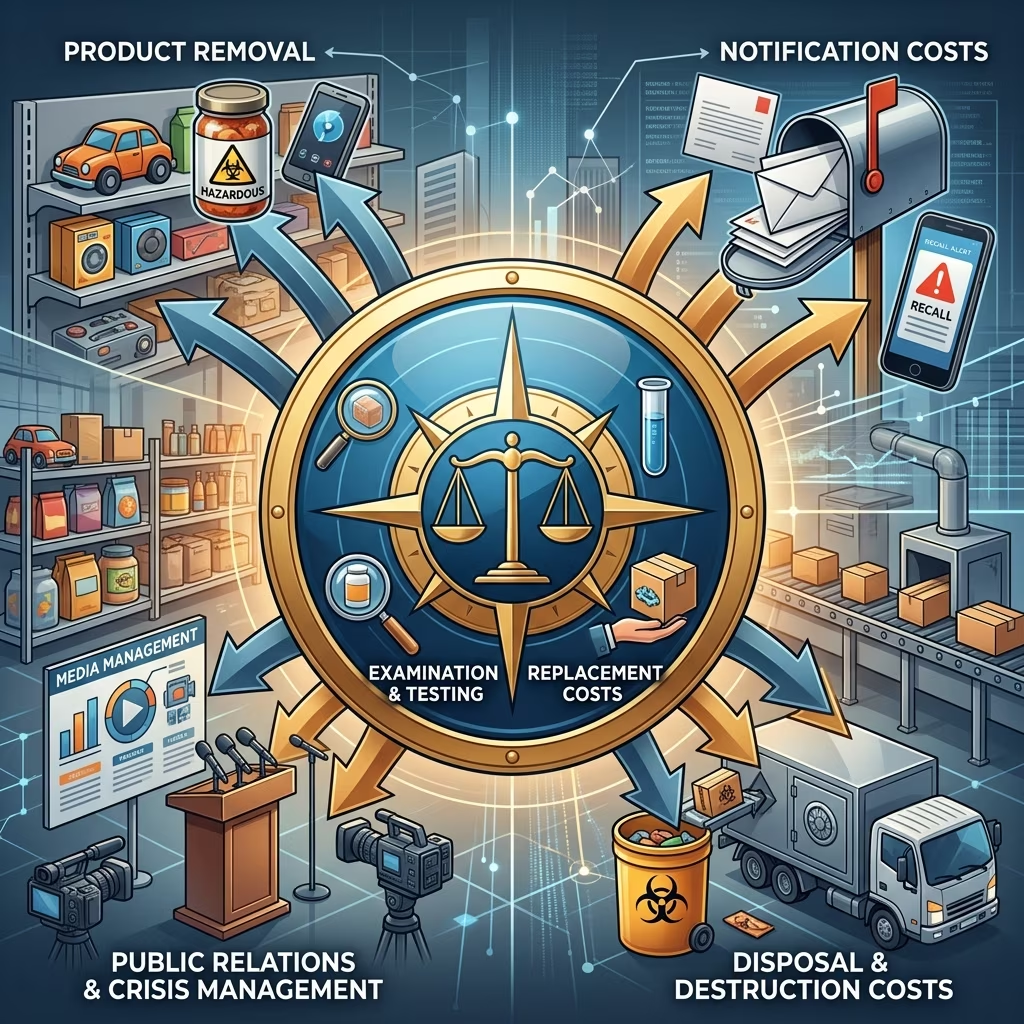
Recall policies are usually built to handle the practical expenses of execution rather than customer injury claims. Depending on the policy, coverage may include the following:
- Customer and distributor notification costs
- Hiring temporary labor or specialized recall teams
- Shipping, freight, and packaging expenses
- Storage and warehousing of retrieved goods
- Tracking, locating, and collecting affected inventory
- Repairing, replacing, or reworking defective items
- Disposal costs when regulated destruction is required
- Public relations or crisis response support, if included in the policy
Some policies may also cover certain testing, inspection, or investigation expenses needed to determine whether the product should be withdrawn. Others may include expenses associated with restoring confidence after the event, though that is less universal and often subject to specific endorsements or sublimits.
What product recall insurance usually does not cover
Recall coverage is not the same as a warranty plan, and it is not a substitute for product liability insurance. It also does not automatically pay for every loss a business suffers after a product problem is discovered. In many policies, the following are excluded or limited:
- Third-party bodily injury claims
- Property damage claims brought by customers or others
- Ordinary product failure that does not create a safety risk
- Losses outside the policy period
- Penalties or fines, unless expressly covered
- Costs caused by poor maintenance, intentional misconduct, or known defects
Coverage may also be limited if the defect was known before the policy began or if the company failed to follow required quality-control procedures. As with most commercial insurance, the exact wording of the policy is critical.
Product recall insurance versus product liability insurance
Businesses often confuse recall insurance with product liability insurance, but the two protect against different types of loss. Product liability insurance generally responds when a product causes bodily injury or property damage and a third party makes a claim. Recall insurance, by contrast, is intended to cover the expense of removing the product from circulation before or while that liability issue develops.
| Coverage type | Main purpose | Typical trigger | Example loss |
|---|---|---|---|
| Product recall insurance | Helps pay recall-related expenses | Defect, contamination, or safety concern | Shipping, notifications, replacement, disposal |
| Product liability insurance | Helps defend and pay claims for injury or damage | Customer lawsuit or third-party claim | Medical bills, legal defense, settlement |
In a real-world event, both policies may be involved. A contaminated food product, for example, could generate recall costs under a recall policy and injury or illness claims under a liability policy. The policies do not duplicate each other; they address different parts of the same event.
Who should consider this type of coverage
Companies that manufacture, package, distribute, or sell consumer goods should evaluate whether recall coverage makes sense for their risk profile. That is especially true for businesses in industries where defects can quickly become safety issues, such as food and beverage, pharmaceuticals, cosmetics, baby products, automotive parts, electronics, and industrial equipment.
Retailers and private-label brands may also need protection if they place their name on products they do not directly manufacture. In those situations, a recall affecting the product line can still create major financial and reputational harm, even if the company did not make the item itself.
What insurers often look at when pricing coverage
Premiums and limits depend on the insurer’s evaluation of the insured’s operations and product risk. Underwriters commonly examine the following factors:
- Type of product and how it is used
- Likelihood and severity of a defect causing harm
- Manufacturing quality controls
- Supply chain complexity
- Past recalls or claims history
- Sales volume and market reach
- Geographic distribution and regulatory exposure
Products with high consumer exposure or complicated supply chains tend to command closer scrutiny. A business with strong testing, traceability, and supplier oversight may present a lower risk than one with limited documentation or minimal inspection procedures.
Steps businesses can take to prepare before a recall
Insurance works best when it is paired with a clear internal response plan. Companies that prepare in advance are more likely to contain the damage and document costs properly. Useful preparation steps include:
- Maintaining lot codes, batch records, and distribution records
- Creating a recall response team with defined roles
- Establishing communication templates for customers and regulators
- Testing supplier verification and product tracking systems
- Reviewing contract language with manufacturers and distributors
- Confirming that insurance limits match realistic recall scenarios
A strong recall plan can also make it easier to satisfy policy conditions. If a policy requires prompt notice, expense documentation, or insurer approval for certain actions, the business will be better positioned to comply if its internal procedures are already mapped out.
How to evaluate a policy before buying
Not all product recall policies are built alike. A business should review the wording carefully and compare several key features before purchasing coverage. Important questions include:
- What specific events trigger coverage?
- Are voluntary recalls included, or only government-ordered recalls?
- Are contamination, tampering, mislabeling, or defect all covered?
- Are brand rehabilitation or crisis management costs included?
- What are the limits, deductibles, and sublimits?
- Are supplier-related incidents included?
- Are recall costs covered for products already sold outside the United States?
These distinctions can significantly change the value of the policy. A lower premium may reflect narrower coverage, stricter conditions, or smaller limits. The cheapest policy is not necessarily the best one if it leaves the company exposed to the costs most likely to arise.
When a recall becomes a legal problem
A recall often begins as a quality or safety issue, but it can quickly become a legal matter as well. Regulators may get involved. Contract disputes may arise with suppliers or retailers. Customers may seek refunds or damages. If anyone is injured, litigation can follow. For that reason, businesses should treat a recall as both an operational event and a legal risk.
Insurance can reduce the immediate financial burden, but it does not remove the need for careful communication, document preservation, and coordinated decision-making. Companies should make sure counsel, risk managers, and insurers are aligned from the start so they do not jeopardize coverage while trying to solve the underlying problem.
Frequently asked questions
Is product recall insurance required by law?
No. It is generally an optional commercial coverage, although some customers, distributors, or lenders may require it by contract.
Does recall insurance cover customer lawsuits?
Usually not. Customer injury or property damage claims are generally handled by product liability insurance rather than recall insurance.
Can a recall happen even if no one was hurt?
Yes. Many recalls are issued because a product may pose a risk even before injuries occur. Recall insurance is often most useful at that stage.
Is a voluntary recall covered?
It depends on the policy. Some policies cover voluntary recalls, while others require a government order or a clearly defined safety threat.
What should a company do after discovering a defect?
It should preserve records, assess the risk, notify its insurer promptly, and activate its recall response plan. Early action can help limit both losses and coverage disputes.
Bottom line for businesses
Product recall insurance is a specialized tool for a specific but serious business risk. It does not replace liability coverage, warranty planning, or quality control, but it can play a central role when a product must be pulled from the market quickly. Companies that sell physical goods should understand exactly what their policy covers, what it excludes, and how it fits alongside the rest of their insurance program.
References
- How do both product liability and product recall insurance work and differ? — HDI Global. 2022-01-01. https://www.hdi.global/en-jp/infocenter/insights/2022/products-liability-vs-product-recall-liability/
- Product Recall Insurance — The Hartford. 2026-01-01. https://www.thehartford.com/general-liability-insurance/product-recall-insurance
- Product Recall Insurance Guide — CFC. 2026-01-01. https://www.cfc.com/en-us/knowledge/resources/guides/product-recall-insurance-guide/
- Product liability, recall and contamination insurance — Insurance Information Institute. 2026-01-01. https://www.iii.org/article/product-liability-recall-and-contamination-insurance
- Product Recall Insurance Coverage — AXA XL. 2026-01-01. https://axaxl.com/insurance/products/product-recall-insurance