
Bankruptcy Chapters: 6 Options, Eligibility, Process And Impact
Comprehensive guide to Chapter 7, 11, 13, and specialized bankruptcies for individuals and businesses seeking debt relief.
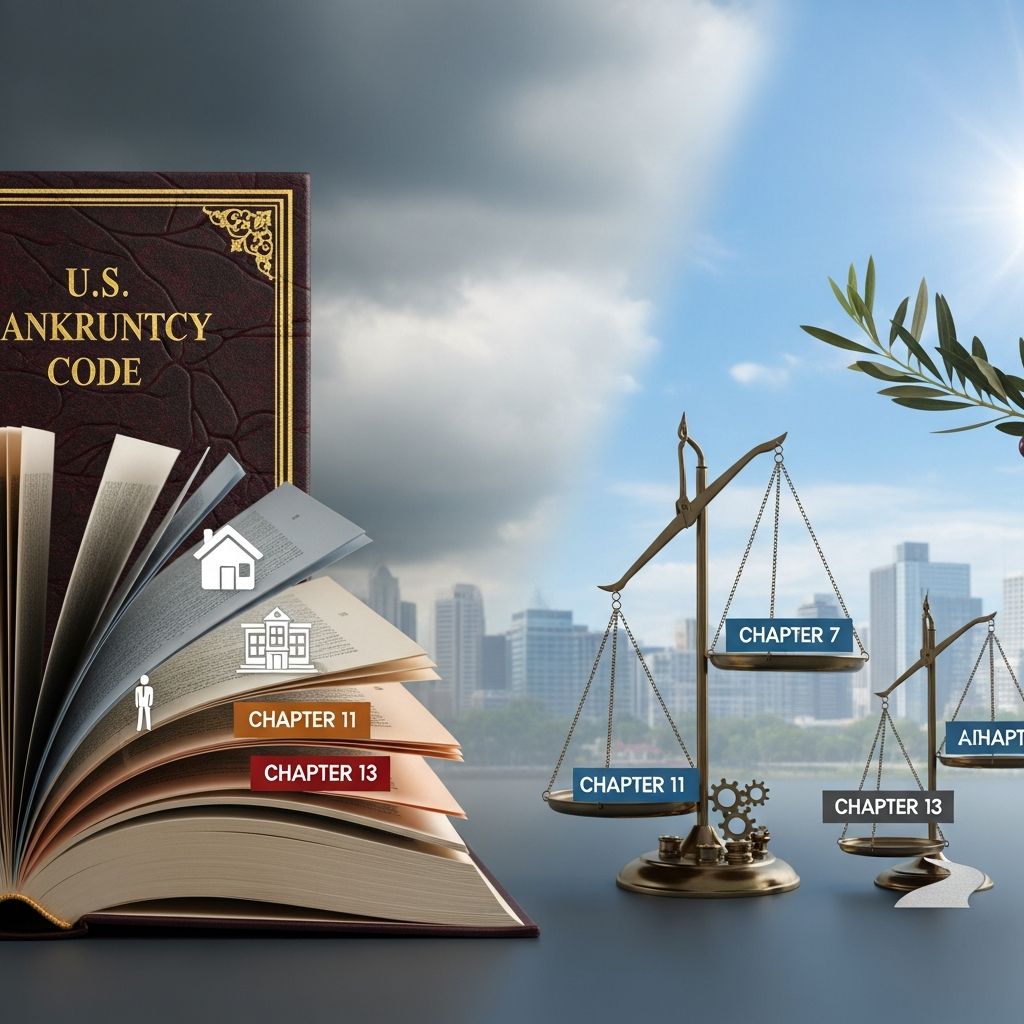
Bankruptcy serves as a federal legal mechanism designed to help overwhelmed debtors—whether individuals or entities—regain financial stability by restructuring or eliminating unmanageable debts. Governed by the U.S. Bankruptcy Code, this process involves court supervision where a trustee oversees asset distribution or repayment plans. In 2024 alone, over 517,000 cases were filed, predominantly under Chapters 7 and 13 for individuals. Choosing the right chapter hinges on factors like income, asset value, debt amount, and business status. This article delves into the primary chapters, their eligibility criteria, procedures, and implications, empowering readers to navigate this complex terrain.
Core Principles of Bankruptcy Filings
At its heart, bankruptcy triggers an automatic stay, immediately halting creditor actions such as collections, foreclosures, and repossessions. Filers must complete credit counseling beforehand and submit detailed financial disclosures. Outcomes vary: some debts like student loans and recent taxes persist, while others are discharged. Success rates depend on compliance, with Chapter 7 offering quickest relief but potential asset loss, contrasted by repayment-focused alternatives.
Chapter 7: The Liquidation Pathway
Chapter 7, dubbed liquidation bankruptcy, dominates personal filings, comprising about 60% of 2024’s 517,308 cases, with 298,049 individual petitions. It suits low-income debtors unable to repay debts, wiping out unsecured obligations like credit cards and medical bills after selling non-exempt assets.
Eligibility and Means Test
Qualification requires passing a means test comparing current income to state medians. If below median, approval is straightforward; above triggers expense deductions to assess disposable income. Exemptions protect essentials: homes up to certain equity limits, vehicles, retirement accounts, and personal items vary by state.
Process Timeline
- Petition Filing: Submit forms listing assets, debts, income, expenses.
- Trustee Assignment: Court appoints trustee to review and liquidate non-exempt property.
- 341 Meeting: Creditors question filer 20-40 days post-filing.
- Discharge: 60-90 days after 341, erasing eligible debts.
Total duration: 4-6 months. Businesses cease operations upon filing, assets sold to pay creditors.
Chapter 13: Wage Earner’s Reorganization
For those with steady income failing Chapter 7’s means test or wishing to retain assets, Chapter 13 offers a 3-5 year repayment plan. In 2024, 195,724 individuals filed, safeguarding homes from foreclosure and cars from repossession by curing arrears. Debt cap: under $2.75 million.
Repayment Plan Mechanics
Plans prioritize secured debts (mortgages, autos), then unsecured. Disposable income funds payments after necessary expenses. Post-plan, remaining unsecured debt discharges. Trustees collect and distribute funds.
| Aspect | Chapter 7 | Chapter 13 |
|---|---|---|
| Income Requirement | Low (means test) | Regular, above poverty |
| Asset Retention | Limited exemptions | Keep all, repay value |
| Duration | 4-6 months | 3-5 years |
| Debt Discharge | Immediate post-liquidation | After plan completion |
Chapter 11: Complex Reorganizations
Primarily for businesses but accessible to high-debt individuals (428 personal filings in 2024), Chapter 11 enables operations continuation while restructuring debts. No debt or income caps make it viable for substantial obligations. Corporations, partnerships, and individuals propose plans creditors vote on, court confirms.
Subchapter V for Small Businesses
Streamlined for entities under $7.5 million debt, reducing costs and trustee roles. Debtors act as their own trustee, speeding resolutions. Large firms like airlines have emerged stronger post-Chapter 11.
Specialized Chapters for Unique Debtors
Chapter 12: Family Farmers and Fishermen
Tailored for family operations with regular income, Chapter 12 mirrors Chapter 13 but with relaxed debt limits and seasonal adjustments. Debtors operate as debtor-in-possession, devising 3-5 year plans. Trustee oversees disbursements minimally.
Chapter 9: Municipal Debt Adjustment
Exclusively for cities, counties, school districts facing insolvency. Voluntary filing requires state authorization. Plans adjust bonds and pensions without liquidating public assets. Rare, under 500 filings yearly.
Chapter 15: Cross-Border Insolvency
Handles international cases, recognizing foreign proceedings. U.S. courts assist asset protection and fair creditor distribution globally.
Strategic Considerations and Long-Term Effects
Selecting a chapter demands professional advice; mismatches lead to dismissals. Credit impacts: Chapter 7 stays 10 years, Chapter 13 seven on reports, hindering loans and jobs initially. Post-bankruptcy rebuilding via secured cards and budgeting accelerates recovery.
Businesses weigh liquidation’s finality against reorganization’s survival odds. Chapter 11’s expense deters small firms favoring Chapter 7.
Frequently Asked Questions
What is the most common bankruptcy type?
Chapter 7 leads with over 300,000 individual filings in 2024, ideal for quick debt erasure.
Can I keep my house in bankruptcy?
Chapter 7 risks loss if equity exceeds exemptions; Chapter 13 allows retention via payments.
How long does bankruptcy affect credit?
Chapter 7: 10 years; Chapter 13: 7 years from filing.
Do businesses file Chapter 13?
Only sole proprietorships; corporations use 7 or 11.
Is bankruptcy better than debt settlement?
Bankruptcy discharges more comprehensively but harms credit longer[10].
Navigating Your Bankruptcy Journey
Consult accredited attorneys or counselors. Free clinics abound. Preparation—gathering statements, tax returns—smooths processes. Bankruptcy isn’t failure; it’s a structured reset. Millions rebuild successfully annually, underscoring its role in economic resilience.
References
- Types of Bankruptcies Explained: Chapter 7, 11 and 13 — Debt.org. 2025. https://www.debt.org/bankruptcy/types/
- 4 Types of Business Bankruptcy (and How to Restructure) — Johnson May Law. 2024. https://www.johnsonmaylaw.com/blog/6-types-bankruptcy-restructuring
- What Are the Types of Business Bankruptcy? — Super Lawyers. 2024. https://www.superlawyers.com/resources/bankruptcy/what-are-the-types-of-business-bankruptcy/
- What Are the Types of Bankruptcy? — Experian. 2025. https://www.experian.com/blogs/ask-experian/what-are-the-types-of-bankruptcy/
- Bankruptcy Basics — United States Courts. 2025. https://www.uscourts.gov/services-forms/bankruptcy/bankruptcy-basics
- Other types of bankruptcy – Chapters 9, 12, & 15 — Internal Revenue Service. 2025. https://www.irs.gov/businesses/small-businesses-self-employed/other-types-of-bankruptcy-chapters-9-12-15
Similar Articles








Read full bio of Sneha Tete




