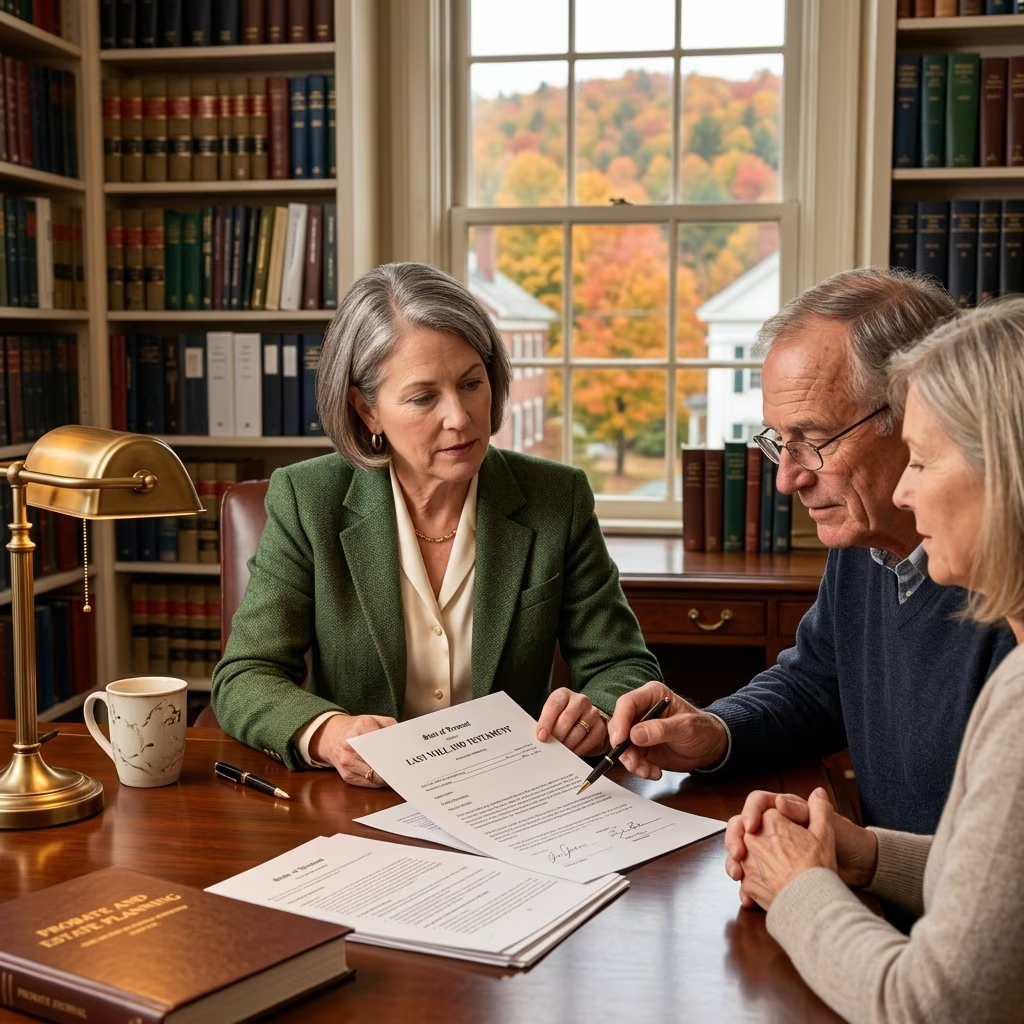
Creating a valid will in Vermont is the cornerstone of basic estate planning. A will allows you to decide who receives your property, who will manage your estate, and, in some cases, who cares for minor children after your death. Without a valid will, Vermont’s intestate succession laws determine how your assets are distributed, which may not match your wishes.
This guide explains the key legal rules governing wills in Vermont, drawn from Vermont statutes and official guidance, and offers practical tips to help you avoid common mistakes.
Why Having a Vermont Will Matters
A will is a written document stating how you want your assets—such as real estate, money, and personal belongings—distributed after you die. When properly executed, it gives the probate court a clear roadmap to follow.
- Control over inheritance: You choose who receives your property instead of relying on default statutory rules.
- Choice of executor: You name a trusted person to administer your estate rather than leaving that choice entirely to the court.[10]
- Protection for loved ones: Thoughtful planning can help reduce conflict among heirs and clarify your intentions.
- Flexibility: You can update or revoke your will as your life circumstances change, such as marriage, divorce, or the birth of children.
In short, a will is a legally recognized way to communicate your final instructions—and Vermont law has specific rules about who may make one and how it must be executed.
Who May Make a Will in Vermont?
Vermont law sets clear eligibility requirements for who can create a will.
| Requirement | Vermont Rule |
|---|---|
| Minimum age | At least 18 years old, or emancipated by court order. |
| Mental capacity | Must be of “sound mind” at the time the will is executed. |
| Form of will | Must be in writing; Vermont does not broadly recognize unwitnessed holographic wills. |
Understanding “Sound Mind”
Being of sound mind generally means that, when signing your will, you:
- Understand the nature of the document you are signing (that it is your will).
- Know the general extent of your property (what you own).
- Recognize the people who would normally be considered your heirs (such as spouse, children, or other close relatives).
- Can form and express rational decisions about how you want your property distributed.
If there is evidence of incapacity, undue influence, or fraud, a Vermont court may find the will invalid.
Formal Requirements for a Valid Vermont Will
Even if you meet age and capacity requirements, your will must be executed according to Vermont’s formal rules to be valid.
Writing and Signature Rules
- Written document: Vermont requires a will to be in writing. This typically means typed or printed text, although a handwritten document may be acceptable if it meets all other legal requirements and is properly witnessed.
- Signature of the testator: The person making the will (the testator) must sign the will.
- Assistance with signing: If the testator cannot physically sign, another person may sign the testator’s name in the testator’s presence and at the testator’s express direction.
The signature usually appears at the end of the document, confirming the testator’s approval of its contents.
Witness Requirements
Vermont law places particular emphasis on witnessing the will correctly.
- Number of witnesses: At least two credible witnesses are required.
- Presence: The testator must sign (or direct another to sign) in the presence of the witnesses, and the witnesses must sign in the presence of the testator.
- Witness signatures: Each witness must sign the will, attesting that they saw the testator execute the document.
While Vermont does allow interested witnesses (those who may benefit under the will), special rules apply to any gift made to them.
Interested Witnesses and Their Gifts
An interested witness is a person who signs the will as a witness and is also named to receive property under the will.
- Vermont does not automatically invalidate a will solely because an interested person served as a witness.
- However, any beneficial gift made to a subscribing witness, or to that witness’s spouse, can be voidable unless there are at least two other competent witnesses.
To avoid disputes, many practitioners recommend using witnesses who are not beneficiaries, although this is a practical choice rather than a statutory requirement.
How Vermont Treats Different Types of Wills
Not all written documents expressing your wishes are treated equally. Vermont focuses on compliance with formal statutory requirements rather than informal or unwitnessed writings.
Holographic and Oral Wills
- Holographic wills: A holographic will is handwritten by the testator. Vermont law does not provide a special category for unwitnessed holographic wills; the key question is whether the document meets the writing, signature, and witness requirements.
- Oral wills: Oral wills are generally not recognized except in very unusual circumstances, and even then they are highly vulnerable to challenge.
For reliability and enforceability, a typed and properly witnessed written will is strongly preferred in Vermont.
Self-Proved Wills
Some states allow “self-proved” wills—wills with a notarized affidavit from the testator and witnesses that can simplify probate. Vermont law now provides a mechanism for a will to be self-proved as to its execution when the testator and witnesses make sworn acknowledgments before a notary or similar officer.
- The testator must sign (or direct another to sign) in the presence of two witnesses.
- The witnesses must sign and acknowledge under oath that the will was executed in compliance with statutory requirements.
A self-proved will can make it easier for the probate court to accept the will’s validity without extensive live testimony, although all substantive requirements (age, capacity, and proper execution) must still be met.
Probate and Allowance of a Will in Vermont
Executing a will is only the first step. After the testator dies, the will must be allowed by a court in order to be effective.[10]
Filing the Will
- Custodian’s duty: Whoever has custody of the will must deliver it to the appropriate Probate Division of the Superior Court (or to the named executor, who must then file it) within 30 days after learning of the testator’s death.
- Venue: The will is filed in the probate court with jurisdiction over the estate, typically based on the decedent’s residence.[10]
Once filed, the probate court examines whether the will was properly executed and whether it should be allowed.[10]
Allowance of the Will
Vermont law outlines how a will is formally “allowed” (accepted as valid) by the court.
- If all heirs at law and any surviving spouse consent, the court may allow the will without a hearing.
- If consents are not obtained, the court will schedule a hearing and give notice as required by the Rules of Probate Procedure.
- Once the will is allowed, that allowance is conclusive as to its due execution and validity, subject to any appeal.
During this process, the estate is also responsible for paying administration costs and legitimate debts before distributing remaining assets to beneficiaries.[10]
Role of the Executor
The person named as executor in the will plays a central role in administering the estate.[10]
- After the will is delivered to the court, the named executor may, pending formal allowance, assume custody of the estate to preserve it until an administrator is appointed and qualifies.
- Once formally appointed, the executor manages estate assets, pays debts, and distributes property according to the terms of the will and Vermont law.[10]
Revoking or Changing a Vermont Will
Estate plans often change over time. Vermont law provides clear methods for revoking or modifying a will.
Revocation Methods
Under Vermont statutes, a will can be revoked in two primary ways:
- By a subsequent will: Executing a new will that either expressly revokes the prior will or is inconsistent with it.
- By a revocatory act: Performing a physical act on the will with intent to revoke, such as burning, tearing, canceling, obliterating, or destroying the will, personally or through another person acting in your conscious presence and at your direction.
If a later will makes a complete disposition of the testator’s estate, Vermont law presumes that the testator intended the later will to replace—rather than supplement—the earlier will, unless clear evidence shows otherwise.
Changing a Will
To change your will, you generally have two options:
- Write a new will: This is often the cleanest way to update your estate plan, especially when changes are substantial.
- Execute a codicil: A codicil is a written amendment to an existing will, executed with the same formalities (writing, signature, and witnesses) required for a will.
Informal changes—such as handwritten notes on a copy of your will—may not be legally effective. Formal execution steps should always be followed.
What Happens If You Die Without a Will?
If a person dies without a valid will, they are said to die intestate. In that case, Vermont’s intestate succession laws determine who receives the estate.
Intestate Succession Basics
Vermont statutes set default shares for surviving spouses, civil union partners, children, and other relatives when no valid will exists.
- If there is a surviving spouse and children, the spouse usually receives a statutory share, and the remainder is divided among children.
- If there is a surviving spouse but no children, the spouse receives a specified share (which may include a fixed amount plus a fraction of the remaining estate), and other relatives receive the balance.
- If there is no surviving spouse or children, more distant relatives, such as parents or siblings, may inherit according to a statutory order of priority.
Although the exact distribution formulas can be complex, the key point is that the law—not the decedent’s unwritten preferences—controls the outcome when no valid will is in place.
Practical Tips for Drafting a Vermont Will
While many people work with attorneys for estate planning, Vermont law does not require you to hire a lawyer to draft a will. However, certain practical steps can reduce the risk of disputes or invalidity.
- List your assets: Prepare a clear inventory of real estate, financial accounts, and valuable personal property.
- Identify your beneficiaries: Decide who should receive which assets and whether you want to include charitable gifts.
- Choose an executor: Select a responsible person who is willing and able to manage your estate.
- Follow formalities carefully: Ensure your will is written, signed correctly, and witnessed in compliance with Vermont statutes.
- Store the will safely: Keep your original will in a secure place and tell trusted individuals where it is located so it can be filed promptly after death.
- Review periodically: Revisit your will after major life events (marriage, divorce, birth of children, significant property changes).
Frequently Asked Questions About Vermont Wills
Do I need a lawyer to make a valid will in Vermont?
No. Vermont law does not require an attorney to draft or execute your will. A person of sound mind can create a will as long as statutory requirements for writing, signature, and witnesses are satisfied. That said, professional advice is often valuable for complex estates or blended families.
Can I use an online or pre-printed will form?
You may use a form as long as the resulting document meets Vermont’s requirements: it is in writing, signed by the testator, and properly witnessed by two or more credible witnesses. Forms that are not tailored to Vermont law or that are executed incorrectly may cause problems, so careful review is important.
Is a handwritten will valid in Vermont?
A handwritten will can be valid if it meets all formal requirements: the testator has capacity, the document is signed, and two credible witnesses sign in the testator’s presence. An unwitnessed handwritten note, on its own, is unlikely to qualify as a valid will under Vermont law.
What if one of my witnesses is also a beneficiary?
The presence of an interested witness does not automatically invalidate the will. However, any beneficial gift to a subscribing witness or that witness’s spouse may be voidable unless there are at least two other competent subscribing witnesses. Using disinterested witnesses helps avoid disputes.
How do I revoke my existing Vermont will?
You can revoke your will by executing a new will that expressly revokes or replaces the prior one, or by performing a revocatory act—such as burning, tearing, or destroying the will—with the intent to revoke it. Informal changes or partial destruction without clear intent may not be effective, so following statutory methods is safest.
What happens to my estate if I die without a will?
If you die without a valid will, Vermont’s intestate succession laws determine who receives your property. Typically, surviving spouses, civil union partners, and children receive priority shares, with more distant relatives inheriting if there is no immediate family. Because these default rules may not align with your wishes, creating a will is the best way to control outcomes.
References
- Vermont Statutes, Title 14, Chapter 1: Wills — Vermont Legislature. 2023-01-01. https://legislature.vermont.gov/statutes/fullchapter/14/001
- Vermont Statutes, Title 14, Chapter 3: Probate of Wills — Vermont Legislature. 2023-01-01. https://legislature.vermont.gov/statutes/fullchapter/14/003
- Wills — Vermont Legal Aid (VTLawHelp). 2022-06-01. https://vtlawhelp.org/wills
- Estates and Wills — Vermont Judiciary. 2021-09-01. http://www.vtcourts.gov/probate/estates-and-wills
- Basic Requirements for a Last Will and Testament in Vermont — LawInfo. 2020-05-01. https://www.lawinfo.com/resources/wills/vermont/
- Vermont Wills Laws — FindLaw. 2019-03-01. https://www.findlaw.com/state/vermont-law/vermont-wills-laws.html
- Are You Ready to Create Your Vermont Will? — Unsworth LaPlante, PLLC. 2018-04-01. https://unsworthlaplante.com/are-you-ready-to-create-your-vermont-will/