
Understanding the U.S. Department of Labor
Learn what the Department of Labor does, how it protects workers, and when it becomes relevant in everyday employment disputes.
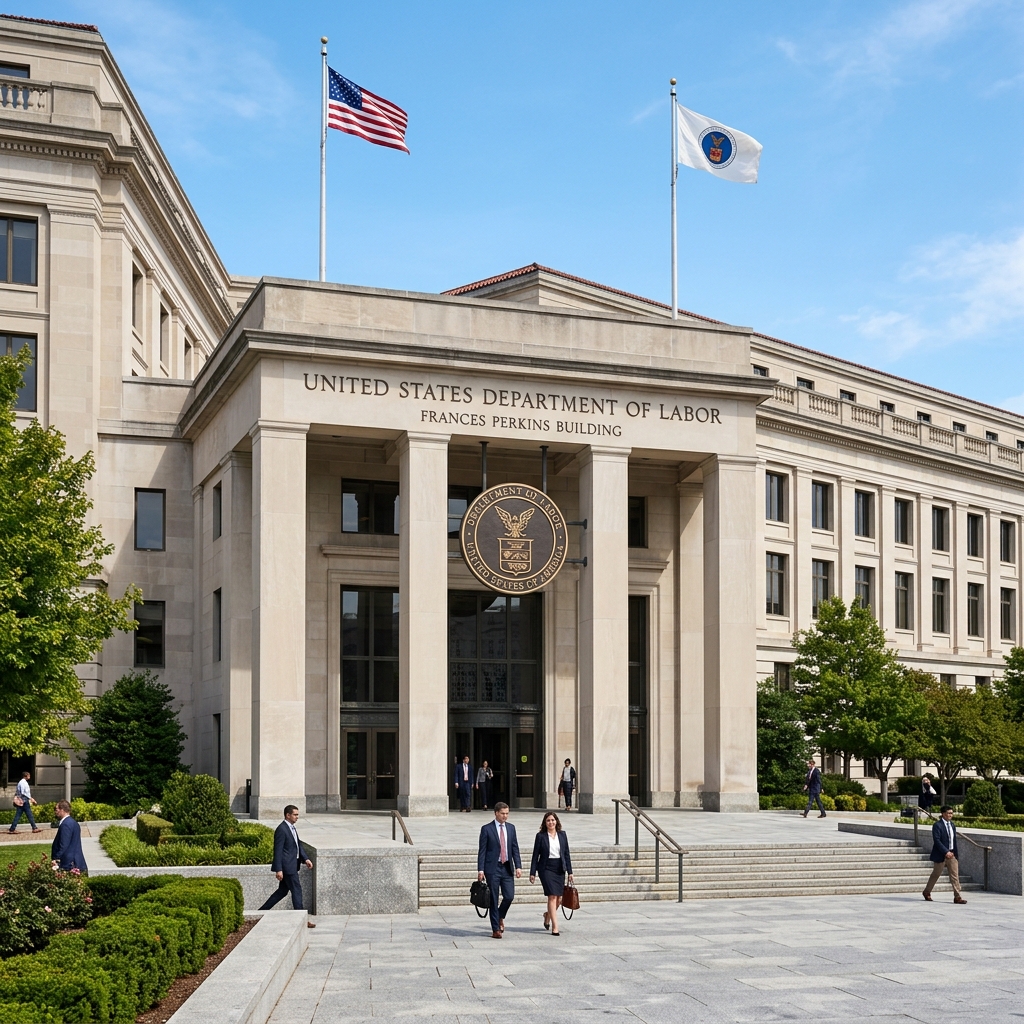
What the U.S. Department of Labor Actually Does
The U.S. Department of Labor is the federal agency most closely associated with worker protections, pay rules, and workplace standards. It helps enforce laws that affect wages, hours, safety, benefits, and certain employment rights, while also collecting labor data and supporting job training and workforce programs.
Although many people know the agency only when a paycheck problem or workplace injury occurs, its work is much broader. The Department of Labor also plays a central role in unemployment insurance administration, retirement and health benefit oversight, and the publication of statistics that shape public policy and employer planning.
The agency’s mission and place in government
The Department of Labor is a Cabinet-level executive branch department. Its mission is to foster and improve the welfare of wage earners, job seekers, and retirees by improving working conditions, supporting employment opportunities, and protecting work-related rights and benefits.
That mission has stayed remarkably consistent over time. The department was established in 1913, reflecting the federal government’s growing role in labor relations, industrial safety, and worker protection as the modern economy expanded.
Main responsibilities at a glance
- Enforcing wage and hour laws, including minimum wage and overtime rules.
- Protecting workers from unsafe conditions through workplace safety standards.
- Administering and supporting unemployment-related programs.
- Overseeing retirement and employee benefit protections.
- Collecting and publishing labor market statistics.
- Promoting workforce development and job training.
Key Parts of the Department of Labor
The Department of Labor is not one single office performing one task. It is a large federal department made up of multiple agencies, each focused on a different slice of the labor market. Together, these offices cover enforcement, research, benefits, and education.
| Agency or function | What it handles |
|---|---|
| Wage and Hour Enforcement | Minimum wage, overtime, child labor, and certain leave-related rules |
| Workplace Safety | Safety and health standards for many workplaces |
| Benefits Oversight | Retirement, health, and other employee benefit protections |
| Employment Statistics | Labor market data, wages, employment trends, and inflation-related measures |
| Workforce Programs | Training, reemployment, and job readiness support |
This division of labor matters because a single employment issue may involve more than one part of the department. For example, a worker who is injured on the job may have safety questions, benefit questions, and wage questions at the same time.
How the Department Protects Workers
One of the department’s core responsibilities is enforcing labor standards that make employment fairer and safer. The agency does not regulate every workplace problem, but it is deeply involved in the major legal rules that govern compensation and conditions of work.
Wages, overtime, and hours
Federal wage laws require many employers to pay at least the minimum wage and to pay overtime when employees work beyond a set number of hours in a workweek, subject to exemptions. The Department of Labor helps interpret and enforce these rules through its wage and hour functions.
These protections matter in common disputes such as unpaid overtime, off-the-clock work, improper employee classification, and questions about whether a worker qualifies for certain exemptions. In practical terms, the department gives workers a place to raise concerns when their pay does not match the law.
Workplace safety and health
The Department of Labor also supports workplace safety standards designed to reduce injuries, illnesses, and fatalities. Its role includes ensuring that employers follow safety rules and that workers have safer working environments.
Safety enforcement is important in industries such as construction, manufacturing, warehousing, and transportation, where hazards can be especially serious. Even in office settings, the agency’s safety framework helps set expectations for hazard prevention and employer responsibility.
Protection against discrimination and related rights
The department is associated with certain employment rights beyond pay and safety, including protections linked to workplace fairness. USAGov notes that the Department of Labor administers federal labor laws that help guarantee rights to fair, safe, and healthy working conditions, including protection against employment discrimination and unemployment insurance.
Some workplace discrimination claims may fall primarily under other federal agencies, but the Department of Labor still plays an important role in employment-related enforcement and guidance. That makes it a major part of the federal labor system even when it is not the only agency involved.
Benefits, Unemployment, and Worker Support
Another important function of the Department of Labor is supporting workers when employment ends or when they need help navigating benefits. The agency’s programs are tied closely to job loss, retirement security, and worker transitions.
Unemployment-related programs
The Department of Labor helps administer unemployment-related benefits, which are typically delivered through state systems but shaped by federal standards and oversight. This arrangement matters because workers usually interact with state agencies, while the Department of Labor sets broad rules, guidance, and funding structures.
In a period of job loss, this federal-state partnership can be the difference between quick access to benefits and a confusing claims process. The Department of Labor’s role is therefore partly administrative and partly supervisory.
Retirement and employee benefits
The department also oversees important issues involving employee benefits and retirement protections. According to USAGov and the department’s own mission statement, this work is part of its responsibility to assure work-related benefits and rights.
For workers, this means the Department of Labor is relevant not only during active employment but also later in life, when retirement plans, health coverage questions, or benefit disputes become significant. It is one reason the agency affects people across the full working lifespan.
Data, Research, and Workforce Development
Beyond enforcement, the Department of Labor is a major source of labor market information. It collects and publishes data on employment, wages, prices, and other indicators that help employers, workers, policymakers, and researchers understand the economy.
Those statistics are not just background numbers. They are used to assess labor shortages, track inflationary pressures, evaluate job growth, and measure the health of key industries. In that sense, the agency informs public debate as well as workplace policy.
Why labor statistics matter
Reliable labor data helps employers plan hiring and compensation, while workers use it to compare wages and evaluate opportunities. Policymakers also rely on it to design training, safety, and employment programs.
This role is sometimes overlooked because it is less visible than enforcement, but it is central to the department’s identity. A labor agency that understands the economy can better enforce laws and design useful programs.
Training and job preparation
The Department of Labor also promotes workforce development, which includes job training and reemployment support. These programs help people move into new work after layoffs, adapt to changing industries, and gain skills that improve long-term earning potential.
Workforce development is especially important when technology, trade, or economic downturns change the nature of available jobs. In those situations, the agency’s role extends beyond regulation and into opportunity-building.
When People Usually Deal with the Department of Labor
Most workers do not think about the Department of Labor every day. Contact usually happens after a problem arises or when someone needs official guidance on rights and benefits.
- A worker believes overtime was not paid correctly.
- An employee suspects misclassification as an independent contractor.
- A jobsite has unsafe conditions or repeated safety violations.
- A person needs help understanding unemployment benefits.
- A retirement or benefit issue requires federal guidance.
Because the department covers so many subjects, the reason for contact can vary widely. Some matters are handled directly by the agency, while others require referral to another office, a state agency, or private legal counsel.
How the Department of Labor Relates to Other Government Offices
The Department of Labor is only one part of the federal employment system. Other agencies may handle tax issues, civil rights complaints, immigration-related work authorization issues, or broader economic policy. The Department of Labor, by contrast, focuses on the workplace relationship itself: pay, conditions, benefits, and training.
This division can be helpful, but it also means workers need to identify the right place to bring a claim. A wage problem may belong with the Department of Labor, while a separate issue involving benefits or another legal right may require a different agency or legal remedy.
What the Department Cannot Do for Every Problem
Even though the Department of Labor is powerful, it does not solve every workplace dispute. It cannot act as a private lawyer for an individual, and it does not replace the court system. Some disputes require a complaint, some require administrative review, and some are resolved only through litigation or settlement.
The practical lesson is that the department is a major resource, but not always the final answer. Workers often use it to begin the process, gather information, or enforce baseline rights before deciding on the next step.
Frequently Asked Questions
What is the main purpose of the Department of Labor? Its main purpose is to promote the welfare of workers, job seekers, and retirees by improving working conditions, protecting employment rights, and supporting access to benefits and training.
Does the Department of Labor handle wage complaints? Yes. Wage and hour enforcement is one of its central functions, including issues involving minimum wage, overtime, and related pay violations.
Does it deal with workplace safety? Yes. The department is responsible for helping enforce workplace safety and health standards that reduce injuries and unsafe conditions.
Can it help with unemployment benefits? Yes. The Department of Labor supports unemployment-related programs, although claims are usually processed through state systems.
Why does the Department of Labor publish statistics? It collects and shares labor market data so employers, workers, researchers, and policymakers can understand employment trends, wages, and broader economic conditions.
Why the Department of Labor Still Matters
The Department of Labor remains one of the most important federal agencies for everyday working life. Its influence shows up in paychecks, safety standards, benefit protections, unemployment support, and the data that shapes economic decision-making.
For workers, understanding the department can make it easier to recognize rights, identify the right complaint process, and know when a workplace issue is more than just a disagreement. For employers, it provides the framework for lawful pay practices, safer workplaces, and compliance with federal labor standards.
References
- What does the Department of Labor (DOL) do? — USAFacts. 2025. https://usafacts.org/explainers/what-does-the-us-government-do/agency/us-department-of-labor/
- What exactly is the DOL (US Department of Labor)? — Indeed. 2025. https://www.indeed.com/hire/c/info/department-of-labor
- U.S. Department of Labor (DOL) — USAGov. 2025. https://www.usa.gov/agencies/u-s-department-of-labor
- A Brief History: The U.S. Department of Labor — U.S. Department of Labor. 2025. https://www.dol.gov/general/aboutdol/history/dolhistoxford
- About Us — U.S. Department of Labor. 2025. https://www.dol.gov/general/aboutdol
- Major Functions of the U.S. Department of Labor — Congressional Research Service, Congress.gov. 2024. https://www.congress.gov/crs-product/IF10975
- U.S. Department of Labor: Home — U.S. Department of Labor. 2025. https://www.dol.gov/
Similar Articles








Read full bio of Sneha Tete




