
Understanding South Dakota DUI Laws and Penalties
Learn how South Dakota defines DUI, when you can be charged, and what penalties and programs you may face after a conviction.
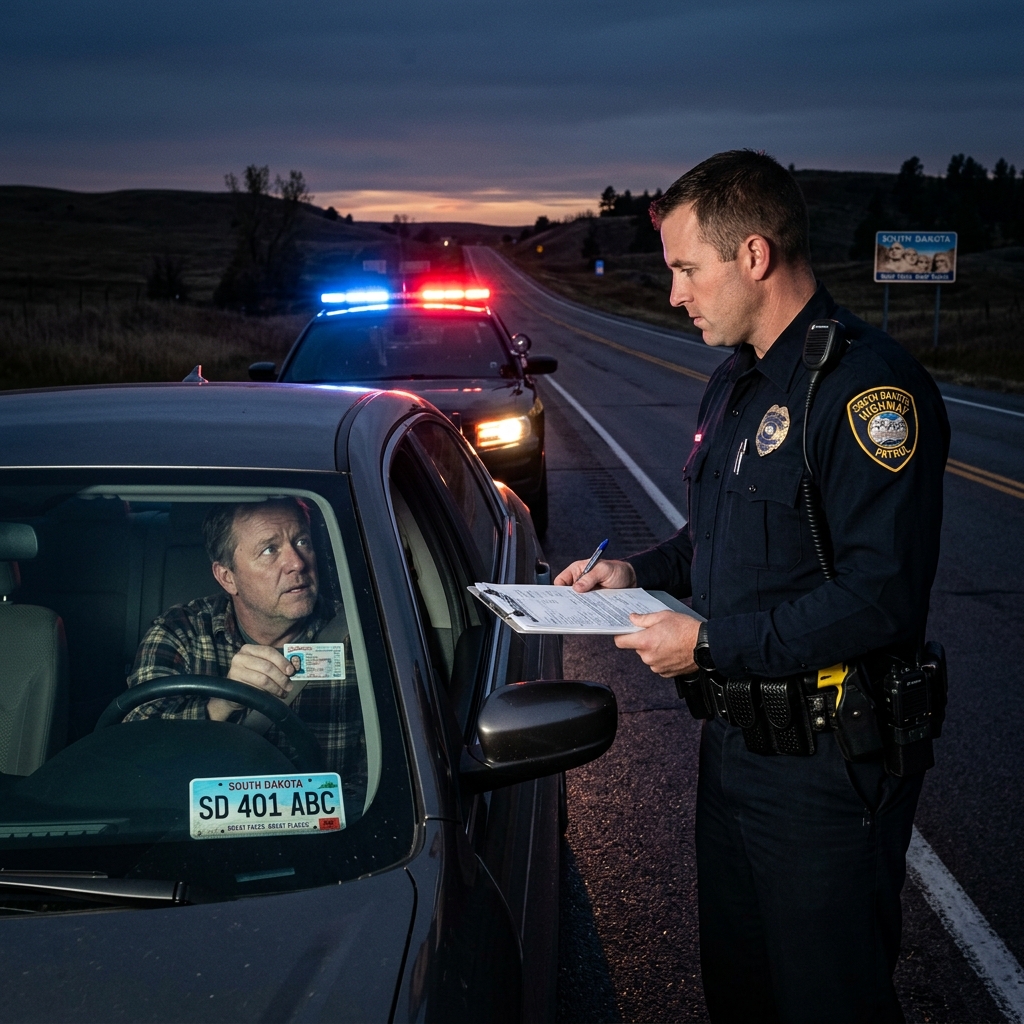
Driving under the influence is treated seriously in South Dakota. State law lays out specific blood alcohol concentration (BAC) limits, a broad definition of impairment, and escalating penalties that can include jail, fines, and long periods without a driver’s license. This guide explains how DUI is defined, what the legal limits are, and what consequences you may face if you are charged or convicted.
How South Dakota Legally Defines DUI
South Dakota uses the term DUI (driving under the influence) to cover a range of situations where a person operates or is in actual physical control of a vehicle while impaired. You do not have to be actively driving down the road to be charged; simply being in control of the vehicle while impaired can be enough.
Under South Dakota Codified Law (SDCL) 32-23-1, a person may not drive or be in control of a vehicle if any of the following apply:
- Their BAC is 0.08% or higher as shown by chemical analysis of breath, blood, or another bodily substance.
- They are under the influence of an alcoholic beverage, marijuana, or a controlled drug or substance without a valid prescription, or a combination of those substances.
- They are under the influence of any controlled drug or prescription or any other substance to a degree that makes them incapable of safely driving.
- They are under the combined influence of alcohol and any drug or substance to a degree that makes them incapable of safe driving.
- They are under the influence of any substance taken into the body in violation of SDCL 22-42-15 (often associated with inhalants or other prohibited substances).
In practice, this means you can be charged with DUI even if your BAC is below 0.08% if officers and prosecutors can show that substances have impaired your ability to drive safely. Alcohol is only one of several substances covered by the law.
Per Se DUI vs. Impairment-Based DUI
South Dakota recognizes both per se DUI and impairment-based DUI. Understanding the difference is important if you are facing a charge.
Per Se DUI
A per se DUI focuses on BAC rather than observable driving behavior. If a chemical test shows a BAC of 0.08% or higher, the law presumes you are under the influence. Law enforcement does not need to prove that your driving was actually impaired; the BAC reading itself is enough to support the charge.
- Standard drivers: BAC of 0.08% or more.
- Commercial drivers: A lower BAC limit of 0.04% often applies under federal and state commercial driving rules (commonly used threshold; consult current CDL provisions for specifics).
The law also uses BAC ranges to guide how impairment is presumed in court. For example, BAC of 0.08% or more is treated as under the influence, while readings below that may be weighed with other evidence.
Impairment-Based DUI
Impairment-based DUI focuses on your condition rather than a specific BAC number. Examples include:
- Being under the influence of marijuana or controlled substances without a valid prescription.
- Being impaired by a lawful prescription medication to a level that makes safe driving impossible.
- Being affected by multiple substances (alcohol plus drugs) such that your ability to drive safely is compromised.
In these cases, officers may rely on field sobriety tests, physical observations, driving behavior, and any chemical tests to build evidence of impairment. The statute explicitly covers prescription drugs and other substances when they render a person incapable of safely driving.
BAC Thresholds and Their Legal Meaning
South Dakota law and related guidance reference several BAC ranges and what they generally mean for a case.
| BAC Range | Typical Legal Interpretation |
|---|---|
| 0.05% or less | Generally, not considered under the influence based solely on BAC. |
| 0.05% to 0.08% | No automatic presumption; BAC can be weighed with other evidence to decide if you were impaired. |
| 0.08% or more | Presumed under the influence; supports a per se DUI charge. |
Even at BAC levels below 0.08%, you may still face charges if officers believe your ability to drive safely was compromised by alcohol or other substances.
Criminal Classification of DUI in South Dakota
South Dakota uses a combination of misdemeanors and felonies for DUI offenses, depending on the number of prior convictions and other factors.
First and Second DUI Offenses
A first-offense DUI is a Class 1 misdemeanor. This is the most serious level of misdemeanor in South Dakota, and it can result in a permanent criminal record.
- Maximum jail time: Up to one year in county jail.
- Maximum fine: Up to $2,000.
- License revocation: Mandatory minimum of 30 days, with the possibility of up to one year.
A second-offense DUI is also treated as a Class 1 misdemeanor, but penalties typically become more severe, especially regarding jail expectations and license revocation length. Courts often impose longer revocation periods and may require additional conditions such as participation in treatment programs.
Third and Subsequent DUI Offenses
A third DUI conviction is generally treated as a Class 6 felony, reflecting the state’s view that repeated impaired driving presents a higher risk to public safety. Later offenses can rise to Class 5 or Class 4 felonies with progressively harsher maximum penalties.
- Class 6 felony (often third DUI): Up to two years in the state penitentiary and up to a $4,000 fine, with at least one year of license revocation.
- Class 5 felony (often fourth DUI): Up to five years in the penitentiary and up to a $10,000 fine, with at least two years of license revocation.
- Class 4 felony (often fifth or sixth DUI): Up to ten years in the penitentiary and up to a $20,000 fine, with at least three years of license revocation.
Higher-level DUI felonies may carry mandatory jail or prison time and lengthy supervision periods. The more prior convictions a person has, the more likely courts are to impose substantial incarceration and extended license revocation.
License Suspensions and Revocations
Losing the right to drive is one of the most disruptive consequences of a DUI conviction in South Dakota. The law requires courts to revoke a person’s license for at least 30 days after a conviction, even for a first offense.
Typical License Consequences
- First offense: Minimum 30-day revocation; commonly up to one year depending on the case.
- Second offense: Often one year of license revocation.
- Felony-level offenses: At least one, two, or three years of revocation depending on the felony class and number of priors.
Administrative license actions by the Department of Public Safety may occur separately from the criminal case. For example, a failed or refused chemical test can trigger an administrative suspension even before the criminal charges are resolved.
In some situations, individuals may seek restricted driving privileges, such as work permits or conditional licenses. These options are limited and usually require strict compliance with court orders and monitoring programs.
Chemical Testing and Refusal
South Dakota, like many states, relies heavily on chemical testing to determine BAC. Breath, blood, or other bodily substances may be analyzed, and results are used in both per se and impairment-based DUI cases.
The state’s implied consent framework means that drivers generally agree to testing as a condition of operating a vehicle on public roads. Refusing a chemical test can lead to separate penalties, including license suspension, even if the driver is later acquitted of DUI.
Enhanced Consequences for High BAC
Some provisions treat high BAC results differently. For example, a BAC of 0.17% or higher may trigger mandatory chemical dependency evaluations and stricter program requirements. Courts tend to view high BAC as evidence of significant risk, increasing the likelihood of intensive supervision and treatment mandates.
Treatment, Evaluation, and Sobriety Programs
South Dakota’s approach to DUI emphasizes both punishment and rehabilitation. Courts often require evaluations and participation in structured programs designed to reduce the risk of future offenses.
Chemical Dependency Evaluations
For many DUI cases, especially those with high BAC readings or repeat offenses, courts may order a chemical dependency evaluation. A licensed counselor assesses whether the person has a clinically significant substance use disorder and recommends appropriate treatment.
- Evaluations help determine the level of substance abuse risk.
- Recommendations can include outpatient counseling, intensive programs, or inpatient treatment.
- Compliance with treatment is often a condition of probation or sentencing.
24/7 Sobriety Program
South Dakota is known for its 24/7 Sobriety Program, a supervision approach that requires individuals to demonstrate ongoing sobriety.
- Participants may have to report twice daily for breath alcohol tests.
- Some individuals wear continuous alcohol-monitoring devices.
- Violations, such as missed tests or positive results, can lead to immediate sanctions.
The program’s goal is to prevent repeat impaired driving by ensuring that participants remain alcohol-free while under supervision. Courts may view successful completion of 24/7 Sobriety as a positive factor in future sentencing decisions.
Underage DUI and Zero-Tolerance Policies
Younger drivers face additional restrictions. Because of the increased crash risk associated with underage drinking and driving, South Dakota uses a zero-tolerance approach to underage DUI.
Key points include:
- Individuals under 21 can be charged if their BAC is 0.02% or higher.
- An underage DUI at 0.02% or more is often treated as a Class 2 misdemeanor, with penalties such as fines, short jail exposure, and license suspension.
- If an underage driver’s BAC reaches 0.08% or more, they may face the same adult DUI penalties described for standard offenses.
Even seemingly small amounts of alcohol can lead to legal consequences for underage drivers, and any conviction can carry long-term ramifications for education, employment, and insurance.
Collateral Consequences of a DUI Conviction
Beyond court-ordered penalties, a DUI conviction may have wide-ranging impacts on a person’s life.
- Criminal record: A Class 1 misdemeanor or felony DUI becomes part of your record and may show up on background checks.
- Employment: Jobs that require driving, professional licensing, or security clearances may be affected.
- Insurance: Auto insurance premiums often increase sharply after a DUI, and some carriers may cancel policies.
- Travel and licensing: Some professional licenses and travel visas consider DUI convictions in evaluating applications.
Because of these collateral consequences, many people seek legal guidance quickly after an arrest to understand all potential outcomes.
Practical Tips If You Face a DUI Charge in South Dakota
While this article is not legal advice, there are practical steps many attorneys recommend if you are facing a DUI allegation:
- Consult with a licensed South Dakota criminal defense or DUI attorney promptly.
- Keep all paperwork from law enforcement and the court organized.
- Track all deadlines related to license hearings and court appearances.
- Consider early evaluation and treatment if substance use is a concern.
- Comply meticulously with any court orders regarding testing or programs.
Early action can make a difference in protecting your driving privileges and managing the scope of potential penalties.
Frequently Asked Questions About South Dakota DUI
Is DUI always based on a BAC of 0.08% or higher?
No. While a BAC of 0.08% or more creates a presumption that you are under the influence, you can also be charged based on impairment caused by alcohol, drugs, or other substances even if your BAC is lower.
Can prescription medications lead to a DUI charge?
Yes. South Dakota law specifically covers controlled drugs obtained by prescription and other substances when they render a person incapable of safe driving. If a medication affects your ability to operate a vehicle safely, you may be at risk of a DUI charge.
What is the maximum penalty for a first DUI in South Dakota?
A first DUI is a Class 1 misdemeanor and carries up to one year in county jail, a fine of up to $2,000, and at least 30 days of driver’s license revocation.
Do underage drivers face different BAC limits?
Yes. South Dakota applies a zero-tolerance policy to underage drivers, meaning a BAC of 0.02% or higher can lead to an underage DUI charge. At 0.08% or higher, underage drivers may face the same penalties as adults.
What is the 24/7 Sobriety Program and who has to participate?
The 24/7 Sobriety Program is a monitoring system where participants must regularly prove they are not consuming alcohol, often through twice-daily breath tests or continuous monitoring devices. Judges commonly require participation for repeat offenders or those considered high-risk, and it may be mandatory in some high-BAC or multiple-offense cases.
References
- Codified Law 32-23-1 — South Dakota Legislature. 2024-01-01. https://sdlegislature.gov/Statutes/32-23-1
- Codified Law 32-23 — South Dakota Legislature. 2024-01-01. https://sdlegislature.gov/Statutes/32-23
- Driving While Under the Influence — Brookings County, South Dakota. 2023-06-15. https://www.brookingscountysd.gov/246/Driving-While-Under-the-Influence
- South Dakota DUI Laws — National College for DUI Defense. 2023-05-10. https://www.ncdd.com/south-dakota-dui-laws
- What are the penalties for a first offense DUI in South Dakota? — Myers Billion LLP. 2023-04-01. https://www.myersbillion.com/blog/what-are-the-penalties-for-a-first-offense-dui-in-south-dakota/
- South Dakota DUI Laws — FindLaw. 2024-02-01. https://www.findlaw.com/state/south-dakota-law/what-are-the-south-dakota-dui-laws.html
Similar Articles








Read full bio of medha deb




