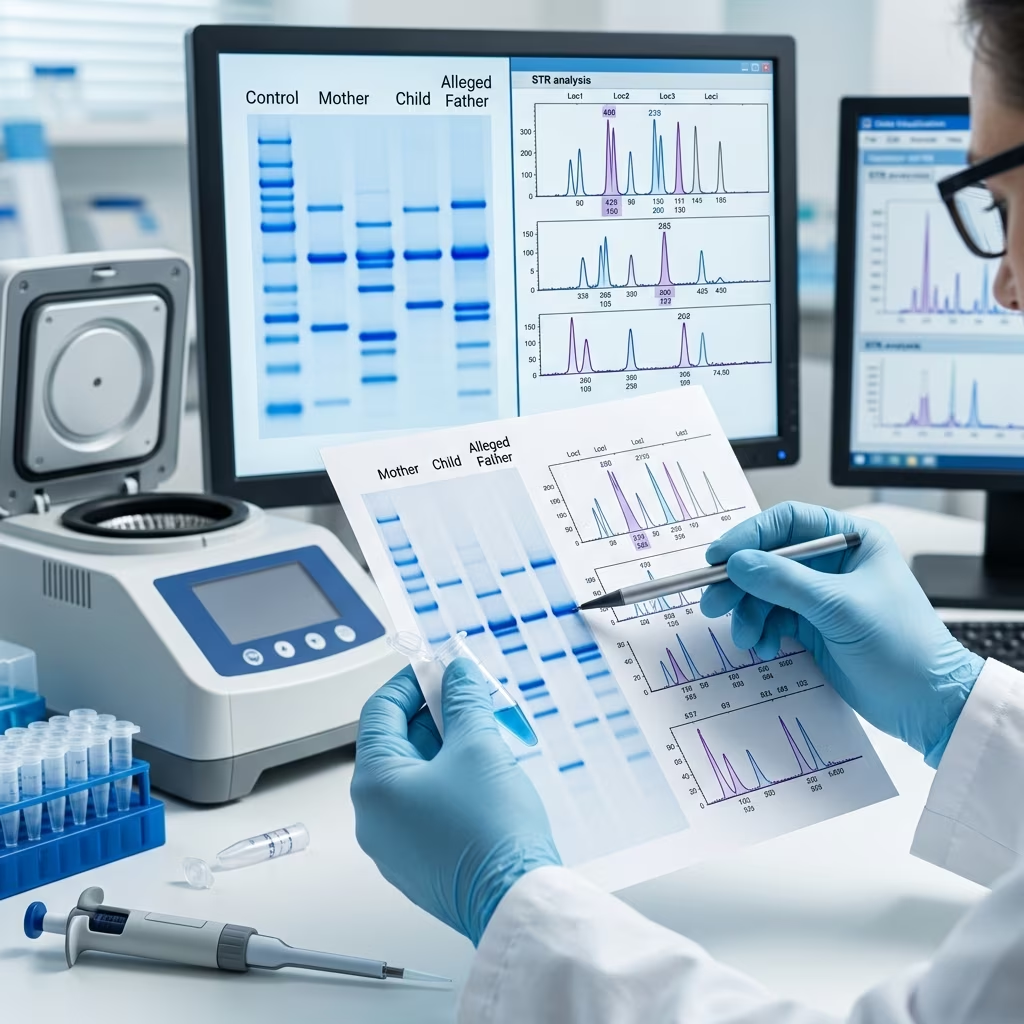
How Paternity Testing Helps Establish Parentage
Paternity testing is used to determine whether a particular man is the biological father of a child. In family law, that question can affect custody, child support, inheritance, benefits, and a child’s legal identity. Modern tests rely on genetic comparison, which makes them far more accurate than older methods based only on physical appearance or blood type.
Although people sometimes speak generally about a “paternity test,” there are different testing methods and different reasons for taking one. Some tests are performed for personal knowledge, while others are designed to meet legal standards in court or before a government agency. The sample used may come from blood, a cheek swab, or in some situations, a prenatal blood test taken during pregnancy.
From Blood Typing to DNA Analysis
Earlier approaches to paternity relied heavily on blood typing and other inherited traits. Blood tests could sometimes rule out a man as the father, but they could not usually identify fatherhood with the level of certainty expected today. Modern testing has moved beyond that limitation by examining DNA directly, which provides a much stronger genetic comparison.
DNA-based testing looks at specific markers inherited from both parents. Because a child receives half of their DNA from the biological mother and half from the biological father, the child’s genetic profile can be compared to that of the alleged father. If the markers do not match, the man can be excluded. If the markers align across the tested regions, the result can show an extremely high probability of paternity.
What a DNA Paternity Test Measures
DNA paternity testing focuses on inherited genetic markers rather than broad biological similarity. Laboratories analyze regions of DNA that are highly variable between individuals. These regions make it possible to compare a child’s genetic pattern with the alleged father’s pattern and determine whether a biological relationship exists.
When the mother’s sample is also available, the test can become even more precise because the laboratory can identify which markers came from the mother and which must have come from the father. That three-person comparison is one reason many legal tests include samples from the child, the mother, and the alleged father.
- A child inherits one set of chromosomes from each biological parent.
- Matching markers support a biological relationship.
- Non-matching markers can exclude a man as the father.
- Including the mother can improve interpretive accuracy.
Common Sample Collection Methods
Most modern paternity tests use a cheek swab, also called a buccal swab. This method is quick, noninvasive, and usually painless. A sterile swab is rubbed on the inside of the cheek to collect cells that contain DNA. Those cells are then sent to a laboratory for analysis.
Blood samples are also acceptable in many testing situations. A blood draw can be useful when a laboratory or court prefers that method, or when a specific test protocol requires it. Blood testing is less convenient than a cheek swab, but it still provides DNA that can be compared just as effectively. In practical terms, the type of sample matters less than whether the laboratory follows proper collection and handling procedures.
Legal Testing and Personal Testing Are Not the Same
People often assume that any DNA test can be used in court, but that is not true. A personal or at-home test may answer a private family question, but it may not satisfy the documentation requirements for a legal proceeding. Legal paternity tests generally require controlled sample collection, verified identities, and a documented chain of custody.
That distinction matters if the result will be used to establish child support, modify custody, add a father’s name to a birth certificate, or resolve a dispute in family court. When the result has legal consequences, the testing process must be more formal than a privately ordered kit used for informational purposes only.
| Testing Type | Main Purpose | Typical Sample | Legal Use |
|---|---|---|---|
| Personal test | Private knowledge | Cheek swab | Usually no |
| Legal test | Court or agency use | Cheek swab or blood | Yes |
| Prenatal test | Determine paternity before birth | Maternal blood plus father’s sample | Sometimes, depending on procedure |
How Accurate Paternity Testing Is
Modern DNA paternity testing is considered highly accurate. When the alleged father is excluded, the result is generally treated as conclusive for the tested relationship. When the samples match, the result is reported as a probability of paternity rather than an absolute statement, but that probability is typically extremely high.
In many cases, properly conducted DNA testing can produce a probability of paternity around 99.9 percent or higher when the tested man is the biological father. That level of certainty explains why courts and child support agencies regularly rely on DNA evidence when parentage is disputed.
Accuracy depends on several factors, including the quality of the sample, the laboratory’s procedures, and whether the correct people were tested. A trustworthy result requires not only strong science, but also careful handling from collection to reporting.
Paternity Testing During Pregnancy
Paternity does not always have to wait until after birth. Prenatal testing options now exist, including non-invasive methods that can be performed early in pregnancy. These tests generally use a blood sample from the mother and a sample from the alleged father, often collected by cheek swab. The laboratory then isolates fetal DNA fragments circulating in the mother’s blood and compares them to the father’s genetic profile.
Non-invasive prenatal testing is attractive because it avoids the procedures historically associated with greater medical risk. For that reason, it is commonly presented as the safer prenatal route when paternity must be determined before delivery. Even so, prenatal paternity testing may cost more than postnatal testing because of the advanced technology involved.
Why Courts and Agencies Care About the Result
Establishing paternity is often a legal turning point rather than just a biological one. Once paternity is confirmed, a father may gain rights and responsibilities related to the child. Those can include the duty to support the child financially, as well as the ability to seek custody or visitation.
Government agencies and courts use DNA results because they are objective, scientifically grounded, and easier to defend than witness testimony or personal belief. In disputes where the identity of a child’s legal father is uncertain, a test result can settle questions that might otherwise remain unresolved for years.
- Child support decisions often depend on confirmed parentage.
- Custody and visitation rights may follow a paternity determination.
- Birth records may need to be corrected or completed.
- Inheritance and benefit claims may depend on legal fatherhood.
What Happens After the Sample Is Collected
After collection, the sample is sent to a laboratory where the DNA is extracted and analyzed. The lab compares the genetic markers across the tested individuals and calculates the probability that the alleged father is the biological father. If the test excludes him, the report will say so plainly. If the test supports paternity, the report will explain the probability value and the basis for that conclusion.
The timing for results varies by lab and by test type. A simple cheek swab may be processed more quickly than a prenatal case or a legally documented test with additional verification steps. Regardless of the timeline, the report should clearly explain the outcome in language that a court or agency can understand.
Questions People Often Ask Before Testing
Many families want practical information before scheduling a paternity test. The most common concerns involve accuracy, privacy, cost, and whether the result can later be used in a legal case. Those questions are reasonable because the decision to test can affect family relationships as well as legal obligations.
Some people also want to know whether a cheek swab is as reliable as a blood sample. In modern DNA testing, both can be highly reliable because both contain the same genetic information. The deciding factor is usually the laboratory method, not the sample type itself.
Frequently Asked Questions
Can a paternity test be done without blood? Yes. A cheek swab is the most common method and is widely used for both personal and legal testing.
Can a blood test still be used? Yes. Blood remains an acceptable sample in many settings, especially when a laboratory or testing protocol calls for it.
Is a positive result always 100 percent certain? No. Positive results are usually reported as very high probabilities rather than absolute certainty, while exclusions are generally conclusive for the tested relationship.
Can paternity be tested before birth? Yes. Non-invasive prenatal options can test for paternity during pregnancy using maternal blood and the alleged father’s DNA sample.
Will an at-home test hold up in court? Usually not by itself. A legal test with proper identification and chain of custody is typically required for court or agency use.
Choosing the Right Testing Path
The best testing method depends on the reason for the test. If the goal is private knowledge, an at-home cheek swab may be enough. If the result will determine legal rights or obligations, a formal legal test is the safer choice. If the family needs answers before a child is born, a prenatal option may be available, but it should be selected carefully and discussed with an appropriate medical or legal professional.
Because paternity has both emotional and legal consequences, the testing process should be approached thoughtfully. The science is strong, but the context matters too. A well-chosen test can provide clarity, reduce conflict, and help families and courts make informed decisions based on reliable evidence.
References
- Paternity Blood Tests and DNA — FindLaw. 2026. https://www.findlaw.com/family/paternity/paternity-tests-blood-tests-and-dna.html
- Paternity Test: How DNA Testing Works and Results — Testing.com. 2025. https://www.testing.com/tests/paternity-test/
- DNA Paternity Test — American Pregnancy Association. 2025. https://americanpregnancy.org/unplanned-pregnancy/dna-paternity-test/
- DNA/Relationship Testing Services — American Red Cross. 2025. https://www.redcrossblood.org/biomedical-services/blood-diagnostic-testing/dna-laboratory-services.html