
Understanding Homeowners Associations Before You Buy
Learn how homeowners associations work, what they can and cannot do, and how their rules, fees, and powers affect everyday life in your community.
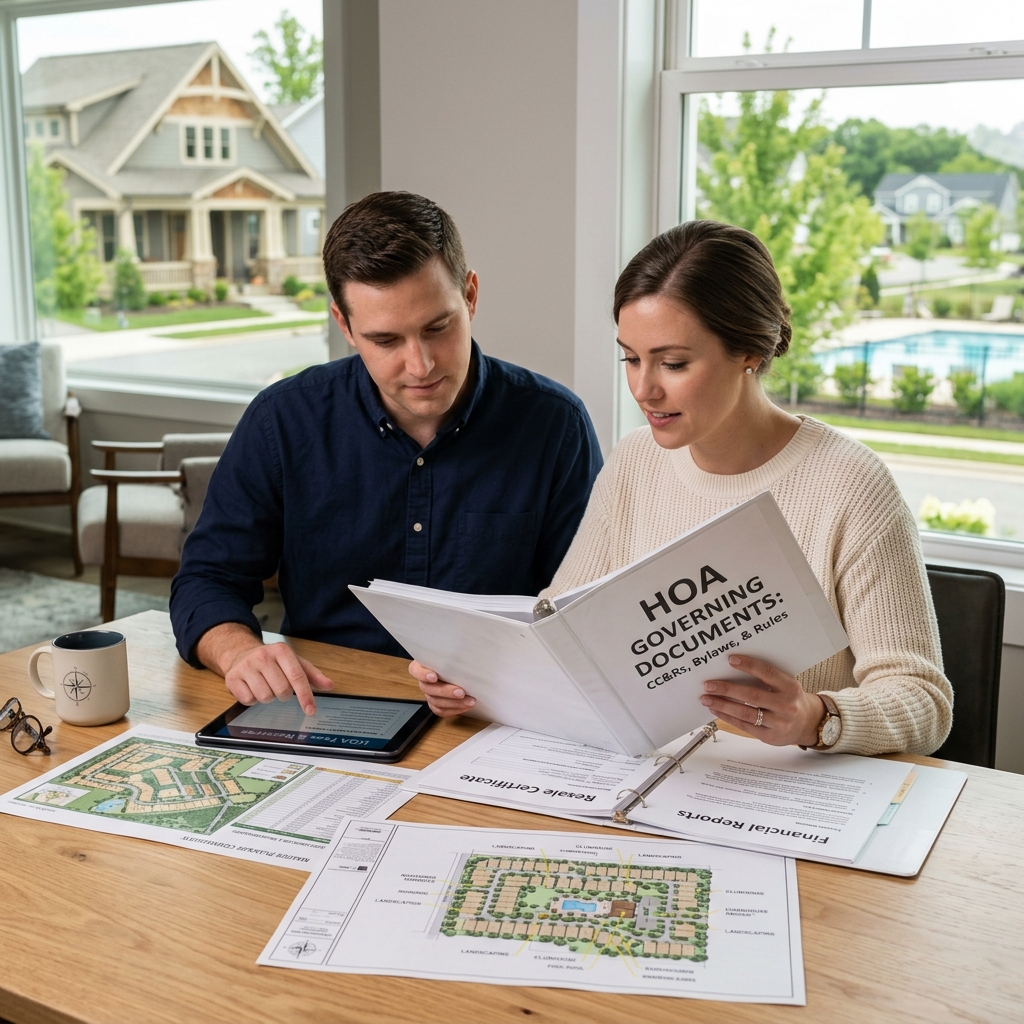
Buying a home in a modern planned community or condominium often means becoming part of a homeowners association (HOA). An HOA can shape everything from how your neighborhood looks to how disputes are resolved, and membership is usually mandatory for anyone who owns property within the development.[10] Understanding how HOAs work before you purchase can help you decide whether a community is the right fit and avoid surprises after closing.
What Is a Homeowners Association?
A homeowners association is a private organization that manages and regulates a residential community, typically a subdivision, planned development, or condominium building.[10] When you purchase property in the community, you generally become a member of the HOA automatically and agree to follow its rules and pay assessments.[10]
Most HOAs are set up as non-profit corporations or similar entities, governed by a board of directors elected by the homeowners.[10] The board is responsible for enforcing rules, approving budgets, maintaining common areas, and making decisions on behalf of the association.
- Membership – Usually mandatory for owners within the development.
- Funding – Dues, fees, and special assessments paid by homeowners.[10]
- Governance – Board of directors, committees, and community meetings.
- Legal structure – Often incorporated as non-profit or similar entity.
Key Governing Documents and Legal Framework
HOAs do not operate in a vacuum. Their authority comes from a combination of private documents and state law. These materials set out the rules, the association’s powers, and homeowners’ rights.
Core Documents You Should Review
- Declaration of Covenants, Conditions, and Restrictions (CC&Rs) – Recorded in the land records and binds each property in the community. It outlines use restrictions, maintenance obligations, and the association’s enforcement powers.
- Bylaws – Explain how the HOA is governed, including board elections, officer roles, meeting procedures, and voting rules.
- Rules and Regulations – Day-to-day policies adopted by the board under the authority of the CC&Rs and bylaws, such as parking rules, amenity use, and architectural guidelines.
- Budget and Financial Statements – Show how the association sets dues, spends money, and reserves funds for future repairs.[10]
State law usually sets baseline requirements for how HOAs operate, often through specific statutes for common-interest communities. For example, California’s Davis–Stirling Common Interest Development Act regulates HOA governance, disclosures, and owner rights in that state. Many states likewise require notice of meetings, access to records, and fair procedures before fines or penalties.
| Element | What It Does | Why It Matters to Buyers |
|---|---|---|
| CC&Rs | Impose binding restrictions and grant enforcement powers. | Defines what you can and cannot do with your property. |
| Bylaws | Set governance structure and election procedures. | Influences how responsive and accountable the HOA is. |
| Rules & Regulations | Provide detailed community standards. | Affect everyday living, from pets to parking. |
| State Law | Imposes consumer protections and procedural requirements. | Limits HOA powers and protects owner rights. |
What Do HOAs Do for the Community?
The specific activities of an HOA vary widely, but most associations share several core functions. They maintain common property, enforce rules, collect assessments, and sometimes provide amenities such as pools, clubhouses, or security services.[10]
Common Responsibilities
- Maintaining shared areas – Landscaping, lighting, roads or private streets, sidewalks, playgrounds, pools, and other facilities.[10]
- Managing insurance and risk – Obtaining coverage for common property and sometimes for buildings in condominium projects.[10]
- Setting and enforcing standards – Architectural review, exterior appearance rules, and behavior rules intended to preserve property values.[10]
- Budgeting and financial management – Creating annual budgets, setting assessments, funding reserves for major repairs.[10]
- Organizing community events – Social activities, meetings, and communications that foster community cohesion.
Associations often justify their rules and dues on the grounds that consistent standards and maintained amenities help protect or enhance property values.[10] Whether this is true in a particular community depends on the quality of management and homeowner participation.
HOA Fees, Assessments, and How They Are Calculated
When you join an HOA community, you must pay regular assessments (often monthly or quarterly) and may also face special assessments for large projects. These amounts fund operations, maintenance, and reserves.[10]
Types of Charges
- Regular assessments – Standard dues that cover recurring expenses like landscaping, utilities for common areas, management fees, and routine repairs.[10]
- Special assessments – Extra charges approved under the governing documents and applicable law to pay for major projects, such as roof replacement or road resurfacing.
- Fines and penalties – Monetary sanctions for violating rules, if authorized by the governing documents and imposed under fair procedures.
Amounts are typically allocated among owners based on one of two approaches:
- Per-unit basis – Each home pays the same fee.
- Proportionate interest – Fees are tied to square footage, percentage interest in common elements, or another formula defined in the CC&Rs.
In many states, HOAs must give notice and sometimes obtain owner approval before imposing certain special assessments or significant increases. Reviewing the budget and reserve study can help you gauge whether future assessments are likely.
Common HOA Rules and Restrictions
HOAs exist partly to maintain a consistent look and feel across the community. To accomplish this, they adopt detailed rules and architectural standards that owners must follow.[10] These rules are usually legally binding as long as they are authorized by the governing documents and comply with state and federal law.
Typical Areas Covered by HOA Rules
- Exterior changes – Requirements for paint colors, roofing materials, fences, and major modifications often require prior approval.
- Landscaping – Standards for lawns, trees, shrubs, and sometimes limits on native or drought-tolerant plants unless protected by statute.
- Parking and vehicles – Prohibitions on commercial vehicles, RVs, or street parking, and towing procedures for violations.
- Use of amenities – Rules for pools, gyms, parks, and clubhouses, including guest policies and hours of operation.
- Noise and nuisance – Prohibitions on activities that disturb neighbors or create safety concerns.
- Flags, signs, and solar equipment – Often subject to detailed regulation, though federal and state laws may protect certain displays or installations.
Rules must be enforced consistently. Selective or discriminatory enforcement can violate fair housing laws or state HOA statutes and may be grounds for legal challenge.
Homeowners’ Rights in HOA Communities
While HOAs have significant authority, homeowners retain important rights. These rights come from property law, the association’s own documents, and state and federal statutes. Knowing these protections can help you navigate disputes and participate effectively in community governance.
Participation and Voting Rights
- Right to vote – Owners typically vote on board elections, changes to governing documents, and certain major expenditures, as defined by the bylaws and CC&Rs.
- Right to attend meetings – State laws often require HOAs to provide notice of open meetings and allow homeowners to attend and address the board during designated times.
- Right to serve on the board or committees – Qualified owners can run for board positions or volunteer for committees, subject to eligibility rules in the bylaws.
Access to Information and Transparency
- Access to records – Owners typically have the right to inspect and copy association documents, such as financial reports, meeting minutes, and governing materials, subject to reasonable procedures and privacy limits.
- Annual disclosures – Many states require HOAs to distribute budgets, reserve information, insurance summaries, and policy statements each year.
- Notice of meetings and changes – Statutes and governing documents often mandate written notice for meetings, rule changes, and assessment increases.
Fair Treatment and Due Process
- Non-discrimination – HOAs must comply with fair housing laws and cannot treat owners differently based on protected characteristics such as race, religion, or disability.
- Right to a hearing before discipline – Owners commonly have a right to advance notice and a chance to be heard before the HOA imposes serious fines or suspends privileges.
- Right to challenge decisions – Owners may dispute HOA actions through internal processes, alternative dispute resolution, or court proceedings if the board exceeds its authority or violates governing documents or law.
Risks and Enforcement Powers: What HOAs Can Do
Because HOAs manage shared property and enforce community standards, they hold powerful tools to compel compliance. These powers must be authorized by the CC&Rs or statutes and exercised under proper procedures.
- Impose fines – When allowed by the governing documents, HOAs may fine owners for rule violations, though courts have limited fines to those specifically authorized.
- Restrict privileges – Associations can suspend access to amenities such as pools or clubhouses for nonpayment or serious violations, subject to legal limits.
- Collect unpaid assessments – HOAs may record liens, charge late fees, and use collection procedures for unpaid dues, often including interest and legal costs.
- Foreclose on property – In certain jurisdictions and under specific conditions, an HOA may initiate foreclosure to enforce a lien for unpaid assessments, but strict statutory requirements typically apply.
These enforcement mechanisms make HOA obligations serious: ignoring dues or rules can lead to escalating financial consequences. At the same time, owners can often negotiate payment plans or use dispute resolution procedures to avoid litigation.
Evaluating an HOA Before You Buy
When considering a home in an HOA community, it is wise to treat the association like a long-term business partner. Reviewing its documents and culture can reveal whether you will be comfortable living under its rules.
Practical Steps for Prospective Buyers
- Request and read the CC&Rs, bylaws, and current rules from the seller or association.
- Review recent budgets, reserve studies, and financial statements to assess fiscal health.[10]
- Ask about any pending special assessments or major capital projects.
- Check minutes of recent board meetings for recurring issues or conflicts.
- Talk to current residents about their experience with enforcement, responsiveness, and community culture.
- Confirm how dues and assessments are calculated and whether they have increased significantly over time.[10]
If you are uncomfortable with the level of control or the association’s track record, you may want to reconsider buying in that particular community. Conversely, a well-run HOA with transparent governance and adequate reserves can be a positive factor in your decision.
Frequently Asked Questions About HOAs
Are HOA rules legally binding?
HOA rules are generally legally enforceable if they are adopted under the authority of valid governing documents and do not conflict with local, state, or federal law. Owners agree to follow these rules when they purchase property in the community and accept the recorded restrictions.
Can an HOA change the rules after I buy my home?
Yes. Boards can usually adopt or amend rules, and owners may vote on changes to CC&Rs or bylaws, following the procedures in the documents and applicable statutes. You should receive notice of proposed changes and may have opportunities to comment or vote.
Do I have to join the HOA?
In most planned developments and condominiums, membership is automatic and mandatory when you buy property in the community.[10] Voluntary associations do exist, but they are less common and typically arise in older neighborhoods without recorded CC&Rs.
What if I disagree with a board decision?
You can attend meetings, raise concerns, and use any internal appeal processes provided in the governing documents. If the dispute involves alleged violations of law or the association’s own rules, you may seek mediation, arbitration, or court relief, depending on your state’s framework.
Can an HOA take my home if I don’t pay dues?
In some jurisdictions, HOAs may foreclose on a lien for unpaid assessments under strict legal procedures. However, foreclosure is usually a last resort after notices, opportunities to cure, and other collection efforts. Owners often can avoid this outcome by communicating early and exploring payment arrangements.
References
- Homeowners Associations — State of California Department of Justice. 2021-03-15. https://oag.ca.gov/consumers/general/homeowner_assn
- Homeowner association — National Association of Realtors (definition and overview). 2022-09-01. https://www.nar.realtor/homeowners-associations-hoas
- Davis–Stirling Common Interest Development Act – Homeowner Rights — Executive Council of Homeowners (ECHO). 2023-02-10. https://echo-ca.org/17-legal-rights-homeowners-living-hoas/
- HOA Rights & Responsibilities — Community Association Management Services (CAMS). 2022-06-30. https://www.camsmgt.com/cams-blog/rights–responsibilities-in-an-HOA
- Homeowners Associations (HOA) in Florida: Legal Rights and Obligations — Scott Harris Law. 2021-11-05. https://www.scott-harris.com/florida-hoa-legal-rights-obligations/
- What are my rights regarding my homeowners’ association (HOA)? — Texas State Law Library. 2023-01-18. https://www.sll.texas.gov/faqs/hoa-rights/
- An HOA FAQ: Fees, Rules, Rights, and More — Harris Sliwoski LLP. 2022-08-12. https://harris-sliwoski.com/blog/an-hoa-faq-fees-rules-rights-and-more/
Similar Articles








Read full bio of Sneha Tete


