
Understanding Alabama Harassment and Harassing Communications Laws
A practical guide to Alabama’s harassment and harassing communications statutes, penalties, and key legal definitions for victims and defendants.
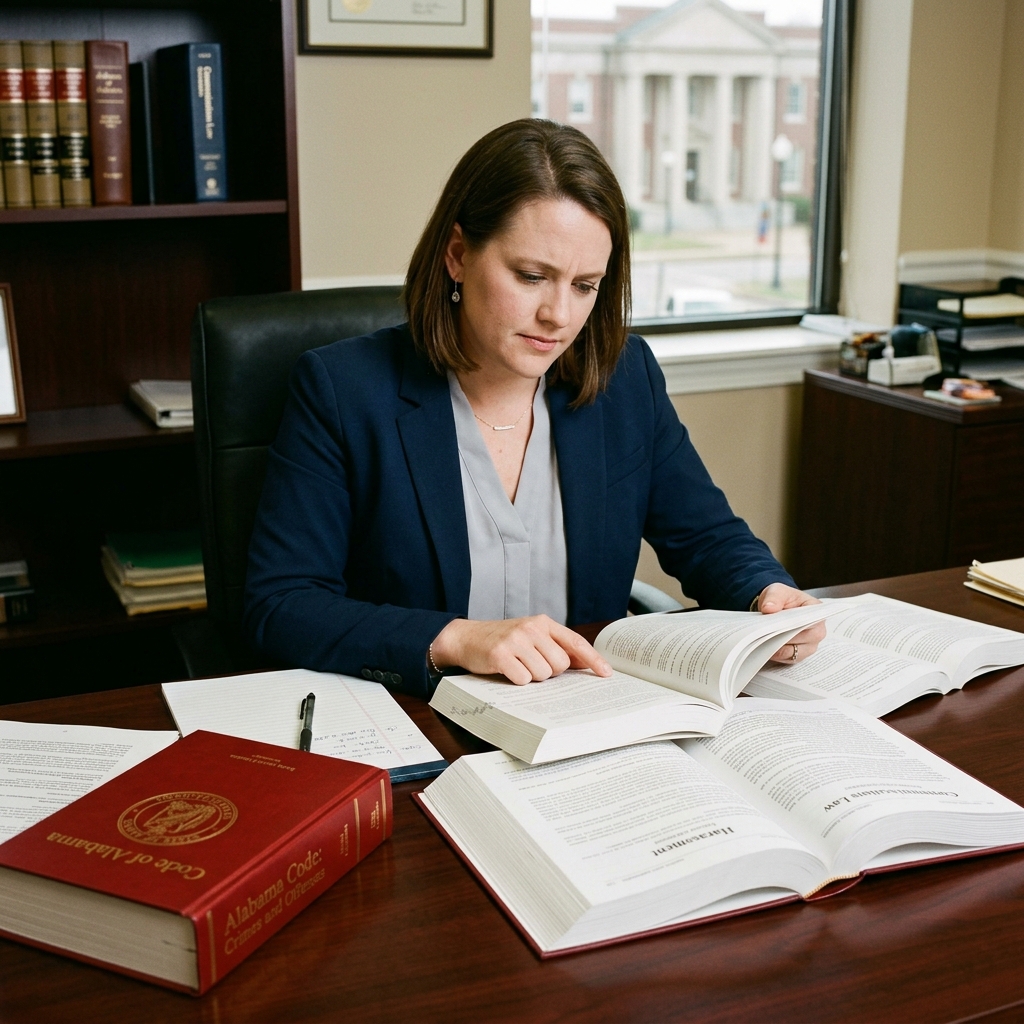
Alabama treats harassment and harassing communications as criminal offenses, with specific definitions and penalties laid out in the state’s criminal code. Anyone living, working, or communicating in Alabama can be affected by these laws, whether as a potential victim, accused person, or employer handling complaints.
This guide explains how Alabama law defines harassment and harassing communications, what conduct is covered, the possible penalties, and practical issues that commonly arise in real cases. It is for general information only and does not replace legal advice from a licensed Alabama attorney.
Legal Framework: Where Alabama Harassment Law Comes From
Harassment in Alabama is primarily governed by Alabama Code §13A-11-8, part of the state’s criminal code on public order offenses. The same section also defines the separate crime of harassing communications that often covers phone, electronic, and other written contact.
- Harassment – Focuses on physical contact, abusive language, obscene gestures, and certain threats.
- Harassing communications – Focuses on how someone uses telephone, mail, or electronic communication in a way that is intended to harass or alarm another person.
- Both offenses are generally classified as Class C misdemeanors, carrying potential jail time and fines.
These laws are designed to protect people from persistent, alarming, or abusive conduct, while still allowing legitimate business and ordinary social interactions.
What Counts as Harassment Under Alabama Law?
Under Ala. Code §13A-11-8(a), a person commits the crime of harassment if, with the intent to harass, annoy, or alarm another person, they engage in specific types of conduct. Intent—meaning the purpose behind the conduct—is a central element.
Core Conduct That May Be Harassment
Alabama law lists two primary categories of behavior that can amount to harassment when done with the required intent:
- Physical contact
A person may commit harassment if they strike, shove, kick, or otherwise touch another person, or subject that person to physical contact, with the intent to harass, annoy, or alarm. - Abusive language or obscene gestures
Directing abusive or obscene language at someone, or making an obscene gesture towards them, can also qualify as harassment when done with the required intent.
Not every shove or offensive remark will automatically be harassment. Prosecutors must prove both the conduct itself and the specific intent to harass, annoy, or alarm the other person.
Threats Treated as Harassment
Alabama’s statute clarifies that certain threats are included within harassment even if no physical contact actually occurs.
A threat—whether verbal or nonverbal—can fall under harassment if:
- The threat is made with the intent to carry it out; and
- The threat would cause a reasonable person who is the target to fear for their safety.
This “reasonable person” standard means the law does not depend solely on the victim’s subjective feelings but instead asks whether an ordinary person in the same situation would reasonably fear for their safety.
Elements the State Must Prove
Alabama’s pattern jury instructions detail what prosecutors must establish beyond a reasonable doubt to obtain a harassment conviction.
- That the defendant engaged in one of the listed behaviors:
– Struck, shoved, kicked, or otherwise touched the person; or
– Directed abusive or obscene language or made an obscene gesture towards the person. - That the defendant acted with the intent to harass, annoy, or alarm the other person.
If the state fails to prove any required element, the jury must find the defendant not guilty of harassment.
Harassing Communications: When Contact Itself Becomes a Crime
Beyond in-person conduct, Alabama law criminalizes certain forms of communication when used to harass or alarm another person. These are referred to as harassing communications and are also defined in Ala. Code §13A-11-8.
Forms of Communication Covered
A person commits harassing communications if, with intent to harass or alarm another person, they engage in any of the following behaviors:
- Harassing written or electronic contact
Communicating with someone by telephone, telegraph, mail, or any form of written or electronic communication in a manner likely to harass or cause alarm. - Telephone calls without legitimate purpose
Making a telephone call, whether or not a conversation happens, when the call has no legitimate communicative purpose. - Lewd or obscene phone language
Calling another person and addressing lewd or obscene words or language to or about that person.
The statute specifically excludes legitimate business telephone communications from criminal liability, even if the call is unwelcome.
Electronic Communication and Modern Context
Because the law references “any other form of written or electronic communication,” it can apply to a wide range of modern technologies, including:
- Text messages
- Emails
- Social media direct messages
- Messaging apps and online platforms
Whether particular conduct through these channels counts as harassing communications depends on the facts of the case and the intent behind the messages.
Penalties and Classification of Offenses
Under Alabama law, both harassment and harassing communications are typically treated as Class C misdemeanors. This classification determines the maximum possible punishment if someone is convicted.
General Penalties for Class C Misdemeanors
Alabama law provides sentencing ranges for misdemeanors. A Class C misdemeanor may result in:
- Up to three months in a county jail or three months of hard labor for the county
- A monetary fine (subject to limits in the criminal code)
- Probation, community service, or other court-ordered conditions
Court costs, restitution, and other consequences (such as protective orders or no-contact orders) can also arise in harassment-related cases.
Enhanced Penalties for Harassment of Public Officials
An introduced bill in the Alabama Legislature (HB293) proposes stricter treatment when harassment or harassing communications target public officials as defined in the state ethics law.
Under this proposal:
- If the victim of a violation of §13A-11-8(a) or (b) is a public official, the offense would be elevated to a Class B misdemeanor.
- Class B misdemeanors carry higher potential penalties than Class C misdemeanors.
The bill also updates language to refer to “individuals” rather than “persons” and clarifies that the law applies to public officials specifically. Changes like this, once in effect, can significantly impact the legal consequences of harassment directed at certain protected roles.
Comparing Harassment and Harassing Communications
Although harassment and harassing communications are closely related and found in the same statute, they address different types of conduct. Understanding the distinction can help people identify which charge might be at issue in a particular situation.
| Aspect | Harassment | Harassing Communications |
|---|---|---|
| Primary focus | In-person physical contact, abusive language, obscene gestures, and certain threats. | Use of telephone, mail, or electronic communication to harass or alarm someone. |
| Key elements | Intent to harass, annoy, or alarm; plus specified conduct such as physical contact or abusive/obscene language. | Intent to harass or alarm; plus specified communication behaviors (harassing messages, purposeless calls, lewd phone language). |
| Classification | Generally a Class C misdemeanor. | Generally a Class C misdemeanor. |
| Examples | Shoving someone during an argument or directing obscene gestures at them with intent to alarm. | Repeated late-night calls with no legitimate purpose, or obscene phone messages directed at someone. |
Common Legal and Practical Issues
Harassment cases frequently arise in workplaces, schools, neighborhoods, and online spaces. While each case is unique, several recurring questions and issues appear.
Intent and Context
Because intent is critical, courts and juries look at the full context of the behavior.
- Was the conduct part of a heated argument, or a sustained pattern of targeting one person?
- Did the accused make statements suggesting they wanted to scare or upset the victim?
- Was the conduct repeated after requests to stop?
Evidence such as prior messages, witness testimony, and the nature of the relationship between the parties can influence how intent is evaluated.
Overlap with Other Offenses and Civil Remedies
Harassment and harassing communications may overlap with other criminal or civil remedies, including:
- Domestic violence statutes when the conduct occurs within a family or intimate relationship.
- Protection from abuse orders or similar civil protective orders.
- Workplace or school discipline handled through internal policies separate from criminal law.
In educational settings, federal Title IX rules may also require schools to address harassment that is based on sex, gender, or other protected characteristics, separate from the state’s criminal definition.
Frequently Asked Questions About Alabama Harassment Laws
1. Is every rude comment or argument considered harassment?
No. Alabama’s harassment law focuses on specific types of conduct—physical contact, abusive or obscene language, obscene gestures, and qualifying threats—combined with an intent to harass, annoy, or alarm. Ordinary disagreements, rudeness, or single off-hand remarks may be offensive but are not automatically criminal harassment.
2. Can online messages or social media posts be prosecuted?
Potentially. Harassing communications law covers any form of written or electronic communication when used with the intent to harass or alarm another person. Depending on the content and circumstances, repeated direct messages, emails, or other electronic contact could be charged as harassing communications, especially if they are obscene, threatening, or clearly lack legitimate purpose.
3. What should someone do if they believe they are being harassed?
Individuals who feel they are being harassed can consider several steps:
- Document incidents, including dates, times, messages, and witnesses.
- Report the conduct to law enforcement if they fear for their safety or believe the behavior meets the legal definition of harassment or harassing communications.
- Contact an attorney or legal aid organization to discuss potential protective orders or other legal remedies.
- In schools or workplaces, file a report through the institution’s formal complaint procedures.
Because the legal threshold for criminal charges can be complex, professional legal advice is important.
4. What defenses might be raised in a harassment case?
Common defenses can include:
- Arguing that the conduct did not occur as alleged.
- Challenging whether the behavior meets the statutory definition (for example, that language was not obscene or abusive in the way the law requires).
- Contesting the accused’s intent to harass, annoy, or alarm.
- Raising constitutional concerns if the charged conduct involves speech and possibly implicates First Amendment protections.
Legal strategy depends on the specific facts and should be developed with a criminal defense lawyer familiar with Alabama law.
5. Are legitimate business calls ever considered harassing communications?
By statute, legitimate business telephone communications are expressly excluded from the definition of harassing communications. Even if someone finds a debt collection call or customer service call unwelcome, it is not typically treated as a criminal offense so long as it serves a legitimate business purpose.
Key Takeaways
- Alabama criminalizes both harassment and harassing communications under Ala. Code §13A-11-8.
- Harassment primarily covers in-person conduct: physical contact, abusive or obscene language, obscene gestures, and certain threats made with intent to harass, annoy, or alarm.
- Harassing communications focuses on how phones, mail, and electronic communication are used to cause alarm, including purposeless calls and obscene language directed at a person.
- Both are usually Class C misdemeanors, but proposed legislative changes may enhance penalties when public officials are targeted.
- Understanding the elements and penalties helps victims know when to seek help and defendants understand what the state must prove in court.
References
- Alabama Code Title 13A. Criminal Code §13A-11-8 — FindLaw / Alabama Legislature. 2025-01-01. https://codes.findlaw.com/al/title-13a-criminal-code/al-code-sect-13a-11-8/
- Section 13A-11-8. Harassment or harassing communications — WomensLaw.org. 2024-01-01. https://www.womenslaw.org/laws/al/statutes/section-13a-11-8-harassment-or-harassing-communications
- Harassment (13A-11-8) – State of Alabama Title 13A Laws and Penalties for Title IX related incidents — Jefferson State Community College. 2020-08-01. https://www.jeffersonstate.edu/wp-content/uploads/2020/08/Title-IX-Pentalties.pdf
- 13A-11-8(a) Harassment – Alabama Pattern Jury Instructions — Alabama Judicial System. 2016-01-01. https://judicial.alabama.gov/docs/library/docs/13A-11-8(a).pdf
- HB293 Introduced – Amendment to Section 13A-11-8 — Alabama Legislature. 2026-03-01. https://alison.legislature.state.al.us/files/pdf/SearchableInstruments/2026RS/HB293-int.pdf
- State of Alabama Criminal Code, Title 13A-5 Sentencing Provisions — Polson & Polson, P.C. 2023-01-01. https://www.polsonlawfirm.com/practice-areas/alabama-assault-lawyer-harassment/
Similar Articles








Read full bio of Sneha Tete




