
Uber & Lyft Drivers in California: Contractor or Employee?
A detailed look at how California labor laws, AB5 and Proposition 22 shape the legal status, rights, and protections of Uber and Lyft drivers.
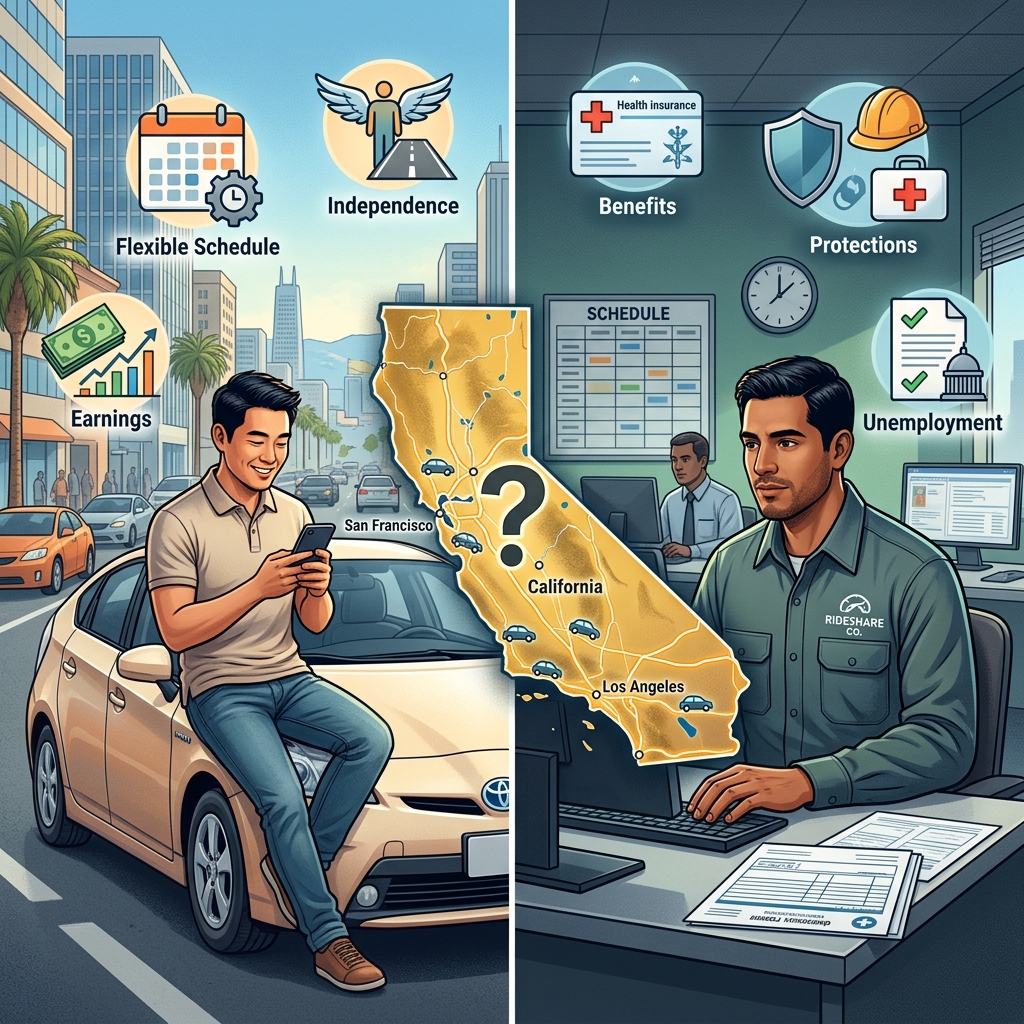
California has become the key battleground over how gig workers are classified, especially drivers for Uber and Lyft. The answer to whether these drivers are legally considered employees or independent contractors directly affects their wages, benefits, taxes, and ability to enforce labor rights.
This article offers an in-depth, original explanation of the legal landscape for rideshare drivers in California, focusing on the interaction between Assembly Bill 5 (AB5), the ABC test, Proposition 22, and recent court decisions.
Why Worker Classification Matters for Rideshare Drivers
Understanding the distinction between employees and independent contractors is the foundation for analyzing Uber and Lyft drivers’ rights in California.
Key Differences Between Employees and Independent Contractors
| Topic | Employee | Independent Contractor |
|---|---|---|
| Wage Protections | Entitled to minimum wage, overtime, and meal/rest break rules. | No guaranteed minimum wage or overtime; paid per contract or trip. |
| Benefits & Safety Nets | Access to unemployment insurance, workers’ compensation, paid sick leave, and other statutory benefits. | Generally not covered by unemployment insurance or workers’ compensation; must rely on private insurance or savings. |
| Tax Treatment | Taxes are withheld; employer pays part of Social Security and Medicare. | Responsible for self-employment taxes and estimated payments; no tax withholding by the platform. |
| Control Over Work | Employer can direct how, when, and where work is done. | More autonomy in choosing when and how to work, though platforms may still control key aspects via apps. |
For rideshare drivers, classification determines whether they receive robust employee protections or operate with more flexibility but substantially fewer statutory rights.
AB5 and the ABC Test: California’s Starting Point
California’s modern approach to worker classification originates from a landmark court decision and subsequent legislation known as Assembly Bill 5 (AB5).
Origins of AB5
AB5 codified the so-called ABC test for determining who is an employee versus an independent contractor. The law presumes workers are employees unless the hiring entity proves otherwise.
The ABC test, now central to California employment law, was designed to limit misclassification and ensure workers receive appropriate protections when they function more like employees than independent contractors.
The ABC Test Explained
Under the ABC test, a worker is considered an employee unless the company proves all three prongs are satisfied:
- A – Control: The worker is free from the hiring entity’s control and direction in performing the work, both under the contract and in practice.
- B – Outside the Usual Business: The work performed is outside the usual course of the hiring entity’s business.
- C – Independent Business: The worker is customarily engaged in an independently established trade, occupation, or business of the same nature as the work performed.
In the context of Uber and Lyft, prong B has been especially contentious: transportation platforms rely entirely on drivers to provide rides, raising questions about whether drivers truly operate outside the companies’ core business.
Initial Impact on Uber and Lyft Under AB5
Legal analyses and enforcement actions applying AB5 concluded that rideshare drivers generally meet the definition of employees under the ABC test.
- Courts noted that Uber and Lyft’s ride-hailing services depend on drivers, making it difficult for the companies to argue the work is outside their usual course of business.
- The California Labor Commissioner filed wage theft lawsuits against Uber and Lyft, alleging the companies misclassified drivers as contractors to avoid paying wages and benefits.
- Commentators observed that many drivers do not operate independently established transportation businesses; instead, they earn income mainly through the platforms, indicating employee-like dependence.
These developments pointed toward employee status for drivers under AB5, setting the stage for a major policy fight and the introduction of Proposition 22.
Proposition 22: A Carve-Out for App-Based Drivers
In response to AB5 and the threat of reclassification, gig companies backed Proposition 22, a California ballot measure designed to create a separate legal framework for app-based transportation and delivery drivers.
What Proposition 22 Does
Proposition 22 was approved by voters in 2020 and provides an exemption for certain app-based drivers from AB5’s employee classification rules.
Under Prop 22:
- Uber, Lyft, and similar platforms may classify covered drivers as independent contractors rather than employees.
- Drivers must retain the ability to choose whether to accept or reject specific ride or delivery requests, reinforcing an element of autonomy.
- Companies are required to provide a set of baseline protections and benefits, even though drivers remain contractors.
Contractor Status Plus Limited Protections
Prop 22 established a hybrid regime that keeps drivers classified as contractors but mandates certain minimum standards.
- Minimum Earnings: A guaranteed minimum earnings level calculated at 120% of the local minimum wage for time drivers spend actively engaged in rides or deliveries (from acceptance to completion).
- Expense Reimbursement: Mileage-based reimbursement for vehicle expenses incurred while actively engaged in a trip, with an adjustable per-mile rate.
- Occupational Accident Insurance: Coverage for medical expenses and lost income due to injuries suffered while the driver is online with the app.
- Healthcare Subsidies: Contributions toward health coverage for drivers who meet specific thresholds of weekly engaged time.
- Anti-Discrimination and Safety Measures: Requirements for background checks, safety training, and policies addressing discrimination and harassment.
However, Prop 22 explicitly does not require companies to provide traditional employee benefits such as overtime pay, paid sick days, or unemployment insurance.
Legal Challenges and Judicial Review
Prop 22 faced significant constitutional and statutory challenges. Critics argued it improperly limited the legislature’s ability to expand workers’ rights and conflicted with aspects of California’s workers’ compensation system.
The legal journey included:
- A trial court decision that found key parts of Prop 22 unconstitutional.
- Subsequent appellate review that reversed much of that ruling and reinstated the measure.
- California’s Supreme Court ultimately upholding the core of Proposition 22, confirming that gig companies can continue classifying covered drivers as independent contractors under the measure.
As of the most recent decisions referenced in credible legal analyses, app-based rideshare drivers in California are treated as independent contractors under Proposition 22, subject to its specific conditions and benefits.
Current Status of Uber and Lyft Drivers in California
Taking AB5, Proposition 22, and court rulings together, the present legal picture is nuanced.
Dominant Classification Under Prop 22
For most Uber and Lyft drivers performing app-based rides in California, the controlling framework is Prop 22. Under this regime:
- Drivers are generally classified as independent contractors, not employees.
- They receive specific benefits and protections defined in the ballot measure rather than the full array of rights available to employees under the Labor Code and wage orders.
Ongoing Litigation and Enforcement Efforts
Despite Prop 22’s current status, litigation and regulatory enforcement continue to shape the boundaries of driver rights.
- The California Labor Commissioner has pursued wage theft claims, alleging historical misclassification and seeking back wages and penalties.
- Legal commentators emphasize that certain claims may still be brought under theories not fully preempted by Prop 22, particularly if drivers allege violations outside the measure’s scope.
- In 2024, the U.S. Department of Labor adopted a refined economic reality test at the federal level, which, although distinct from AB5, influences national debate over whether Uber drivers are economically independent contractors or employees under federal law.
Gig companies maintain that contractor status provides flexibility and earning opportunities, while worker advocates argue that drivers should be treated as employees with full labor protections.
Practical Implications for California Rideshare Drivers
For an individual driver in California, the legal framework translates into concrete, day-to-day consequences. Below are some critical practical implications grounded in the current regime.
What Drivers Gain Under Proposition 22
- Guaranteed Earnings Floor: During time spent actively on trips, drivers receive at least 120% of the local minimum wage, providing some income stability compared to traditional contractor arrangements without minimums.
- Partial Expense Coverage: Per-mile reimbursement for vehicle costs while engaged in rides helps offset fuel, maintenance, and depreciation, though only for covered active time.
- Injury Protection: Occupational accident insurance offers medical and disability coverage when drivers are using the app for work.
- Health Subsidies for Regular Drivers: Those who drive a substantial number of engaged hours may qualify for subsidies toward health insurance, easing the burden of private coverage.
What Drivers Do Not Receive as Contractors
- Overtime Pay: There is no statutory overtime premium for working long hours, in contrast to employee protections.
- Unemployment Insurance: Drivers typically lack access to state unemployment benefits if their income declines or they lose work.
- Workers’ Compensation: Traditional workers’ compensation systems do not generally apply; instead, drivers rely on the specific insurance arrangements required by Prop 22.
- Paid Sick Leave and Certain Leave Rights: They are not guaranteed paid sick days or broader family leave protections that employees may enjoy.
Drivers must also manage their own taxes, including self-employment tax and deductions for expenses, similar to other independent contractors.
Strategies for Drivers Navigating the Legal Landscape
Although the legal rules are set by statute and court decisions, rideshare drivers can take practical steps to protect their interests and better understand their rights.
Track Work Carefully
- Maintain detailed records of hours spent driving, distances traveled, and expenses such as fuel, maintenance, and insurance.
- Compare app-generated data with personal logs to ensure earnings and reimbursements align with Prop 22 minimums.
Evaluate Health and Insurance Options
- Determine eligibility for healthcare subsidies under Prop 22 by reviewing engaged-time thresholds.
- Consider supplemental insurance to fill gaps not covered by occupational accident policies, especially for periods when not logged into the app.
Seek Legal Advice When Needed
- Consult with employment law attorneys or legal aid organizations if you suspect underpayment, denial of required benefits, or misapplication of Prop 22’s rules.
- Stay informed about ongoing litigation and potential legislative changes that could affect future classification or benefits.
Frequently Asked Questions (FAQs)
Are Uber and Lyft drivers in California currently employees or independent contractors?
As of the latest major court rulings and statutory framework, most app-based Uber and Lyft drivers in California are legally treated as independent contractors under Proposition 22, rather than employees under AB5.
Does AB5 still apply to Uber and Lyft drivers?
AB5 and the ABC test continue to govern worker classification in California generally, but Prop 22 creates a specific exemption for certain app-based drivers, allowing gig companies to classify them as contractors while providing limited mandated benefits.
Do contractors under Proposition 22 receive a minimum wage?
Prop 22 does not convert drivers into employees, but it does require companies to ensure earnings equivalent to at least 120% of the local minimum wage for the time drivers spend actively engaged in rides or deliveries, plus a mileage reimbursement.
Can drivers still bring legal claims against Uber or Lyft?
Yes. While Prop 22 governs classification and certain benefits, drivers may still assert other legal claims where permitted, and the California Labor Commissioner has pursued wage theft lawsuits related to misclassification and unpaid wages.
Could the legal status of drivers change again in the future?
It is possible. Worker advocates continue to challenge aspects of Prop 22 and push for broader protections, and future legislative or judicial developments could further modify or reinterpret the rules governing gig-economy drivers.
References
- Are Uber Drivers in California Employees or Independent Contractors? — Nolo. 2025-01-01. https://www.nolo.com/legal-encyclopedia/california-labor-commissioner-rules-uber-driver-employee-not-independent-contractor.html
- Passage of Proposition 22 Provides Independent Contractor Exemption for Uber, Lyft, and Other Online-Based Transportation Businesses — FordHarrison. 2020-11-05. https://www.fordharrison.com/passage-of-proposition-22-provides-independent-contractor-exemption-for-uber-lyft-and-other-online-based-transportation-businesses
- Court of Appeal Affirms Order Requiring Uber and Lyft to Treat Its California Drivers as Employees — Terp Law. 2020-10-22. https://www.terplaw.com/blog/court-of-appeal-affirms-order-requiring-uber-to-treat-its-california-drivers-as-employees
- Uber, Lyft drivers to remain contractors after California Supreme Court ruling — Associated Press via YouTube summary. 2024-07-25. https://www.youtube.com/watch?v=l8EWaAdIaJY
- How Does AB 5 Affect Lyft and Uber Drivers? An In-Depth Analysis — Law Firm Davidoff & Associates. 2020-12-01. https://www.lawfirmdavidoff.com/blog/how-does-ab-5-affect-lyft-and-uber-drivers/
- Employee or Independent Contractor? A Legal Analysis of Uber’s Worker Misclassification — Columbia Undergraduate Law Review. 2024-03-01. https://www.culawreview.org/current-events-2/employee-or-independent-contractor-a-legal-analysis-of-ubers-worker-misclassification
- Labor Commissioner’s Wage Theft Lawsuits against Uber & Lyft — California Department of Industrial Relations. 2020-08-05. http://www.dir.ca.gov/dlse/Lawsuits-Uber-Lyft.html
Similar Articles








Read full bio of Sneha Tete




