Why domestic violence is a workplace issue
Domestic violence is often discussed as a private problem, but its effects frequently appear at work. Employees may struggle with missed time, visible stress, reduced concentration, or safety risks if an abusive partner tries to make contact during the workday. For employers, the issue is not only one of compassion; it is also a matter of operational continuity, legal awareness, and workplace safety.
A thoughtful response helps protect the employee, limits harm to coworkers, and creates a culture where people can ask for help without fear of punishment. A workplace that responds poorly may unintentionally increase danger, especially if it exposes the employee’s situation or pressures them into decisions before a safety plan is ready.
Recognizing possible warning signs
Managers and HR professionals are not expected to diagnose abuse. They should, however, be alert to changes that may indicate an employee needs support. One warning sign alone may not mean anything is wrong, but several changes together can justify a private, respectful check-in.
- Repeated late arrivals, absences, or unexplained schedule changes
- A sudden decline in performance from a previously reliable employee
- Frequent personal calls, messages, or interruptions
- Visible anxiety, fatigue, or distraction
- Concern about transportation, parking, or someone waiting outside
- Requests to keep contact information, location, or schedule confidential
These signs can have many causes, so the goal is not to assume abuse. The goal is to open a safe channel for communication if the employee wants support.
How supervisors should start the conversation
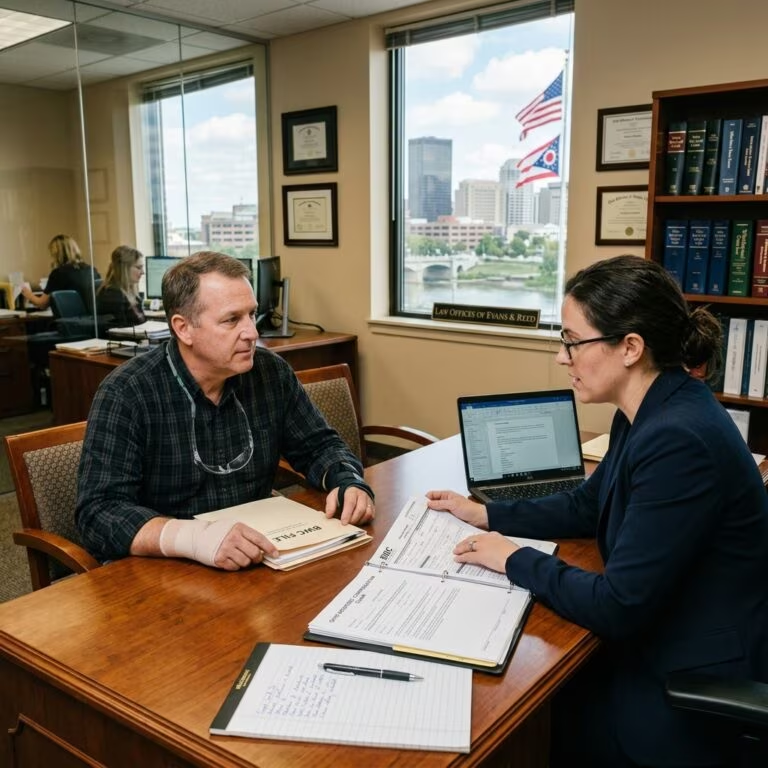
If a manager suspects that an employee may be dealing with domestic violence, the conversation should be private, calm, and nonjudgmental. The manager should focus on safety and support rather than investigation. A respectful opening can be simple: express concern, note any work-related changes, and ask whether there is anything the workplace can do to help.
Good practice is to listen more than speak. Employees may not be ready to disclose details, and they should never be pressured to explain, prove, or justify what they are experiencing. Trust is built when the employee understands that the workplace is trying to help, not critique their choices.
What employers should say and what they should avoid
| Helpful response | Unhelpful response |
|---|---|
| “I’m concerned about your safety and want to help.” | “Why don’t you just leave?” |
| “What would make work feel safer for you right now?” | “Are you sure this is really happening?” |
| “We can talk about options that protect your privacy.” | “You should go home and sort this out immediately.” |
| “Would you like help connecting with a support resource?” | “Maybe you should try counseling with the abuser.” |
The biggest mistakes are judgment, disbelief, and urgency. Domestic violence can become more dangerous when a survivor is pushed too quickly to leave or to confront the abuser without a plan. Employers should avoid telling the employee to handle everything immediately.
Confidentiality should be built into the response
Confidentiality is essential. Information about abuse should be shared only with those who truly need to know in order to provide support or ensure safety. That may include HR, security, or a small number of designated leaders, depending on the situation.
Employers should also protect the employee’s contact details, work location, schedule, and emergency information. If the abusive person has tried to call, email, or appear in person, those channels may need to be restricted or redirected. Even casual conversation in the office can create risk if it reveals that the employee is seeking help.
Creating an individualized workplace safety plan
Every situation is different, so the safest approach is to build a plan with the employee rather than for the employee. A workplace safety plan can address communication, physical security, and emergency response. It should be practical, discreet, and easy to follow.
- Changing the employee’s schedule or work location when needed
- Adjusting parking, building entry, or escort arrangements
- Screening calls or emails from unknown or suspicious contacts
- Updating emergency contacts and internal alert procedures
- Giving security staff enough information to respond appropriately
- Coordinating with the employee on what to do if the abuser appears at work
The best safety plans are flexible. They should be revisited if the employee’s situation changes, if there is an increased threat, or if the workplace itself changes in a way that affects security.
Using HR policies and workplace systems effectively
Organizations should not depend on improvisation. A clear policy helps managers act consistently and reduces the chance of harmful mistakes. The policy should explain who to contact, how to handle confidentiality, what kinds of support may be available, and how the workplace will respond to threats or harassment connected to domestic violence.
Useful policies often include guidance on leave, flexible scheduling, emergency communication, visitor management, and employee support services. They should also clarify that retaliation, harassment, and stalking are prohibited. When staff know there is a process, they are more likely to report concerns early.
When security or law enforcement may be needed
Not every case requires emergency intervention, but some do. If the employee is in immediate danger, or if the abusive person appears at the workplace, threatens violence, or violates a protective order, security staff and law enforcement may need to be contacted right away. Employers should have a clear escalation protocol so no one has to improvise during a crisis.
Security staff can also help with practical measures such as escorting the employee to a vehicle, monitoring entrances, documenting incidents, and restricting access to the building. These steps should be coordinated carefully so they increase safety without drawing unwanted attention to the employee.
Training managers and coworkers to respond appropriately
Training is one of the most effective preventive tools. Supervisors should know how to notice warning signs, respond respectfully, and refer employees to the correct internal contact. Security personnel should understand threat assessment, while HR staff should know how to document concerns and maintain confidentiality.
Broader employee education can also help. When workers understand that domestic violence can affect attendance, performance, and safety, they are less likely to misread a survivor’s behavior as laziness or unreliability. Training also helps create a workplace culture where people are more willing to ask for help early.
Connecting employees with support resources
Employers do not need to become counselors, but they can connect employees to specialized help. Employee assistance programs, local advocacy organizations, and crisis hotlines can provide confidential support, safety planning, and referrals. These resources are especially helpful when the employee is not ready to speak with law enforcement or a formal advocate.
It is also useful to keep a current list of local and national resources available in a discreet format. The more quickly an employee can access support, the easier it is to reduce risk and stabilize the situation.
Balancing performance management with compassion
Domestic violence can affect work quality, punctuality, attendance, and communication. Employers still need to manage job expectations, but discipline should not be the first response when a pattern may be connected to abuse. A better approach is to address the performance issue while also asking whether support or accommodations are needed.
This balance matters because a harsh response can push the employee further away from help. At the same time, the workplace must remain functional and fair to the employee and the team. Clear documentation, consistent communication, and thoughtful accommodations help maintain that balance.
Sample workplace practices that can make a difference
- Designate a small internal response team for safety-related situations
- Keep emergency contacts and security procedures up to date
- Offer flexible work arrangements when operationally possible
- Make privacy protection part of onboarding and HR training
- Share resource lists in a discreet, accessible way
- Review workplace violence policies regularly
These practices do not replace individualized support, but they create an environment where a fast, respectful response is more likely.
Frequently asked questions
Should a manager ask an employee directly whether they are a victim of domestic violence? A direct accusation is not recommended. A private, supportive conversation about observed changes and safety concerns is more effective and less intrusive.
What if the employee does not want help? The employer should respect that decision, provide information about available resources, and keep the door open for future conversation. The employee may not be ready to act immediately.
Can an employer require a safety plan? If there is a serious workplace risk, a safety plan may be necessary. It should still be developed collaboratively whenever possible so it reflects the employee’s needs and preferences.
Should coworkers be told about the situation? Only if there is a legitimate need to know. Broad disclosure is usually unnecessary and can create additional risk.
What if the abusive partner contacts the office? The contact should be handled through the workplace’s security and HR procedures. Staff should not improvise or pass along personal information.
Is it appropriate to suggest couples counseling? No. Joint counseling can increase risk when abuse is present. The employee should be directed to specialized domestic violence support instead.
A practical culture of support
The most effective workplace response is built before a crisis occurs. Policies, training, confidentiality, and resource planning all make it easier to respond well when an employee needs help. When employers take domestic violence seriously, they reduce the chance of harm and send a clear message that employees are not alone.
Support does not require perfect answers. It requires privacy, patience, structure, and a willingness to listen. Those basics can make a meaningful difference when an employee is trying to stay safe while continuing to work.
References
- Domestic Violence in the Workplace — Mosaic Family Services. 2025-01-01. https://mosaicservices.org/domestic-violence-in-the-workplace/
- When Domestic Violence Comes to Work — SHRM. 2023-10-17. https://www.shrm.org/topics-tools/news/risk-management/domestic-violence-comes-to-work
- Workplace Violence Program — U.S. Department of Labor. 2024-01-01. https://www.dol.gov/agencies/oasam/centers-offices/human-resources-center/policies/workplace-violence-program
- Recognizing and Responding to Domestic Violence in the Workplace — SUNY Rockland. 2024-01-01. https://sunyrockland.edu/about/dei/domestic-violence/recognizing-and-responding-to-domestic-violence-in-the-workplace/
- Silent Suffering: Addressing Domestic Violence Among Employees — Spring Health. 2024-02-20. https://www.springhealth.com/blog/addressing-domestic-violence-in-the-workplace
- Domestic Violence and the Workplace Model Policy and Toolkit — Cornell Law School, Gender Justice Clinic. 2023-01-01. https://www.lawschool.cornell.edu/academics/experiential-learning/clinical-program/gender-justice-clinic/domestic-violence-and-the-workplace-model-policy-and-toolkit/