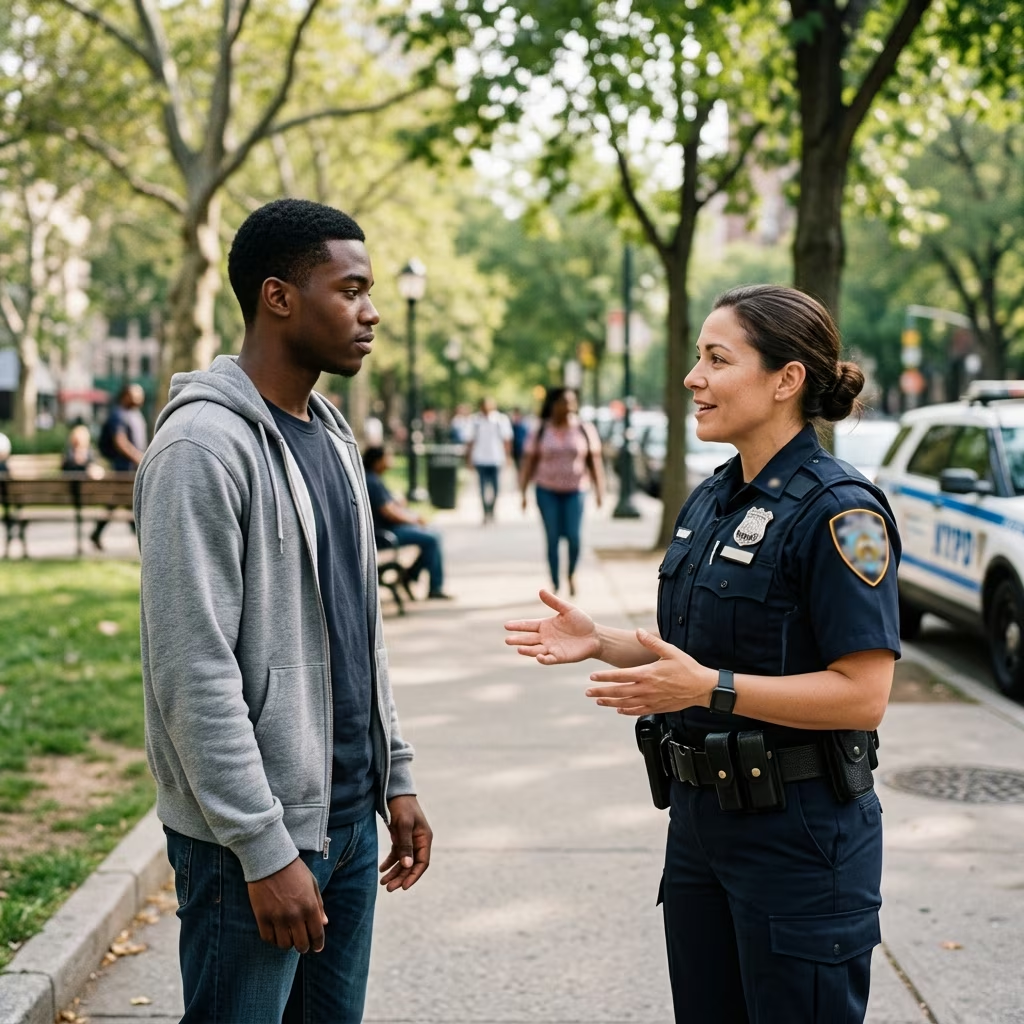
Encounters with police officers can be stressful, whether they happen during a routine traffic stop, at your front door, or on the street. How you respond in those moments can influence your safety, your legal rights, and the outcome of the situation. This guide offers practical, rights‑aware strategies to help you stay calm, communicate clearly, and reduce the risk of misunderstandings or conflict while respecting the role of law enforcement.
Why Police Encounters Matter For Your Safety
Police officers are tasked with enforcing the law and protecting public safety, but these duties often require them to make quick decisions in uncertain conditions. Research on officer safety shows that traffic stops and roadside interactions are among the most dangerous parts of police work because officers are close to moving vehicles and may not know what to expect from drivers or passengers. At the same time, people involved in these encounters may feel anxious, confused, or afraid, which can lead to tense interactions.
Understanding what typically happens during police encounters and how to respond can:
- Lower the chances of miscommunication or escalation.
- Help you avoid unintentional legal problems.
- Protect your rights while cooperating with reasonable requests.
- Support the safety of officers who are performing a difficult job.
Core Principles For Dealing With Police
Although specific laws differ by jurisdiction, several general principles apply widely and can guide your behavior whenever you interact with law enforcement.
1. Stay Calm and Control Your Movements
Anxiety is natural, but sudden or unpredictable actions can be misinterpreted. Try to keep your hands visible and move slowly when reaching for documents or personal items.
- Breathe and pause before responding if you feel upset.
- Keep your hands where the officer can see them, such as on the steering wheel during a traffic stop.
- Tell the officer what you are going to do before you move, for example, “My registration is in my glove compartment; I’m going to reach for it now.”
2. Be Respectful, Even If You Disagree
Polite communication does not mean you surrender your rights. It simply makes it easier to get through the encounter safely. Many agencies emphasize the importance of respectful interaction for both officers and the public as a way to build trust and reduce tension.
- Use a calm tone; avoid shouting or insults.
- Address the officer professionally (for instance, “Officer,” “Sergeant,” or “Deputy”).
- If you disagree, say so clearly but neutrally: “I don’t consent to a search,” or “I’d like to speak with a lawyer before answering more questions.”
3. Know the Difference Between Requests and Orders
Officers may phrase things as questions or as commands. It is helpful to understand which is which and how to respond.
- Requests often sound like: “Do you mind if I look in your bag?” You generally have the right to say no.
- Orders may sound like: “Step out of the vehicle,” or “Put your hands where I can see them.” Failure to comply can lead to arrest or additional charges.
- You can respectfully clarify: “Is that a request or a lawful order?”
Preparing For Traffic Stops
Traffic stops are one of the most common ways people encounter police. Understanding what usually happens and how to respond can make these interactions safer for everyone involved.
What To Do When You See Flashing Lights
When an officer signals you to stop, your actions affect not only your safety but also the officer’s. Federal highway safety guidance emphasizes the importance of slowing down and pulling over safely when you see flashing lights, both to comply with the law and to protect first responders.
- Slow down promptly and signal your intent to pull over.
- Choose a safe location such as a shoulder, parking lot, or well‑lit area if you can do so without delaying too long.
- Stay inside the vehicle unless the officer instructs you to get out.
During the Stop: Step‑By‑Step
| Step | Your Actions | Purpose |
|---|---|---|
| 1. Park and secure the car | Turn off the engine, set the parking brake, roll down your window. | Shows cooperation and reduces safety risks. |
| 2. Position your hands | Place your hands on the steering wheel or clearly in view. | Helps the officer see that you are not reaching for a weapon. |
| 3. Wait for instructions | Do not reach for documents until the officer asks. | Prevents misunderstandings about your movements. |
| 4. Provide required information | Offer your license, registration, and proof of insurance when requested. | Most jurisdictions legally require this during a stop. |
| 5. Communicate clearly | Answer basic identification questions, but be thoughtful about additional information. | Maintains cooperation while preserving your rights. |
Understanding “Move Over” Expectations
All U.S. states have some form of “Move Over” law, which requires drivers to slow down and often change lanes when approaching emergency vehicles stopped on the roadside with flashing lights. When you are the driver being stopped, other vehicles are expected to give space to protect you and the officer, but you also play a role by pulling as far off the roadway as safely possible.
Protecting Your Rights During Encounters
Knowing your basic legal rights helps you make informed decisions under pressure. This section offers general guidance, but you should consult local laws or a licensed attorney for advice specific to your location.
Identification and Basic Questions
Most jurisdictions require drivers to provide certain information during traffic stops, and some allow officers to ask for identifying details during lawful detentions. However, you usually have a choice about answering broader questions unrelated to identity or immediate safety.
- Provide requested documents such as driver’s license and registration when legally required.
- If you are unsure about a question, you may say, “I’d prefer not to answer,” or “I would like to speak with a lawyer before continuing.”
- Remain consistent; answering some questions and refusing others may invite further inquiry, so think carefully before you respond.
Consent to Searches
Officers sometimes ask for permission to search your vehicle, bag, or pockets. Consent is often voluntary, and you may decline. If an officer has a legal basis to search without consent, they may do so regardless of what you say, but your response still matters.
- Listen carefully for phrases like “Do you mind if I look…” or “May I search your…”
- If you do not want to consent, you can state clearly: “I do not consent to any searches.”
- Say it calmly and once or twice; arguing repeatedly usually does not change the situation.
Recording Police Activity
Courts and civil rights guidance in many parts of the United States recognize the public’s right to record police performing their duties in public places, as long as recording does not interfere with the officer’s work or violate other laws. Recording can provide an objective record of events and may help resolve disputes later.
- Keep a reasonable distance and do not obstruct officers’ movement.
- Hold your phone steadily; avoid sudden movements that could be misinterpreted.
- If questioned, you can respond: “I am documenting what’s happening. I’m not interfering.”
Remember that specific rules vary across jurisdictions, so familiarize yourself with local law and, if needed, seek legal advice.
Managing Encounters Outside of Traffic Stops
Not every police interaction happens on the road. Officers may approach you on the sidewalk, at a public event, or at your home. The context affects your rights and obligations, but some general strategies carry across situations.
Street Encounters and Casual Questions
On the street, officers may initiate conversation to gather information or observe behavior. In some situations, you are free to walk away; in others, you may be temporarily detained.
- Politely ask, “Am I free to leave?” If the officer says yes, you may choose to end the conversation.
- If the officer says no, you are likely being detained; stay calm and avoid physical resistance.
- Provide identification if required by local law; otherwise, consider your comfort level in sharing additional details.
When Police Come to Your Home
Officers sometimes visit homes to follow up on reports, serve legal documents, or conduct investigations. The rules here can be different from public encounters.
- You can speak with officers through the door or outside rather than inviting them in, unless they have a warrant or an emergency reason to enter.
- If officers present a warrant, ask to see it and read the scope of what is authorized.
- Consider contacting a lawyer if the situation involves a search or serious allegations.
After the Encounter: Following Up Wisely
Once the immediate interaction is over, you may still have decisions to make—such as how to handle a citation, whether to file a complaint, or how to process what happened emotionally.
Handling Tickets and Court Dates
If you receive a citation or notice to appear in court, read it carefully and comply with all deadlines. Missing a required appearance can lead to additional penalties beyond the original issue.
- Note the date, time, and location of any hearing.
- Consider speaking with a legal professional about your options, especially if you believe the citation was issued in error.
- Gather any evidence that might be relevant, such as photos or recordings from the scene.
Reporting Concerns or Compliments
Many police departments maintain formal processes for citizen feedback, including filing complaints about misconduct or offering commendations for positive interactions. Police oversight organizations and public agencies encourage structured feedback as a way to improve trust and accountability.
- Check your local department’s website for information about how to file a complaint or compliment.
- Include dates, times, badge numbers, and descriptions of what occurred.
- Keep copies of any forms you submit and note any case or reference numbers.
Emotional Safety and Support
Stressful encounters can affect your emotional well‑being, particularly if you felt afraid or confused. People who frequently interact with law enforcement, whether as officers or citizens, may experience cumulative stress over time. Caring for your mental health after difficult experiences is just as important as understanding your legal rights.
- Talk with trusted friends, family members, or community leaders about what happened.
- Consider reaching out to counseling or support services if the experience was traumatic.
- Engage with community organizations that work on improving police–community relations to help transform personal experiences into constructive change.
Frequently Asked Questions (FAQ)
Can I refuse to answer questions from a police officer?
In many situations, you are only required to provide basic identification or documents, such as a driver’s license during a traffic stop. Beyond that, you often have the option to decline answering further questions and to request legal counsel. Laws vary, so consult a qualified attorney or local legal aid organization for guidance specific to your area.
Is it legal to record police during a traffic stop?
In much of the United States, courts and legal advocacy organizations recognize a right to record police in public, including during traffic stops, provided that recording does not interfere with the officer’s duties or violate other laws. Stay calm, maintain a safe distance, and do not obstruct the officer’s movements while recording.
What should I do if I think an officer acted improperly?
Document as many details as you can once you are safe: time, location, badge number, and what was said or done. Then look up your local department’s procedure for filing a complaint and consider speaking with an attorney or civil rights organization. Structured reporting can help oversight bodies review concerns and, where appropriate, take corrective action.
How can I show respect without giving up my rights?
Respect is mostly about tone and behavior—speaking calmly, avoiding insults, following clear lawful orders, and keeping your movements predictable. You can still clearly state your boundaries, such as declining consent to a search or asking to speak with a lawyer, while maintaining a polite demeanor.
Why are roadside safety rules, like slowing down near police, important?
Federal safety agencies emphasize that the side of the road is a hazardous place for officers and other emergency responders. When drivers slow down, give space, and follow Move Over laws, they reduce the risk of crashes and injuries for everyone present, including themselves, passengers, and officers.
References
- National Police Week: Honoring the Fallen by Protecting Those Who Serve — National Highway Traffic Safety Administration. 2024-05-10. https://www.nhtsa.gov/national-police-week-honoring-fallen-protecting-those-who-serve
- Peace Officers Memorial Day and Police Week, 2026 Proclamation — The White House. 2026-05-11. https://www.whitehouse.gov/presidential-actions/2026/05/peace-officers-memorial-day-and-police-week-2026/
- National Police Week 2026 — National Law Enforcement Officers Memorial Fund. 2026-04-01 (approx.). https://nleomf.org/memorial/programs/national-police-week-2026/
- National Police Week: Home — National Police Week (policeweek.org). 2025-05-01 (approx.). https://www.policeweek.org
- Honoring Our Heroes: Reflecting on National Police Week — Thomson Reuters Legal. 2023-05-15. https://legal.thomsonreuters.com/blog/honoring-our-heroes-reflecting-on-national-police-week/