
Reforming the Insurrection Act: Time for Change?
Exploring the history, controversies, and urgent need for modernizing America's 1807 Insurrection Act amid rising political tensions.
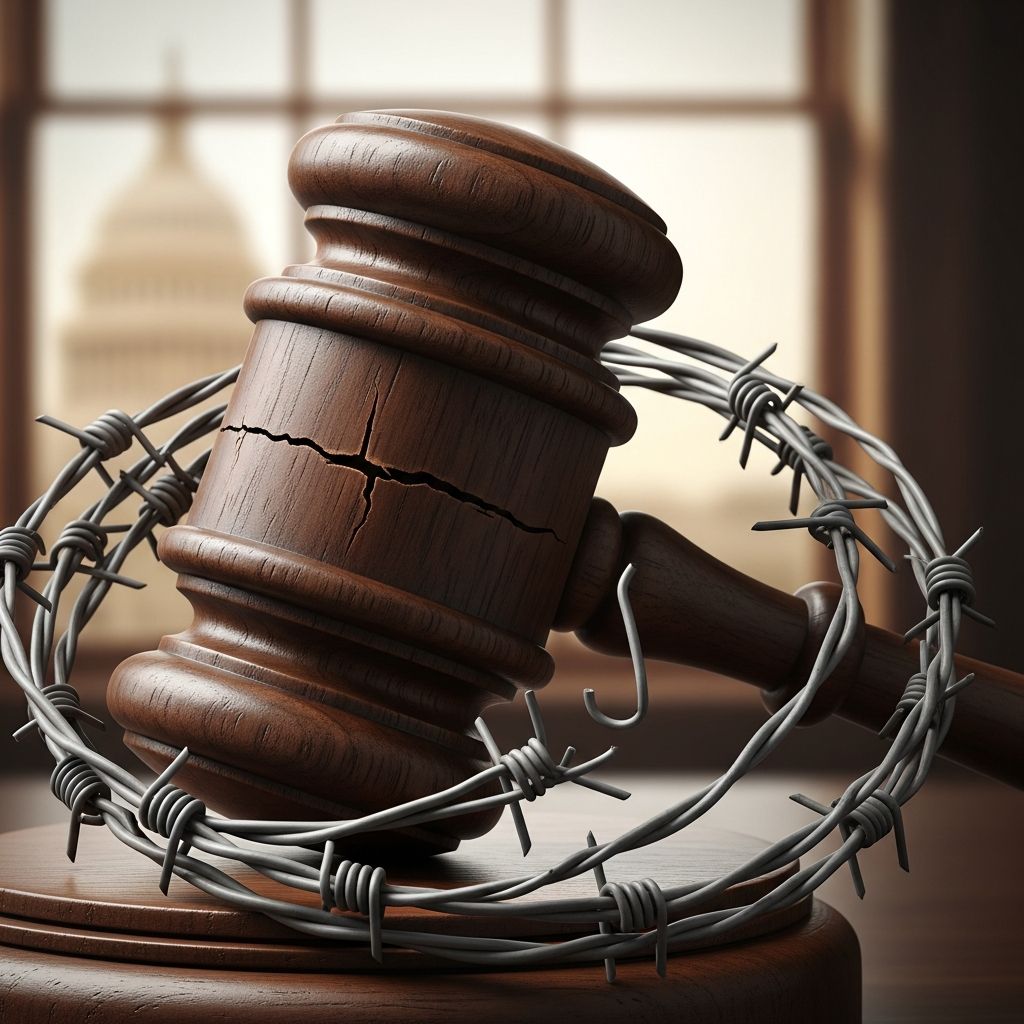
The Insurrection Act of 1807 stands as one of the oldest federal laws granting the U.S. president extraordinary power to deploy military forces domestically. Originally designed to address rebellions in a young nation, it has evolved into a tool fraught with ambiguity and potential for misuse in today’s polarized environment. As recent political rhetoric has spotlighted its invocation, questions arise about whether this 200-year-old statute requires significant updates to align with modern democratic norms and safeguards.
Historical Foundations of a Controversial Law
Enacted amid early American instability, the Insurrection Act emerged from events like the Whiskey Rebellion and Shay’s Rebellion, where local authorities struggled to maintain order. Signed by President Thomas Jefferson, it empowered the executive to federalize militias to suppress uprisings that hindered law enforcement. Over time, amendments expanded its scope, notably during the Civil War when President Abraham Lincoln used it to counter Confederate resistance, overriding state objections.
Key expansions occurred in 1861, allowing deployment against a state’s will if rebellion threatened federal authority. Further tweaks in the 19th and 20th centuries broadened criteria to include ‘domestic violence’ and ‘unlawful combinations,’ terms left undefined, creating interpretive leeway for presidents. This vagueness, while practical in 1807, now poses risks in an era of mass protests and urban unrest.
How the Act Overrides Traditional Limits
Normally, the Posse Comitatus Act of 1878 bars federal troops from domestic law enforcement. The Insurrection Act carves out exceptions, permitting soldiers to quell insurrections, protect federal property, or enforce laws when states request aid or prove unable. Presidents must first issue a dispersal proclamation, but unilateral decisions dominate.
Without clear definitions for triggers like ‘insurrection’ or ‘conspiracy,’ executives wield broad discretion. The Supreme Court in 1827 affirmed presidential judgment as conclusive, though later rulings hinted at judicial oversight for good faith. This tension underscores the Act’s potency as ‘loaded medicine’ needing precise calibration.
Notable Deployments: Lessons from History
- 1957-1965 Civil Rights Era: Presidents Eisenhower and Kennedy invoked it to enforce desegregation in Little Rock, Ole Miss, and Alabama, using troops to protect federal court orders against resistant governors.
- 1992 Los Angeles Riots: President George H.W. Bush deployed forces at California’s request to restore order after widespread violence.
- Recent Threats: In 2020 and 2025, amid protests in Portland, Los Angeles, and other cities, former President Trump considered activation, sparking debates over federal overreach.
These instances highlight the Act’s role in crises but also reveal patterns of controversy, particularly when federal forces confront civilians without state consent.
Core Flaws: Vague Language and Unlimited Power
Critics, including the Brennan Center for Justice, label the Act ‘overbroad and ripe for abuse’ due to undefined terms like ‘domestic violence’ or ‘conspiracy.’ This could encompass protests or minor crimes, blurring lines between military and police roles. Phrases like ‘by any other means’ might even authorize non-DOD forces, amplifying risks.
Presidential discretion lacks objective benchmarks; current text hinges on subjective views (‘as the President considers’). Absent time limits or congressional checks, deployments could persist indefinitely, eroding civil liberties. In a divided nation, this invites partisan misuse, as seen in threats against Democratic-led cities.
| Issue | Current Problem | Potential Risk |
|---|---|---|
| Vague Triggers | No definitions for ‘insurrection’ | Misuse against protests |
| Unilateral Action | President decides alone | Lacks checks and balances |
| No Time Limits | Indefinite deployments | Prolonged military presence |
| Overrides Posse Comitatus | Exception without bounds | Militarizes civilian policing |
Expert Calls for Comprehensive Reform
Reform advocates propose objective criteria: military use only when civilian agencies are demonstrably insufficient. This shifts from subjective presidential views to verifiable facts. Time caps—e.g., 14 days without congressional approval—would enforce accountability, extendable only by vote.
Joint certification by the President, Defense Secretary, and Attorney General could affirm state incapacity, adding layers of review. Judicial oversight would ensure good faith, building on Ninth Circuit precedents. Bipartisan efforts, like S.2070 debated by Senators Blumenthal and Cornyn, aim to mandate congressional consultation. The Brennan Center’s 2022 proposal to the January 6 Committee urged clarifying archaic language for 21st-century threats.
Balancing National Security and Civil Liberties
Proponents of restraint argue reforms prevent authoritarian drift without hobbling crisis response. Objective standards preserve presidential flexibility for true emergencies, like natural disasters overwhelming locals, while curbing abuse.
Opponents fear reforms might delay action in fast-evolving threats. Yet history shows rare invocations—fewer than 30 times—suggesting safeguards won’t paralyze governance. Modern tools like National Guard activations offer alternatives, reducing reliance on active-duty troops.
Political Hurdles to Legislative Overhaul
Congressional gridlock stalls progress. Partisan divides, evident in Trump’s 2025 threats amid anti-deportation protests, politicize the issue. House Democrats’ resistance to related funding bills signals broader tensions.
Yet momentum builds: virtual forums by experts like Elizabeth Goitein and Jack Goldsmith highlight urgency. With elections looming, reforming this ‘dangerous authority’ could restore public trust in institutions.
Frequently Asked Questions (FAQs)
What is the Insurrection Act?
A 1807 law allowing presidents to deploy U.S. military domestically to suppress rebellions or unrest when states can’t or won’t.
Has it been used recently?
No full invocations since 1992, but threats surfaced in 2020 and 2025 over protests in cities like Portland and Los Angeles.
Why reform now?
Vague terms risk abuse; lacks checks like time limits or congressional input, threatening democracy.
Can courts stop it?
Limited; presidents have wide latitude, but good faith reviews possible per Ninth Circuit.
What reforms are proposed?
Objective criteria, 14-day limits, joint certifications, and congressional extensions.
Path Forward: Safeguarding Democracy
Updating the Insurrection Act isn’t about distrusting leaders but fortifying democracy. By defining limits, imposing checks, and clarifying scope, Congress can ensure military might serves the people, not subverts them. As debates intensify, the stakes—civil liberties versus order—demand action before the next crisis tests an outdated law.
References
- The Insurrection Act needs an overhaul — The Daily Record. 2025-11-07. https://thedailyrecord.com/2025/11/07/the-insurrection-act-needs-an-overhaul/
- Insurrection Act of 1807 — Wikipedia (citing primary historical sources). 2025. https://en.wikipedia.org/wiki/Insurrection_Act_of_1807
- Fix the Insurrection Act — Brennan Center for Justice (YouTube transcript). 2024-07-25. https://www.youtube.com/watch?v=SrEhM8vJH-g
- Five Things You Should Know About the Insurrection Act — National Immigration Law Center. 2026-01-21. https://www.nilc.org/articles/five-things-you-should-know-about-the-insurrection-act/
- Senators Blumenthal and Cornyn Debate Insurrection Act Reform — U.S. Senate (YouTube). 2023. https://www.youtube.com/watch?v=gvztOUyPPeg
Similar Articles








Read full bio of medha deb




