
Recording Police in Florida: Rights, Risks and Real-World Lessons
An in-depth look at Florida law on recording police, key court rulings, and practical steps to stay safe while documenting encounters.
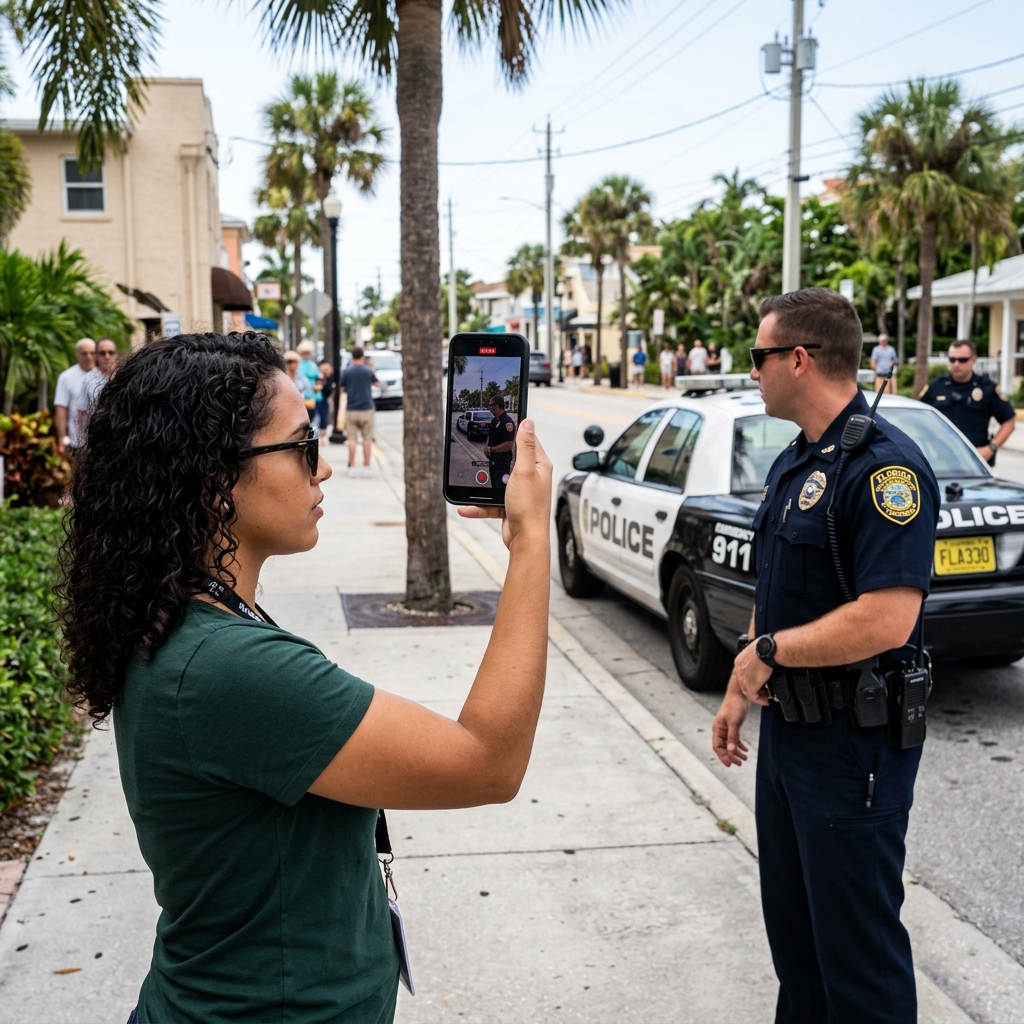
Across the United States, everyday people increasingly use cell phones to record police encounters. These recordings can expose misconduct, corroborate legitimate law enforcement actions, and play a crucial role in public debates about policing. Yet in states like Florida, where wiretap laws impose strict consent requirements, citizens who hit “record” may find themselves in handcuffs, even when they believe they are acting lawfully.
This article examines how Florida law treats the recording of police officers, using the example of a disc jockey arrested while filming an arrest on his phone as a starting point. It explains the legal landscape, outlines common charges people face, and offers practical guidance for those who want to document police activity without unnecessarily increasing their risk of arrest.
Why Recording Police Matters
Citizen recordings have dramatically reshaped public understanding of police conduct. In many high-profile incidents, cell phone video has provided context that did not appear in official reports or body-camera footage, sometimes prompting internal investigations or changes in policy.
- Accountability: Visual evidence can support complaints, lawsuits, and disciplinary actions when officers use excessive force or violate procedures.
- Transparency: Recordings let communities see how laws are enforced in practice, beyond statistics or press releases.
- Protection for both sides: Video may confirm that officers acted properly, helping to resolve disputes and defend police against unfounded allegations.
In one Florida case, dashboard-mounted cell phone footage of an arrest showed physical blows that were not clearly visible on police body cameras, leading to public scrutiny and an internal investigation. Incidents like this illustrate why many civil rights advocates encourage citizens to record interactions with law enforcement.
Florida’s Wiretap and Recording Framework
Florida’s approach to audio recording is anchored in its wiretap statute, which is more restrictive than the laws of many other states. Florida is often described as a two-party consent jurisdiction: both the person recording and the person being recorded must agree to the audio capture in most non-public situations.
| Legal Concept | Florida Approach |
|---|---|
| Consent requirement | Generally requires consent of all parties for audio recording of private communications. |
| Core statute | State wiretap law (commonly referenced as Florida Statutes chapter 934), which criminalizes unauthorized interception of oral communications. |
| Expectation of privacy | Recording is more likely to be lawful when the recorded person has no reasonable expectation of privacy, such as during public events. |
The distinction between private and public conversations is central. Florida law recognizes that some communications occur in settings where speakers assume their words are not being secretly recorded. At the same time, it acknowledges that there is generally less privacy in public spaces, especially where activity is visible or audible to any bystander.
Public Spaces and Police Officers: The Privacy Question
Courts evaluating recordings of police typically address whether an officer performing official duties in a public area has a reasonable expectation of privacy. Both Florida state courts and federal courts have repeatedly held that on-duty officers in public are not entitled to the same privacy protections as private individuals engaged in confidential conversations.
As a result, many legal commentators reading Florida law conclude that:
- Recording an officer’s public conduct in the street or another open location is generally less likely to violate wiretap provisions.
- The risk increases if the recording involves surreptitious audio of a conversation that might be considered private (for example, secretly capturing an officer’s conversation away from the public eye).
It is important to distinguish between open video recording of what is visible to anyone present and secret audio interception of what someone reasonably believes is not being captured. This distinction often shapes whether charges are filed and how they are resolved.
Common Charges When Citizens Record Police
Even when a recording ultimately proves lawful, citizens may still be arrested at the scene. In the case of the Miami disc jockey whose experience prompted this discussion, the allegation involved obstruction of justice linked to his effort to film police activity on his phone. That pattern appears in other encounters around the country: while a citizen may intend simply to document events, officers may interpret the behavior as interference.
Typical charges that arise in these situations include:
- Obstruction or resisting without violence: Officers may argue that the person recording is physically or verbally hindering an arrest or investigation.
- Disorderly conduct: If a crowd forms or tensions escalate, recording may be cited alongside other behaviors as contributing to a disturbance.
- Unlawful interception or wiretap violations: When audio is involved, prosecutors may consider whether state wiretap law has been violated, particularly if recording seems covert.
In many instances, formal charges related to recording itself are later reduced or dismissed, especially when prosecutors assess the constitutional implications or conclude that privacy expectations were minimal. Legal practitioners in Florida have reported that while arrests for citizen recording occur, prosecutors frequently decline to pursue long-term cases relying solely on unauthorized recording as the central offense.
Constitutional Considerations: The Right to Record
Beyond state statutes, federal appellate courts have recognized a First Amendment interest in recording police officers performing their duties in public. Multiple circuits have held that documenting public officials in public spaces contributes to informed discussion about government conduct and is therefore protected, subject to reasonable time, place, and manner restrictions.
Key constitutional themes include:
- Freedom of expression: Capturing video and audio is treated as part of gathering information, which precedes speech and press activities.
- Public oversight: Courts view recording as a tool for monitoring government power, comparable to attending public hearings or reading official records.
- Reasonable limitations: Governments can adopt neutral rules about where citizens stand, how close they can get, or whether they enter restricted areas, provided these rules are not selectively enforced against those who record.
Florida residents therefore navigate a dual framework: constitutional principles that generally favor the right to record, and state statutes that regulate how audio is captured and whether privacy expectations are respected. When conflicts arise, courts must balance these interests.
Practical Guidance for Recording Police in Florida
Given the tension between legal protections and real-world enforcement, attorneys often advise caution in Florida when recording police encounters. Citizens who decide to document an incident can take steps to reduce their risk of being arrested or having recordings seized.
Core Safety Practices
- Maintain distance: Stand far enough away that officers cannot reasonably claim you are interfering with a detention, search, or arrest.
- Do not physically obstruct: Avoid blocking pathways, touching suspects or officers, or entering areas clearly marked as off-limits.
- Remain calm and non-confrontational: Keep your voice level, do not shout instructions at officers, and avoid sudden movements that may be misinterpreted.
- Openly display your recording device: Holding the phone visibly rather than hiding it reduces the perception that you are secretly intercepting communications.
- Follow lawful orders: If officers direct bystanders to move for safety reasons, comply while continuing to record from the new location if possible.
Minimizing Wiretap Risks
Because Florida’s wiretap law focuses on audio interception, specific strategies can help reduce exposure:
- Focus on recording public activity visible to anyone passing by, rather than private conversations or interactions in secluded areas.
- Consider announcing that you are recording so there is less argument about secrecy.
- Avoid surreptitious recording of extended conversations between officers when it is unclear whether those conversations are intended to be private.
These steps do not guarantee immunity from arrest, but they align more closely with interpretations of the law that distinguish public documentation from hidden interception.
Lessons from a DJ’s Arrest
In the Miami disc jockey incident, the citizen used his cell phone to record police activity during an arrest and was subsequently taken into custody on an obstruction allegation. While the precise facts of that case are unique, several broader lessons emerge that apply to others who might record police:
- Recording alone can trigger confrontation: Officers may react strongly to being filmed, especially in tense situations, regardless of the recorder’s intentions.
- Obstruction claims are flexible: Broad statutes give officers discretion to interpret certain behaviors as interference, even if the person recording believes they are merely observing.
- Outcome may depend on later review: Prosecutors, defense attorneys, and judges often reassess events after the fact, when emotions have cooled and recordings are available for review.
For citizens, the key takeaway is that legally defensible actions can still lead to short-term consequences. Understanding this reality helps people make informed decisions about whether, when, and how to record.
Police Body Cameras vs. Citizen Cell Phones
Many departments have adopted body-worn cameras, but citizen recordings remain essential. Official footage is controlled by the agency, may be subject to retention limits, and is sometimes unavailable or incomplete. Citizen videos can offer independent perspectives that complement or challenge official recordings.
| Source of Video | Key Advantages | Key Limitations |
|---|---|---|
| Police body cameras | Continuous recording during shifts, standardized policies, and integration with evidence systems. | Controlled by law enforcement; footage may not be publicly released or may omit certain angles. |
| Citizen cell phones | Independent documentation, multiple viewpoints, and rapid sharing across social platforms. | May start mid-incident, can be shaky or incomplete, and may raise legal questions under state recording laws. |
In some Florida cases, citizen recordings have revealed details not clearly visible in body-camera footage, underscoring why the public’s ability to document events remains vital even as official technology becomes more common.
Frequently Asked Questions (FAQs)
Can I legally record police officers in public in Florida?
Federal constitutional principles generally support the right to record on-duty police in public spaces, but Florida’s wiretap law still applies to audio. Courts have indicated that officers performing public duties do not have a reasonable expectation of privacy in what they are doing openly, which favors the legality of recording visible activity.
Do I need the officer’s consent to record?
Florida’s wiretap statute generally requires consent of all parties for audio recording of private communications. However, when an officer has no reasonable expectation of privacy because the conduct is occurring publicly, legal commentators argue that recording does not violate the statute. The distinction between public and private settings remains crucial.
Can police arrest me just for filming?
Some individuals have been arrested while filming, often under charges like obstruction or disorderly conduct rather than a specific prohibition on recording. Whether those charges stand depends on the facts and later legal review. Arrest is possible, even if courts ultimately conclude that recording was lawful.
What should I do if an officer orders me to stop recording?
Legal strategies vary, but many attorneys advise prioritizing personal safety and avoiding physical confrontation. Calmly asking whether you are being lawfully ordered to move or leave, and complying with clear safety directives while continuing to record from a different location, may reduce immediate risk. For personalized guidance, consultation with a criminal defense lawyer is recommended.
Are recordings admissible in court?
Courts often admit recordings if they are relevant, authenticated, and obtained in a manner consistent with applicable laws. Evidence rules govern how recordings are introduced, and judges may consider whether any wiretap or privacy statute was violated when deciding how to treat a particular video or audio file.
Balancing Rights, Risks, and Responsibility
Recording police in Florida sits at the intersection of constitutional rights, state wiretap rules, and day-to-day policing realities. Citizens have strong reasons to document encounters, from protecting themselves to contributing to broader conversations about justice. At the same time, arrests like that of the Miami disc jockey demonstrate that exercising those rights can carry short-term consequences.
For those who decide that recording is necessary, thoughtful planning can make a difference:
- Understand the basics of Florida’s consent and privacy rules before an encounter occurs.
- Keep recordings focused on public activity rather than private conversations.
- Remain physically and verbally non-interfering, even as you document what unfolds.
- Seek legal advice promptly if you are arrested or if police seize your device.
Florida’s higher courts are likely to continue clarifying how wiretap law interacts with the right to record police. Until clearer guidance emerges, citizens must weigh the importance of documentation against the practical risk of confrontation. Thoughtful, informed recording practices can help protect both legal interests and personal safety while contributing to a more transparent system of public accountability.
References
- Can You Legally Audio Record Police During a Stop? — Law Offices of Mark Eiglarsh. 2016-01-01. https://www.eiglarshlaw.com/published-works/can-you-legally-audio-record-police-during-a-stop/
- Miami Disc Jockey Arrested After Recording Arrest With Cell Phone — Florida Injury Blog (Flaxman Law Group). 2010-03-31. https://floridainjuryblog.com/miami-disc-jockey-arrested-after-recording-arrest-with-cell-phone/
- Violent arrest of Black student in Florida shows benefits of recording police from new vantage point — ABC7 / Associated Press. 2024-03-19. https://abc7.com/post/violent-arrest-black-student-florida-shows-benefits-recording-police-new-vantage-point/17416188/
- Florida Statutes, Chapter 934: Security of Communications — Florida Legislature. 2024-01-01. https://www.leg.state.fl.us/statutes/index.cfm?App_mode=Display_Statute&URL=0900-0999/0934/0934.html
Similar Articles








Read full bio of Sneha Tete




