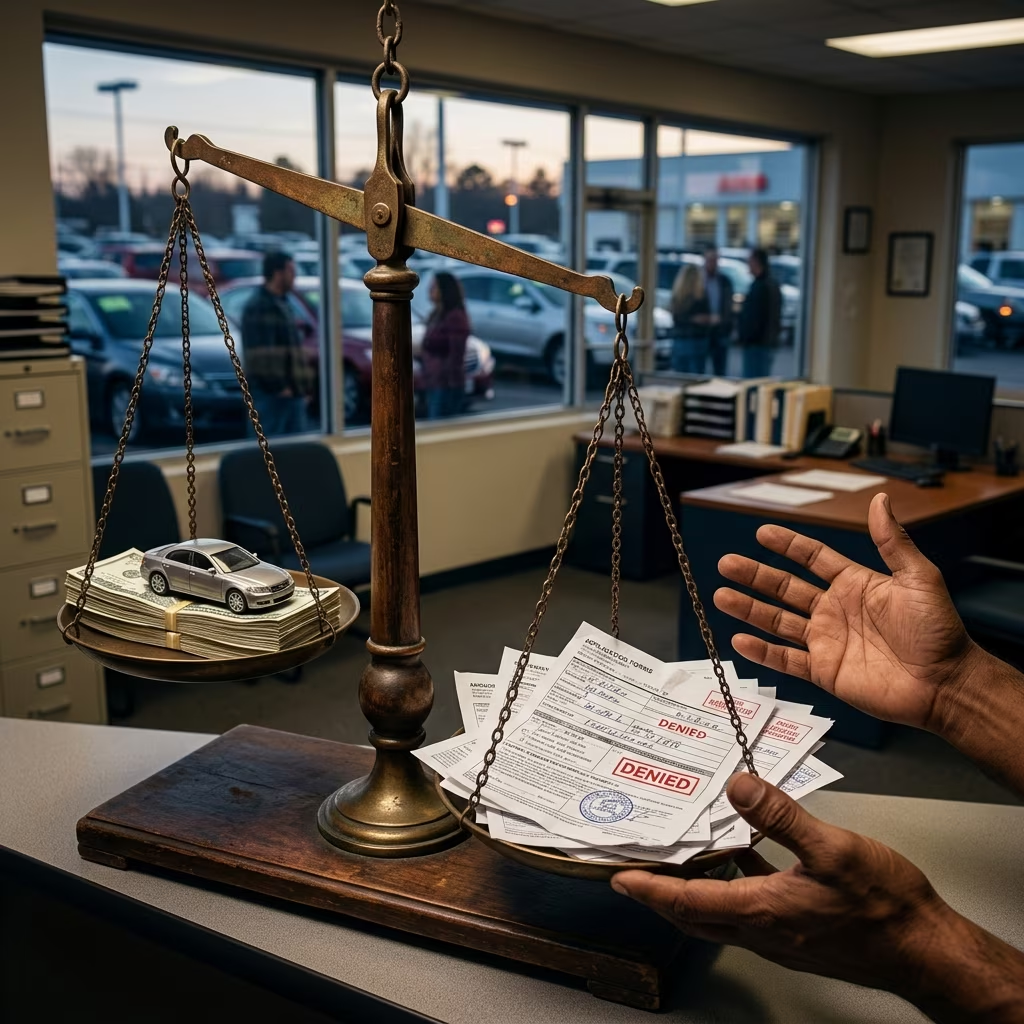
Car financing is supposed to help people buy reliable transportation, but the lending process does not always treat borrowers equally. Research has found that race can influence whether an applicant is approved, how much interest is charged, and how expensive the loan becomes over time.
These disparities matter because auto loans are a major source of consumer credit in the United States. When a borrower is denied financing or pushed into a more expensive loan, the impact can spread well beyond the dealership lot.
Why Auto Lending Raises Fairness Concerns
Auto lending is often arranged quickly and under pressure, especially at dealerships. That setting can give lenders and dealers significant discretion when deciding which rate to offer and whether to add a markup to the loan.
Researchers and fair lending advocates have warned that this discretion can create unequal outcomes when race is allowed, even indirectly, to affect lending decisions.
- Approval decisions may differ even when borrowers have similar financial profiles.
- Interest rate markups can raise the total cost of the loan.
- Minority borrowers may be offered less favorable terms despite comparable or better repayment performance.
What the Research Shows
Multiple studies have found measurable racial disparities in auto lending. One set of findings reported that Black and Hispanic applicants were approved at lower rates than white applicants with similar credit characteristics.
That same research estimated that the approval gap translated into roughly 80,000 fewer minority loans each year.
Other analysis found that minority borrowers, on average, paid higher interest rates than white borrowers with comparable credit profiles, and that the extra cost could add hundreds of dollars over the life of the loan.
| Finding | Reported impact |
|---|---|
| Approval rate gap | Black and Hispanic applicants were 1.5 percentage points less likely to be approved. |
| Subprime gap | The disparity rose to 2.4 percentage points for subprime borrowers. |
| Interest rate difference | Minority borrowers paid about 70 basis points more in interest. |
| Estimated cost | The added cost was estimated at about $410 in present value terms for the average minority borrower. |
Why the Gap Is Not Easily Explained by Credit Risk Alone
One of the most important conclusions in the research is that the differences did not disappear after controlling for creditworthiness. The studies considered factors such as credit scores, income, debt-to-income ratios, and location, yet racial disparities remained.
That matters because it suggests the issue is not simply that lenders are reacting to stronger or weaker repayment risk. In fact, one study found that minority borrowers defaulted less often than white borrowers with similar profiles, even though they were charged more.
Researchers have described this pattern as consistent with racial bias rather than a neutral statistical response to risk.
How Dealership Pricing Can Affect the Final Loan
Many borrowers assume the lender alone controls the loan terms, but dealerships can play a major role in setting the final price. A dealer may receive an interest rate offer from a lender and then add a discretionary markup before presenting the loan to the buyer.
Because the markup is often not obvious to the consumer, two borrowers with the same lender approval can end up paying very different amounts.
- Markups can increase the monthly payment.
- They can raise the total interest paid over the life of the loan.
- They can be difficult to detect without comparing offers.
What Tester Studies Reveal
Matched-pair testing has also pointed to unequal treatment in the auto market. In those studies, non-white testers were often quoted higher financing costs for the same vehicle and were sometimes treated less seriously as buyers.
These tests found that white testers were more likely to have their credit checked and to receive more detailed financing information, while non-white testers were more often given broad estimates or less favorable terms.
In several cases, the financial difference was substantial, with non-white testers facing thousands of dollars in additional loan costs over time.
Why These Differences Matter for Consumers
Auto loans affect more than the purchase price of a vehicle. A small change in the interest rate can produce a meaningful difference in lifetime cost, especially on longer loans.
For families with tight budgets, higher monthly payments can make transportation harder to afford, and transportation is often necessary for work, school, and medical care. That is why fair access to car financing has real economic importance.
Discriminatory lending can also make it harder for borrowers to build wealth. When one group consistently pays more for the same credit, the result is an uneven transfer of money from borrowers to lenders and dealers.
Legal Protections Against Discrimination
Federal fair lending laws prohibit credit discrimination based on race and other protected traits. In practice, that means lenders and dealers should not set terms or deny financing because of a borrower’s race.
Enforcement actions and research have shown that oversight can reduce unexplained differences in interest rates, which suggests that policy enforcement can make a difference.
Warning Signs That a Loan May Be Unfair
Borrowers may not always know whether discrimination played a role, but certain warning signs can justify closer review.
- You were quoted a higher rate than other buyers with similar credit.
- The dealer refused to explain how your rate was calculated.
- You were not shown lender options or credit terms in writing.
- The dealer quickly steered you toward one financing package without comparison.
- You were given a vague reason for a denial that does not match your credit profile.
What Borrowers Can Do Before Signing
Consumers can reduce risk by shopping for financing before visiting the dealership, asking for written rate quotes, and comparing offers from multiple lenders. It also helps to review your credit report so you know what lenders are likely to see.
Borrowers should ask whether the quoted interest rate includes a dealer markup and whether a lower rate is available through another lender. Keeping all loan documents can be important if a dispute later arises.
What to Do If You Suspect Discrimination
If you believe you were treated differently because of race, you can document the transaction and seek help from a consumer rights attorney, a fair lending agency, or a government enforcement office. Preserving emails, purchase worksheets, loan estimates, and final contract terms can help support a complaint.
It may also be useful to compare your terms with those offered to similarly situated buyers. A pattern of higher pricing, worse treatment, or unexplained denial can be relevant evidence.
Frequently Asked Questions
Can a car lender legally consider race?
No. Federal fair lending rules prohibit discrimination in credit decisions based on race.
Why do some borrowers pay more even with good credit?
Research suggests that discriminatory markups, unequal approval decisions, and dealership discretion can cause higher costs even when borrowers have comparable financial profiles.
Does a denial prove discrimination?
Not by itself. But unexplained denial, especially when paired with similar or stronger credit than other approved borrowers, may justify a closer review.
Are higher rates always illegal?
No. Rates can vary based on credit risk and loan terms. The legal concern arises when race influences the decision or when comparable borrowers are treated differently without a legitimate reason.
Can dealership markups be challenged?
Yes. If a markup is applied in a discriminatory way or without lawful justification, it may raise fair lending concerns.
What the Evidence Suggests Overall
The available research points to a clear pattern: racial disparities in auto lending are real, measurable, and costly.
While not every loan involves discrimination, the data show that Black and Hispanic borrowers have faced lower approval rates, higher borrowing costs, and stronger burdens from dealer discretion. Those findings make auto lending an important area for consumer protection and fair lending enforcement.
References
- The Hidden Inequality in Auto Lending — Rice Business Wisdom. 2024-01-01. https://business.rice.edu/wisdom/hidden-inequality-auto-lending
- Evidence of Racial Discrimination in the $1.4 Trillion Auto Loan Market — Chicago Fed. 2023-01-01. https://www.chicagofed.org/publications/profitwise-news-and-views/2023/discrimination-auto-loan-market
- Racial Disparities in the Auto Loan Market — Oxford Academic, Review of Financial Studies. 2023-01-01. https://academic.oup.com/rfs/article-abstract/36/1/1/6588701
- Racial Disparities in the Auto Loan Market — Federal Reserve/academic PDF. 2023-01-01. https://files.consumerfinance.gov/f/documents/cfpb_mayer_racial-discrimination-in-the-auto-loan-market.pdf
- Discrimination When Buying a Car — National Fair Housing Alliance. 2018-01-11. https://nationalfairhousing.org/wp-content/uploads/2018/01/Discrimination-When-Buying-a-Car-FINAL-1-11-2018.pdf
- Statement of Kristen Clarke on Discrimination in Auto Lending — Lawyers’ Committee for Civil Rights. 2019-04-01. https://lawyerscommittee.org/wp-content/uploads/2019/04/Discrimination-in-Auto-Lending-Statement-of-Kristen-Clarke-FINAL.pdf