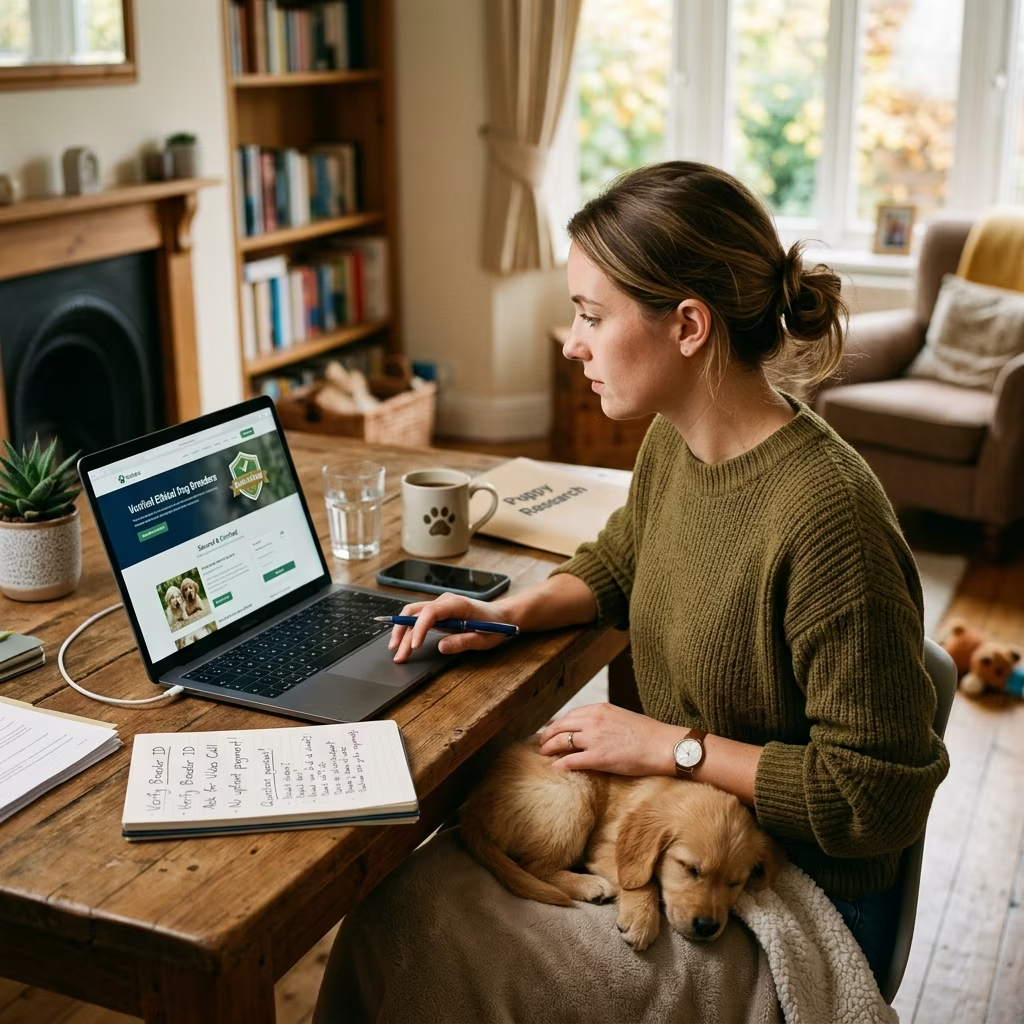
Buying a puppy online can feel convenient and heartwarming, but it has also become a lucrative opportunity for fraudsters. Across the United States, law enforcement agencies and consumer watchdogs report sharp increases in complaints about fake online pet sales, with victims often losing hundreds or even thousands of dollars and never receiving an animal. Understanding how these scams work and how to avoid them is essential for anyone considering bringing home a dog through the internet.
Why Online Puppy Scams Are Increasing
Online puppy scams have grown rapidly over the past decade as more people turn to the internet for shopping and pet adoption. Several factors contribute to this trend:
- High demand for specific breeds: Consumers frequently search for designer or rare breeds, which scammers exploit by advertising attractive puppies that are difficult to find locally.
- Emotional decision-making: The desire for a cute puppy can override normal caution, making buyers more vulnerable to pressure and manipulation.
- Remote transactions: Online marketplaces and social media make it easy to advertise pets and complete payments without any face-to-face contact.
- Easy anonymized payments: Fraudsters use payment methods such as wire transfers, gift cards, or certain apps to receive money quickly and disappear, making recovery difficult.
- Low cost of creating fake websites: Scam websites with professional-looking photos and fabricated testimonials can be built cheaply and replicated across multiple domains.
Consumer protection offices in some states have reported dozens of complaints within a single year, with average losses per victim reaching several hundred dollars. The Better Business Bureau has similarly documented a nationwide rise in pet-related frauds, particularly since more people began searching for companion animals during periods of social isolation.
How Typical Puppy Purchase Scams Work
While individual scams vary, many follow a predictable pattern. Knowing this pattern makes it easier to recognize suspicious offers early and avoid financial loss.
Step 1: The Attractive Online Listing
Most scams begin with a polished listing on a classified ads site, social media page, or standalone website specializing in a particular breed. These listings often feature multiple high-quality photos of adorable puppies and may promise:
- Purebred or designer breeds at below-market prices
- Free or reduced shipping anywhere in the country
- Health guarantees, registration papers, and vaccinations
- Emotional backstories, such as needing to rehome the dog quickly
In many cases, the photos are copied from legitimate breeders’ sites or stock image libraries, and the same images may appear on multiple unrelated pages.
Step 2: Limited Communication and Pressure
When a buyer responds, the “seller” usually prefers to communicate by email, messaging apps, or social media, and may avoid phone calls or video chats. Common tactics include:
- Refusing to meet in person, often citing distance or travel constraints
- Offering only vague details about the puppy’s parents, health, or environment
- Using emotional language to create urgency, such as claiming many people are interested
- Pressuring the buyer to send a deposit quickly to “reserve” the dog
Step 3: Upfront Payment Requests
The scammer then asks for payment through methods that are difficult to reverse or trace. Common requests include:
- Wire transfers through money transfer services
- Gift cards or prepaid debit cards
- Peer-to-peer payment apps, especially to anonymous or unverified accounts
These payment routes usually lack strong consumer protection, so once the money is sent, it is very hard to recover.
Step 4: Additional “Fees” and Threats
Even after the first payment, scammers often continue to demand more money. Typical excuses involve:
- Shipping insurance or special travel crates
- Veterinary clearance or quarantine charges
- Customs or export/import fees for international shipping
If the buyer hesitates, the scammer may threaten to report them for animal neglect or breach of contract, hoping fear will push the victim to pay. In reality, there is no puppy and no shipping company involved.
Step 5: Disappearance of the Seller
Eventually, the “seller” stops responding to messages or deletes the website or social media page entirely. Victims then discover they cannot trace the person or recover their funds. When they search the website name or phone number, they may find other complaints reporting similar experiences.
Key Warning Signs of an Online Puppy Scam
Several recurring indicators can help you distinguish between legitimate breeders or shelters and fraudulent operations. Consumer advocates and animal welfare organizations highlight the following red flags:
| Warning Sign | Why It Matters |
|---|---|
| No phone calls or live conversation | Refusal to talk by phone or video suggests the seller may be hiding identity or location. |
| Only email or messaging app communication | Exclusive reliance on text-based channels makes it easier to disappear after payment. |
| Too-good-to-be-true pricing | Designer or purebred dogs offered at steep discounts are often bait to attract victims. |
| Requests for wire transfers or gift cards | These payment methods lack strong buyer protections and are favored by fraudsters. |
| Stock or copied photos | Images appearing across multiple sites indicate the puppies shown may not belong to the seller. |
| Unclear physical address or overseas location | Difficult-to-verify addresses and foreign operations complicate enforcement and recovery. |
| New website with no history or reviews | Recently created domains with minimal feedback are higher-risk than established breeders. |
According to animal welfare and consumer organizations, a very high proportion of websites advertising pets may be fraudulent, which makes careful checking essential before committing money.
Safer Ways to Find a Puppy or Dog
Despite the risks, it is still possible to safely obtain a puppy or adopt a dog. The key is to prioritize transparency, verifiable information, and reputable organizations.
Consider Local Shelters and Rescues
Animal shelters, humane societies, and established rescue organizations are often safer sources for pets because they have physical locations, staff, and clear adoption procedures. Many are registered nonprofits or work closely with local governments, giving them more accountability than anonymous online sellers.
- Visit the shelter in person to meet the animals and staff.
- Ask about the organization’s history, policies, and veterinary care practices.
- Verify that adoption fees and procedures are clearly explained and documented.
Work With Reputable Breeders
If you prefer a particular breed and decide to work with a breeder, expert organizations recommend several safeguards:
- Meet the breeder and puppy: Whenever possible, visit the breeder’s facility or home to see where the dog is raised.
- Ask for health records: Request documentation of vaccinations, screenings, and veterinary visits, and confirm the puppy has been examined by a licensed veterinarian.
- Check references and reviews: Look for long-term customer feedback, referrals, or recognition from breed clubs.
- Request proof of registration if applicable: If the dog is advertised as registered, ensure papers are available and authentic.
Responsible breeders typically welcome questions and provide extensive information; reluctance to share basic details should be treated as a warning sign.
Verify Online Sellers Thoroughly
If an online option still seems appealing, take time to independently verify the seller before sending any money.
- Search the seller’s name, phone number, and email address alongside terms like “scam” or “complaint.”
- Use reverse image search tools to see if puppy photos appear on multiple unrelated sites.
- Check when the website domain was registered and whether it has a history of ownership.
- Look for clear contact details, including a physical address and landline number.
- Attempt a video call and observe whether the person can show the puppy in real time and answer detailed questions.
Any inconsistencies discovered at this stage—such as changing stories, mismatched information, or reluctance to verify details—should prompt you to walk away.
Smart Payment Practices for Puppy Purchases
Payment choices play a major role in your ability to recover funds if something goes wrong. Consumer advocates and law enforcement consistently warn against sending money through channels with limited dispute mechanisms.
- Avoid: Wire transfers, gift cards, prepaid cards, and anonymous payment apps.
- Prefer: Credit cards or reputable payment services that offer buyer protection and clear dispute processes.
- Be cautious with deposits: Pay only once you have verified the seller’s legitimacy and obtained written agreements.
In situations involving large sums or shipping arrangements, consider using a written contract and keeping all receipts, emails, and messages to support potential claims.
What To Do If You Suspect a Puppy Scam
If you believe you have encountered an online puppy scam—or already sent money to a fraudulent seller—acting quickly can increase the chances of limiting damage and helping authorities track patterns of abuse.
Immediate Steps
- Stop sending money: Do not pay additional “fees” or respond to threats.
- Contact your payment provider: Report the transaction to your bank, credit card company, or payment service, and ask about potential chargebacks or dispute processes.
- Document everything: Save screenshots of advertisements, messages, receipts, and website addresses.
Reporting the Scam
Reporting your experience helps consumer protection agencies and law enforcement identify patterns and warn others. Depending on where you live, you may be able to contact:
- Your state or local attorney general’s consumer protection division.
- National consumer complaint platforms or fraud reporting systems.
- Animal welfare organizations tracking pet-related scams.
Provide as much detail as possible, including payment methods, contact information for the seller, and any documents you received.
Frequently Asked Questions About Online Puppy Scams
Are all online puppy listings scams?
No. Many legitimate breeders and shelters use online platforms to advertise animals. However, consumer and animal welfare organizations warn that a significant share of websites advertising pets may be fraudulent, so careful verification is essential.
Is it safe to have a puppy shipped from another state?
Shipping can be done safely through reputable breeders and transport services, but it also introduces risk. Insist on thorough verification of the seller, clear documentation, and secure payment methods. Be wary of anyone who pressures you to pay for multiple unexpected shipping-related fees.
What if the price seems much lower than other sources?
Deeply discounted prices for popular breeds are a common tactic used by scammers to attract buyers. Research typical market prices before shopping; if an offer appears dramatically cheaper, approach it with skepticism and verify every detail.
Can I trust photos and videos?
Photos and videos alone are not reliable proof that the seller possesses the puppy. Images are easily copied, and video can be staged. Use reverse image searches, ask detailed questions about the dog’s environment, and seek independent references before trusting visual materials.
How can I check if a breeder is reputable?
Look for breeders with established histories, positive reviews or referrals, transparent health records, and willingness to meet or talk extensively. Some breed organizations maintain lists of responsible breeders and can help you verify credentials.
Practical Checklist Before Sending Any Money
Use this quick checklist to assess an online puppy offer:
- Have you spoken to the seller by phone or video, not just text?
- Did you verify the physical address and search for reviews or complaints?
- Do the photos appear unique, or do they show up on multiple sites?
- Is the price consistent with typical costs for the breed, or suspiciously low?
- Are you being asked to pay via secure, traceable methods rather than wire transfers or gift cards?
- Do you have written documentation of the terms, including any shipping arrangements and health guarantees?
If several items on this list raise concerns, it is safer to walk away and look for a more transparent, verifiable source.
References
- Attorney General DeWine Warns Online Puppy Scams Reported in Ohio — Ohio Attorney General. 2017-05-18. https://www.ohioattorneygeneral.gov/Media/News-Releases/May-2017/Attorney-General-DeWine-Warns-Online-Puppy-Scams-R
- Trending Now: Online Puppy Scams — ASPCA. 2020-09-15. https://www.aspca.org/news/trending-now-online-puppy-scams
- FAQ on Internet Puppy Scams — Michigan State University, Animal Legal & Historical Center. 2019-01-01. https://www.animallaw.info/article/faq-internet-puppy-scams
- How to Spot a Puppy Scam Online — American Kennel Club. 2020-10-28. https://www.akc.org/expert-advice/advice/spot-puppy-scam/
- Better Business Bureau warns of growing online pet scam — Sinclair Broadcast Group / My Fox 28 Columbus. 2017-12-20. https://myfox28columbus.com/news/local/better-business-bureau-warns-of-growing-online-pet-scam