
Property Rights When a Deed Is in Another Name
Learn how title issues arise, how to clear ownership records, and what deed transfers require.
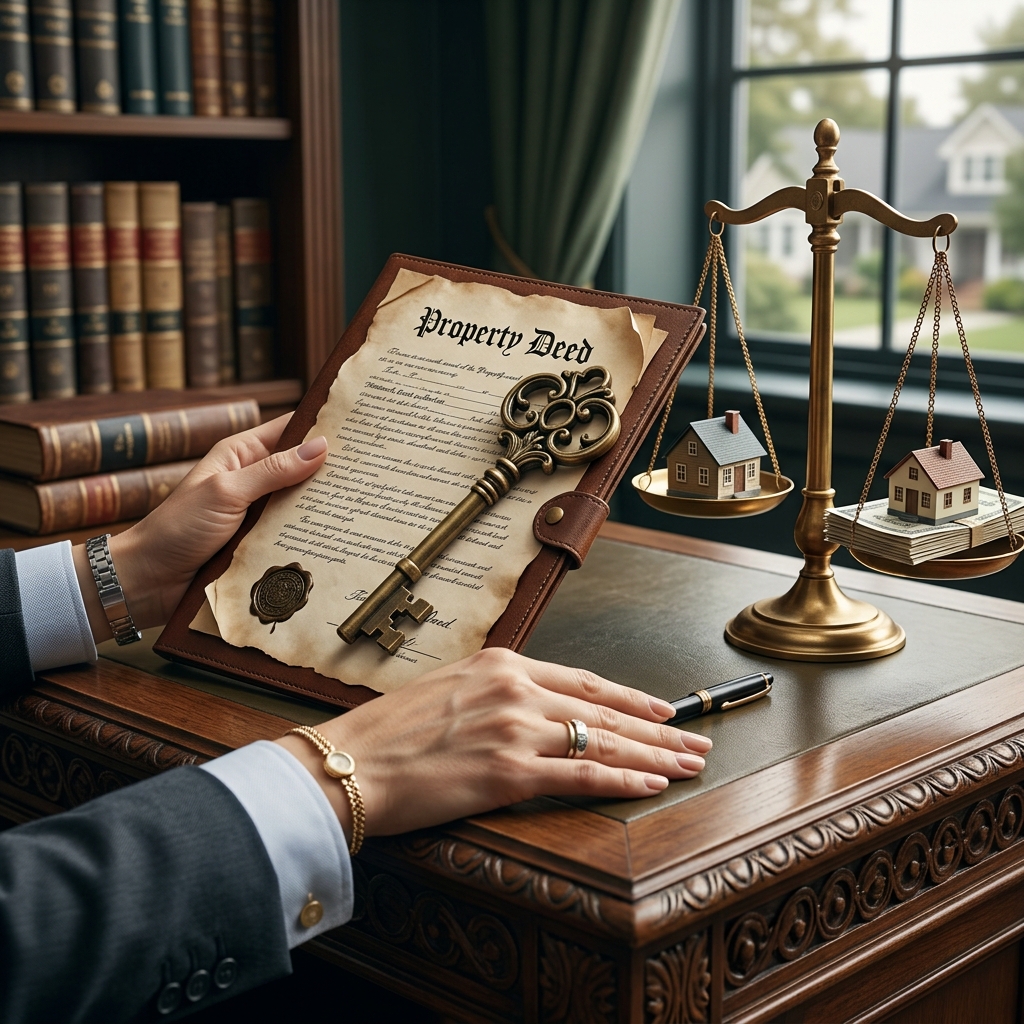
When the Deed Does Not Match the Real Owner
A deed is the legal record that shows who holds an interest in real property. When that record lists the wrong person, the mismatch can create serious problems with sale, inheritance, financing, and insurance. The safest response is to confirm the title history, identify why the name is wrong, and take formal steps to correct the ownership record rather than assuming the issue will resolve itself.
In practice, a name error may happen because of a prior owner, an incomplete transfer, a family transaction that was never finished properly, or an inheritance matter that was not documented in the county records. Whatever the cause, the central goal is the same: make the public record reflect the true ownership interest so that future transactions are not clouded by uncertainty.
- Title problems can interfere with selling or refinancing a home.
- Insurance companies may question whether coverage is valid if ownership is unclear.
- Heirs and co-owners may dispute rights if the deed and the actual arrangement do not match.
Start by Verifying the Ownership Record
The first step is to look beyond the current deed and examine the chain of title. A chain of title is the sequence of recorded transfers that shows how the property changed hands over time. This record helps determine whether the current deed contains a mistake or whether the person named on the deed really does have a legal claim to the property.
A title search can reveal whether the property is owned by one person, multiple people, or an estate, and it can also expose liens, easements, or other encumbrances that may affect the property. If the title search shows that the wrong person is listed, or that ownership was never properly transferred, the next step is to determine how the error should be corrected under state law.
| Issue | Why it matters |
|---|---|
| Wrong name on deed | The record may not reflect the actual owner. |
| Missing transfer documents | Ownership may never have been fully conveyed. |
| Unresolved inheritance | Heirs may need probate or other proof of title. |
| Unrecorded correction | Later buyers or lenders may treat the title as defective. |
Why a Recorded Deed Matters So Much
Ownership of real estate is not protected by private understanding alone. Even if everyone involved agrees about who should own the property, the law generally expects the deed to be signed, properly executed, and recorded in the county where the property is located. Until that happens, the public record may still show an earlier owner or an incorrect grantee.
Recording serves several purposes. It gives public notice of the change in ownership, helps establish priority over later claims, and creates a paper trail for lenders, buyers, and courts. Without recording, a corrected deed may be ineffective against third parties who rely on the public records.
- Recording helps protect against later disputes over ownership.
- It gives lenders and insurers a reliable source for title review.
- It is often required before the property can be refinanced or sold.
Ways to Correct a Deed That Names the Wrong Person
The right solution depends on how the problem happened. In some situations, the person listed on the deed can simply sign a new deed to transfer their interest to the correct owner. In others, the issue may require probate, an affidavit, or a court proceeding. The remedy should match the legal source of the error.
If the incorrect party is willing to cooperate, the most direct approach is usually to use a deed that transfers the interest out of that person’s name and into the proper owner’s name. Common correction tools include a quitclaim deed or, in some cases, a warranty deed. These instruments are often used when someone needs to give up any claim they may have and formally pass that claim to another person.
Quitclaim Deed
A quitclaim deed transfers whatever interest the signer has, if any, without promising that the title is free from defects. It is often used to clear a name from a deed, fix a family transfer, or resolve a simple ownership mistake. Because it does not guarantee clean title, it is useful for correction purposes, but it does not offer the same protection as a deed that contains warranties.
Warranty Deed
A warranty deed provides stronger assurances. It generally promises that the grantor has the right to transfer the property and that the title is free from certain claims except those specifically listed. When used in a correction setting, a warranty deed may offer greater comfort to the recipient and to future buyers or lenders, but it may not always be necessary.
What a Corrective Deed Usually Includes
A deed used to fix ownership should be drafted carefully. If key information is missing, the record may remain unclear even after the correction is filed. The exact requirements vary by state, but several basic elements are usually expected in a valid deed.
- The property address
- The legal description of the parcel
- The names of the grantor and grantee
- The parcel or tax identification number, if used in the local system
- The form of ownership, when multiple people are taking title
- The signatures required by state law
- Notarization and, where required, witnesses
The legal description is especially important. A street address alone often is not enough to identify the real property with legal certainty. A description tied to a recorded lot, plat, metes-and-bounds description, or prior deed reference is usually needed to avoid future confusion.
When the Wrong Name Came From an Inheritance Problem
Some title errors happen because a homeowner died before the property was transferred correctly. In those cases, the property may still be titled in the deceased person’s name, or it may show a prior owner who never completed the transfer. When that happens, the legal fix may depend on how the property passed at death.
For inherited property, a county recorder cannot simply rewrite the old deed to insert a new owner’s name. Instead, heirs or beneficiaries may need to file documents that establish their right to ownership. Depending on the state and the circumstances, that might include a death certificate, probate documents, an executor’s deed, an administrator’s deed, or another instrument that establishes the legal transfer.
- A transfer-on-death arrangement may require proof of death and supporting forms.
- Probate administration may produce a deed from the estate representative.
- Heirs may need an affidavit or court order if the property was never transferred properly.
What Happens If the Person on the Deed Refuses to Help
If the named person will not sign a corrective deed, the matter becomes more complicated. The available options may include contacting a title company, seeking a quiet title action, or using probate or court proceedings to resolve competing claims. The proper path depends on whether the problem is a clerical error, a failed transfer, an inheritance issue, or a genuine ownership dispute.
A title company can sometimes help locate the people whose signatures are needed or explain what documents are missing. But if the dispute is legal rather than clerical, the parties may need a lawyer to determine whether a court can order the title corrected. A quiet title action, for example, is designed to establish who owns the property when the record is uncertain or contested.
How Ownership Form Affects the Analysis
When more than one person is involved, the way title is held can affect what happens next. Some owners hold property as tenants in common, where each person owns a distinct share. Others may hold title as joint tenants or, in some states, as tenants by the entirety. The ownership form can affect survivorship rights, transfer rights, and the way a deceased owner’s share passes.
Because of those differences, the exact wording on the deed matters. Two people may both appear on a deed, but that does not automatically mean their interests are equal or that the property will pass to the survivor without further action. The deed language and state law together determine the result.
| Ownership form | General effect |
|---|---|
| Tenants in common | Each owner holds a separate interest that may pass through an estate. |
| Joint tenancy | A surviving owner may receive the deceased owner’s share if survivorship applies. |
| Tenancy by the entirety | Available in some states for married couples, with special survivorship rules. |
Risks of Leaving the Title Unfixed
Ignoring a deed problem may seem harmless when the people involved trust one another, but the risk grows over time. A house with a title defect can become harder to refinance, insure, sell, or pass to heirs. The longer the issue remains unresolved, the more difficult it may become to gather documents, locate signers, or prove the original intent of the parties.
Leaving the record inaccurate can also create tax and estate complications. A person who believes they own the property may discover that the county records still list someone else, while a family member may assume they have no rights when the deed tells a different story. Correcting the issue early reduces the chance of later conflict.
Practical Steps to Take Right Away
If your property is titled in another person’s name, or if your name appears on a deed that does not match the real ownership arrangement, begin with documentation. Gather prior deeds, closing records, probate papers, wills, trust documents, and any correspondence about how the property was supposed to be transferred. Then compare those records to the current county deed.
Once you understand the gap, decide whether the fix is likely to be cooperative or contested. A cooperative issue may be solved with a signed corrective deed and proper recording. A contested issue may require legal help, especially if the property was inherited, transferred informally, or held by multiple family members without clear paperwork.
- Order a title search or review existing title insurance materials.
- Confirm whether the deed lists the correct parties and ownership form.
- Ask the current title holder to sign a corrective transfer if appropriate.
- Record the new deed promptly after execution.
- Seek legal advice if the matter involves inheritance, divorce, or dispute.
Frequently Asked Questions
Can I own a house if my name is not on the deed? Ownership usually depends on the title record and the transaction documents. If your name is missing, you may need a corrective deed, probate documents, or another legally recognized transfer to prove your interest.
Is a quitclaim deed enough to fix the problem? It can be enough in many simple correction situations because it transfers whatever interest the signer has. However, it does not guarantee title quality, so it may not solve every problem.
Do I need to record the corrected deed? Yes. Recording is a critical part of protecting the transfer against later claims and making the change visible in the public records.
What if the title issue came from a deceased owner? You may need probate-related documents, an affidavit, or a deed from the estate representative. The exact path depends on state law and how the property passed at death.
Should I use a lawyer? Legal help is especially useful when the title issue involves inheritance, unclear ownership shares, missing signers, or a dispute over who really owns the property.
References
- Property Rights: Deed in Someone Else’s Name — FindLaw. 2026-07-09. https://www.findlaw.com/realestate/owning-a-home/property-rights-deed-in-someone-elses-name.html
- Guides: Probate Law: Real Property Deeds — Texas State Law Library. 2026-07-09. https://guides.sll.texas.gov/probate/property-deeds
- Massachusetts Real Estate Ownership — Massachusetts Registry of Deeds, Middlesex North. 2026-07-09. https://massrods.com/middlesexnorth/massachusetts-real-estate-ownership/
- What Are My Rights if My Name is On a Deed in California? — Gokallaw. 2026-07-09. https://gokallaw.com/what-are-my-rights-if-my-name-is-on-a-deed-in-california/
- How to Transfer Property to Family — LegalShield. 2026-07-09. https://www.legalshield.com/blog/how-to-transfer-property-to-family
Similar Articles








Read full bio of medha deb


