
Private Student Loans: Complete Family Guide For 2025 Planning
A clear guide to how private student loans work, when they fit, and what to compare before borrowing.
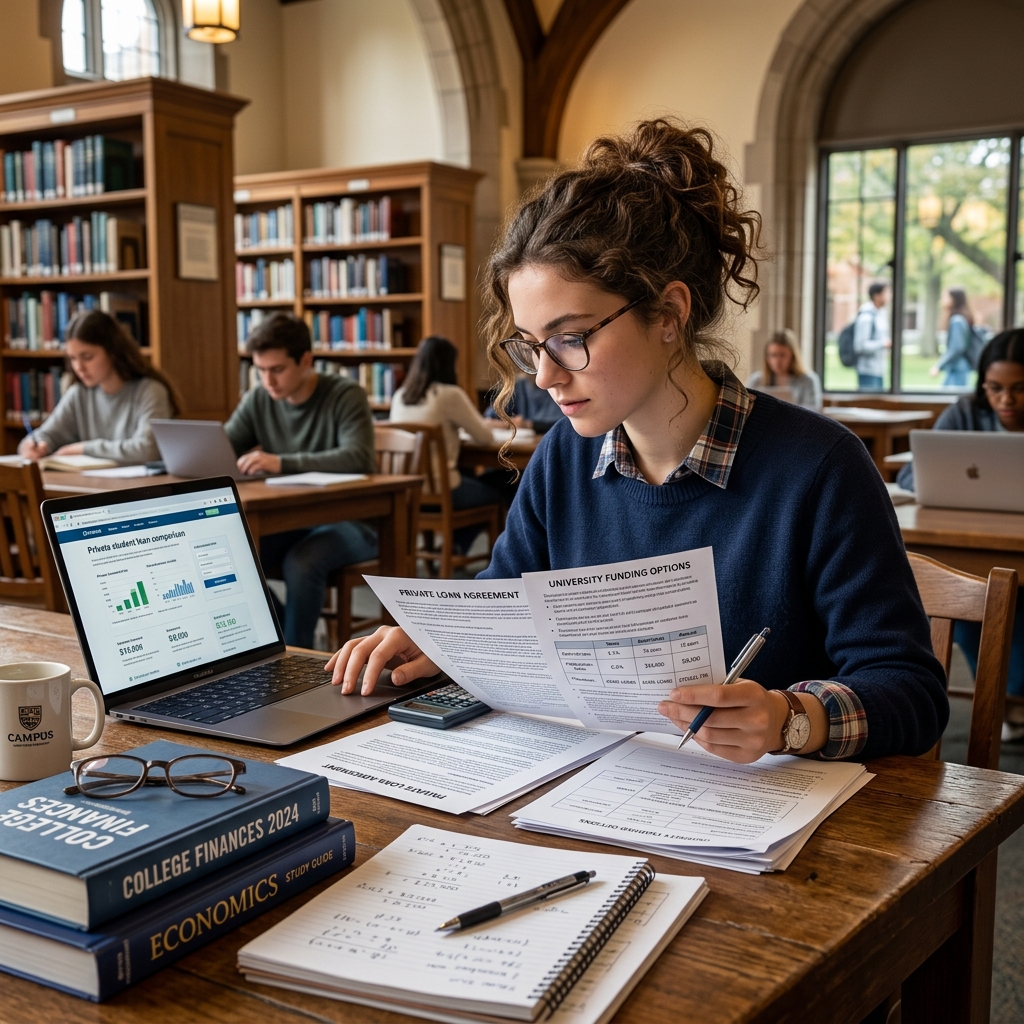
Private Student Loans: A Practical Way to Fill College Funding Gaps
Private student loans can help bridge the difference between college costs and the aid a student has already received. They are usually offered by banks, credit unions, and specialized education lenders, and they often come with terms that depend on credit history, income, and whether a cosigner is involved.[10]
These loans are not the first place most families should start. Federal student loans generally offer more flexible repayment options and borrower protections, while private loans are often best viewed as a supplemental tool when grants, scholarships, savings, and federal aid do not cover the full bill.
When a private loan may make sense
A private loan may be worth considering if the student has already used federal aid and still faces a remaining balance. That situation is common when tuition, housing, books, or other school-certified expenses exceed the amount covered by grants and federal loans.
Private loans are also used by some families who want to compare lenders for rate, repayment structure, and cosigner rules. The key point is that a private loan should be chosen after reviewing every other funding source, especially federal options.
How private student loans differ from federal loans
Private student loans are fundamentally different from federal loans because they are issued by private lenders rather than the government. As a result, the interest rate, repayment choices, and borrower protections can vary widely by lender and may depend on creditworthiness.
Federal student loans usually provide stronger default protections, fixed rules for deferment or income-driven repayment, and certain forgiveness options. By contrast, private loans may offer fewer built-in safeguards, so borrowers need to examine the fine print carefully before signing.
| Feature | Federal student loans | Private student loans |
|---|---|---|
| Source | U.S. Department of Education | Bank, credit union, or private lender |
| Approval basis | Eligibility rules and enrollment status | Credit history, income, and often cosigner strength |
| Repayment protections | Usually broader | Vary by lender |
| Interest rate | Set by federal program rules | Fixed or variable, lender-specific |
| Forgiveness options | May be available in some cases | Usually limited or unavailable |
What lenders usually look for
Most private lenders review credit history before approving a loan. Students with limited credit often need a cosigner, typically a parent or another creditworthy adult, to improve the chance of approval and possibly secure a lower rate.
Lenders may also require the borrower to attend an eligible school, maintain satisfactory enrollment status, and meet citizenship or residency rules. Some lenders also consider debt-to-income ratios, academic standing, and the total cost of attendance certified by the school.
- Credit profile: A stronger score can improve approval odds and pricing.
- Cosigner: Many student borrowers need one because they have little borrowing history.
- School eligibility: The institution often must be approved by the lender.
- Enrollment status: Lenders commonly require at least half-time enrollment.
- Loan amount: Borrowing is usually limited to school-certified costs of attendance.
Costs to compare before borrowing
The advertised interest rate is important, but it is only one part of the total price of a loan. Borrowers should also review fees, repayment terms, whether the loan has a fixed or variable rate, and whether interest starts accruing right away.
Some lenders charge origination fees, while others do not. A few also impose prepayment penalties, though many modern private student loans do not. The safest approach is to compare the full cost of borrowing rather than focusing only on monthly payment estimates.
- Interest rate: Fixed rates stay the same; variable rates can rise or fall.
- Fees: Look for application fees, origination fees, or late fees.
- Repayment term: Longer terms may lower monthly payments but increase total interest.
- Grace period: Some loans delay full repayment until after graduation.
- Capitalization: Unpaid interest may be added to the balance in some cases.
The application process in plain language
Applying for a private student loan usually starts with comparing lenders and collecting basic financial information. Many families submit applications to more than one lender so they can compare rates, terms, and cosigner requirements before making a final decision.
After a borrower applies and is approved, the school typically certifies the loan amount. That certification process helps ensure that the loan does not exceed the student’s cost of attendance for the academic year.
- Compare several lenders and review eligibility requirements.
- Check whether prequalification is available without a hard credit inquiry.
- Choose a loan amount that matches the school-certified need.
- Submit the application and any required documentation.
- Wait for school certification and final loan approval.
- Confirm when funds will be disbursed to the school.
How loan funds are usually distributed
Private loan proceeds are commonly sent directly to the school first. The school applies the money to tuition, fees, housing, and other approved charges, and any remaining funds may be released to the student for additional educational expenses.
Disbursement timing matters because some schools send funds at the beginning of each term, while others use a different schedule. Borrowers should ask the financial aid office when payments will arrive so they can plan for bills that come due before disbursement.
Repayment rules and timing
Repayment schedules vary by lender, but private student loans often begin repayment sooner than many borrowers expect. Some loans require interest payments while the student is in school, while others allow deferred repayment until after graduation or after enrollment drops below half-time.
Deferred repayment can provide short-term breathing room, but it may also allow interest to build up before principal payments begin. Borrowers should check whether the lender offers interest-only periods, immediate repayment, or a traditional grace period after school ends.
Why borrowers should read the promissory note closely
The promissory note is the legal contract that governs the loan, and it contains the details that matter most if something goes wrong. That document typically explains the rate, repayment terms, late charges, default consequences, and any special conditions tied to the loan.
Families should not treat the loan as interchangeable with federal aid. If a borrower later struggles financially, the lender’s options may be narrower than those available under the federal system.
Questions to ask before signing
- Is the rate fixed or variable?
- Are there any origination or application fees?
- Does the loan require a cosigner?
- When does repayment begin?
- Is there a grace period after graduation?
- Can the loan be prepaid without penalty?
- How does the lender handle unpaid interest?
- What happens if the borrower leaves school or drops below half-time?
How to think about private loans responsibly
Borrowing privately should usually be a last step after using grants, scholarships, savings, work-study, and federal loans. That sequence helps preserve the best borrowing terms for as long as possible and reduces the chance of taking on unnecessary debt.
A helpful rule is to borrow only what is needed for the academic year and to keep the total debt manageable relative to expected future earnings. The school’s cost of attendance, not just the tuition bill, should guide the borrowing decision because books, supplies, transportation, and housing can also matter.
Checklist for comparing lenders
- Check whether the lender is transparent about APR, fees, and repayment terms.
- Compare fixed and variable rate options side by side.
- Review cosigner release policies, if available.
- Confirm whether the lender uses school-certified borrowing limits.
- Look at repayment flexibility if the borrower faces hardship.
- Compare total repayment cost, not just the monthly payment.[10]
Common mistakes families make
One common mistake is borrowing too quickly after seeing a low advertised rate. Another is overlooking fees or variable-rate risk, which can make a loan more expensive over time.
Some families also forget to compare private loan offers against the full federal aid package. That comparison matters because the federal system may offer more forgiving repayment options even when the headline interest rate looks less attractive.
Frequently asked questions
Are private student loans a good option?
They can be useful when a student still has a funding gap after exhausting other aid, but they are usually best used only after federal loans and scholarships have been considered.
Do private student loans require a cosigner?
Often yes, especially for students with little or no credit history. A cosigner can improve approval chances and may help secure a better rate.
Can private loans cover living expenses?
Yes, if the school certifies a cost of attendance that includes room, board, and other education-related expenses. Any excess funds may be sent to the student for personal educational costs.
Can I pay off a private student loan early?
Many private lenders allow early payoff without a penalty, but borrowers should confirm this before signing because terms vary by lender.
Should I compare several lenders?
Yes. Comparing multiple lenders can reveal meaningful differences in rates, fees, cosigner rules, and repayment flexibility.[10]
Private student loans are not a shortcut to college affordability, but they can be a useful tool when used carefully. The best results usually come from comparing several lenders, borrowing only what is necessary, and reading every term before the loan is signed.
References
- Private Student Loans – Finaid — Finaid. 2026-07-09. https://finaid.org/loans/privatestudentloans/
- Federal Versus Private Loans — Federal Student Aid, U.S. Department of Education. 2026-07-09. https://studentaid.gov/understand-aid/types/loans/federal-vs-private
- Private Loans — New York State Higher Education Services Corporation. 2026-07-09. https://hesc.ny.gov/find-aid-you-need/student-loans/private-loans
- Private Education Loans — The University of Texas at Dallas Office of Financial Aid. 2026-07-09. https://finaid.utdallas.edu/aid-programs/student-loans/private-loans/
- Private Student Loans for College — Sallie Mae. 2026-07-09. https://www.salliemae.com/student-loans/private-student-loans/
- Private Student Loans for College with Fixed Interest Rates — MEFA. 2026-07-09. https://www.mefa.org/undergraduate-loan/
- ELMSelect — ELM Resources. 2026-07-09. https://www.elmselect.com/v4
Similar Articles








Read full bio of medha deb




