
Nursing Mothers’ Break Time Rights at Work
A practical guide to federal lactation break rules, employer duties, and worker rights.
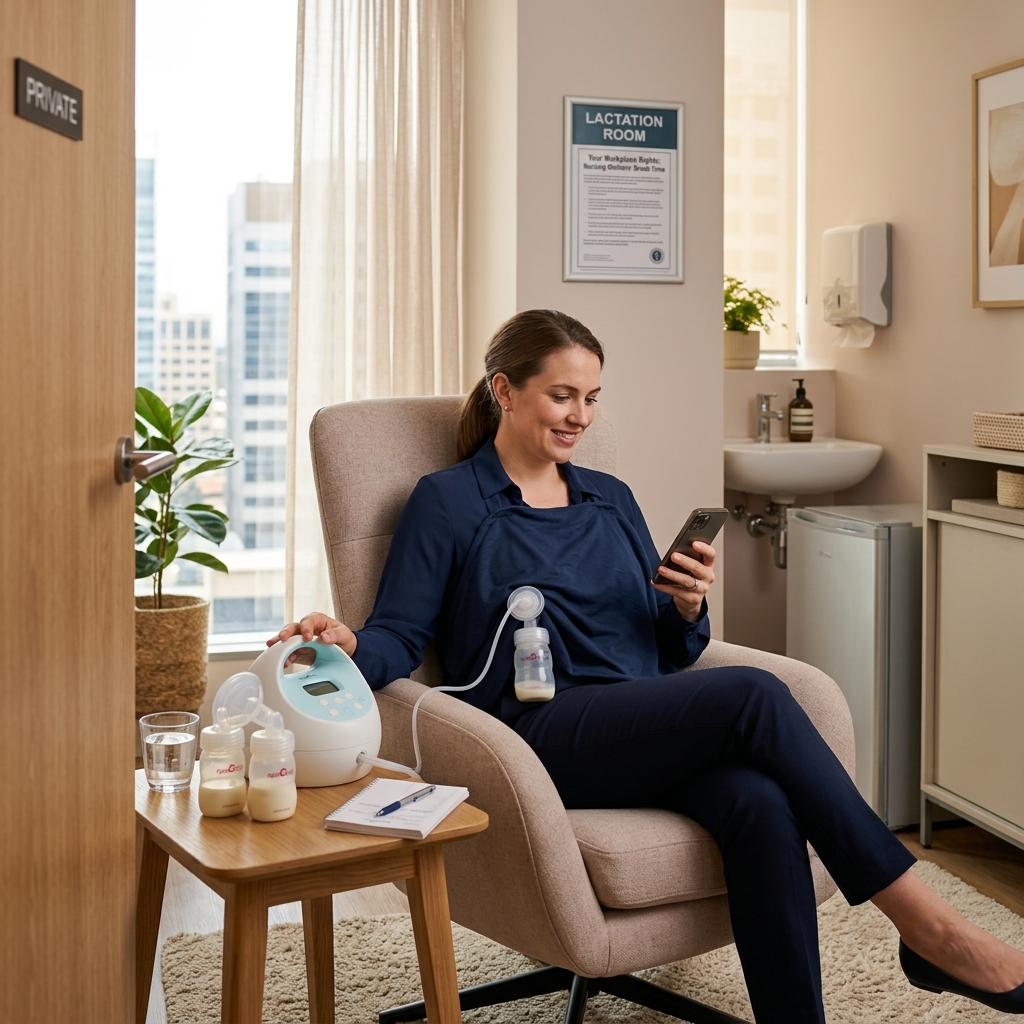
Federal law gives many nursing employees the right to take reasonable break time to express breast milk during the workday and to use a private space that is not a bathroom. These protections are meant to make it possible to continue breastfeeding after returning to work, while also giving employers a clear framework for compliance.
The rules do not create a one-size-fits-all schedule. Instead, they require employers to provide breaks as needed and a location that protects privacy and prevents intrusion. The details matter, especially after the PUMP Act expanded coverage for many workers who were not fully protected before.
What the law is designed to do
The main federal rule on lactation accommodations appears in the Fair Labor Standards Act, as amended by the Affordable Care Act and later expanded by the PUMP Act. Under this framework, most nursing workers are entitled to reasonable break time and a place to pump that is not a bathroom, is shielded from view, and is free from intrusion.
The purpose of the law is practical: it recognizes that employees who are lactating need time and a suitable location to express milk during the workday. That need may arise more than once a day, and the timing depends on the employee’s milk supply, the age of the child, and work conditions.
Who is covered
Coverage under federal law is broader than it once was. The original break-time rule focused on many employees covered by the FLSA, and the PUMP Act extended protections to nearly all workers. As a result, coverage now includes many employees who were previously left out, such as teachers, nurses, farmworkers, and certain salaried employees.
The law applies regardless of gender. It protects employees who need to express milk for a nursing child, and it generally applies for up to one year after the child’s birth under the federal standard.
| Issue | Federal rule |
|---|---|
| Break time | Reasonable break time as needed to express milk |
| Private space | Room or area other than a bathroom, shielded from view and free from intrusion |
| Duration of protection | Up to one year after the child’s birth under federal law |
| Coverage | Expanded by the PUMP Act to cover most workers |
What counts as reasonable break time
The law does not give a fixed number of minutes or a fixed number of breaks. That flexibility is intentional because pumping schedules vary. Some employees may need only a short break; others may need more time. The key legal standard is reasonableness in light of the employee’s needs.
Government guidance has explained that a typical nursing employee may need multiple breaks during a workday, and the length of each break can vary. In practice, employers should expect that break needs may change over time and should be prepared to adjust schedules when necessary.
- Break frequency may change based on the employee’s personal needs.
- Break length may depend on how long pumping takes in a given setting.
- Employers should avoid rigid rules that prevent a worker from pumping when needed.
- Communication between employee and employer often helps prevent conflict.
What the pumping space must provide
A compliant space must be functional for expressing milk and must protect the worker’s privacy. The law specifically says the space cannot be a bathroom. It must also be shielded from view and free from intrusion by coworkers, clients, customers, or the public.
The exact setup can vary, but the space should let the employee pump comfortably and without interruption. A temporary space may be acceptable if it truly satisfies the privacy requirements. However, a place that is shared, exposed, or regularly interrupted is unlikely to meet the legal standard.
Some workplaces also provide extra features that improve usability, such as a nearby sink, refrigeration, or a lockable door. Those items may not always be required by federal law, but they can make compliance easier and support a more workable accommodation.
Does the employee have to be paid for pumping time?
Pay rules depend on whether the pumping break is otherwise paid time and whether the employee is fully relieved from duty. If an employee uses an ordinary paid break period to express milk, the employer must pay for that time. If the employee is not completely relieved from work duties during the break, the time may also need to be treated as hours worked.
In contrast, if the break is unpaid under the employer’s general break policy and the employee is fully off duty, the employer generally does not have to pay for that time. Employers should review wage-and-hour practices carefully to avoid misclassifying compensable time.
How the federal law interacts with state rules
Federal law sets a minimum floor, but state laws can offer stronger protection. Some states require more generous break time, expand coverage to more workers, add storage or refrigeration requirements, or protect employees for longer than one year after childbirth.
When state and federal law differ, the rule that gives the employee greater protection usually controls. That means employers should not rely on the federal standard alone if a state law applies. In many workplaces, the safest approach is to check both layers of law and follow the stricter requirement.
How employers can comply in practice
Good compliance usually depends on advance planning. Employers should identify available pumping locations, train supervisors, and create a clear process for workers to request accommodations. Because many disputes start with a lack of communication, a simple internal policy can make a major difference.
- Identify private spaces before an employee needs them.
- Make sure supervisors understand that pump breaks are protected.
- Allow scheduling flexibility when job duties permit.
- Avoid retaliating against workers who request accommodations.
- Review pay practices to determine whether break time is compensable.
Employers with more limited space may need creative solutions, but convenience alone does not excuse noncompliance. The legal test focuses on whether the location is private, shielded from view, and free from intrusion.
What workers should do if their rights are ignored
If an employer fails to provide required break time or an appropriate space, the employee can raise the issue internally first. In many cases, a written request helps document the need and gives the employer a chance to correct the problem.
If the problem continues, workers may contact the U.S. Department of Labor’s Wage and Hour Division. The agency can investigate possible violations of the FLSA and explain available options. In some cases, an employee may also have a direct legal claim, especially if the employer refuses to comply or retaliates after the request.
Under the PUMP Act, an employee generally must give the employer notice and allow time to fix the issue before filing certain claims, although some circumstances can permit quicker action. If retaliation or discharge occurs after a request for pumping accommodations, the situation can become more serious and may support additional remedies.
Common misunderstandings about lactation breaks
Many workplace disputes arise because employers assume the rule is narrower than it really is. Others assume the rule is so vague that any arrangement will do. Both ideas can lead to mistakes.
| Myth | Reality |
|---|---|
| Only certain mothers are protected | Federal law now extends coverage broadly to many workers who need to express milk |
| A bathroom is acceptable if it is clean | The law says the space must not be a bathroom |
| Employers can set one fixed pumping schedule for everyone | Breaks must be reasonable and tied to the worker’s actual needs |
| Pumping time is always unpaid | Pay depends on the circumstances and whether the worker is relieved from duty |
Why this issue matters for workplaces
Lactation accommodations are not only a legal issue but also a workforce issue. Employees who can continue breastfeeding after returning to work may experience less stress in balancing family and job responsibilities. Employers, in turn, benefit from clearer policies, fewer disputes, and better retention.
Workplaces that treat these accommodations as part of normal operations often avoid the confusion that leads to complaints. A practical policy can also help managers respond consistently, instead of improvising when an employee asks for help.
Frequently asked questions
How long does the federal right last?
Under federal law, the standard protection applies for up to one year after the child’s birth. Some state laws may provide a longer period.
Can an employer deny pumping time because work is busy?
General workload concerns do not erase the legal duty to provide reasonable break time. Employers may need to plan staffing and schedules so the accommodation can be provided.
Can the employer offer a conference room instead of a lactation room?
Yes, if the room is available when needed and truly private, shielded from view, and free from intrusion. The legal focus is on whether the space works in practice, not on the room’s original purpose.
Must the employer provide a refrigerator or sink?
Federal law does not always require those items, but some state laws do, and many employers provide them as a matter of policy. Employers should check local requirements before deciding what is enough.
What if the employee is exempt from overtime?
Coverage can be affected by the worker’s classification and the specific law in question. The PUMP Act expanded protections significantly, so employers should not assume exempt status eliminates all obligations.
Can a worker be punished for asking for pumping breaks?
No. Retaliation can create additional legal exposure, especially if an employee is disciplined, reduced in hours, or terminated after requesting protected accommodations.
Practical steps for employees and employers
Employees should keep requests simple and specific. It helps to say when break time is needed, what type of space is required, and whether any schedule adjustments would help. Documentation can be useful if the issue later becomes a legal dispute.
Employers should respond promptly, confirm the arrangement in writing when possible, and revisit the setup if the employee’s needs change. A flexible approach is often the easiest way to stay compliant.
Because federal and state rules can overlap, businesses with employees in multiple locations should not rely on a single nationwide policy without reviewing local law. A policy that works in one state may be too limited in another.
More questions about nursing mothers’ rights
Do all employers have to follow the same rule? Most employers must provide lactation accommodations under federal law, and the PUMP Act expanded coverage to nearly all workers.
What is the most important requirement? The two core duties are reasonable break time and a private space that is not a bathroom.
What should an employer do first? Start with a written policy, identify private space, and train managers before a complaint arises.
References
- FLSA Protections to Pump at Work — U.S. Department of Labor. 2024-01-01. https://www.dol.gov/agencies/whd/pump-at-work
- Time and Place to Pump at Work: Your Rights — U.S. Equal Employment Opportunity Commission. 2024-01-01. https://www.eeoc.gov/time-and-place-pump-work-your-rights
- What the law says about breastfeeding and work — U.S. Office on Women’s Health. 2024-01-01. https://womenshealth.gov/supporting-nursing-moms-work/what-law-says-about-breastfeeding-and-work
- The PUMP Act Explained — U.S. Breastfeeding Committee. 2024-01-01. https://www.usbreastfeeding.org/the-pump-act-explained.html
- Lactation Accommodation — California Department of Industrial Relations, Division of Labor Standards Enforcement. 2024-01-01. https://www.dir.ca.gov/dlse/Lactation_Accommodation.htm
- Reasonable Break Time for Nursing Mothers: A Provision Enacted into Law by Section 4207 of the Patient Protection and Affordable Care Act of 2010 — PubMed Central. 2021-05-25. https://pmc.ncbi.nlm.nih.gov/articles/PMC8194478/
Similar Articles








Read full bio of Sneha Tete




