
When Your Neighbor’s Home Business Becomes a Legal Problem
Understand how to handle noise, traffic, and other issues caused by a neighbor’s home-based business using practical legal tools.
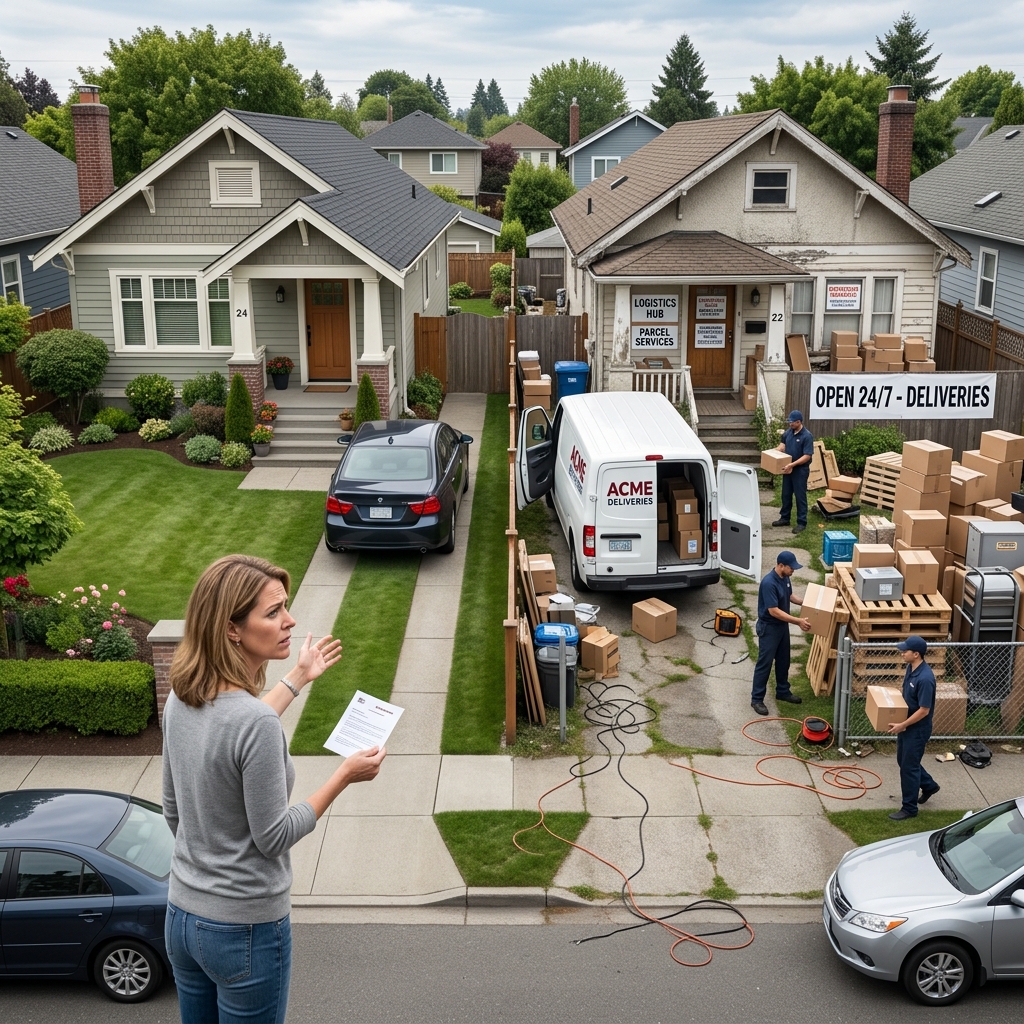
Home-based businesses are increasingly common, but they can create serious tension when they interfere with nearby residents’ comfort, safety, or property use. If your neighbor’s business is causing noise, traffic, parking issues, or other disturbances, you may have legal options to restore your quality of life.
This guide explains how to recognize when a home business crosses the line from inconvenience to legal nuisance, outlines practical steps to resolve conflict, and describes formal remedies you can pursue if informal efforts fail.
Understanding Home-Based Businesses in Residential Areas
Many local governments allow residents to run small businesses from home under specific conditions. These rules are often found in zoning codes, homeowner association (HOA) documents, or municipal ordinances.
Typical limits for home businesses in residential zones may include:
- Restrictions on business signage visible from the street
- Limits on the number of employees who can work on-site
- Caps on customer visits or delivery frequency
- Prohibitions on certain commercial or industrial activities
- Requirements that the business not substantially disrupt neighbors
A home business that complies with these rules and operates discreetly may never cause a problem. Conflicts arise when business activities change the character of the neighborhood or repeatedly interfere with others’ right to use and enjoy their property.
Common Problems Caused by Neighbor Home Businesses
Issues vary widely depending on the type of business, but some recurring complaints include:
- Excessive noise from machinery, music, or customer traffic
- Parking congestion on residential streets or driveways
- Increased traffic from deliveries, ride-sharing, or client visits
- Odors or fumes from cooking, chemicals, or manufacturing
- Visual clutter from signage, stored materials, or constant visitors
- Safety concerns such as blocked driveways, fire hazards, or hazardous materials
Not every annoyance is legally actionable. The key questions are whether the interference is substantial and continuous, and whether it violates any local laws, permits, or private agreements.
Is Your Neighbor’s Business a Legal Nuisance?
In many states, property owners can bring a nuisance claim if a neighbor’s activities substantially and unreasonably interfere with their use and enjoyment of their property.
Courts often consider factors such as:
- How intense the disturbance is (noise level, odor strength, traffic volume)
- How often it happens and how long it has continued
- The nature of the neighborhood (quiet residential vs. mixed use)
- Whether the activity violates local ordinances or zoning rules
- Whether reasonable steps could reduce the impact
Occasional minor inconvenience is usually not enough. However, ongoing loud noise late at night, daily traffic jams on a narrow street, or continuous fumes drifting into nearby homes can meet the threshold for legal relief.
Check the Legal Framework Before You Act
Before confronting your neighbor or contacting authorities, it helps to understand the legal landscape that governs home businesses in your area.
1. Zoning and Land Use Rules
Local zoning ordinances typically define what types of activity are allowed in residential districts. These rules may address:
- Permitted home occupations (for example, consulting versus auto repair)
- Limits on floor space used for business purposes
- Noise and hours of operation
- Signage, parking, and traffic impacts
You can usually review zoning codes on your city or county’s website or by contacting the planning or zoning department.
2. HOA Covenants and Community Rules
If you live in a community with a homeowners’ association, there may be additional restrictions on home-based businesses. Some HOAs prohibit certain types of commercial activity outright, while others allow them subject to rules on noise, parking, and neighborhood appearance.
Review your HOA’s covenants, conditions, and restrictions (CC&Rs), bylaws, and community guidelines. HOAs often have enforcement processes that can address violations without requiring you to go directly to court.
3. Local Nuisance and Noise Ordinances
Most municipalities have general ordinances regulating noise, public safety, and nuisance behavior. These may set quiet hours, maximum decibel levels, or rules about obstructing streets and sidewalks.
If your neighbor’s business clearly violates a local ordinance, you may be able to file a complaint with a city department or law enforcement rather than pursuing a private lawsuit.
Documenting the Problem: Build a Clear Record
Whether you end up negotiating, seeking mediation, or going to court, detailed documentation of the disturbance is critical.
Useful steps include:
- Keep a written log noting dates, times, duration, and type of problem (noise, odors, traffic, etc.).
- Take photos or videos of parked vehicles, blocked driveways, visible equipment, or crowds when appropriate.
- Record communications with your neighbor, HOA, or city officials (emails, letters, meeting notes).
- Collect corroboration from other neighbors experiencing similar issues.
A well-organized record makes it easier for officials, mediators, or courts to see that the problem is ongoing and serious rather than an isolated disagreement.
Practical Steps Before Resorting to Legal Action
Legal proceedings can be expensive, time-consuming, and emotionally draining. Many disputes can be resolved by escalating through a series of practical steps before you consider court.
Start with Respectful Communication
Often, the business owner may be unaware of the impact on neighbors or may underestimate the level of disruption. A calm, direct conversation can sometimes resolve the issue quickly.
- Explain specific problems (for example, early-morning deliveries or evening parking jams).
- Share how the issue affects your household (sleep, work, safety, or property use).
- Suggest concrete solutions (limited hours, designated parking, soundproofing).
- Focus on collaboration rather than blame.
Written follow-up, such as a polite letter or email summarizing the conversation, can document the effort and clarify agreed changes.
Engage Your HOA or Community Association
If you live in a community governed by an HOA, reporting the issue to the association can be an effective next step. HOAs often have authority to enforce community rules through warnings, fines, or other sanctions.
Provide:
- A clear description of the business activities causing problems
- References to specific HOA rules you believe are being violated
- Your documentation log, photos, or statements from other neighbors
Ideally, the association will investigate and work with the business owner to bring operations into compliance or reduce their impact.
Use Mediation Services
When direct communication is difficult or emotions run high, mediation can be a constructive way to reach a compromise. Mediation involves a neutral third party who facilitates conversation and helps the parties explore mutually acceptable solutions.
Key features of mediation include:
- Informal, confidential meetings rather than adversarial hearings
- Voluntary participation and control over the outcome
- Lower cost and quicker resolution compared with litigation
Some local courts, community organizations, or bar associations offer low-cost or free mediation services for neighbor disputes.
When Complaints to Authorities May Be Appropriate
If respectful communication and community processes do not work, or if the business activities create immediate safety or legal concerns, contacting local authorities may be justified.
City or County Code Enforcement
Code enforcement departments investigate violations of zoning, building codes, and nuisance ordinances. Submitting a complaint can trigger an inspection or review of the neighbor’s business operations.
You may be asked to provide:
- The property address and description of the business
- Details of the alleged violation (noise, traffic, dangerous conditions)
- Your documentation log and any supporting evidence
If officials find violations, they may issue warnings, fines, or orders to modify or cease certain activities.
Noise and Public Safety Complaints
Where disturbances clearly fit within local noise or public safety rules, you can sometimes contact law enforcement or a non-emergency line for assistance. However, this step should be used thoughtfully, as repeated police involvement can escalate tensions and may not lead to long-term solutions.
Legal Remedies When Informal Measures Fail
In situations where the home business continues to disrupt your life despite negotiation, HOA involvement, mediation, and local complaints, formal legal action may be warranted.
Common legal avenues include:
| Legal Option | Typical Goal | Best For |
|---|---|---|
| Injunction | Stop or limit specific disruptive activities | Ongoing nuisance (noise, traffic, odors) with clear evidence |
| Small Claims Lawsuit | Recover money for property damage or measurable losses | Minor to moderate financial harm, simple cases |
| Civil Lawsuit (Nuisance) | Seek damages and long-term relief | Serious, persistent interference or high-value harm |
| HOA Enforcement Action | Internal penalties or forced compliance under community rules | Violations in HOA-governed communities |
Injunctions to Restrict Harmful Conduct
An injunction is a court order directing a person to stop certain activities or to perform specific actions. If a neighbor’s business constitutes a nuisance, you may ask a court to issue an injunction limiting hours, restricting certain operations, or prohibiting activities that violate local law.
Courts often consider:
- Whether the harm is likely to continue without court intervention
- The balance between the neighbor’s business interests and your right to quiet enjoyment
- Availability of less restrictive alternatives
Injunctions can be temporary (to address urgent short-term issues) or permanent, depending on the case and the evidence presented.
Small Claims Court for Limited Damages
If the business has caused tangible financial losses—such as minor property damage, clean-up costs, or expenses from blocked access—you may be able to file a claim in small claims court.
Small claims courts are designed to be simpler and more accessible, often without the need for full legal representation. They handle lower-value disputes and can award monetary damages if you prove your losses.
Civil Lawsuits for Serious or Long-Term Harm
When the impact of the business is severe, prolonged, or involves substantial financial or personal harm, a more complex civil lawsuit may be necessary. This might involve claims for:
- Private nuisance
- Negligence (for unsafe or careless business practices)
- Violation of local ordinances or zoning rules
Civil lawsuits typically require legal counsel, detailed evidence, and more time. However, they may result in both damages and long-term relief for significant harm.
How a Lawyer Can Help in Neighbor Business Disputes
Legal disputes between neighbors are sensitive. A lawyer experienced in real estate or neighbor law can help you understand your rights, assess the strength of your case, and choose the most appropriate strategy.
Lawyers may assist by:
- Reviewing zoning codes, HOA rules, and relevant ordinances
- Evaluating whether the business activity meets the legal definition of nuisance
- Drafting demand letters or settlement proposals
- Representing you in mediation or negotiations
- Filing and managing court actions if needed
In many cases, a well-crafted letter from an attorney outlining legal concerns and potential consequences is enough to encourage a business owner to adjust their operations.
Balancing Legal Rights with Long-Term Neighbor Relations
Even when you have strong legal grounds, it is important to consider the long-term impact of your choices. Neighbors rarely disappear after a dispute is resolved, and ongoing hostility can make living in your own home stressful.
Before pursuing formal legal remedies, ask yourself:
- Have you exhausted reasonable informal options (conversation, mediation, HOA)?
- Is the harm serious enough to justify the cost and emotional toll of a lawsuit?
- Could a negotiated compromise reduce the impact without ending the business entirely?
Lawyers and mediators can help explore creative solutions, such as adjusted hours, soundproofing measures, parking plans, or relocation of some business activities, that preserve your rights while avoiding scorched-earth conflict.
Frequently Asked Questions (FAQs)
Can I force my neighbor to close their home business?
You usually cannot force a business to close simply because you dislike it. However, if the business violates zoning rules, HOA covenants, or creates a legal nuisance, authorities or courts may order changes or restrictions that effectively limit or end certain operations.
What if my neighbor has a permit for their business?
A permit or license does not give the business unlimited freedom. The owner must still comply with the conditions of the permit, local ordinances, and general nuisance law. If permitted operations cause substantial, ongoing harm, you may still have legal options.
Is calling the police the best first step?
Usually not. Authorities are more effective when there are clear legal violations or safety concerns. Starting with direct communication, documentation, and possible mediation is often more productive and less likely to escalate tensions.
Do I need a lawyer to go to small claims court?
Small claims courts are designed for self-representation, and many people file and argue their own cases. That said, consulting a lawyer beforehand can help you evaluate your claim, organize evidence, and understand what you must prove to succeed.
What if my HOA refuses to act?
If your HOA declines to enforce its rules despite clear evidence of violations, you may need to explore other options, such as complaints to city code enforcement or private legal action. A lawyer can advise you about potential claims related to the HOA’s duties, depending on your jurisdiction.
References
- Neighbor Disputes — FindLaw. 2023-05-01. https://www.findlaw.com/realestate/neighbors/neighbor-disputes.html
- Solving Disputes with Your Neighbors — People’s Law Library of Maryland. 2021-08-15. https://www.peoples-law.org/solving-disputes-your-neighbors
- Neighbors’ Legal Rights and Obligations — Justia. 2020-11-10. https://www.justia.com/real-estate/home-ownership/owning-a-home/meeting-neighbors-and-resolving-disputes/neighbors-and-pets/
- Neighbor Disputes & Boundary Issues — Hoestenbach Law Group. 2022-02-01. https://hoestenbachlawgroup.com/real-estate-law/neighbor-disputes-boundary-issues/
- Can a Lawyer Help Resolve Neighbor Disputes — Baker Law Group. 2021-06-20. https://jbakerlawgroup.com/can-a-lawyer-help-resolve-neighbor-disputes/
Similar Articles








Read full bio of Sneha Tete


