
Neighborhood Watch Program: 9 Practical Steps To Maintain It
A practical guide to how neighborhood watch programs help communities prevent crime and strengthen local safety.
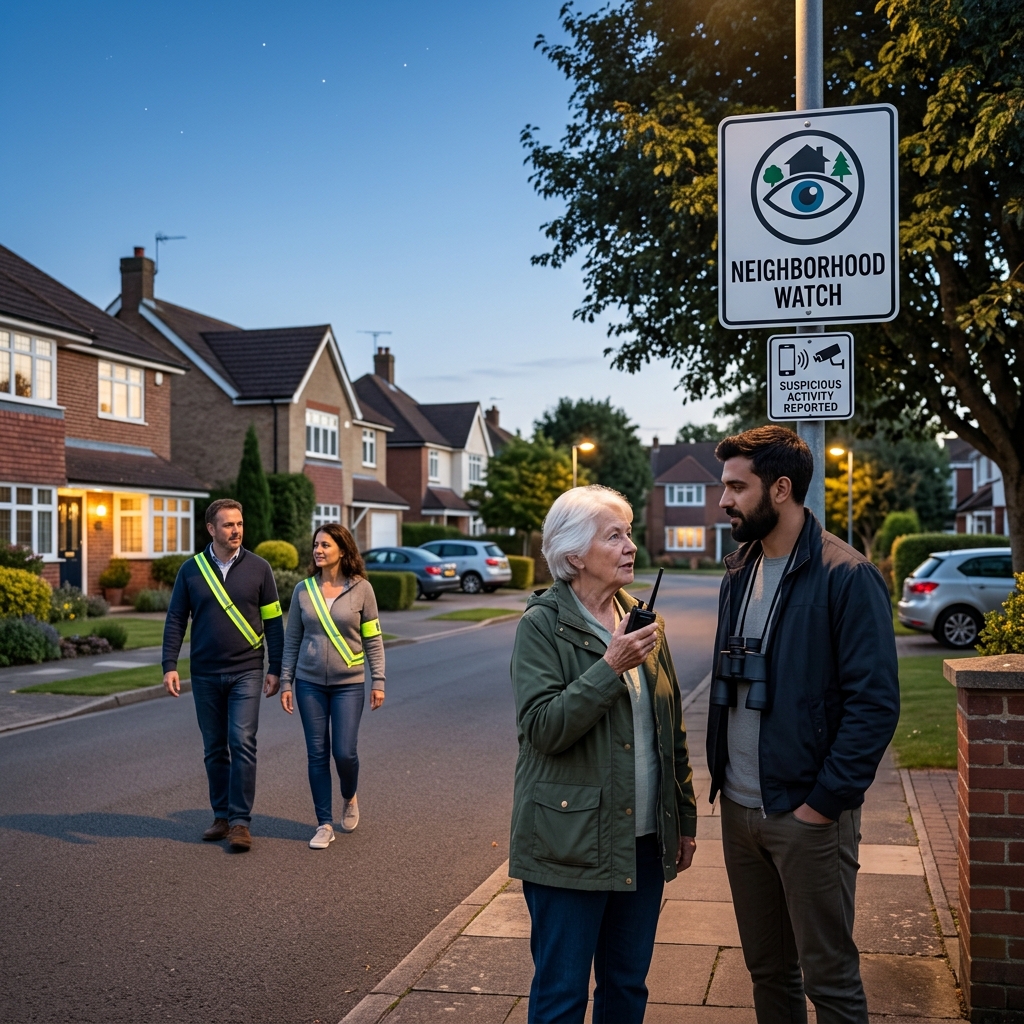
What a Neighborhood Watch Program Does
A neighborhood watch program is a community-led effort that helps residents reduce crime by paying attention to what is happening around them and sharing concerns with law enforcement. The model is built on ordinary people working together, not on residents taking the law into their own hands. According to official public-safety guidance, the core idea is simple: when neighbors communicate, observe, and report suspicious activity, they can make an area harder for criminals to target.
These programs are often described as one of the oldest and most effective crime-prevention tools in the United States. They bring together residents, police officers, and sometimes local organizations so that safety becomes a shared responsibility rather than the burden of one household alone.
Why Communities Use It
Neighborhood watch programs are usually created because residents want a practical way to respond to local concerns such as burglary, theft from cars, vandalism, loitering, and other forms of disorder. The value of the program is not only in catching crime after it happens, but in discouraging it before it starts. Visible participation, better communication, and faster reporting can all reduce opportunities for offenders.
Another advantage is social. Programs often give neighbors a reason to meet one another, exchange contact information, and build trust. That trust matters because people are more likely to report a problem quickly when they know who to call and feel confident that others will respond.
How the Program Usually Works
Most neighborhood watch groups operate through a simple structure. Residents agree to watch out for unusual behavior, learn the difference between normal neighborhood activity and suspicious conduct, and contact police when something appears wrong. Official guidance emphasizes that participants should observe and report, not investigate, confront, or detain anyone themselves.
Many groups also use communication tools such as phone trees, email lists, text groups, or neighborhood apps to spread information quickly. If police alert the group to a pattern of crime, residents can take practical steps such as improving lighting, locking vehicles, and securing homes more carefully.
What Residents Are Asked to Do
Neighborhood watch participation is usually light on formal duties but strong on consistency. Members are expected to pay attention, share information, and support one another. In many communities, residents also attend meetings where they learn what local crime trends look like and what kinds of behavior should be reported.
- Notice unusual behavior near homes, vehicles, and common areas.
- Report suspicious activity to police instead of trying to handle it personally.
- Share important safety updates with nearby residents.
- Attend meetings when possible so the group stays organized.
- Help keep the neighborhood clean, well-lit, and active.
The most effective programs are the ones where residents stay involved over time rather than treating the effort as a one-time campaign.
Examples of Behavior That May Deserve Attention
Public-safety resources often list signs that may indicate a problem, but the key is context. Something may be suspicious in one setting and completely ordinary in another. A resident does not need to be certain that a crime is occurring before calling police; the purpose of the program is to report concerns early enough for trained officers to assess them.
| Possible Sign | Why It May Matter |
|---|---|
| Someone checking windows or parked cars | May suggest scouting for property to steal |
| Unusual noises or shouting | Could indicate a fight, emergency, or break-in |
| Property being removed when no one should be home | May point to burglary or unauthorized access |
| Slow-moving vehicles without a clear purpose | Can indicate lookout activity or other suspicious conduct |
| A person being forced into a vehicle | May be a violent or urgent emergency requiring immediate police response |
Even when the facts seem uncertain, the safe response is the same: stay out of danger, note details, and contact law enforcement promptly.
Why Police Involvement Matters
Neighborhood watch programs work best when they are connected to local police or sheriff’s offices. Official guidance repeatedly notes that law-enforcement participation gives a watch group credibility, useful training, and a clear channel for sharing information.
Police officers can explain crime patterns, identify recurring problems, and help residents understand what information is most useful when making a report. They can also teach participants how to document concerns accurately without creating unnecessary fear or conflict.
This partnership also helps define boundaries. A neighborhood watch is a supplement to policing, not a replacement for it. Officers respond to crimes, investigate reports, and make legal decisions; residents help by observing and communicating.
Steps for Starting a Group
Creating a neighborhood watch usually begins with a small group of interested residents. The process does not require a large budget, but it does require communication and follow-through. Community guidance suggests that the first step is often to contact neighbors, identify shared concerns, and hold a meeting to discuss the idea.
- Reach out to nearby residents and ask who wants to participate.
- Contact local police, a community liaison, or a sheriff’s office for guidance.
- Hold an initial meeting so neighbors can meet one another and discuss priorities.
- Select a coordinator or block captain to organize future meetings and information sharing.
- Choose the communication tools the group will use for updates and alerts.
- Post signs or decals where appropriate so the program is visible.
Some communities also keep simple contact lists so residents can reach one another quickly. The goal is not bureaucracy for its own sake; it is making sure the group can react promptly when something happens.
How the Program Can Go Beyond Crime Reporting
Although neighborhood watch began as a crime-prevention strategy, many programs now support a wider sense of community safety. Public resources note that organized neighbors can help spot environmental problems that invite crime, such as abandoned vehicles, poor lighting, vacant lots, and littered or neglected property.
Groups may also support cleanups, improve street visibility, encourage residents to secure outdoor areas at night, and connect with local schools or youth programs. These efforts matter because crime prevention is not only about watching for wrongdoing; it is also about strengthening the conditions that make a neighborhood stable and active.
In some places, neighborhood watch groups collaborate with small businesses, community centers, and faith organizations. That broader network can help share information more widely and encourage residents who might not otherwise attend a police meeting to participate in local safety efforts.
Common Misunderstandings About Neighborhood Watch
One of the most important points in official guidance is that neighborhood watch members are not vigilantes. They are not expected to patrol aggressively, confront suspects, or decide guilt. Their role is limited to awareness, communication, and reporting.
Another common misunderstanding is that a watch group only matters in high-crime areas. In reality, programs can be useful in quiet neighborhoods too, because they help preserve safety, build relationships, and create a faster response network if a problem develops.
Some residents also assume that a watch group requires constant activity. In practice, even a modest program can be effective if it has clear contact points, a basic meeting schedule, and a shared understanding of what should be reported.
Benefits for Residents and Law Enforcement
When neighborhood watch is done well, the benefits can reach both the community and the police department. Residents gain more confidence, better information, and a stronger sense of mutual responsibility. Police gain more eyes and ears in the neighborhood, which can improve the speed and accuracy of reports.
The program can also improve trust. That is important because residents are more likely to cooperate with officers when they already have a working relationship with them and understand how local policing operates.
Some groups even find that the biggest gain is not a dramatic drop in crime, but a stronger feeling that neighbors know each other, notice what is going on, and are willing to help when something feels wrong.
Frequently Asked Questions
Is neighborhood watch the same as private security?
No. A neighborhood watch is a volunteer-based community effort, while private security is a paid service with different authority and responsibilities. Watch members observe and report; they do not act as guards or police.
Do residents need police approval to start one?
Most programs are strongest when local police are involved from the beginning, and official guidance encourages that partnership. While the exact setup varies by location, collaboration with law enforcement is widely recommended.
What should someone do if they see a possible crime?
The safest approach is to leave the area if necessary, avoid direct contact, and call police with as many useful details as possible. Neighborhood watch programs stress reporting rather than investigating.
Can an apartment complex or business district use the same idea?
Yes. Although the term is often associated with residential streets, similar organizing principles can work in apartment communities, mixed-use areas, and commercial districts when participants agree to share information and coordinate with authorities.
Does a group need formal meetings forever?
Not necessarily, but regular contact helps maintain momentum. Many communities use periodic meetings, occasional training, or digital communication to keep the program active and useful.
When a Neighborhood Watch Is Most Effective
The strongest programs tend to share a few traits: clear leadership, steady communication, realistic expectations, and a strong relationship with local law enforcement. They also focus on practical prevention steps rather than fear-based messaging.
In that sense, neighborhood watch works best as part of a broader strategy that includes good lighting, responsible reporting, neighborhood maintenance, and neighborly contact. It is not a cure-all, but it can be a valuable piece of a safer community.
References
- Neighborhood Watch Program — City of Laurel, Maryland. n.d. https://www.cityoflaurel.org/351/Neighborhood-Watch-Program
- How To Start A Neighborhood Watch — National Crime Prevention Council. n.d. https://www.ncpc.org/resources/home-neighborhood-safety/neighborhood-watch/
- Neighborhood Watch — Metropolitan Police Department of the District of Columbia. n.d. https://mpdc.dc.gov/page/neighborhood-watch
- Neighborhood Watch Guide — Office of Justice Programs, U.S. Department of Justice. n.d. https://ojp.gov/ncjrs/virtual-library/abstracts/neighborhood-watch-guide
- National Neighborhood Watch — National Sheriffs’ Association. n.d. https://nnw.org
- Crime Prevention — National Sheriffs’ Association. n.d. https://www.sheriffs.org/programs/crime-prevention/
Similar Articles








Read full bio of medha deb




