
Montana Cannabis and Employment Rights Explained
How Montana’s lawful product protections and evolving cannabis laws shape what employers can and cannot do when workers use marijuana off the job.
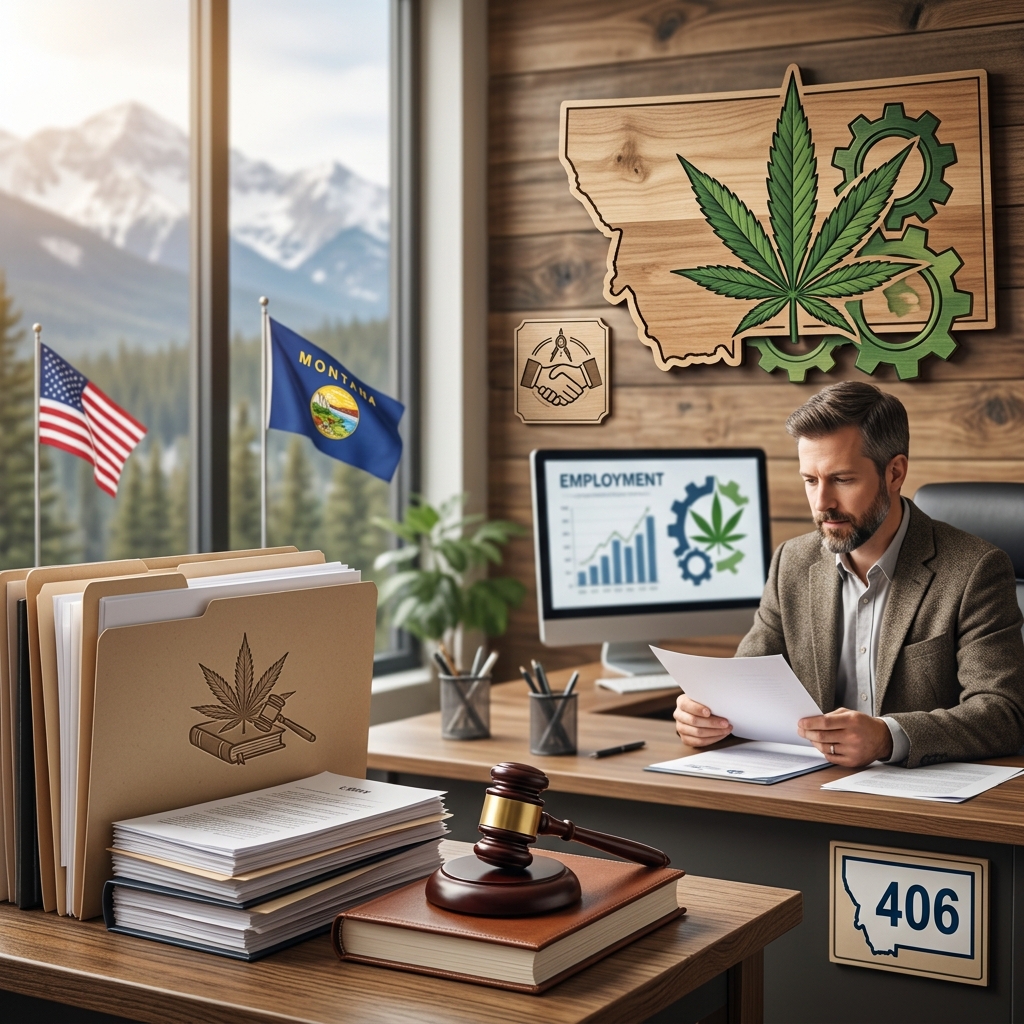
Montana has moved from prohibiting cannabis to permitting both medical and recreational use, but that change has not eliminated workplace drug policies or employer concerns about safety and performance. At the center of the state’s approach is a lawful product statute that restricts employment discrimination based on lawful off-duty conduct, including marijuana. Understanding how these rules interact is essential for both workers and employers navigating hiring, firing, and drug testing decisions.
From Criminalization to Legal Use: The Montana Cannabis Landscape
Montana permits medical and recreational cannabis use, meaning adults can legally consume marijuana under state law if they comply with applicable regulations. Legalization, however, did not automatically answer questions about how cannabis use affects employment rights, especially in safety-sensitive roles or in workplaces subject to federal requirements.
Several key points frame the broader landscape:
- Cannabis is legal under Montana law, but remains illegal under federal law, which still classifies marijuana as a Schedule I controlled substance.
- Employers retain authority to implement drug-free workplace programs and testing policies, particularly where safety or federal rules are implicated.
- Off-duty protections exist, but apply only to lawful use away from the workplace and are subject to statutory exceptions.
These overlapping regimes often produce tension: a person can legally consume cannabis on the weekend and still face workplace consequences on Monday, depending on the job and circumstances.
The Lawful Product Statute: Core Protection for Off-Duty Conduct
Montana’s lawful product law, codified at MCA 39-2-313, prohibits employers from discriminating against individuals for legally using lawful products off the employer’s premises during nonworking hours. Following recreational legalization, marijuana is treated as a lawful product for purposes of this statute.
In practice, the statute provides that an employer generally may not:
- Refuse to hire someone solely because they lawfully use marijuana off-duty.
- Discriminate in terms of compensation, promotion, or other employment privileges due to lawful off-duty cannabis use.
- Penalize employees for legal off-site, off-hours consumption when it does not affect job performance or workplace safety.
The law is designed to draw a line between personal lifestyle choices made outside of work and the employer’s legitimate interest in workplace performance and safety.
Key Exceptions: When Employers May Still Act
Despite these protections, the statute contains important exceptions that permit employers to take adverse action in specific circumstances. The most significant exceptions relate to impairment, occupational qualifications, certain contracts, and nonprofit missions.
Impairment and Safety Concerns
Employers may act against an employee whose lawful product use, including marijuana, affects the ability to perform job responsibilities or compromises workplace safety. Under the statute, off-duty protection does not apply when:
- Use of marijuana “affects in any manner” an individual’s ability to perform job-related responsibilities.
- Use of marijuana affects the safety of other employees.
In other words, if an employee arrives at work impaired, an employer is not restricted by the off-duty protections and may apply its disciplinary policy.
Bona Fide Occupational Qualification
The statute also exempts situations where cannabis use conflicts with a bona fide occupational qualification reasonably related to the individual’s employment. This can arise in roles that involve:
- Operating heavy machinery or motor vehicles.
- Performing emergency or life-saving functions (for example, firefighters or EMTs, who are often subject to stricter testing regimes).
- Jobs essential to public welfare and safety.
In such positions, an employer can argue that abstaining from marijuana is a legitimate qualification because impairment could significantly endanger others.
Professional Service Contracts and Nonprofit Employers
Additional exceptions apply to certain contractual relationships and nonprofit organizations:
- Individuals who work under personal professional service contracts may have contractual limits on product use, including marijuana, if the unique nature of their services justifies such restrictions.
- Nonprofit employers whose primary purpose is to discourage use of lawful products, such as anti-drug advocacy organizations, may impose stricter bans on marijuana use.
These exceptions recognize that some employers, by mission or contract, legitimately integrate abstinence into their operational or ethical frameworks.
Established Substance Abuse Policies
The statute further states that an employer does not violate the law if it acts based on a reasonable belief that its actions are permissible under an established substance abuse or alcohol program or policy, a professional contract, or a collective bargaining agreement. This provision underscores the importance of clear, documented policies that employees receive in writing.
Recreational Use Protections After HB 701
Montana House Bill 701 amended the lawful off-duty conduct statute to expressly include marijuana as a lawful product. According to legal commentary, this means employers cannot deny job applicants or discriminate against current employees because of legal marijuana use during nonworking hours.
In practice, HB 701 reinforced that:
- Hiring decisions cannot be based solely on lawful off-duty cannabis use.
- Employment actions such as compensation, promotion, and the terms and conditions of employment must not be influenced by legal off-duty marijuana consumption.
- The protections apply only to off-duty conduct, not to use while working or impairment on the job.
At the same time, employment law guidance emphasizes that the recreational marijuana law still allows employers to take action when marijuana is used during working hours or causes impairment at work.
Employer Drug Testing and Policy Design
Even with off-duty protections, many Montana employers use drug testing as part of their hiring or ongoing employment practices. Workplace policy design must account for the statutory limitations, as well as the difference between presence of metabolites and actual impairment.
| Issue | Recommended Approach |
|---|---|
| Pre-employment testing | Clarify which positions require testing (e.g., safety-sensitive, federally funded) and ensure criteria relate to occupational qualifications. |
| Random and periodic testing | Align with an established, written substance abuse program and, where applicable, collective bargaining agreements. |
| Positive test results | Consider whether the result indicates impairment at work or solely off-duty use; avoid automatic termination where protected off-duty use is implicated. |
| Accommodation of medical cannabis | Recognize that employers are not required to accommodate medical marijuana use, even if recommended and used outside work, while still following disability laws for underlying conditions. |
Legal and compliance resources note that employers in some jurisdictions may be prohibited from firing employees purely for a positive marijuana test unless they can show workplace impairment, though specific requirements vary by state. Montana’s framework emphasizes lawful off-duty protection rather than a blanket ban on drug testing or discipline.
Employee Protections and Practical Limits
For employees, the lawful product statute and HB 701 provide meaningful protection for personal cannabis use away from work, but those protections have important practical limits.
What Is Generally Protected
In many standard positions, an employee who:
- Uses marijuana legally during nonworking hours.
- Does not come to work impaired.
- Does not hold a safety-sensitive or federally regulated job.
is typically shielded from adverse employment actions based solely on that off-duty use. Employers should not deny promotions, cut pay, or terminate employment merely because they learn about lawful off-site consumption, absent one of the statutory exceptions.
Where Protection May Not Apply
However, the following situations often fall outside the statute’s protection:
- Arriving at work under the influence, or otherwise impaired on the job.
- Working in a role where abstinence from cannabis is a bona fide occupational qualification.
- Being subject to a professional service contract that explicitly limits use of certain products.
- Employment by nonprofits focused on discouraging drug use.
- Positions subject to federal testing standards or funding requirements (for example, certain transportation or defense roles).
Employees should carefully review their employer’s written policies and, when in doubt, seek legal advice about their specific situation.
Interaction with Federal Law and Safety Regulations
Even where state law permits cannabis use and protects off-duty conduct, federal law complicates the picture. Marijuana remains illegal under federal law, and industries such as transportation, aviation, and defense often adhere to federal drug testing rules.
Employment compliance materials emphasize that employers may still take adverse action when required by state or federal law, or when failing to do so would jeopardize federal contracts or funding. In these cases, the employer’s obligations under federal regulations may supersede state off-duty protections.
Practical Guidance for Workers and Employers
The evolving legal landscape can be confusing. Both employees and employers benefit from practical guidance grounded in statutory requirements and credible interpretations.
Tips for Employees Who Use Cannabis
- Know your role: Determine whether your job is safety-sensitive, federally regulated, or subject to special contractual terms that may restrict cannabis use.
- Avoid workplace impairment: Do not use marijuana during working hours and avoid any use that could leave you impaired when you report to work.
- Read policies carefully: Review your employer’s substance abuse and drug testing policies, paying attention to consequences for positive tests and definitions of impairment.
- Document communications: If you are disciplined or terminated and believe protected off-duty use is the only basis, keep records of written notices and consider consulting an attorney.
Best Practices for Employers
- Update policies: Ensure drug and alcohol policies reflect current Montana law, including recognition of lawful off-duty cannabis use and statutory exceptions.
- Distinguish use from impairment: Train supervisors to focus on documented performance and safety concerns rather than assumptions based on off-duty behavior.
- Clarify safety-sensitive roles: Identify positions where abstinence may be a bona fide occupational qualification and explain these requirements to applicants and employees.
- Coordinate with counsel: Work with employment counsel to align policies with federal obligations and collective bargaining agreements, reducing litigation risk.
Frequently Asked Questions (FAQs)
1. Can I be fired in Montana for using marijuana off-duty?
Montana’s lawful product statute generally protects you from discrimination based solely on legal off-duty cannabis use. However, you may still face discipline if your use affects your job performance, workplace safety, violates a bona fide occupational qualification, or conflicts with certain contracts or nonprofit missions.
2. Does a positive marijuana test automatically mean I can be terminated?
A positive test shows prior use, not necessarily current impairment. Legal and compliance guidance in multiple jurisdictions emphasizes that employers should differentiate between off-duty use and impairment at work, and some protections limit adverse action based solely on test results. In Montana, employers must consider the lawful product protections and statutory exceptions when responding to a positive test.
3. Are employers required to accommodate medical marijuana use?
No. Employers in Montana are not required to accommodate medical marijuana use, even if it was legally recommended and used outside of work. They must still comply with disability laws regarding underlying medical conditions, but that does not include a duty to permit workplace marijuana use.
4. How does federal law affect my rights as a Montana employee?
Federal law still classifies marijuana as illegal, and many industries are subject to federal drug testing and safety rules. Employment guidance notes that employers may need to take adverse action when required by federal law or to avoid losing federal contracts or funding. In such cases, federal obligations may limit the practical effect of state off-duty protections.
5. What should employers do to stay compliant with Montana’s cannabis laws?
Employers should review and revise their policies to reflect lawful off-duty protections, define impairment standards, identify safety-sensitive roles, and align with federal requirements. Employment law resources highlight the importance of clear written policies and training to ensure decisions are based on safety and job performance rather than generalized assumptions about cannabis use.
References
- Montana Workplace Marijuana Laws Overview — Accurate Background. 2023-05-10. https://www.accurate.com/marijuana-law-state/montana/
- Marijuana Laws by State: Employee Protections — GovDocs. 2023-03-01. https://www.govdocs.com/marijuana-laws-by-state-employee-protections/
- Philadelphia and Montana Join List of Jurisdictions That Provide Protections for Recreational Marijuana Use — Hunton Andrews Kurth. 2022-02-09. https://www.hunton.com/hunton-employment-labor-perspectives/philadelphia-and-montana-join-list-of-jurisdictions-that-provide-protections-for-recreational-marijuana-use
- 39-2-313 Discrimination prohibited for use of lawful product during nonworking hours — exceptions — Montana Code Annotated. 2017-01-01. https://mca.legmt.gov/bills/2017/mca/title_0390/chapter_0020/part_0030/section_0030/section_0130/0390-0020-0030-0130.html
- Montana Marijuana Laws & Considerations — National Drug Screening. 2022-08-15. https://www.nationaldrugscreening.com/marijuana-considerations/montana/
- Montana Will Protect Off-Duty Marijuana Use — Society for Human Resource Management (SHRM). 2021-07-12. https://www.shrm.org/topics-tools/employment-law-compliance/montana-will-protect-duty-marijuana-use
Similar Articles








Read full bio of medha deb




