
Minnesota Wills: Creating Legal Documents for Estate Planning
Complete guide to drafting, executing, and managing wills in Minnesota.
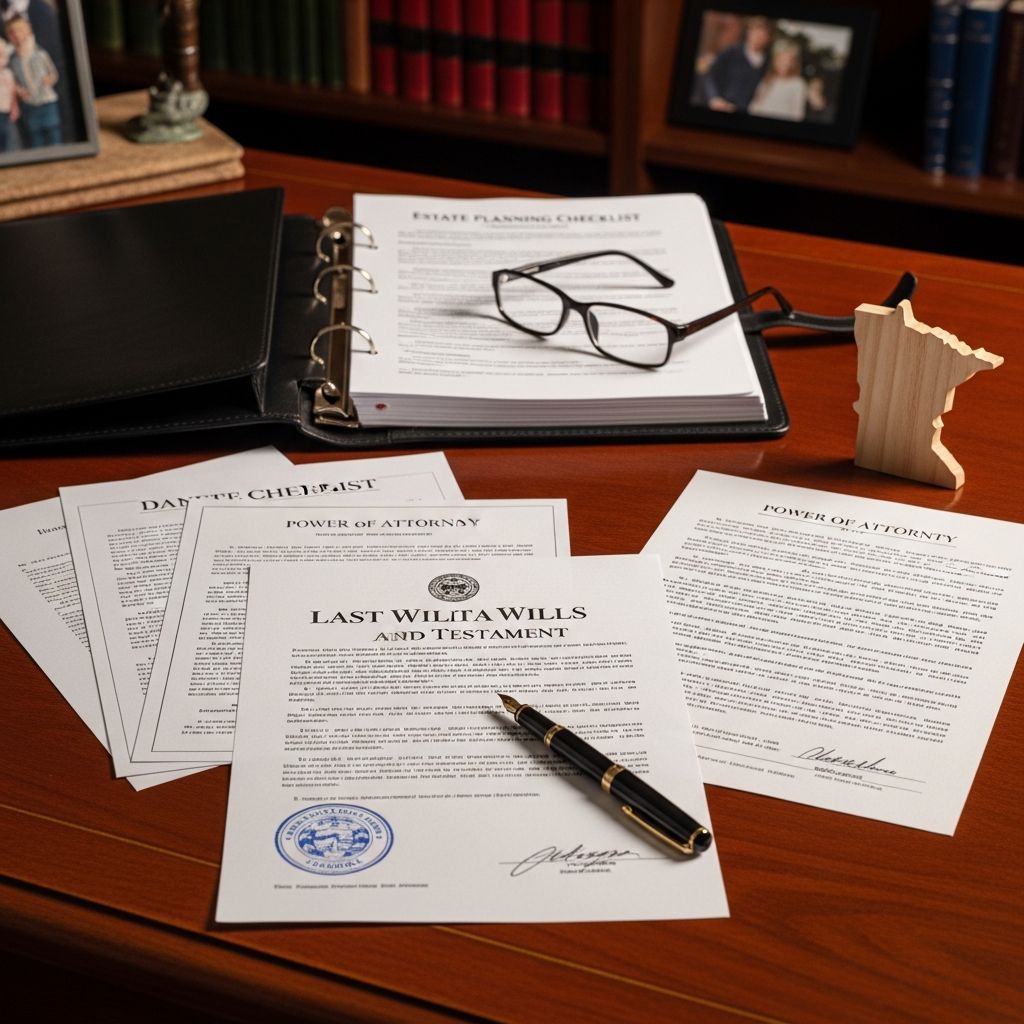
Understanding Wills and Estate Planning in Minnesota
A will serves as a fundamental legal document that directs how your assets and property will be distributed after your death. In Minnesota, creating a valid will ensures that your wishes are honored and that your loved ones understand your intentions regarding your estate. Beyond simply distributing property, a will allows you to designate guardians for minor children, name an executor to manage your estate, and specify any particular conditions or wishes for how your affairs should be handled. Without a valid will, Minnesota’s intestacy laws will determine how your property is divided, which may not align with your personal preferences.
Foundational Requirements for a Legally Binding Will in Minnesota
Minnesota law establishes clear prerequisites that must be met for a will to be considered legally valid and enforceable. Understanding these requirements is essential before you begin drafting your document.
Age and Mental Capacity Standards
To create a will in Minnesota, you must be at least 18 years old. Beyond age, the law requires that you possess sound mind, which means you understand the nature of creating a will, have a reasonable understanding of the extent and value of your assets, know who your potential beneficiaries are, and comprehend how the terms of your will will distribute your property. This mental capacity requirement does not mean you must be in perfect health or free from minor cognitive issues; rather, it focuses on whether you have sufficient mental clarity to understand the basic implications of what you are doing when you create your will.
Written Form Requirements
Minnesota law mandates that your will be in written form. This means your will must be typed, printed, or otherwise displayed in tangible written format. Oral instructions, video recordings, or purely verbal statements do not constitute a valid will in Minnesota. While some states recognize handwritten, or holographic, wills, Minnesota generally does not accept handwritten wills unless they were legally executed in another jurisdiction. However, Minnesota has evolved to recognize electronic wills, provided they meet specific technological and authentication standards, including qualified electronic signatures and secure storage mechanisms.
The Signature and Witnessing Framework
The execution process—how you sign and have your will witnessed—is critical to its validity. Minnesota’s requirements ensure that the document authentically represents your intentions and reduces the risk of fraud or undue influence.
Testator Signature Requirements
You, as the testator (the person creating the will), must sign the document. The signature can be your personal signature, or if you are physically unable to sign due to disability, another person may sign on your behalf in your conscious presence and at your direction. This accommodation ensures that individuals with mobility limitations or other physical disabilities can still execute a valid will without being excluded from estate planning.
Witness Standards and Procedures
Your will must be signed by at least two witnesses, and each witness must sign the document within a reasonable time after witnessing either your signature or your acknowledgment that the document is your will. Minnesota law requires that witnessing occur in person; remote witnessing via video conferencing platforms such as Zoom is not permitted for traditional wills. It is recommended, though not legally required, that your witnesses be disinterested parties—individuals who will not personally benefit from your will and have no financial stake in your estate. This practice helps prevent claims of undue influence or impropriety.
Notarization and Self-Proving Wills
While notarizing your will is not required to make it legal in Minnesota, you have the option to make your will self-proving. A self-proving will includes affidavits from your witnesses, executed before a notary public, that attest to the proper execution of the document. This approach can streamline the probate process by eliminating the need to locate witnesses later to verify the will’s authenticity. However, notarization alone is insufficient to satisfy Minnesota’s two-witness requirement.
Essential Components Your Will Should Address
An effective will covers multiple aspects of your estate and personal affairs. To ensure your document is comprehensive, consider including the following elements:
- Clear identification of beneficiaries: Specify by name each person, organization, or entity that will receive assets from your estate, and clearly describe what each beneficiary will receive
- Itemized asset distribution: Provide detailed instructions on how specific assets—real estate, vehicles, bank accounts, jewelry, artwork, or business interests—should be distributed
- Executor designation: Name a personal representative (also called an executor) who will manage your estate, settle debts, pay taxes, and distribute assets according to your wishes
- Guardian appointments: If you have minor children, designate a guardian to care for them and, separately, a conservator to manage their financial affairs if needed
- Alternate fiduciaries: Name backup choices for executor and guardian roles in case your first choices are unable or unwilling to serve
- Trustee designations: If your will establishes any trusts, identify who will serve as trustee
- Special conditions or instructions: Include any specific wishes, such as funeral preferences, conditions on inheritance, or guidance on how certain assets should be managed
Procedures for Properly Executing Your Minnesota Will
Following the correct execution procedure is crucial. A will that fails to meet Minnesota’s formal requirements may be challenged in probate court and could be deemed invalid, leaving your estate to be distributed according to state law rather than your intentions.
Step-by-Step Execution Process
Begin by ensuring your document is properly drafted with all necessary provisions and language. You should sign the will in the presence of at least two competent witnesses. As you sign, acknowledge to the witnesses that this is your will. Each witness must then sign the document in your presence and, ideally, in the presence of the other witness, though Minnesota law requires only that they sign within a reasonable time after witnessing your signature or acknowledgment. Document the date of execution on the will. If you opt for a self-proving will, have the witnesses and yourself execute sworn affidavits before a notary public attesting to the proper execution of the document.
Storage and Safekeeping
After execution, store your original will in a secure location, such as a safe deposit box, a home safe, or with your attorney. Provide information about the location to your executor and family members so they can locate it after your death. Keep copies in accessible locations as well, but ensure the original is preserved and protected from damage or loss.
Modifying or Revoking Your Will
Circumstances change, and you may need to update your will to reflect new assets, changed family situations, or revised wishes. Minnesota law provides mechanisms for modifying or entirely replacing your will.
You can revoke your will by executing a new will or by physically destroying the original document. If you wish to make minor changes without creating an entirely new will, you can execute a codicil—a formal amendment to your existing will that follows the same execution requirements as the original will. Any additions, deletions, or modifications written directly onto your will without following proper legal procedures may not be recognized and could lead to disputes. For substantial changes, creating a new will is generally the clearer and safer approach.
Understanding Minnesota’s Probate Process
When you pass away, your will must go through probate—the legal process by which your will is validated, your estate is inventoried, debts are paid, taxes are settled, and assets are distributed to beneficiaries.
Triggering Probate
In Minnesota, probate is required if the deceased owned $75,000 or more in total assets or owned any real property. If your estate is below this threshold and contains no real estate, your heirs may be able to use simplified procedures or avoid probate altogether.
Informal Probate Procedures
For many estates, Minnesota allows informal probate, which is less formal and faster than formal probate. To initiate informal probate, your personal representative files an application for informal probate and appointment as personal representative with the probate registrar. The required documents typically include:
- The original will or a certified copy
- The decedent’s death certificate and, if applicable, death certificates of any beneficiaries who predeceased the decedent
- A filing fee (or a request for a fee waiver if the applicant cannot afford it)
- The Affidavit of Mailing (form PRO803), confirming that required parties were notified
Post-Appointment Responsibilities
Once appointed, the personal representative receives Letters Testamentary—official documents granting authority to act on behalf of the estate. The personal representative must then:
- Collect all of the decedent’s property and assets
- Create a detailed inventory of the estate within six months of appointment or nine months of death, whichever is later
- Notify creditors and allow them to file claims against the estate using the Written Statement of Claim form (PRO402)
- Settle outstanding debts, obligations, and taxes, including state estate tax returns (Form M706) and federal estate tax returns (Form 706) if applicable
- Distribute remaining assets to beneficiaries according to the will
Closing the Estate
Before distributing assets to beneficiaries, the personal representative must prepare and file the Final Account and Proposal for Distribution (form PRO913) within one year of appointment. After beneficiaries receive their shares, they must sign a Receipt for Assets by Distributee (form PRO916) acknowledging what they received. Finally, the personal representative files a Petition for Discharge (form PRO1304), and once approved by the court, the personal representative is formally released from their duties and the estate is closed.
Special Considerations and Advanced Planning
Beyond the basic will, Minnesota residents should consider whether additional estate planning tools would benefit their situation. A will does not protect your inheritance from creditors’ claims or ensure privacy in the probate process. For those with significant assets, complex family situations, or privacy concerns, trusts, powers of attorney, and healthcare directives may provide additional benefits and control over how your estate is managed and distributed.
Frequently Asked Questions About Minnesota Wills
Q: Do I need to notarize my will to make it legal?
A: No, notarization is not required for a will to be legal in Minnesota. However, you may choose to create a self-proving will by having your witnesses execute sworn affidavits before a notary, which can simplify probate proceedings.
Q: Can I write my will by hand?
A: Minnesota does not generally recognize handwritten wills created within the state. Your will should be typed or printed. However, if a handwritten will was legally executed in another state, it may be recognized in Minnesota.
Q: What if I cannot physically sign my will?
A: If you are unable to sign due to physical disability, another person may sign on your behalf in your conscious presence and at your direction. This ensures that physical limitations do not prevent you from executing a valid will.
Q: Can I use electronic witnesses via video call for my will?
A: For traditional wills, Minnesota requires in-person witnessing; remote witnessing via video platforms like Zoom is not permitted. However, Minnesota does recognize electronic wills that meet specific legal standards, though they must still be properly witnessed according to state guidelines.
Q: What happens if I die without a will?
A: If you die without a valid will, Minnesota’s intestacy laws determine how your property is distributed among your spouse, children, and other relatives. This distribution may not align with your personal wishes, and the process can be more complicated and expensive for your family.
Q: How often should I review my will?
A: It is recommended to review your will every three to five years or whenever major life changes occur, such as marriage, divorce, the birth of children, significant changes in assets, or changes in your wishes regarding guardians or executors.
References
- How to Make a Valid Will in Minnesota — Unique Estate Law. 2024-12-17. https://uniqueestatelaw.com/2024/12/17/how-to-make-a-valid-will-in-minnesota/
- Free Minnesota Last Will and Testament | PDF | Word — eSign. https://esign.com/last-will-and-testament/mn/
- Sec. 524.2-502 MN Statutes — Minnesota Revisor of Statutes. https://www.revisor.mn.gov/statutes/cite/524.2-502
- Wills – Probate and Planning — Minnesota Attorney General. https://www.ag.state.mn.us/consumer/handbooks/probate/CH1.asp
- How to Make a Will in Minnesota – Easy Instructions — YouTube. https://www.youtube.com/watch?v=8mnDAtJyfK0
- Common Questions About Wills — LawHelp Minnesota. https://www.lawhelpmn.org/self-help-library/fact-sheet/common-questions-about-wills
- Probate, Wills, & Estates — Minnesota Judicial Branch. https://mncourts.gov/help-topics/probate-wills-and-estates
Similar Articles








Read full bio of Sneha Tete




