
Managing the Notice Period: Employee Rights and Duties
Understand your legal protections, practical responsibilities, and best practices for a smooth and professional notice-period transition.
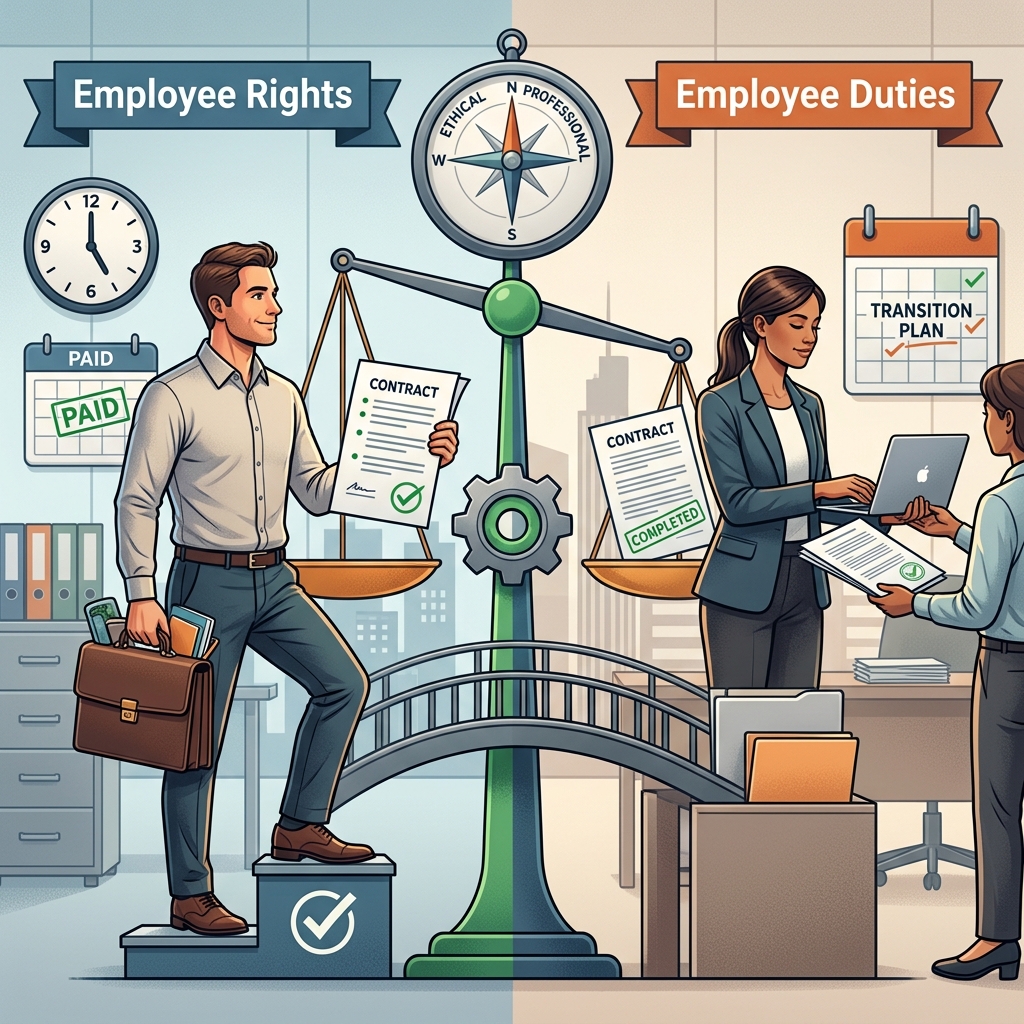
The notice period is the bridge between an existing job and whatever comes next. It is the time after you or your employer announces that your employment will end, but before your final working day. How you handle this phase can affect your reputation, finances, legal rights, and future opportunities.
This guide explains what a notice period is, the rights employees typically have, the responsibilities they must uphold, and practical strategies to navigate the transition professionally and legally.
Understanding What the Notice Period Is
A notice period is the time between formal notification of resignation or termination and an employee’s last day at work. It exists in many employment systems to give both sides time to prepare for the change.
During this time, employees generally continue to perform their duties and receive pay, while employers manage handovers, recruit replacements, and wrap up administrative processes.
Key Features of a Notice Period
- Defined timeframe: Often measured in weeks or months (for example, two weeks, 30 days, or 90 days), depending on contract terms, role seniority, or applicable law.
- Triggering event: Begins when either the employee formally resigns or the employer informs the employee of dismissal or redundancy.
- Continuity of work: Employees usually keep working in their role, completing tasks and supporting transition plans.
- End of employment: Official termination of the employment relationship occurs on the last day of the notice period.
Variation Between Countries and Contracts
Notice rules can differ significantly:
- No universal requirement: In the United States, most employment is at will, which means either party can end the relationship at any time for any lawful reason, usually without a legally mandated notice period for individual resignations or terminations.
: U.S. employees often give two weeks’ notice as a professional norm, rather than because the law requires it. - Statutory minimums: In the United Kingdom, employees with more than a month of service generally have statutory minimum notice periods that grow with length of service.
- Contract-based periods: Many employers worldwide set notice expectations in individual contracts or employee handbooks, which can range from a few weeks to several months, especially for senior roles.
Employee Rights During the Notice Period
Employees often worry that once they resign or are told their employment will end, their rights drastically shrink. In reality, many key protections continue to apply throughout the notice period.
Right to Pay and Benefits
Unless an employee is placed on unpaid leave or released early in accordance with the contract and applicable law, they are typically entitled to receive normal wages for the duration of the notice period.
- Salary continuity: Employees should continue to be paid for the hours or salary they are contracted to work until the last day of employment.
- Accrued benefits: Benefits such as earned vacation or paid time off may be paid out or used, depending on company policy and local law.
- Access to facilities: Employers must continue to provide a workplace and access to tools needed to perform duties, unless security or safety concerns justify restrictions.
Protection Against Unlawful Treatment
The fact that an employee is leaving does not give employers permission to disregard employment protections. Anti-discrimination, health and safety, and other legal obligations remain in force.
- Non-discrimination: Employers must not treat employees unfairly because of protected characteristics such as race, gender, disability, or religion during the notice period.
- Safe working environment: Health and safety laws still apply; employers must take reasonable steps to prevent physical or psychological harm.
- Stable conditions: Significant worsening of working conditions, such as arbitrary removal of agreed benefits or unreasonable increases in workload, can create disputes and, in some systems, may violate rights.
Right to Clarity and Documentation
Clear documentation protects both employees and employers.
- Written notice or resignation: Employees can provide a dated letter or email confirming their intention to leave and their proposed last day, preserving a record of the decision.
- Statement of terms: Employers should provide clear information about the length of the notice period, final pay, benefits treatment, and any expectations for handover.
- Reference and record: While not guaranteed in all jurisdictions, many employers provide a reference or confirmation of employment that can support future job searches.
Employee Responsibilities During the Notice Period
Rights during the notice period come with ongoing duties. Employees are expected to maintain professional standards even though their employment is ending.
Continuing to Perform Work
Employees remain responsible for performing the duties they were hired to do, with care and seriousness, until their final day.
- Doing agreed work: The core tasks and responsibilities in the job description still apply.
- Professional conduct: Attendance, punctuality, and quality of work should meet normal standards; persistent lateness, absenteeism, or misconduct may still justify disciplinary action.
- Safety and diligence: Employees must avoid putting themselves or others at risk and follow reasonable safety guidelines.
Supporting Handover and Transition
A well-managed handover benefits both parties and can preserve goodwill and references.
- Documenting work: Create or update documentation about active projects, processes, and key contacts.
- Training successors: Where requested and reasonable, help train replacement staff or colleagues who will assume responsibilities.
- Communicating status: Provide clear, factual updates on outstanding tasks and deadlines so that your employer can plan after your departure.
Respecting Confidentiality and Intellectual Property
Obligations around confidential information and intellectual property often survive the end of employment.
- Trade secrets: Employees must not disclose or misuse trade secrets and confidential information they learned on the job, even after they leave.
- Company property: Return equipment, access cards, documents, and digital files that belong to the employer.
- Compliance with restrictive covenants: Non-disclosure, non-solicitation, or non-compete clauses in contracts may continue to apply after the notice period, subject to local law.
Legal and Contractual Frameworks
Notice periods are shaped by a mix of statutes, case law, and contractual commitments. Understanding this framework helps employees evaluate what is required and what is negotiable.
At-Will Employment and Notice
| Aspect | At-Will Employment (e.g., U.S.) | Contract/Statutory Systems (e.g., UK) |
|---|---|---|
| Basic rule | Either party may end employment at any time, for any lawful reason, often without mandatory notice. | Minimum notice periods may be set by law and contracts, especially for employees with longer service. |
| Employee resignation | Two weeks’ notice is common practice but not legally required. | Contracts usually specify notice length; shorter or longer periods may be negotiated. |
| Employer termination | No general federal requirement for individual terminations; special rules apply for mass layoffs (e.g., WARN Act). | Employers must observe statutory minimum notice and any contractual terms, or provide pay in lieu where permitted. |
Special Rules for Mass Layoffs and Plant Closures
Some legal regimes distinguish between individual terminations and large-scale workforce reductions.
- Mass layoff notice: In the United States, the federal Worker Adjustment and Retraining Notification (WARN) Act generally requires certain employers to provide 60 days’ advance notice of plant closures or mass layoffs affecting a threshold number of workers.
- State-level requirements: Several U.S. states supplement the WARN Act with stricter “mini-WARN” laws that may demand longer notice or apply to smaller employers.
- Other jurisdictions: Different countries set their own rules for collective redundancies, often involving consultation with employee representatives or unions.
Practical Strategies for Employees in the Notice Period
Beyond formal rights and obligations, practical steps can make your notice period smoother and protect your long-term interests.
Communicating Your Decision to Leave
- Tell your supervisor first: Share your decision with your direct manager before spreading the news more broadly, preferably in a meeting or call supported by written confirmation.
- Provide clear dates: Specify your intended final day, taking into account contractual or policy requirements.
- Keep the tone professional: Avoid emotional or accusatory language; focus on facts and appreciation where appropriate.
Planning for Financial and Career Transitions
- Review your final pay: Clarify how unused leave, bonuses, and other benefits will be handled.
- Understand unemployment benefits rules: In many systems, voluntarily resigning can affect eligibility for unemployment benefits, sometimes only available when job loss is not the worker’s fault or when specific conditions are met.
- Secure references and documents: Request a reference or employment verification and keep copies of performance reviews, if permissible.
Maintaining Professional Relationships
- Express gratitude: Thank colleagues and managers who have supported your work.
- Stay constructive: If asked for feedback, share observations in a solution-focused, respectful way.
- Preserve networks: Connect with coworkers on professional platforms and keep communication channels open for future collaboration.
Common Notice Period Challenges and How to Address Them
Notice periods can involve tension or uncertainty. Identifying frequent issues helps employees respond thoughtfully.
Shorter or Longer Notice Than Expected
- Employer waives part of the notice: Some employers may release employees earlier than the contractual notice end date, sometimes with pay in lieu or an agreement that the last working day is advanced.
- Employee requests shorter notice: When a new job requires an earlier start, employees may negotiate reduced notice. The employer may accept, reject, or compromise.
- Extended notice for senior roles: Executive or specialist positions may require longer notice, such as three to six months, to protect operational continuity.
Changes in Duties During the Notice Period
- Reassignment of tasks: Employers may adjust duties to prioritize handover work or reduce access to sensitive information.
- Unreasonable workload increases: Dramatic increases in tasks or responsibility that appear punitive may raise legal and ethical concerns, particularly where they affect health or safety.
- Open communication: Discuss changes in workload and responsibilities early with your manager, and escalate concerns where appropriate.
Confidential Information and Future Employment
- Review agreements: Before accepting a competitor role, revisit confidentiality, non-solicitation, or non-compete clauses.
- Avoid data misuse: Do not take customer lists, code, or proprietary documents unless clearly authorized.
- Seek legal advice when needed: If you are unsure about the scope of your obligations, professional legal guidance can clarify risks and options.
Frequently Asked Questions (FAQs)
1. Do I have to give two weeks’ notice when I resign?
In many places, particularly in the United States, there is no general legal requirement to provide two weeks’ notice when resigning, unless your contract or company policy says otherwise. However, offering reasonable notice is widely seen as a professional courtesy that helps maintain positive references and smooth handovers.
2. Can my employer change my job duties during the notice period?
Employers can often adjust duties to reflect transitional needs, such as asking you to document processes or train colleagues. Significant changes that worsen conditions, especially if they appear punitive or unsafe, may conflict with contractual terms or workplace rights, and should be discussed or challenged through appropriate channels.
3. Am I still protected by workplace safety and anti-discrimination laws?
Yes. Core protections around health, safety, and non-discrimination remain in effect throughout the notice period. Employers must continue to provide a reasonably safe work environment and avoid discriminatory or harassing treatment.
4. What happens to my unused vacation or paid time off?
Unused leave is typically handled according to local law and employer policy. In many systems, employees may receive payment for accrued but unused vacation upon termination, while other forms of leave may not be paid out. Employees should review their contracts and check with HR.
5. Can I be terminated immediately instead of working my notice?
In at-will systems or where contracts permit, employers may end employment immediately, sometimes offering pay in lieu of notice or none at all if lawful. In jurisdictions with statutory notice requirements, employers typically must provide notice or pay in lieu, except in cases of serious misconduct.
References
- What is a notice period? Meaning, types, and more — HiBob. 2026-01-10. https://www.hibob.com/hr-glossary/notice-period/
- What Is a Resignation Notice Period? Essential Guide for Employers — Paychex. 2023-08-15. https://www.paychex.com/glossary/what-is-notice-period
- Notice periods — Advisory, Conciliation and Arbitration Service (Acas). 2023-06-20. https://www.acas.org.uk/notice-periods
- End of employment contract in the United States — CXC Global. 2024-03-01. https://www.cxcglobal.com/global-hiring-guide/united-states/end-of-employment-in-united-states/
- Rights and Responsibilities of Employers and Employees — Éducaloi. 2022-11-05. https://educaloi.qc.ca/en/capsules/rights-and-responsibilities-of-employers-and-employees/
- What is Notice Period: a Complete Guide — TeamUp. 2023-09-12. https://www.helloteamup.com/post/what-is-notice-period
- A Quitter’s Guide to Employment Law: What Are My Legal Rights if I Resign? — WantAtHome. 2021-07-01. https://www.wantathome.com/blog/a-quitters-guide-to-employment-law-what-are-my-legal-rights-if-i-resign/
Similar Articles








Read full bio of Sneha Tete




