
Idaho Wills: Rules, Validity, and Planning Basics
Learn how Idaho treats wills, what makes them valid, and how to plan with confidence.
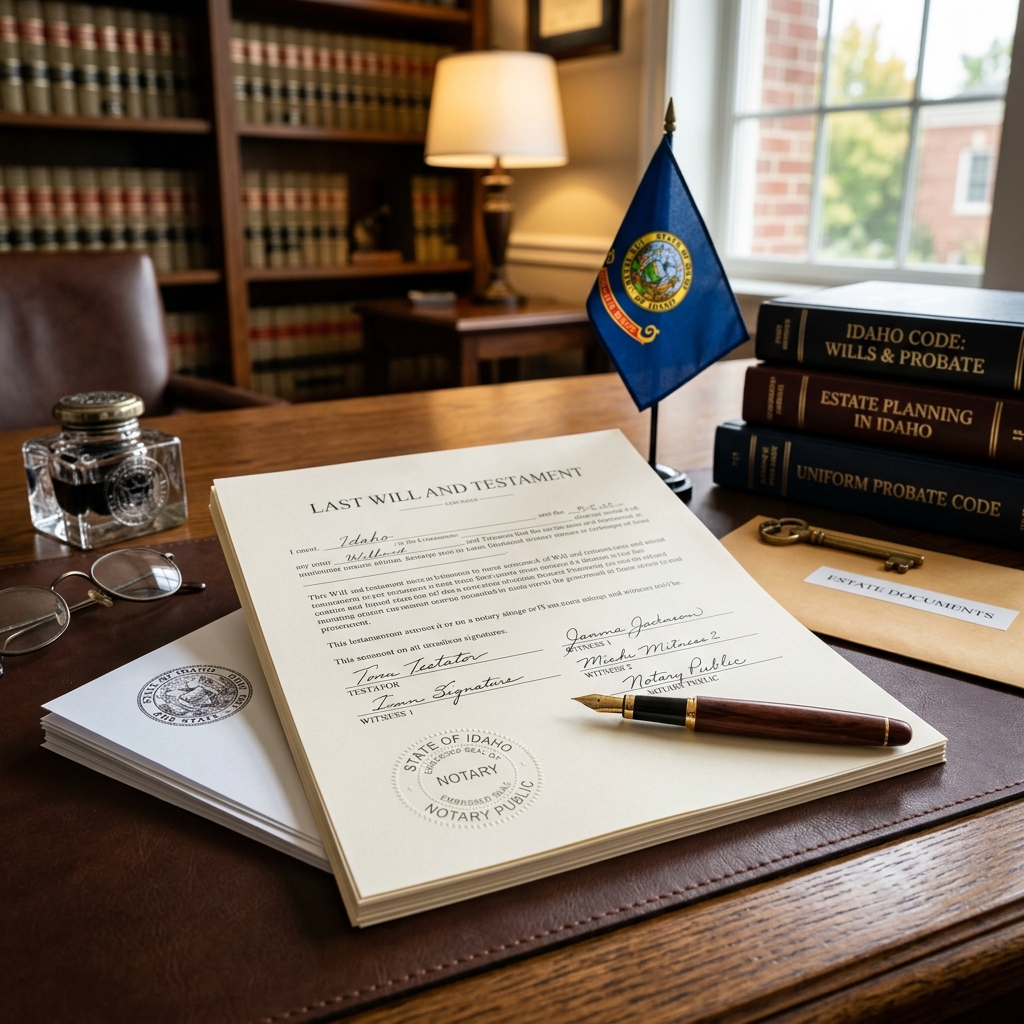
Creating a will is one of the most important steps in an estate plan, because it gives you a legally recognized way to say who should receive your property after death. In Idaho, the law allows more than one type of will, but each must meet specific requirements to be effective. If a will does not satisfy those rules, the estate may be handled under intestacy law instead, which means the state decides who inherits.
This guide explains the main features of Idaho will law in plain language. It covers the kinds of wills the state recognizes, who can make one, how signing and witnessing work, and why careful drafting matters even when a will seems simple.
What a Will Does in Idaho
A will is a written legal statement that directs how a person’s property should be distributed after death. It can name beneficiaries, choose a personal representative to manage the estate, and include instructions for matters such as guardianship of minor children. In practical terms, it helps reduce confusion by replacing guesswork with written instructions.
Without a valid will, Idaho’s intestacy rules control the transfer of assets. Those rules generally prioritize close relatives, starting with a spouse, children, and parents, and then moving outward to more distant family members if needed. That default system may not match a person’s actual wishes, which is why a carefully prepared will is often the foundation of a basic estate plan.
Who Can Make a Valid Will
Idaho requires the person making the will, called the testator, to meet basic legal standards. According to Idaho’s will rules as summarized in state-law references, the testator must generally be at least 18 years old or an emancipated minor and must be of sound mind. In everyday terms, this means the person must understand what property they own, who their likely heirs are, and what it means to create a will.
Capacity matters because a will is only as strong as the person’s legal ability to make it. If there is serious doubt about whether the testator understood the document, the will can face challenges in probate. That is why clear drafting, careful signing procedures, and good recordkeeping are so valuable.
The Two Main Types of Wills Recognized in Idaho
Idaho law recognizes both formal written wills and holographic wills. These two formats work differently, and each has its own practical advantages and risks.
| Type of Will | How It Is Made | Witnesses Needed | Notarization Needed |
|---|---|---|---|
| Formal written will | Typed or otherwise prepared in writing | Yes, typically two | Not always required, but useful for self-proving forms |
| Holographic will | Written in the testator’s own handwriting | No | No |
The right format depends on the person’s circumstances. A formal will is usually better for people with broader estates, blended families, or specific distribution plans. A holographic will may work in limited situations, but it carries more risk if the wording is unclear or the handwriting becomes a point of dispute.
Requirements for a Formal Written Will
For a formal will to be effective, Idaho requires more than simply putting wishes on paper. The document must be signed by the testator and witnessed by at least two competent adults who either saw the signing or heard the testator acknowledge the will or signature.
These witness requirements serve an important purpose: they help prove that the signature is genuine and that the testator acted voluntarily. Witnesses do not need to be relatives, but they should be adults who can later confirm what happened during execution.
- The will should clearly identify the testator.
- The document should reflect the testator’s intent to dispose of property at death.
- The testator should sign the will in the presence of the witnesses or acknowledge the signature to them.
- At least two qualified witnesses should sign the document.
Although a formal will can be valid without notarization, many people choose to add a notary so the will can later be treated as self-proving. That can simplify probate by reducing the need to locate witnesses later.
How Holographic Wills Work
Idaho also allows holographic wills, which are handwritten wills. For this type of will to be valid, the important material parts must be in the testator’s handwriting, and the document must be signed. A date is also commonly required or strongly recommended, because it helps show when the will was made and can reduce uncertainty if multiple versions exist.
The main advantage of a holographic will is convenience. A person can create one without witnesses, and it does not need to be notarized. But that convenience comes with tradeoffs. A handwritten will is easier to misread, easier to challenge, and often more vulnerable when the wording is incomplete.
For example, if a handwritten will names beneficiaries but does not clearly explain which property each person receives, probate disputes may follow. A holographic will can be valid, but valid does not always mean easy to administer. For that reason, many people use holographic wills only as emergency documents or short-term backups.
What Idaho Does Not Recognize
Idaho does not recognize oral wills, sometimes called nuncupative wills, as valid estate-planning tools. A person cannot simply speak wishes aloud and expect those wishes to control the distribution of property after death.
Idaho law also places strong emphasis on written form. A will should be on paper and should clearly show the intended provisions. Because of that, audio recordings, video messages, and informal verbal statements do not replace a compliant will.
Self-Proving Wills and Notarization
Notarization is not always required for a valid Idaho will, but it can make estate administration easier. A self-proving will typically includes a notarized affidavit signed by the testator and witnesses, confirming that the document was executed properly. This can save time later because the probate court may not need to track down the witnesses to verify the will.
In many estates, this small extra step is worth the effort. It does not change the substance of the will, but it improves the administrative record. That is especially helpful when witnesses move away, become unavailable, or no longer remember the signing ceremony clearly.
Information That Should Appear in a Strong Will
Even when Idaho law does not demand a highly formal structure, good estate planning calls for clarity. A well-drafted will usually identifies the testator by full legal name and residence, names the intended beneficiaries, and describes property distribution in a way that is easy to follow.
- Full legal name of the testator
- Residence information, including city and county
- Names of spouse and children, if relevant
- Appointment of a personal representative
- Specific gifts of major assets
- Instructions for residue, or what remains after specific gifts are made
- Any guardianship wishes for minor children
Clarity also helps reduce family conflict. If several relatives have similar names, if a beneficiary dies before the testator, or if the estate includes jointly held or unique assets, precise wording can prevent confusion.
Why Probate Planning Matters
Wills and probate are closely connected. After death, the estate may need to go through probate so a court can validate the will, appoint a personal representative, and oversee distribution of property. The process can be straightforward in simple estates, but it may become more involved when assets are numerous, debts are substantial, or beneficiaries disagree.
Because probate examines the will’s validity and the estate’s assets, a poorly drafted document can delay administration and increase costs. A better will reduces uncertainty from the beginning. It also makes it easier for loved ones to understand what the testator intended.
Practical Tips for Idaho Residents
Anyone making a will in Idaho should focus on both legal compliance and practical clarity. The strongest will is not necessarily the longest one; it is the one that clearly reflects the testator’s real intentions and can be administered without unnecessary conflict.
- Use clear language instead of vague instructions.
- Choose witnesses who are likely to be available later.
- Keep the signed original in a safe but accessible place.
- Review the will after major life events such as marriage, divorce, childbirth, or a major change in assets.
- Make sure beneficiary designations on retirement accounts or insurance policies match the estate plan.
These steps do not replace legal drafting, but they strengthen the overall estate plan. A will should work together with other documents rather than stand alone as the only plan.
Common Mistakes That Can Cause Problems
Many will disputes begin with avoidable errors. One common mistake is assuming that a handwritten note is automatically enough, even when it lacks essential details. Another is letting the document become outdated after family or financial changes.
Other problems include failing to use proper witnesses, making ambiguous gifts, or leaving out a residuary clause that explains where the remaining property should go. If a will is incomplete, the estate may have to rely on state default rules for part of the distribution.
Frequently Asked Questions
Does a will have to be notarized in Idaho?
No. A basic formal will does not have to be notarized to be valid, although notarization can be used to create a self-proving will that may be easier to probate later.
Can I write my own will by hand?
Yes. Idaho recognizes holographic wills if the material provisions are in the testator’s handwriting and the document is signed, but these wills can be harder to interpret and defend.
How many witnesses does Idaho require?
Formal wills generally require at least two witnesses who either observed the signing or heard the testator acknowledge the signature or the will itself.
What happens if I die without a will?
If there is no valid will, Idaho’s intestacy laws determine who inherits. Those laws generally direct property first to close family members, such as a spouse, children, or parents.
Can an oral statement create a will in Idaho?
No. Idaho does not recognize oral wills. A valid testamentary document must be in writing and must meet the state’s formal requirements or qualify as a holographic will.
Final Thoughts on Planning Ahead
Idaho gives residents more than one way to create a valid will, but the safest approach is usually the one that leaves the least room for doubt. For many people, that means a carefully drafted written will with proper witnesses and, where helpful, a self-proving notarized affidavit. For others, a holographic will may serve as a temporary solution, but it should be handled with caution.
A will is not just a legal formality. It is a practical instruction manual for the people left behind. When written clearly and executed correctly, it can reduce stress, protect family relationships, and make estate administration more efficient.
References
- Idaho Wills Laws — FindLaw. n.d. https://www.findlaw.com/state/idaho-law/idaho-wills-laws.html
- Making a Will in Idaho — Nolo. 2025. https://www.nolo.com/legal-encyclopedia/idaho-make-will-31734.html
- Idaho Code § 15-2-501 et seq. — Idaho Legislature. 2025. https://legislature.idaho.gov/statutesrules/idstat/title15/t15ch2/sect15-2-501/
- Will Registry — Idaho Secretary of State. n.d. https://sos.idaho.gov/will-registry/
- Last Will and Testament in Idaho: Essential Guide for Boise Families — Johnson May Law. n.d. https://www.johnsonmaylaw.com/blog/last-will-and-testament-in-idaho
- Wills and Trusts in Idaho — Evergreen Elder Law. n.d. https://evergreenelderlaw.com/wills-and-trusts-in-idaho/
- Wills and Small Estates — Idaho Legal Aid Services. n.d. https://idaholegalaid.org/resources/wills-and-small-estates
Similar Articles








Read full bio of Sneha Tete


