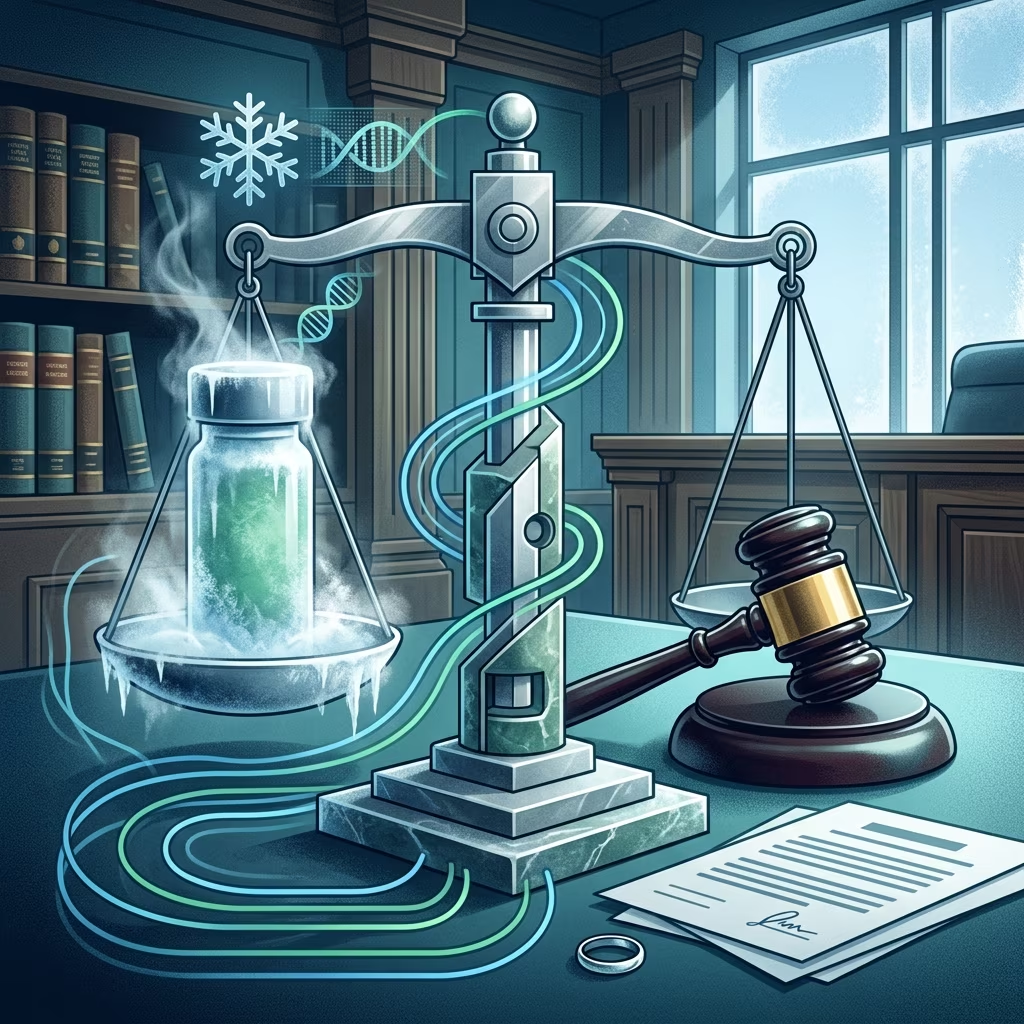
Disputes over frozen embryos can turn a divorce into a legal and personal conflict unlike almost any other. These cases sit at the intersection of family law, reproductive autonomy, contract law, and public policy, which is why courts often struggle to apply a single rule. In many states, the outcome depends on whether the couple signed an enforceable agreement before fertility treatment, and if not, judges usually rely on a state-specific balancing test or consent-based framework.
This issue matters because embryos are not treated exactly like ordinary property, but they are not treated exactly like children either. That legal ambiguity leaves courts with difficult questions: Who gets to decide whether the embryos are used, donated, stored, or destroyed? Should the right not to procreate outweigh the desire to become a parent? And what happens when the documents signed at a fertility clinic do not reflect the couple’s current wishes?
Why embryo disputes are so difficult
Frozen embryo cases are hard because they involve more than money or ownership. They involve future parenthood, genetic connection, and deeply personal choices about reproduction. Courts must decide whether the embryos should be treated as a form of marital property, as a special class of property, or as something that deserves a distinct legal approach.
That uncertainty creates legal variation from state to state. Some courts rely heavily on signed agreements, while others consider broader fairness concerns. In practice, the same dispute can produce very different outcomes depending on the jurisdiction and the facts of the case.
The most common legal approaches
Although state laws differ, several approaches appear repeatedly in embryo-disposition cases. The table below shows the main models courts and lawmakers tend to use.
| Approach | Basic idea | Typical result |
|---|---|---|
| Contract-based approach | The court enforces the agreement the couple signed before or during IVF treatment. | The written form or fertility contract usually controls. |
| Mutual-consent approach | Neither party can act unless both agree. | The embryos remain in storage until there is a shared decision. |
| Balancing approach | The judge weighs each spouse’s interests and the consequences of each possible outcome. | The stronger reproductive interest may prevail, depending on the facts. |
The contract-based method is common because fertility clinics often require patients to sign paperwork addressing storage, destruction, donation, or transfer of embryos. Courts frequently treat those documents as controlling if they are clear and valid. In a number of disputes, judges also look to whether the parties later signed any additional agreements, such as prenuptial or postnuptial terms, that specifically address embryo disposition.
The mutual-consent model tries to avoid forcing either spouse into parenthood against their will. Under this framework, embryos cannot be used unless both people agree, which effectively gives each party a veto. This method can reduce the risk that one spouse is compelled to become a genetic parent after divorce.
The balancing model is more flexible. A court using this method may weigh whether one spouse wants the embryos for implantation, whether the other wants to avoid parenthood, and whether there are other realistic options such as donation or continued storage. This approach is often used when no clear agreement exists or when the agreement leaves important gaps.
Why written agreements matter so much
In embryo cases, the best evidence of the parties’ intent is often the document they signed before treatment began. That is why fertility-clinic forms can play such a central role in later litigation. If the agreement says what should happen in the event of divorce, many courts will enforce that decision.
However, not every form is detailed enough to resolve the dispute completely. Some documents address death but not divorce. Others mention storage without explaining who may decide on implantation. In those situations, courts may need to interpret the contract, review any related agreements, and decide whether the language is sufficiently specific to control the outcome.
- Clear language can reduce litigation.
- Updated agreements can reflect changing wishes over time.
- Extra planning is useful when embryos are created during marriage.
- Ambiguous forms often lead to expensive and emotionally exhausting disputes.
What courts usually consider when no agreement solves the problem
When the paperwork does not answer the question, judges usually move beyond the contract and examine the parties’ competing interests. One spouse may argue for a chance to have a genetically related child, while the other may argue that no one should be forced into biological parenthood after the relationship ends.
Courts also tend to ask whether one party has other ways to become a parent. That issue can matter because a spouse who has no practical alternative may claim a stronger interest in using the embryos. By contrast, a spouse who wants to avoid parenthood may argue that the law should not impose lifelong obligations based on a prior relationship that no longer exists.
Some judges are also influenced by the purpose for which the embryos were originally created. If the embryos were intended for joint family building, a court may view the dispute differently than if they were preserved for a single spouse’s future use. Even so, prior intention does not always settle the case, especially when the parties now disagree sharply.
Possible outcomes for frozen embryos after divorce
Once a court decides who controls the embryos, several outcomes are possible. The exact choice depends on state law, the agreement, and the couple’s preferences. The most common possibilities include continued storage, use by one spouse, donation, or destruction.
- Continued storage: The embryos remain frozen until the parties agree or a court order resolves the dispute.
- Implantation: One spouse may be allowed to use the embryos to attempt pregnancy, depending on the governing law.
- Donation: The embryos may be donated for another couple’s use or, where permitted, for research.
- Destruction: Some agreements or court orders allow embryos to be discarded.
These outcomes are not interchangeable from a legal or emotional standpoint. Donation, for example, may feel very different from destruction, and implantation can create future parenthood concerns that do not exist with storage. Because the stakes are so high, courts often proceed cautiously and focus closely on what the parties agreed to before conflict arose.
How state law shapes the result
There is no single nationwide rule governing embryo disposition after divorce. That means the controlling law depends on the state where the case is heard. Some states have statutes that address embryo custody or related assisted-reproduction issues, while others rely on appellate decisions and general family-law principles.
This state-by-state structure explains why outcomes can look inconsistent. In one jurisdiction, a court may enforce a clinic contract almost automatically. In another, the judge may balance the spouses’ interests and place significant weight on the right not to procreate. Because the law remains unsettled in many places, legal advice must always be tailored to local rules.
Practical planning steps for couples considering IVF
Couples who are considering in vitro fertilization can reduce the risk of later conflict by planning ahead. The most helpful step is to address embryo disposition before the relationship becomes strained. That means reading the fertility-clinic forms carefully and deciding how the embryos should be handled if the couple separates, divorces, dies, or no longer agrees on their use.
Additional agreements can also help. Many family-law attorneys recommend considering a prenuptial or postnuptial agreement that specifically addresses embryos and other reproductive material. While these agreements are not a cure-all, they can provide important evidence of intent and reduce uncertainty later.
- Review all clinic consent forms before signing.
- Make sure divorce is specifically addressed, not just death or storage.
- Consider whether a separate marital agreement is appropriate.
- Update paperwork if your wishes change over time.
- Keep copies of all signed documents in one place.
Why the right not to procreate is so important
Many courts view the right not to become a genetic parent as a powerful legal interest. The reason is simple: implantation can create a child and, with it, long-term emotional, financial, and legal consequences. Even if one spouse wants to use the embryos, the other may object to becoming a parent in any sense connected to that child’s birth.
This concern is one reason mutual-consent and contract-based systems are so attractive to judges. They reduce the likelihood that one person’s reproductive autonomy is overridden. At the same time, they can also leave a spouse without any practical path to genetic parenthood, which is why these cases are so hard to resolve fairly.
Frequently asked questions
Are frozen embryos treated like property?
Not exactly. Courts often describe them as a unique legal category rather than ordinary personal property. That is why judges usually do not apply standard property rules without modification.
Can a fertility clinic agreement decide everything?
Often it can decide most of the dispute, but not always. If the agreement is vague, incomplete, or challenged as invalid, a court may still need to step in.
Can one spouse force the other to become a parent?
Generally, courts are reluctant to do that. Many legal frameworks place substantial weight on the spouse who does not want reproduction to occur.
What if the couple never discussed divorce when the embryos were created?
Then the court will usually look at state law, the clinic paperwork, and each spouse’s competing interests. That is where litigation becomes especially uncertain.
Can embryos be donated instead of used?
In some cases, yes. Donation may be available for reproduction or research, depending on the agreement and the law of the state involved.
The bigger lesson for families and lawyers
Frozen-embryo disputes show how modern family law must adapt to reproductive technology. The legal system is still developing standards for questions that once did not exist. Until more states create clearer rules, courts will continue relying on a mix of contracts, consent principles, and fairness-based analysis.
For families, the most important lesson is that advance planning matters. For lawyers, the challenge is to draft documents that are specific enough to guide future disputes while still anticipating changes in the couple’s circumstances. As IVF becomes more common, the need for careful legal drafting and thoughtful judicial review will only increase.
References
- Frozen Embryos and Divorce – CT — Needle | Cuda. 2024. https://www.needlecuda.com/frozen-embryos-and-divorce-ct/
- Disposition of Frozen Embryos at Divorce — Colorado Family Law. 2024. https://www.colorado-family-law.com/assets-debts/disposition-frozen-embryos-divorce
- What Happens to Frozen Embryos After Divorce? — Envision Family Law. 2024. https://www.envisionfamilylaw.com/what-happens-to-frozen-embryos-after-divorce/
- What Happens with Frozen Embryos in a Divorce? — ATC Law. 2024. https://www.atclaw.com/blog/what-happens-with-frozen-embryos-in-an-illinois-divorce