
FMLA, Paid Leave, Overtime and Bonuses Explained
Understand how FMLA leave interacts with paid time off, overtime eligibility, and performance-based bonuses so you can protect both your job and your paycheck.
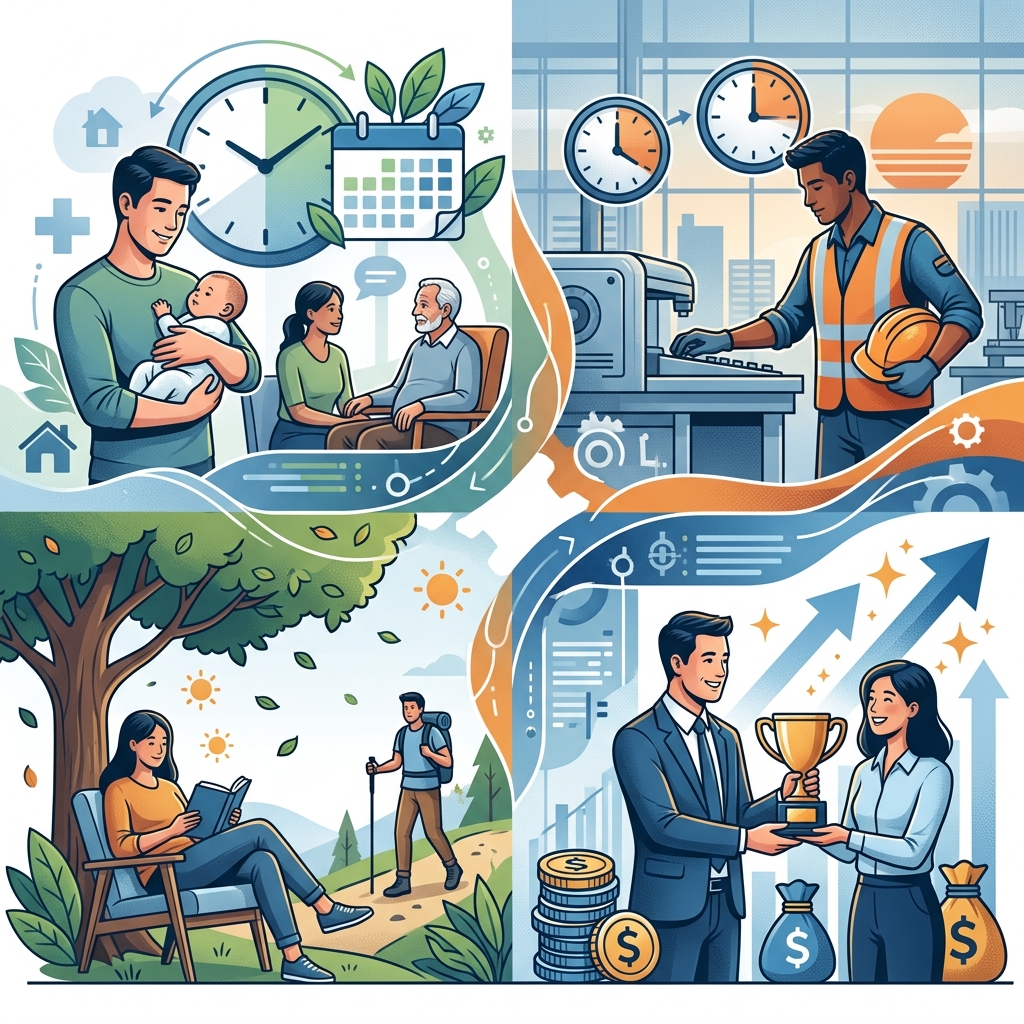
The federal Family and Medical Leave Act (FMLA) offers powerful job protections when you need time away from work for serious family or medical reasons, but it raises practical questions about income: Will you be paid? Will your bonus shrink? Are you still eligible for overtime when you return? Understanding how FMLA interacts with paid leave, overtime, and bonuses can help you plan ahead and protect your rights.
This guide breaks down how FMLA works, when pay is or is not required, and how your employer may legally treat overtime and incentives while you are on leave and when you return.
1. Core FMLA Basics: What It Protects (and What It Does Not)
FMLA is a federal labor law that gives eligible employees the right to take leave for specific family and medical reasons while keeping their job and health insurance coverage.
1.1 What FMLA Guarantees
- Job-protected leave for qualifying reasons, generally up to 12 workweeks in a 12‑month period for most types of leave.
- Up to 26 workweeks of leave in a 12‑month period to care for a covered servicemember with a serious injury or illness (military caregiver leave).
- Continuation of group health benefits (e.g., medical, dental, vision) on the same terms as if you were actively working.
- Reinstatement to the same or an equivalent position when your leave ends, including similar pay, benefits, and working conditions.
1.2 What FMLA Does Not Guarantee
FMLA is primarily a job protection law, not a wage replacement law.
- The federal FMLA does not require paid leave; leave is generally unpaid unless you use employer-provided paid time off or are covered by a separate state or employer paid leave program.
- FMLA does not itself provide cash benefits or wage replacement (unlike Social Security or state disability programs).
- FMLA does not guarantee promotion, new incentives, or changes in pay that would not have happened if you had continued working.
1.3 Common Qualifying Reasons for FMLA Leave
Under federal law, eligible employees may use FMLA leave for:
- Birth of a child and bonding time
- Placement of a child for adoption or foster care
- Caring for a spouse, child, or parent with a serious health condition
- Your own serious health condition that prevents you from working
- Certain military-related reasons, including qualifying exigencies and caregiving for a covered servicemember
2. Paid Time Off and FMLA: When Your Leave Can Be Paid
Many employees are surprised to learn that FMLA leave can be both unpaid and paid at the same time, depending on how employer policies and state laws interact with federal protections.
2.1 FMLA Leave Itself Is Unpaid
At the federal level, there is no requirement that employers pay wages during FMLA leave. That means:
- Your employer is not required by federal law to continue your salary or hourly pay while you are on FMLA leave.
- Any pay you receive during FMLA leave comes from other sources: accrued paid time off, employer-specific benefits, union contracts, or state programs.
2.2 Using Accrued Paid Leave During FMLA
Employers may allow or require you to use accrued paid leave (like vacation, sick leave, or personal days) at the same time as FMLA leave. From your perspective:
- Your time away from work is FMLA-protected.
- Your paycheck may continue for some or all of that time because you are drawing down your accrued paid leave.
Once your accrued paid leave is exhausted, any remaining FMLA leave is typically unpaid unless another benefit or program applies.
2.3 State Paid Family and Medical Leave Programs
Several states operate separate paid family and medical leave programs that provide partial wage replacement when workers take leave for qualifying reasons. These programs are distinct from the federal FMLA but often work alongside it.
Key points about many state paid leave programs:
- They generally offer partial wage replacement for a set number of weeks for bonding with a new child, caring for a seriously ill family member, or your own health condition.
- Eligibility and benefit levels vary by state, but workers often receive a percentage of their prior wages, subject to minimum and maximum weekly benefit amounts.
- Some state programs provide paid benefits even when FMLA does not apply (for example, at smaller employers or for workers with shorter tenure).
2.4 Employer-Provided Paid Family Leave
Some employers voluntarily offer paid parental or family leave benefits that go beyond any legal requirements. These policies may:
- Provide full or partial pay for a set number of weeks when you take parental or family leave.
- Run concurrently with FMLA leave, meaning your paid weeks count toward your 12 FMLA weeks.
- Have additional eligibility requirements, such as minimum tenure or full-time status.
Always review your employee handbook and benefit documents to see whether your employer offers paid leave that can overlap with FMLA.
3. Overtime and FMLA: How Your Hours and Opportunities Are Treated
FMLA affects whether certain hours count toward overtime calculations and whether you must work overtime while on intermittent or reduced schedule leave. It also affects your right to be considered for overtime when you return.
3.1 Counting FMLA Hours Toward Overtime
FMLA leave hours generally do not count as hours worked for purposes of overtime eligibility under federal wage and hour rules. The U.S. Department of Labor recognizes that hours not actually worked do not generate overtime obligations.
That means:
- If you are on FMLA leave for part of a workweek, your employer is typically not required to treat those leave hours as hours worked when calculating overtime.
- You are still entitled to overtime pay for any hours you actually work in excess of applicable thresholds under the Fair Labor Standards Act (FLSA) or state law.
3.2 Intermittent FMLA Leave and Overtime Obligations
Employees may sometimes take FMLA leave on an intermittent basis (for example, a few hours or days at a time) or on a reduced work schedule to manage ongoing medical conditions.
- Your employer can require you to limit overtime when you are on a reduced schedule if the overtime would interfere with your medically necessary schedule.
- Your refusal to work overtime due to approved intermittent FMLA leave cannot lawfully be used as a basis for discipline when the absence is FMLA‑protected.
3.3 Overtime Opportunities After Returning From FMLA
When you return from FMLA leave, you must be restored to the same or an equivalent position with equivalent pay, including the same opportunity to work overtime.
| Aspect of Job | What Must Be Preserved After FMLA |
|---|---|
| Base Pay Rate | Same or equivalent hourly wage or salary |
| Shift Differentials | Same or equivalent pay premiums (e.g., night or weekend shift differentials) |
| Overtime Opportunity | Same chance to work overtime as employees in comparable positions |
| Bonus Eligibility | Same eligibility for bonuses as employees who take comparable non‑FMLA leave |
4. Bonuses, Incentives, and FMLA: Can They Be Reduced?
One of the most confusing areas is how FMLA impacts bonuses, incentive pay, and performance-based awards. Federal regulations draw a distinction between unconditional and conditional forms of additional pay.
4.1 Unconditional Increases and Bonuses
Unconditional pay increases or bonuses are benefits you receive regardless of your performance or attendance, such as:
- Across-the-board cost-of-living increases
- Automatic seniority raises
- Fixed holiday bonuses given to everyone without performance conditions
Employees on FMLA leave must receive these unconditional pay increases or bonuses just as if they had not taken leave. If the employer provides an unconditional raise or bonus to workers generally, an employee out on FMLA leave is entitled to the same benefit.
4.2 Conditional, Performance-Based Bonuses
Conditional bonuses are awards tied to meeting measurable requirements, such as:
- Perfect attendance bonuses
- Production or sales quotas
- Safety bonuses based on incident-free hours
Under federal guidance, employers must treat FMLA leave the same as comparable forms of leave (such as non-FMLA medical leave or personal leave) when determining whether employees have met the conditions for these bonuses.
In practice, that means:
- If employees who miss work for non‑FMLA reasons (like vacation or other unpaid leave) lose or have their bonus prorated, an employee who took FMLA leave may be treated the same way.
- If employees who miss work for other reasons still receive the full bonus, the employer cannot withhold or reduce a bonus solely because of FMLA leave.
4.3 Prorating Bonuses Due to FMLA Leave
Courts and regulators have recognized that an employer may prorate a production or quota-based bonus to account for periods of FMLA leave, as long as other comparable leave is treated consistently.
For example:
- If a sales bonus is based on annual sales volume, and an employee is on FMLA leave for a portion of the year, the employer may calculate the bonus based on the period worked, or prorate the target, provided that employees who miss work for non‑FMLA reasons are treated the same way.
- What an employer cannot do is demand full-year production while ignoring the fact that a portion of that time was legitimately protected leave.
4.4 Key Rule: Equal Treatment Compared to Other Leave
The central principle is equal treatment. Employees who use FMLA leave must have the same rights to conditional bonuses or pay increases as employees who take similar non‑FMLA leave.
To evaluate whether a bonus decision is lawful, ask:
- How does the employer treat employees who miss work for non‑FMLA reasons (e.g., workers’ compensation, personal leave, or short-term disability)?
- Is the employer applying the same formula or rules to your situation?
5. How State Laws and Employer Policies Change the Picture
Although FMLA sets a federal baseline, your actual income and job protections may be shaped by a patchwork of state laws and employer-specific policies.
5.1 State Family and Medical Leave Laws
Many states have enacted their own family and medical leave laws, some of which provide job protection that goes beyond FMLA or apply to smaller employers. These laws may:
- Cover employers with fewer than 50 employees, expanding access for workers at small businesses.
- Provide more weeks of leave than FMLA or additional qualifying reasons such as care for extended family members.
- Operate alongside federal FMLA, giving some employees both state and federal rights.
5.2 State Paid Family Leave and Wage Replacement
Separate from job-protection laws, some states administer paid family leave insurance programs funded through payroll contributions. These programs generally:
- Pay a portion of your usual wages (up to a state-set maximum) while you are off work for eligible family or medical reasons.
- Have independent eligibility rules, such as minimum earnings or contributions over a base period.
- May apply regardless of employer size, meaning you can receive benefits even if FMLA does not apply.
5.3 Employer Policies and Collective Bargaining Agreements
Your employer’s internal policies and any applicable collective bargaining agreement (union contract) can provide benefits beyond those required by law, including:
- Additional paid parental or medical leave
- More generous accrual and use of paid time off
- Enhanced job protection or return-to-work rights
- Specific rules regarding eligibility for bonuses during leave
Always compare the protections of FMLA, state law, and your employer’s policy; you are typically entitled to the most favorable combination of rights that apply to your situation.
6. Practical Planning Tips Before Taking FMLA Leave
Because leave affects both your job and your paycheck, planning ahead can make a significant difference.
6.1 Questions to Ask Human Resources
- How will my base pay, overtime, and bonuses be handled while I am on leave?
- Will I be required or allowed to use accrued paid time off during my FMLA leave?
- Does our state provide paid family leave or disability benefits that I should apply for?
- How will my health insurance premiums be handled while I am away?
- Will my performance evaluation period or goals be adjusted to reflect my time on leave?
6.2 Documenting Communications and Decisions
To protect yourself, it is wise to keep written records.
- Request important information and decisions in writing or follow up conversations with a confirming email.
- Keep copies of leave approval letters, benefit explanations, and any communications about bonuses and overtime expectations.
- If you believe your rights are being violated, consider consulting an employment attorney or your state labor agency.
6.3 Coordinating FMLA With Other Benefits
In many cases, your time away from work may involve multiple overlapping protections and benefits:
- FMLA for federal job protection
- State family or medical leave for additional job protection
- State paid family leave or disability insurance for wage replacement
- Employer-paid leave or short-term disability benefits
Understanding how these programs interact can help you minimize income gaps and avoid surprises when you return.
7. Frequently Asked Questions (FAQs)
Does FMLA leave have to be paid?
No. Under federal law, FMLA leave is generally unpaid. You may receive pay during your FMLA leave if you use accrued paid time off, have employer-provided paid leave, or qualify for separate state benefits.
Will I lose my bonus if I take FMLA leave?
It depends on how the bonus is structured and how your employer treats workers on comparable non‑FMLA leave. You are entitled to unconditional increases and bonuses (like across-the-board raises), but performance-based bonuses can be reduced or prorated if the same rules apply to employees who take other forms of leave.
Can my employer count FMLA leave against an attendance bonus?
Employers may treat FMLA absences the same as other absences when determining eligibility for attendance bonuses, as long as they do not single out FMLA leave for worse treatment than similar leave. Equal treatment is the key legal requirement.
Does time on FMLA count toward overtime eligibility?
No. FMLA leave hours generally do not count as hours worked when calculating overtime. Only hours actually worked are counted for overtime purposes, although you retain the right to the same overtime opportunities when you return.
Can I be denied overtime opportunities after taking FMLA?
Your employer must restore you to the same or an equivalent position, including similar opportunities for overtime and premium pay. An employer cannot lawfully reduce your overtime opportunities as punishment for taking FMLA leave.
What if my state has its own family or medical leave law?
If your state has its own family or medical leave law, you may have additional rights to job protection or paid leave beyond FMLA. In many cases, both federal and state protections apply; you are generally entitled to the most favorable combination of rights offered by both.
Do I keep my health insurance while on FMLA?
Yes. Your employer must continue your group health insurance on the same terms as if you had been working, including access to medical, dental, and other covered benefits. You may still be responsible for your usual share of premiums.
References
- Fact Sheet #28A: Employee Protections under the Family and Medical Leave Act — U.S. Department of Labor, Wage and Hour Division. 2023-01-01. https://www.dol.gov/agencies/whd/fact-sheets/28a-fmla-employee-protections
- Paid Family Leave and Other Benefits — New York State Paid Family Leave, NY.gov. 2022-06-01. https://paidfamilyleave.ny.gov/paid-family-leave-and-other-benefits
- Paid Family Leave — California Employment Development Department (EDD). 2024-01-01. https://edd.ca.gov/paidfamilyleave
- State Family and Medical Leave Laws — National Conference of State Legislatures (NCSL). 2023-08-01. https://www.ncsl.org/labor-and-employment/state-family-and-medical-leave-laws
- State Paid Family Leave Laws Across the U.S. — Bipartisan Policy Center. 2021-12-01. https://bipartisanpolicy.org/explainer/state-paid-family-leave-laws-across-the-u-s/
- How FMLA Leave Affects Quotas and Bonuses — Garrison Law. 2019-05-01. https://garrisonlaw.com/how-does-taking-an-fmla-leave-affect-an-annual-quota-or-an-end-of-year-bonus/
Similar Articles








Read full bio of medha deb




