
Driving With Snow On Your Car Roof: 5 Essential Safety Steps
Uncover state laws, fines, and safety hazards of driving with uncleared snow on your vehicle roof this winter.
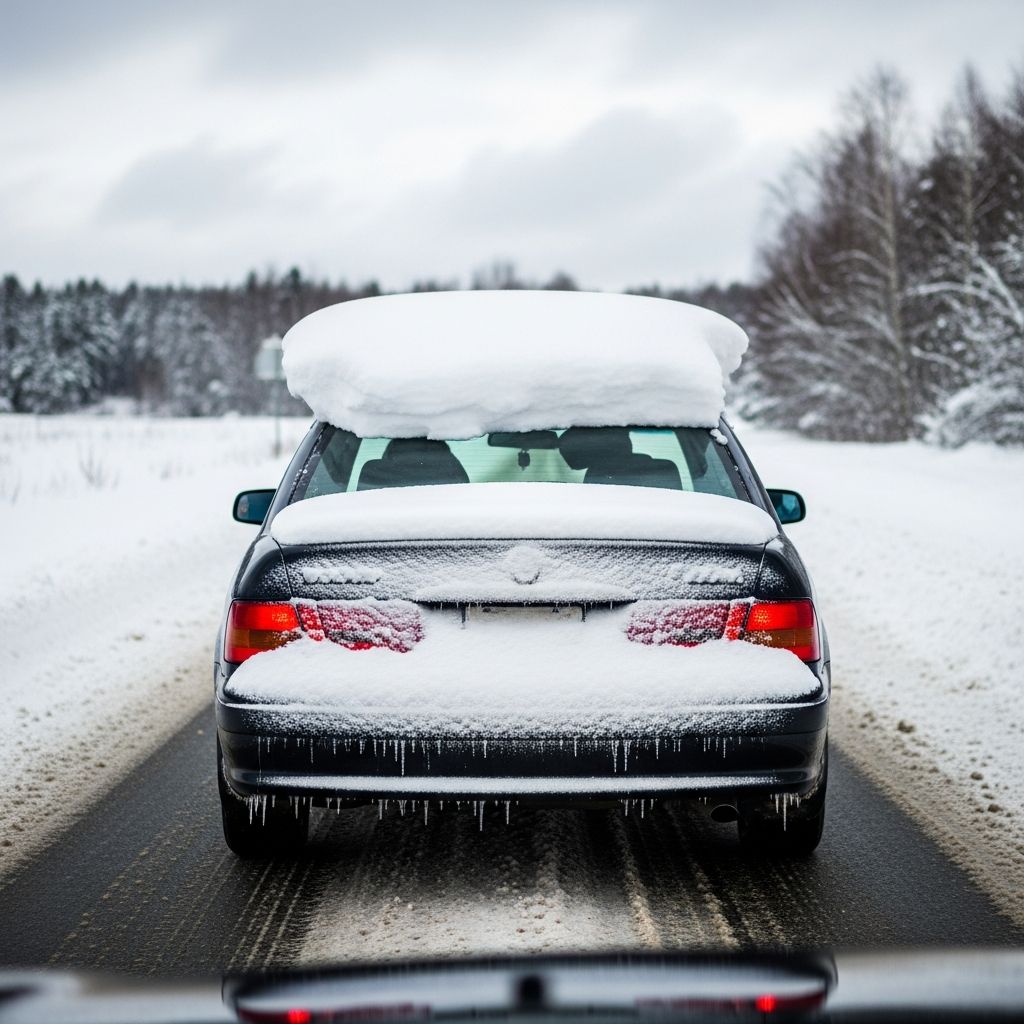
Leaving snow accumulated on a vehicle’s roof while driving poses significant hazards and legal consequences across numerous U.S. states. These regulations stem from real-world incidents where dislodged snow caused injuries and fatalities, prompting lawmakers to enforce strict vehicle clearance rules.
Why Snow on Vehicles Endangers Everyone
Snow and ice buildup on a car roof can suddenly dislodge during motion, especially when braking or turning, flying backward at high speeds toward trailing vehicles. This creates a projectile hazard that impairs visibility for drivers behind and risks windshield cracks, structural damage, or worse. Beyond immediate dangers, obscured lights, plates, and mirrors violate basic roadworthiness standards, escalating accident probabilities in already treacherous winter conditions.
- Visibility Blockage: Roof snow sliding forward under deceleration covers windshields instantly.
- Debris Projection: Hardened ice chunks act like missiles, capable of penetrating glass.
- Mechanical Risks: Clogged exhausts from packed snow lead to carbon monoxide buildup inside cabins.
Statistics from transportation authorities highlight that poor vehicle preparation contributes to thousands of winter crashes annually, underscoring the need for full clearance before roadways.
State-by-State Legal Framework
Laws vary widely, with some states imposing proactive bans on uncleared vehicles and others reacting only after incidents occur. Northeast regions lead with explicit prohibitions, while others invoke general safety statutes.
| State | Key Law | Fine Range | Notes |
|---|---|---|---|
| New Hampshire | Jessica’s Law | $250+ | Named after fatal ice ejection; license points apply. |
| Pennsylvania | Christine’s Law | Varies | Requires clearance within 24 hours post-storm. |
| New Jersey | Exposed Surfaces Statute | Up to $1,500 (commercial) | Covers all vehicle exteriors; defenses for en-route cleaning. |
| Connecticut, Rhode Island | Affirmative Duty | $100-$500 | Preventative; no incident required for citation. |
| Ohio | Unsafe Vehicle | Up to $170 | Enforced post-incident in many counties. |
| Illinois, Alaska, Georgia, Wisconsin, Massachusetts, Kansas | Obstruction Laws | $100-$300 | Triggers if snow enters driver views. |
| Michigan, Tennessee | Reckless/Obstruction | Misdemeanor possible | Includes roadway deposition bans. |
This table summarizes primary enforcement mechanisms; always verify local codes as interpretations differ by jurisdiction.
In proactive states like those with “affirmative duty,” police can ticket merely for observed snow coverage, eliminating the need to prove harm. Reactive states, such as Ohio, wait for snow fallout but still deem uncleared cars “unsafe.” Commercial operators face amplified penalties due to larger snow volumes.
Origins of These Winter Driving Regulations
Many statutes trace back to heartbreaking tragedies that exposed legislative gaps. New Hampshire’s Jessica’s Law emerged after a massive ice slab from a truck roof fatally struck a young woman in 2004, prompting immediate reforms. Pennsylvania’s Christine’s Law addressed a similar loophole, mandating preemptive action rather than post-accident blame. These “namesake” laws reflect a pattern: preventable deaths galvanizing public and official response, evolving from vague ordinances to targeted mandates.
Broader adoption followed as data linked uncleared vehicles to rising claims. For truckers, federal OSHA guidelines clash with state cleaning duties, creating compliance dilemmas around ladder safety on high roofs. Exemptions, like Maine’s for vehicles over 10,000 pounds, spark debate over equity versus risk.
Practical Steps for Compliant Snow Removal
Full vehicle clearance takes minutes but averts disasters. Start with quality tools: long-handled brushes with ice scrapers to reach roofs safely without ladders.
- Preheat the Engine: Run for 5-10 minutes to loosen frost; check exhaust for blockages first.
- Clear All Glass: Windshield, side/rear windows, mirrors—full sweeps, not peepholes.
- Tackle the Roof: Use broom-like extensions; sweep from front to back to avoid windshield dumps.
- Inspect Lights and Plates: Headlights, taillights, signals, license—must be visible.
- Undercarriage and Wheels: Knock off packed slush to prevent hydroplaning.
Avoid hot water on glass to prevent cracking from thermal shock. For heavy accumulations, rock salt aids melting but rinse vehicles post-use to combat corrosion. Park facing prevailing winds post-storm to minimize drift buildup.
Special Challenges for Commercial and Heavy Vehicles
Truck drivers navigate unique perils: OSHA prohibits unsafe climbing, yet states demand roof clearance. Solutions include steamers at truck stops, tarps (though impractical), or documented routes to cleaning facilities. New Jersey permits citations avoidance if heading directly to such sites without detours. Fines escalate dramatically for fleets, with $1,500+ possible if debris causes injury, amplifying insurance premiums.
Passenger vans and SUVs mirror these issues at smaller scales, where partial clearing tempts but fails legally. Enforcement ramps during storms, with patrols targeting highways.
Consequences Beyond Fines: Insurance and Liability
A citation often adds license points, hiking rates 20-50%. If snow causes a crash, drivers face civil suits for negligence, with “failure to clear” as prima facie evidence. Criminal charges like reckless endangerment arise in severe cases, especially fatalities. Insurers deny claims labeling vehicles “unroadworthy,” leaving owners liable for all damages.
- Financial Hit: Fines + repairs + premiums = thousands.
- Legal Exposure: Personal injury lawsuits from victims.
- Record Impact: Points linger 3-5 years, barring jobs or hikes.
Winter Driving FAQs
Is it ever okay to drive with some snow on the roof?
No, in proactive states; even minimal coverage violates duty-to-clear laws. Reactive areas risk charges if it shifts.
How long after a storm must I clear snow in Pennsylvania?
Within 24 hours, though experts advise immediate action as ice hardens.
What if I’m a trucker and can’t safely reach the roof?
Seek facilities en route; document to defend tickets. OSHA prioritizes fall prevention.
Does snow on hood or trunk count legally?
Yes, all exposed areas; focus on flight risks.
Can police pull me over just for snow, no accident?
Absolutely in affirmative duty states like NH, NJ; others need obstruction proof.
Proactive Habits for Safer Winters
Integrate routines: nightly brushes, garage storage, all-weather mats. Apps track plows and storms for prep timing. Community campaigns reinforce norms, reducing “snow hawk” sightings. Ultimately, clearance embodies responsibility—protecting self, family, strangers alike.
Winters demand vigilance; one brush stroke prevents chains of peril. Equip, clear, drive safe.
References
- These US States Will Fine You For Driving With Snow On Your Car — Jalopnik. 2024-01-15. https://www.jalopnik.com/2056280/driving-with-snow-on-car-illegal-us-states/
- Driving with snow on your car could lead to trouble with the law — WCPO 9 (YouTube Transcript). 2025-01-08. https://www.youtube.com/watch?v=VPMVnvVi090
- Ohio Revised Code: Vehicle Equipment and Loads — Ohio Legislature (official .gov). 2025-12-01. https://codes.ohio.gov/ohio-revised-code/title-45/chapter-4513
- Pennsylvania Vehicle Code: Securing Loads — Pennsylvania General Assembly (.gov). 2024-07-01. https://www.legis.state.pa.us/cfdocs/legis/LI/consCheck.cfm?txtType=HTM&ttl=75&div=0&chpt=49&sctn=27&subsctn=0
- New Jersey Statute on Vehicle Clearance — NJ Legislature (.gov). 2025-03-15. https://lis.njleg.state.nj.us/nxt/gateway.dll?f=templates&fn=default.htm
Similar Articles








Read full bio of medha deb


