
Domestic Violence Green Cards for Immigrant Survivors
How immigrant survivors of domestic violence can seek safety, independence, and lawful status through U.S. immigration protections.
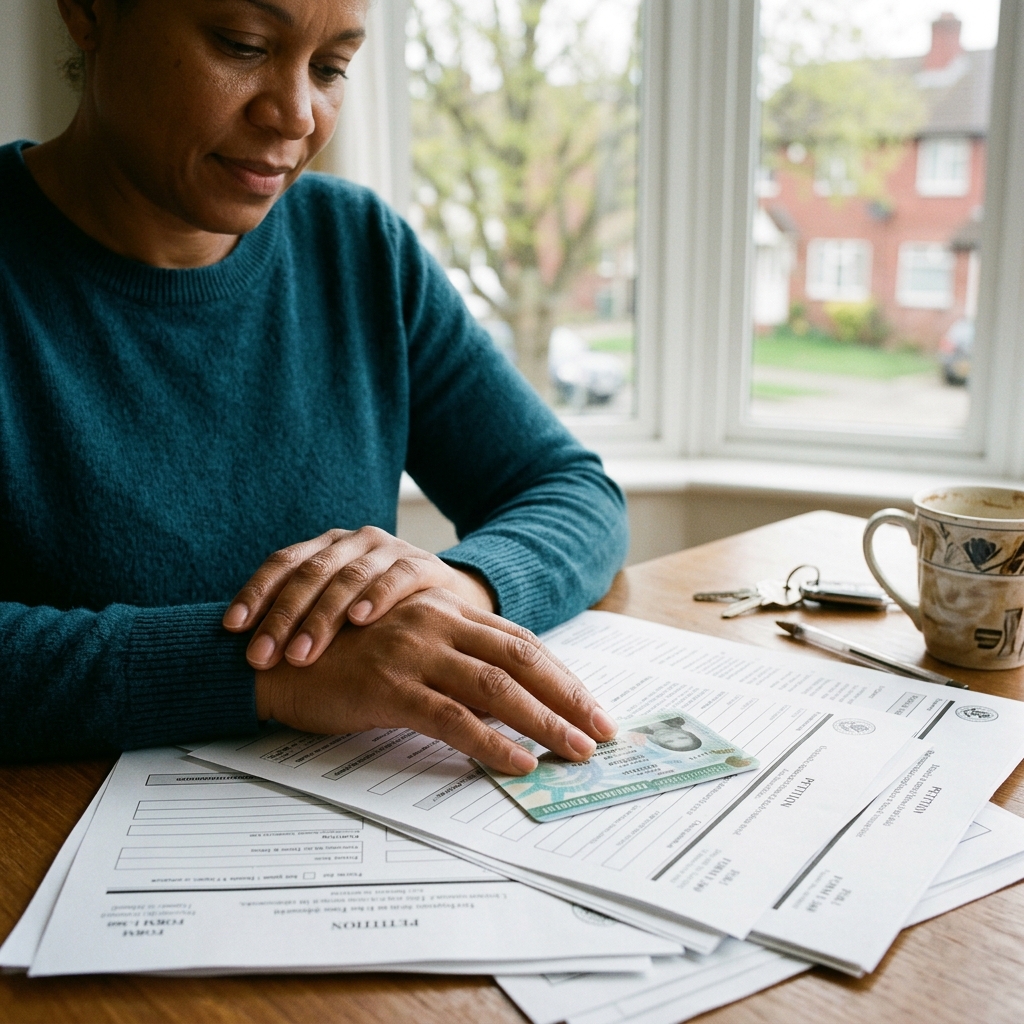
Immigrant survivors of domestic violence often face a double threat: abuse at home and fear of losing immigration status if they leave the relationship. U.S. law offers several ways for these survivors to seek safety and, in many cases, to apply for a green card without relying on an abusive family member.
This guide explains key immigration options for domestic violence survivors, the eligibility rules, and practical steps to prepare a strong application. It is general information, not legal advice, and survivors are strongly encouraged to consult an experienced immigration attorney or accredited representative.
Understanding Domestic Violence in the Immigration Context
Domestic violence can include much more than physical assault. For immigration purposes, many protections are triggered by battery or extreme cruelty, terms that cover a wide range of abusive behaviors.
- Battery: physical harm such as hitting, choking, shoving, or restraining.
- Extreme cruelty: patterns of threats, intimidation, isolation, sexual abuse, emotional manipulation, or financial control that seriously harm a person’s well-being.
- Abuse may be documented through police reports, medical records, photos, protective orders, therapist letters, or detailed personal statements from the survivor and witnesses.
Immigrant survivors may be especially vulnerable when an abusive spouse, parent, or adult child controls access to immigration paperwork, refuses to file petitions, threatens to call immigration authorities, or uses lack of status as a weapon to keep the survivor from leaving.
Key Immigration Protections for Domestic Violence Survivors
U.S. immigration law provides several avenues of protection and, in many cases, a path to permanent residence:
- VAWA self-petition leading to a green card for certain spouses, children, and parents of abusive U.S. citizens or lawful permanent residents.
- Battered spouse or child waiver to remove conditions on a two-year marriage-based green card when the relationship was abusive.
- U nonimmigrant status (U visa) for victims of certain crimes, including domestic violence, who help law enforcement investigate or prosecute the offense.
- Other remedies, such as VAWA cancellation of removal in immigration court and, in limited cases, asylum based on persecution related to domestic violence.
The most widely used option for domestic violence survivors who have a connection to a U.S. citizen or permanent resident family member is the VAWA self-petition.
VAWA Self-Petition: A Path to a Green Card Without the Abuser
The Violence Against Women Act (VAWA) is a federal law that, among other protections, allows certain immigrant survivors to file for immigration status on their own, without the abuser’s knowledge or consent. Despite its name, VAWA protections apply to people of any gender.
Who Can File a VAWA Self-Petition?
Under U.S. Citizenship and Immigration Services (USCIS) rules, a person may qualify for a VAWA self-petition if they are the victim of battery or extreme cruelty by a close family member who is a U.S. citizen (USC) or lawful permanent resident (LPR).
| Relationship to Abuser | Abuser’s Status | Potential Eligibility |
|---|---|---|
| Current or former spouse | U.S. citizen or LPR | May self-petition if marriage was entered in good faith and abuse occurred. |
| Child (unmarried, under 21 in most cases) | U.S. citizen or LPR parent | May self-petition as an abused child. |
| Parent | Adult U.S. citizen son or daughter (21 or older) | May self-petition as an abused parent. |
Core Eligibility Requirements
To qualify for a VAWA self-petition, survivors generally must show that:
- They have a qualifying family relationship to a U.S. citizen or LPR (spouse, child, or parent).
- They experienced battery or extreme cruelty by that family member.
- They live or lived with the abuser in the United States.
- They are a person of good moral character (for example, no serious criminal record).
- If filing as a spouse, the marriage was entered into in good faith, not solely for immigration purposes.
These requirements must be supported by evidence, but USCIS understands that domestic violence sometimes occurs without police involvement. Detailed personal statements, affidavits from friends or professionals, and other circumstantial evidence can be critical.
How the VAWA Self-Petition Process Works
VAWA is not a separate visa category; it is a self-petition process that can lead to permanent residence if approved.
- The survivor files Form I-360, Petition for Amerasian, Widow(er), or Special Immigrant, checking the VAWA-related category.
- There is no filing fee for VAWA I-360 petitions, making the process more accessible for survivors.
- The abuser is not notified by USCIS when a VAWA petition is filed, which helps protect the survivor’s safety.
- If the I-360 is approved and an immigrant visa is available, the survivor may be eligible to file Form I-485 to obtain a green card, sometimes at the same time as the I-360.
Evidence Commonly Used in VAWA Cases
A strong VAWA package often includes a mix of personal statements and documentary proof, such as:
- A detailed personal declaration describing the relationship, the abuse, and its impact.
- Proof of the family relationship (marriage certificate, birth certificate, or other official records).
- Proof of shared residence, such as leases, bills, mail, or school records.
- Evidence of battery or extreme cruelty (police reports, medical records, photos, protective orders, shelter records, or letters from counselors, social workers, or religious leaders).
- Evidence of good moral character (police clearance letters, community support statements, employment records).
Because every case is different, survivors should speak with a qualified immigration practitioner to determine which documents are most helpful and how to address any gaps in the evidence.
Battered Spouse or Child Waiver: Removing Conditions on Residence
Some immigrants receive a two-year conditional green card after marriage to a U.S. citizen. Normally, the couple must file a joint petition (Form I-751) to remove conditions near the end of the two-year period. When the relationship is abusive, a survivor does not have to remain in the marriage or rely on the abuser for this filing.
Under U.S. law, conditional residents who are victims of battery or extreme cruelty can request a battered spouse or child waiver to remove conditions on their status without a joint petition.
- The survivor files Form I-751 on their own, indicating they are requesting a waiver based on abuse.
- They must show the marriage was entered in good faith and that battery or extreme cruelty occurred during the relationship.
- Evidence similar to a VAWA case—personal statements, police reports, medical documents, or witness affidavits—can be used to support the waiver request.
A successful battered spouse waiver allows the survivor to become a full lawful permanent resident without any conditions, regardless of whether the marriage remains intact.
Other Immigration Options After Domestic Violence
Not every domestic violence survivor has a qualifying relationship with a U.S. citizen or permanent resident. In those situations, other forms of immigration protection may be available.
U Nonimmigrant Status (U Visa)
The U visa is designed for victims of certain crimes, including many forms of domestic violence, who are helpful to law enforcement or prosecutors investigating or prosecuting the crime.
- Survivors must have suffered substantial physical or mental abuse as a result of the criminal activity.
- They generally need a signed certification from a law enforcement agency confirming their helpfulness.
- After maintaining U status for a required period, many U visa holders can apply for a green card.
U visas can be a critical option for survivors who do not qualify for VAWA because the abuser is not a U.S. citizen or permanent resident, or because there is no qualifying family relationship.
VAWA Cancellation of Removal and Asylum
Survivors who are already in removal (deportation) proceedings may have access to different remedies:
- VAWA cancellation of removal is a form of relief that, if granted, results in a green card. Requirements include continuous presence in the U.S., abuse by a U.S. citizen or LPR family member, and proof that removal would cause extreme hardship to the survivor or qualifying relatives.
- Asylum may be available in limited circumstances when domestic violence is tied to persecution on a protected ground (such as membership in a particular social group) and the survivor cannot safely return to the home country.
Because these forms of relief involve complex legal standards and strict deadlines, representation by an experienced immigration attorney is especially important.
Safety Planning and Practical Steps for Survivors
Immigration relief is only one part of a survivor’s safety strategy. It is essential to consider both immediate protection and long-term stability.
Immediate Safety Measures
- Contact local domestic violence hotlines or shelters, which can help with emergency planning, confidential housing, and referrals.
- Call emergency services if you are in immediate danger; police can assist with protective orders, transportation to medical care, and safety checks.
- Keep important documents (passports, birth certificates, medical records, immigration papers) in a safe place or with a trusted person.
Preparing for an Immigration Case
Survivors considering immigration options related to domestic violence can take practical steps to strengthen their case:
- Write a timeline of the relationship, documenting when the abuse began, how it escalated, and efforts made to seek help.
- Collect any available documents: texts, emails, social media messages, photos of injuries or damaged property, and records from hospitals, counselors, or shelters.
- Identify potential witnesses, such as friends, family, neighbors, coworkers, clergy, or advocates, who can describe what they observed.
- Meet with a reputable legal services provider or non-profit specializing in immigrant survivors of abuse; many offer low-cost or free consultations.
Frequently Asked Questions (FAQs)
Does my abusive spouse have to sign anything for a VAWA case?
No. A VAWA self-petition is filed without the abusive family member’s participation. USCIS does not require their signature or consent and does not inform them that you filed.
Can men use VAWA protections, or is it only for women?
VAWA protections are gender-neutral. Men, women, and non-binary people can all qualify as long as they meet the legal requirements as abused spouses, children, or parents of U.S. citizens or permanent residents.
What if I do not have police reports or hospital records?
Lack of official records does not automatically disqualify you. Survivors can rely on detailed personal statements, witness affidavits, counseling notes, and other evidence to show battery or extreme cruelty. An attorney can help identify the strongest available proof.
Will applying for VAWA affect my children?
In many cases, children can be included as derivative beneficiaries on a VAWA self-petition, allowing them to obtain status through the parent’s case if eligibility is met.
Can I stay in the U.S. while my VAWA case is pending?
Whether you can remain lawfully in the U.S. during a pending VAWA case depends on your current status and eligibility to file for work authorization or adjustment of status. It is important to get case-specific legal advice, especially if you entered without inspection or overstayed a visa.
When to Seek Legal Help
Domestic violence-related immigration cases are legally and emotionally complex. Survivors should consider professional assistance when:
- They have prior criminal charges, immigration violations, or removal orders.
- They are unsure whether the abuse they experienced meets the legal standard of battery or extreme cruelty.
- They have limited documentary evidence and need help building a persuasive case.
- They are considering multiple options, such as VAWA, U visa, and asylum, and need guidance on which path is most realistic.
Legal aid organizations, bar association referral services, and domestic violence advocacy groups can help survivors locate reputable immigration lawyers or accredited representatives experienced with VAWA and related protections.
Empowerment Through Immigration Relief
For many immigrant survivors, obtaining a green card or other lawful status is a turning point that restores control over their lives. It can mean the ability to work legally, seek stable housing, protect children, and participate in community life without constant fear of deportation or retaliation from an abuser.
While the process can be lengthy and emotionally demanding, U.S. law recognizes the unique vulnerabilities of domestic violence survivors and offers multiple paths to safety and permanent status. With careful planning, strong evidence, and the support of advocates and legal professionals, survivors can use these protections to break free from abuse and build secure, independent futures.
References
- Green Card for VAWA Self-Petitioner — U.S. Citizenship and Immigration Services (USCIS). 2023-04-01. https://www.uscis.gov/green-card/green-card-eligibility/green-card-for-vawa-self-petitioner
- Abused Spouses, Children and Parents — U.S. Citizenship and Immigration Services (USCIS). 2023-04-01. https://www.uscis.gov/humanitarian/abused-spouses-children-and-parents
- Violence Against Women Act (VAWA) Self-Petition — Crime Victims Help NY. 2022-06-15. https://crimevictimshelpny.org/rights/immigration/item.9018-Violence_Against_Women_Act_VAWA_SelfPetition
- Can I get immigration papers as a victim of domestic violence? — LawHelpNY. 2022-06-10. https://www.lawhelpny.org/resource/vawa-laws-for-abuse-victims
- Domestic Violence – Immigration Laws — Office of the Attorney General, Commonwealth of Virginia. 2021-09-01. https://www.oag.state.va.us/programs-outreach/domestic-violence?view=article&id=218
- What You Need to Know About Immigration and Intimate Partner Violence — Legal Aid Society NYC. 2023-05-01. https://legalaidnyc.org/get-help/family-domestic-violence-divorce/what-you-need-to-know-about-partner-violence/
- VAWA Immigration: Green Card for Domestic Violence Victims — Tondini Law. 2023-03-10. https://tondinilaw.com/vawa/
Similar Articles








Read full bio of medha deb


