
Do Wills Need To Be Notarized: Expert Guide To Witness Rules
Understand when notarization matters for a will, how witnesses work, and how self‑proving affidavits can streamline probate.
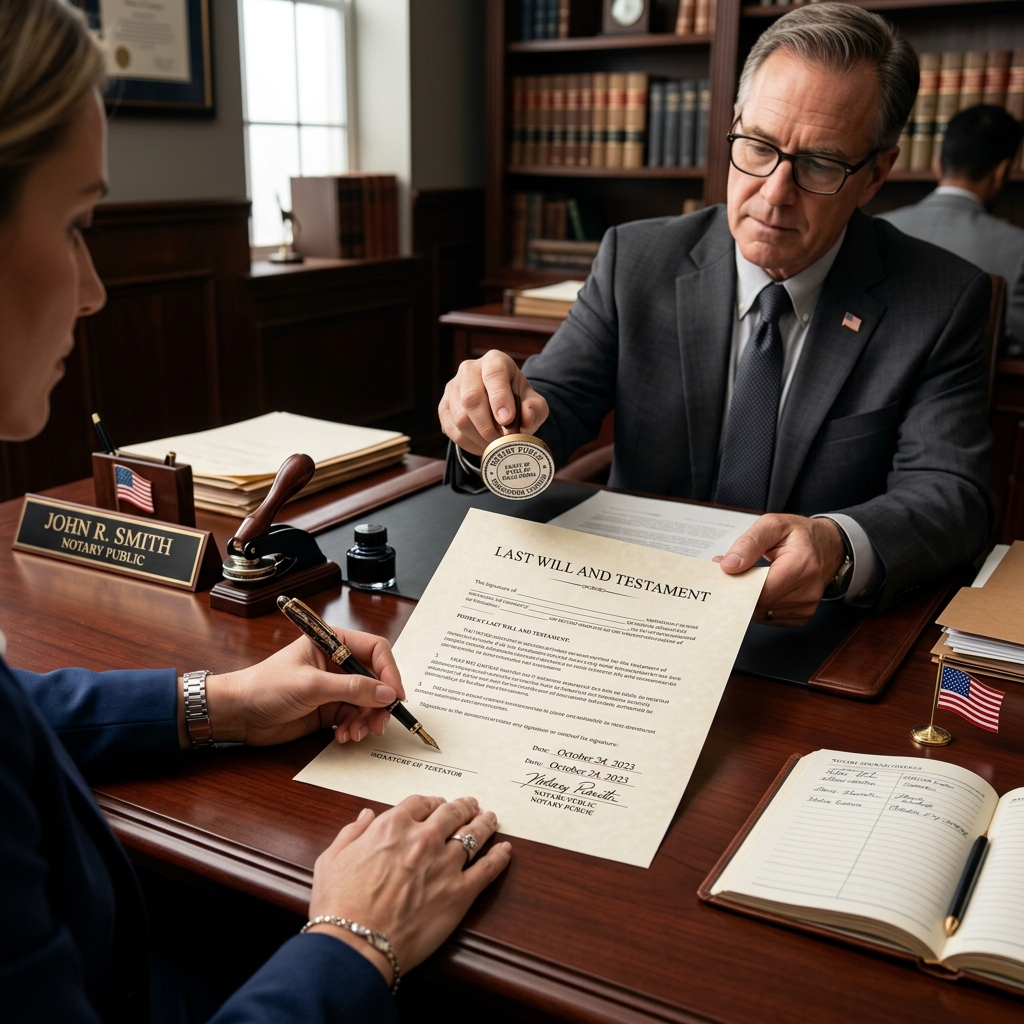
Many people assume that a will is only legally valid if it has a notary stamp, but in most U.S. states, that assumption is wrong. What usually matters more than notarization is whether the will has been properly signed and witnessed according to state law. Understanding the distinction between validity and convenience can help you avoid costly mistakes in your estate plan.
Wills, Witnesses, and Notaries: The Core Differences
To see where notarization fits in, it helps to separate three concepts: the will itself, the witnesses, and the notary public.
- The will is the legal document stating how you want your property distributed after death.
- Witnesses are individuals who observe you sign the will and confirm that you appeared to be acting voluntarily and with mental capacity.
- A notary public is an official authorized to verify identities, administer oaths, and certify signatures on certain legal documents.
State probate codes typically spell out how many witnesses are required, who can serve as a witness, and what signatures are needed to make the will enforceable. In most states, those rules do not say the will must be notarized to be valid, although notarization may still be useful in specific contexts.
Is Notarization Required for a Will to Be Valid?
Across the U.S., the general pattern is that notarization is optional for validity, while witnessing is mandatory for most typed wills. The precise requirements vary by state, but several jurisdictions illustrate the trend clearly.
California: Witnesses Matter, Notaries Do Not
In California, a will does not need to be notarized to be legally valid. Instead, California Probate Code section 6110 requires:
- The will must be in writing.
- It must be signed by the testator (the person making the will).
- It must be signed by at least two competent adult witnesses who are present at the same time and understand that they are witnessing the testator’s will.
A notary’s signature cannot substitute for these witnesses. A will that is only notarized, without proper witnesses, may be challenged or rejected in probate court.
Pennsylvania: Signing Is Enough, Notarization Is Optional
Pennsylvania follows a similar pattern. The only legal requirement for a basic will is that the testator signs it; notarization is optional. If the testator is unable to sign, they can make a mark, but in that situation two competent individuals should witness the mark to confirm it represents the testator’s signature.
Although notarization is not required for validity, Pennsylvania allows self‑proving wills that use a notarized affidavit to simplify later court proceedings.
General Rule in Many States
Legal guidance for consumers generally reflects these state‑specific rules: in most U.S. jurisdictions, a will does not have to be notarized to be legally effective. Instead, the critical elements are:
- Clear identification of the testator.
- The testator’s signature (and date, where required).
- Compliance with state witness requirements, usually at least two disinterested adults for typed wills.
When Notarization Becomes Helpful: Self‑Proving Wills
Although notarization is rarely a requirement for validity, it can offer a significant advantage through what is known as a self‑proving will. A self‑proving will typically includes a notarized affidavit signed by the testator and witnesses, stating that the will was properly executed.
The main purpose of this affidavit is to streamline probate—the process by which a court confirms the will’s authenticity after the testator’s death. Without such an affidavit, courts may need live testimony or other evidence from witnesses to verify the will. With it, the will is often accepted as properly executed based on the affidavit alone.
| Aspect | Will With Self‑Proving Affidavit | Will Without Notarization |
|---|---|---|
| Validity | Valid if state signature and witness rules are met; notarization adds a self‑proving feature. | Equally valid if signature and witness rules are met; no self‑proving status. |
| Probate Process | Usually faster because the affidavit serves as proof of proper execution. | May require contacting witnesses or additional evidence to satisfy the court. |
| Court Burden | Reduced burden; less need for live testimony about signing circumstances. | Greater burden; potential hearings about whether the will was correctly signed. |
| Cost | Small upfront notary fee, possible savings on later court costs. | No notary fee, but potential for higher administration costs later. |
Why Witnesses Usually Matter More Than Notaries
Witnesses serve a different legal function than notaries. They are there at the moment of signing to observe your mental state and confirm that you are acting freely, not under pressure or fraud.
- Most state laws specify a minimum number of witnesses (often two) and sometimes restrict witnesses who stand to inherit under the will.
- Witnesses can later testify about the circumstances of signing if someone challenges the will.
- In some states, certain handwritten (holographic) wills can be valid without witnesses, but they are more susceptible to disputes over authenticity and clarity.
By contrast, the notary’s primary legal role is to verify identities and administer oaths. Notaries generally do not draft the will, give detailed legal advice, or replace the requirement for witnesses in the states that impose witnessing rules.
How a Notary Typically Interacts With a Will
When a will includes a self‑proving affidavit or other notarial certificate, the notary’s tasks usually include:
- Verifying government‑issued photo identification for the testator and witnesses.
- Confirming that all signers appear alert, coherent, and willing to sign.sup>
- Ensuring that the notarial certificate is correctly completed, with venue information, date, and the notary’s signature and seal.
- Recording the notarization in the notary’s journal according to local law or practice.
Trusted professional organizations for notaries emphasize that the testator should come to the notary with clear legal instructions and appropriate forms. The notary’s role is to carry out the notarization correctly, not to design the estate plan.
Typed Wills vs. Handwritten Wills and Notarization
State law often distinguishes between typed (attested) wills and holographic (handwritten) wills. This affects whether witnesses and notarization are helpful or necessary.
- Typed wills almost always require witnesses for validity in U.S. states, but do not generally require notarization.
- Handwritten wills may be valid without witnesses in some jurisdictions if they are entirely in the testator’s handwriting and properly signed; in others, witnesses are still required.
- Notarizing a handwritten will does not fix problems such as unclear language, missing signatures, or non‑compliance with state statutes.
Because handwritten wills tend to generate more disputes, especially when the testator did not obtain legal advice, notarization and proper witnesses can sometimes reduce later challenges but cannot overcome fundamental legal defects.
Practical Reasons to Consider Notarizing a Will
Even when not required, there are practical benefits to adding notarization to an otherwise valid will.
- Efficiency in probate: Self‑proving affidavits can accelerate the process of proving the will in court, saving time for heirs and executors.
- Evidence of proper execution: A notarized affidavit memorializes that everyone signed in the proper order, at the proper time, with appropriate understanding.
- Reduced risk of disputes: Robust evidence of execution can deter challenges alleging forgery, coercion, or lack of capacity.
- Administrative convenience: Courts may rely on the notarized affidavit instead of locating witnesses years later.
Common Misconceptions About Notarizing a Will
- Misconception: A notary stamp alone makes a will valid.
In states such as California, a notarized will without required witnesses can be vulnerable to challenge. Witness signatures remain essential for validity in many jurisdictions. - Misconception: Notarization can fix a poorly drafted will.
Notarization does not correct ambiguous language, missing beneficiaries, or conflicts with state law. It only certifies signatures and, where applicable, oaths. - Misconception: If a will is self‑proving, legal advice is unnecessary.
Self‑proving status addresses how the will is proved in court, not whether the substantive provisions accomplish your estate planning goals.
Checklist: Deciding Whether to Notarize Your Will
Use this checklist as a high‑level guide when you are deciding if and how to involve a notary:
- Confirm your state’s basic signing and witness requirements for wills.
- Verify that your will is written clearly and covers your assets and beneficiaries as intended.
- Ensure you have the correct number of competent, preferably disinterested, witnesses available.
- If your state recognizes self‑proving wills, consider using a properly drafted affidavit and arranging for a notary to attend the signing.
- Store the executed will and any affidavit securely and inform your executor or attorney where to find the documents.
Frequently Asked Questions About Notarizing Wills
Does notarizing a will replace the need for witnesses?
No. In most states, a notary’s signature does not replace the witness requirement for typed wills. For example, California law still demands two adult witnesses even if a notary is involved.
If my will is not notarized, is it automatically invalid?
Not necessarily. A will can be perfectly valid without notarization if it meets your state’s rules for signing and witnessing. Notarization usually adds a self‑proving layer rather than basic validity.
Can I write my own will and then have it notarized?
Many people legally write their own wills, but the critical step is ensuring the document satisfies your state’s formalities. Notarization can be added for convenience, but it will not cure defects such as missing witnesses or unclear wording.
Do handwritten wills need to be notarized?
State rules differ. Some jurisdictions allow holographic wills without witnesses if they are entirely handwritten and signed, but these wills face greater risk of challenges. Notarization may help prove authenticity but is not a universal requirement.
Is a self‑proving will always better than a non‑notarized will?
A self‑proving will often makes probate smoother, especially when witnesses may be difficult to locate later. However, what matters most is that the will is substantively sound, complies with state law, and reflects your actual wishes.
References
- Can I Write My Own Will and Have It Notarized? — LegalShield. 2023-04-10. https://www.legalshield.com/blog/can-i-write-my-own-will
- Does a Will Need Notarization in California? Legal Guide — Moravecs Law. 2022-06-15. https://www.moravecslaw.com/post/does-a-will-need-to-be-notarized-in-california
- Notarization is No Substitute for Witnesses to a California Will — The Grossman Law Firm. 2021-09-01. https://www.grossmanlaw.net/notarization/
- Wills in Pennsylvania: Do They Have to Be Notarized? — Smith Legacy Law. 2014-11-12. https://www.smithhorwitz.com/blog/2014/november/do-wills-have-to-be-notarized-in-pennsylvania-/
- How To Properly Notarize a Will — The PA Notary. 2020-03-08. https://thepanotary.com/how-to-properly-notarize-a-will/
- Notarizing a Will — Notaries.com. 2019-07-22. https://www.notaries.com/articles/notarizing-a-will/
- Notarize a Will — National Notary Association. 2018-05-30. https://www.nationalnotary.org/knowledge-center/about-notaries/tips-tutorials/notarize-wills
Similar Articles








Read full bio of Sneha Tete


