
Do You Have to Go to Court for an Uncontested Divorce?
Learn when an uncontested divorce can be finalized with minimal or no court appearance, and what steps still happen behind the scenes.
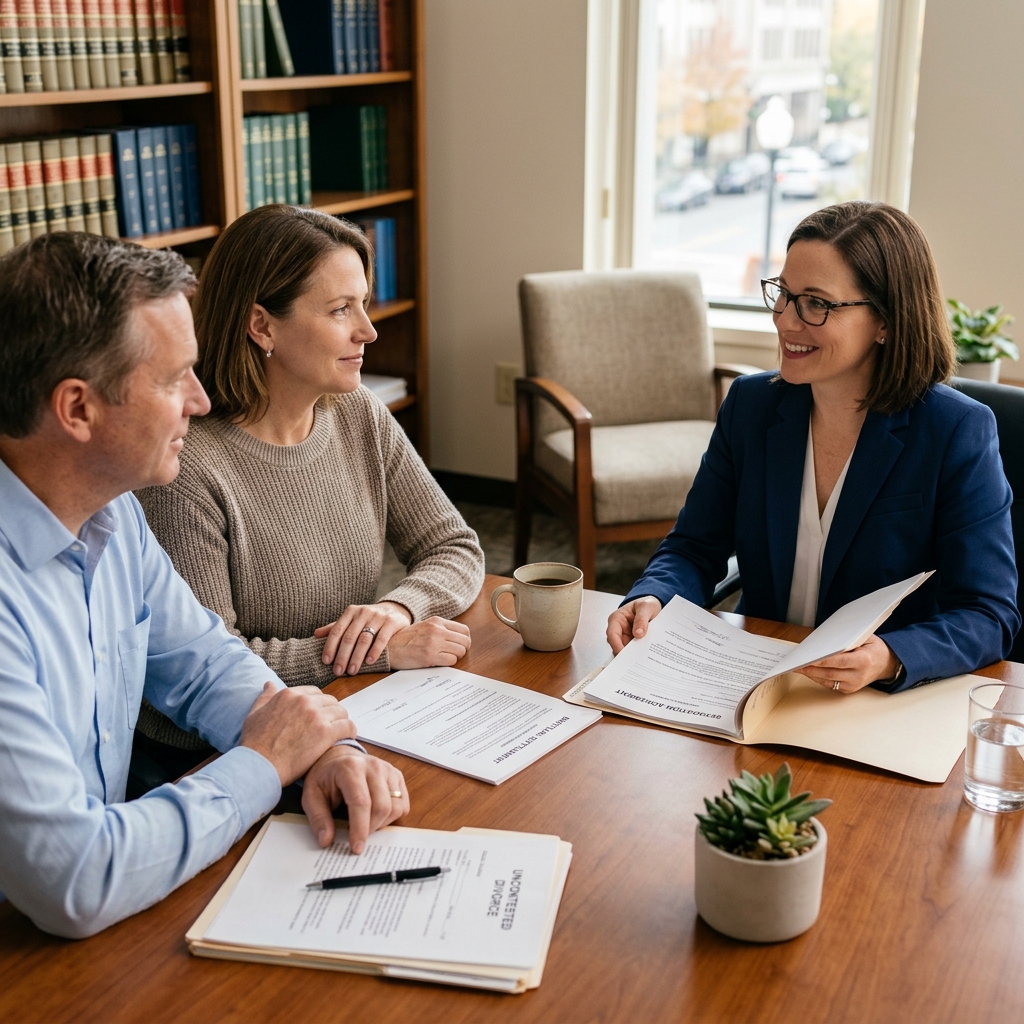
Many couples hope to end their marriage with as little conflict, expense, and time in court as possible. An uncontested divorce is often the clearest path to those goals, but the rules for whether you must physically appear in court vary widely by state and even by county. Some jurisdictions allow divorces to be finalized based only on paperwork, while others still require at least a brief court hearing before a judge signs the final decree.
This guide explains when a court appearance is required, how “paper divorces” work, what conditions typically must be met to avoid a trial, and what practical steps you will still need to take even in a low-conflict case.
Understanding What Makes a Divorce “Uncontested”
An uncontested divorce means that there is no active legal dispute for the court to resolve. In other words, you and your spouse either:
- Agree on all terms of the divorce (property division, debt allocation, parenting arrangements, and any support); or
- Do not contest the case because one spouse fails to respond after being properly served with divorce papers.
Because the judge does not need to hear evidence or decide contested issues, uncontested divorces are generally faster, cheaper, and procedurally simpler than contested divorces.
| Type of Divorce | Key Feature | Typical Court Involvement |
|---|---|---|
| Uncontested | Spouses agree on all issues or one does not respond | Often brief hearing or paperwork review; may avoid in-person appearance in some areas |
| Contested | Spouses disagree on one or more issues | Requires hearings, possible trial, and active judicial decisions |
| Simplified / Summary | Special streamlined process for eligible couples | Usually one brief appearance; some courts accept paperwork only in limited cases |
Do You Ever Avoid Court Completely?
In many states, even an uncontested divorce still involves the court, because only a judge can legally dissolve a marriage. The key difference is whether you must appear in person or whether the judge can sign the final order based solely on the documents you file.
Common patterns across U.S. states include:
- Paperwork-only finalization: Some courts allow uncontested divorces to be finalized by reviewing signed settlement agreements and proposed judgments without requiring a hearing, especially when there are no minor children and all forms are complete.
- Brief, non-adversarial hearings: Other courts require a short appearance where one or both spouses answer basic questions and confirm that the agreement is voluntary and meets legal requirements.
- Remote appearances: Increasingly, courts use video conferencing or electronic filing systems so parties can attend brief hearings online rather than physically coming to the courthouse.
Even when you do not enter a courtroom, the divorce still happens through the court system. The judge has a legal duty to review your agreement, ensure required information is provided, and confirm that the terms comply with state law.
Simplified and Summary Divorce Options
Several states provide a special streamlined process sometimes called simplified, summary, or agreed divorce. These procedures are designed for couples whose situation is relatively straightforward.
Typical eligibility criteria include:
- No minor or dependent children, and the wife is not pregnant;
- No request for ongoing spousal support (alimony);
- A complete agreement on how to divide marital property and debts;
- At least one spouse meets state residency requirements;
- Both spouses agree that the marriage is irretrievably broken.
Using a simplified process often means fewer forms, reduced waiting times, and clear step-by-step instructions. However, simplified procedures may also limit rights to a trial or appeal, and courts often still require at least one brief appearance before the judge signs the final decree.
When Is a Court Hearing Still Required?
Whether you must attend a hearing for an uncontested divorce depends on local rules and the details of your case. Consider factors such as:
- Children: If minor children are involved, many courts require hearings to review custody, visitation, and child support arrangements, even if parents agree.
- Complex property or debt: Cases involving significant assets, business interests, or complicated debts may prompt a judge to ask questions or request clarifications at a hearing.
- Incomplete or inconsistent paperwork: If documents are missing, contradictory, or unclear, court staff may set a hearing to resolve issues rather than reject the filing outright.
- Local practice: Some courts have a policy that every divorce requires a short hearing, regardless of whether the case is contested.
Because of these variations, most legal self-help resources advise checking with the clerk’s office or a local attorney to learn whether your specific court allows a divorce to be finalized without attendance at a hearing.
Core Steps in an Uncontested Divorce
Even when both spouses agree, there are several key steps that must be completed to obtain a final divorce.
1. Confirm Jurisdiction and Residency
Courts can only grant divorces if they have legal authority over the case, known as jurisdiction. Common requirements include:
- Living in the state for a minimum period (commonly six months);
- Living in the county where you file for a shorter period, such as 90 days;
- Showing proof of residence, which might include an ID, lease, or utility bill.
Residency rules protect both spouses from being forced into a distant court without meaningful connection to the location.
2. Prepare and File the Initial Petition
The spouse who starts the case files an original petition for divorce (or similar form) in the appropriate court. This document:
- States that the marriage should be dissolved;
- Includes basic information about both spouses and any children;
- Requests particular relief, such as division of property and debts.
Some courts also require a civil case information sheet or other administrative forms when the petition is filed.
3. Serve the Other Spouse and Obtain a Response
Even in amicable situations, the responding spouse must formally receive notice of the case. This is called service of process. Acceptable methods may include personal delivery by a sheriff or process server, certified mail, or—if the spouse cannot be located—publication with court permission.
If the responding spouse agrees with the divorce terms, they may file an answer, sign a joint petition, or sign specific forms acknowledging receipt and waiving further service. If they do not respond at all, an uncontested divorce may proceed by default in some jurisdictions.
4. Negotiate and Document the Settlement
The heart of an uncontested divorce is a written settlement agreement that sets out how all issues will be handled. This typically covers:
- Who will receive particular assets (home, vehicles, savings, retirement accounts);
- Which spouse will be responsible for specific debts and obligations;
- If applicable, parenting time schedules, decision-making authority, and support for children;
- Any agreement about spousal support.
Courts often provide template agreements or required forms to ensure that important details are not overlooked and that the written terms comply with state law.
5. Submit Final Forms for Judicial Review
Once the agreement is signed, you will file your proposed final decree or judgment of dissolution along with the settlement documents. The judge then reviews the paperwork to verify:
- Proper jurisdiction and residency;
- Valid service of process or waiver of service;
- A complete and legally sufficient agreement on required issues;
- Compliance with child support and custody standards where children are involved.
If the judge identifies problems, the court may contact you to correct the forms or schedule a brief hearing to ask clarifying questions.
Court Appearance vs. Paper Divorce: Practical Differences
When comparing a brief court appearance to a paperwork-only process, consider the following practical differences.
| Aspect | Brief Court Hearing | Paperwork-Only Finalization |
|---|---|---|
| Time at courthouse | Requires at least one trip or remote appearance at a scheduled time | No physical appearance; judge reviews documents on their own schedule |
| Opportunity to ask questions | You might ask the judge procedural questions during the hearing | Questions typically addressed through the clerk or legal help resources |
| Form corrections | Judge can address errors immediately and request changes on the record | Errors may result in rejection or delay until corrected and re-filed |
| Stress level | Some people find appearing in court stressful, even briefly | Less direct interaction with the court, but responsibility for clean paperwork is higher |
Online and Remote Options
Courts increasingly provide electronic filing and remote appearance tools. For example, some Florida counties allow parties to submit forms electronically and attend short hearings online for certain types of divorce cases. Other states have online portals or self-help websites that guide users through forms and processes.
Remote options can reduce travel time and make the process more accessible, but they typically do not eliminate the judge’s review of the case. Even when hearings are conducted via video, you must still follow formal procedures and deadlines.
Parenting Courses and Additional Requirements
In divorces involving children, you may face additional requirements beyond standard paperwork. Some states require:
- Completion of an approved parenting education course before the divorce is finalized;
- Submission of child support worksheets using state guidelines;
- Detailed parenting plans addressing physical custody, decision-making, and holiday schedules.
Judges sometimes carefully review these materials during a hearing to confirm that arrangements are in the children’s best interests, even when parents have reached full agreement.
Pros and Cons of Skipping a Full Trial
Choosing an uncontested or simplified path almost always reduces the amount of time spent in court, but it also affects your legal options.
- Advantages:
- Lower legal costs and fewer missed work days;
- Greater privacy compared to a contested trial;
- Faster finalization once required waiting periods pass;
- More control over the outcome because terms are negotiated rather than imposed.
- Possible drawbacks:
- Limited ability to challenge the agreement later, especially under simplified procedures that waive trial and appeal rights;
- Risk of overlooking long-term financial or tax consequences when negotiating without legal advice;
- Less opportunity for the judge to catch unfair or imbalanced terms if the case is handled almost entirely on paper.
Self-Help Resources and When to Seek Legal Advice
Many courts and legal aid organizations provide detailed instructions, standardized forms, and checklists for uncontested divorces. For instance, state law libraries and legal help websites explain filing requirements, provide fillable forms, and outline steps for agreed divorces without children or real property.
You may consider consulting an attorney or experienced legal professional when:
- You are unsure whether your agreement is fair or legally enforceable;
- Your case involves significant assets, retirement accounts, or a business;
- You are concerned about safety, coercion, or unequal bargaining power;
- You want to confirm that using a simplified process will not unintentionally waive important rights.
In some regions, people use non-attorney professionals such as paralegals to help complete forms when they feel comfortable negotiating terms directly but want assistance with paperwork. Official court resources often warn, however, that only licensed attorneys can give legal advice, and courts cannot provide individualized legal recommendations.
Frequently Asked Questions (FAQs)
1. If my divorce is uncontested, will I definitely avoid going to court?
Not necessarily. While some courts finalize uncontested divorces based solely on paperwork, others require at least a brief hearing to confirm residency, review the settlement, and ensure that both spouses understand the terms. Local rules and the presence of children or complex assets often determine whether an appearance is required.
2. Can I get an uncontested divorce if my spouse never responds?
In many jurisdictions, a divorce can still be granted when a spouse fails to respond after being properly served, and the case may be treated as uncontested because there is no objection on record. However, courts usually require proof of service and compliance with waiting periods before granting a default judgment.
3. Is a simplified or summary divorce always better than a standard uncontested divorce?
Not always. Simplified procedures offer speed and simplicity but may be limited to couples with no children and modest assets, and they can restrict rights to trial or appeal. A standard uncontested case with a comprehensive settlement agreement may be more appropriate when you need tailored terms or wish to preserve certain legal options.
4. Do I need a lawyer for an uncontested divorce?
In many states you may represent yourself, especially when forms and instructions are available through court self-help resources. However, obtaining legal advice is wise if you have questions about long-term financial implications, child-related orders, or the fairness of proposed terms. Courts typically emphasize that they cannot provide legal advice even when they offer forms and guidance.
5. What happens if the judge finds a problem with our paperwork?
If the judge discovers missing information or legal defects, the court may request corrections, schedule a brief hearing, or temporarily deny the proposed decree. You can usually fix these issues by updating forms, clarifying terms in the settlement agreement, or supplying additional documents, but this may delay finalization.
References
- Filing for Divorce without an Attorney — State of Florida.com. 2023-01-10. https://www.stateofflorida.com/articles/divorce-without-attorney/
- Filing a Divorce without Children — TexasLawHelp.org. 2023-04-05. https://texaslawhelp.org/article/filing-a-divorce-without-children
- How to File an Uncontested Divorce in Oregon — OregonLawHelp.org. 2022-09-15. https://oregonlawhelp.org/topics/family/divorce-separation-and-annulment/divorce-process/starting-divorce-or-responding-divorce-papers/how-file-uncontested-divorce-oregon
- Divorce – Self-Representation — New Mexico Courts. 2023-07-01. https://selfrepresentation.nmcourts.gov/divorce/
- Filing for Divorce – Guides — Texas State Law Library. 2022-11-22. https://guides.sll.texas.gov/divorce/filing-for-divorce
- Dissolution of Marriage (Divorce) — Florida Courts. 2021-05-10. https://www.flcourts.gov/Services/family-courts/domestic-relations-court-resources/dissolution-of-marriage-divorce
- Divorce — New York Courts. 2023-06-30. https://www.nycourts.gov/help/family-issues-divorce/divorce
Similar Articles








Read full bio of medha deb


