
Digital Wills and Tablets: How One Case Is Shaping Estate Planning
Exploring how a tablet‑written will ended up in court, what it means for electronic wills, and why careful planning still matters.
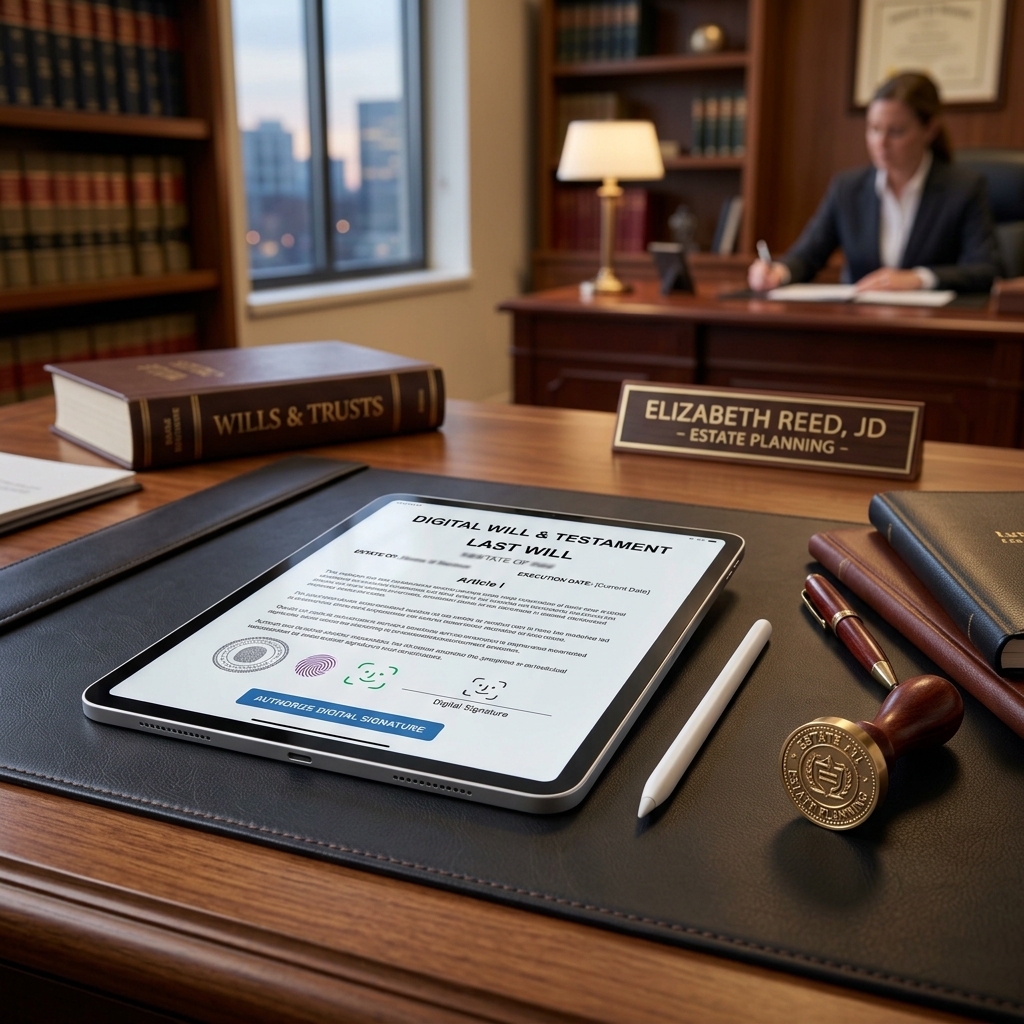
As more of life moves onto screens, a natural question follows: can a last will and testament exist purely in digital form and still be legally valid? A recent probate case involving a will written on an Android tablet has become a touchstone for this discussion, illustrating both the promise and risks of electronic wills in the modern legal landscape.
This article uses that tablet‑will scenario as inspiration to explore the evolving rules around electronic wills, how courts analyze such documents, and what technology‑minded individuals should consider before drafting their estate plans on a device instead of paper.
From Pen and Paper to Screens: The Rise of Electronic Wills
Traditional will‑making has long relied on paper documents signed in ink and witnessed in person. The core idea is simple: the document should reflect the testator’s genuine intentions and be difficult to forge or manipulate. As everyday communication moves online, basic legal concepts like “written” and “signed” are being tested in new ways.
- Writing historically meant a physical document; now courts are asked whether a text file, handwritten stylus markings, or typed content on a tablet qualify as “writing.”
- Signatures once meant pen‑and‑ink; today, they might include typed names, digital signatures, stylus scribbles, or even biometric authentication.
- Witnessing traditionally required everyone to be physically present; modern cases test whether remote or electronic witnesses can satisfy statutory requirements.
Some jurisdictions have begun to adopt specific statutes for electronic wills, while others continue to rely on older probate rules that never contemplated tablets or cloud storage.
The Tablet Will That Reached Probate Court
In the widely discussed case that inspires this analysis, a person in a hospital room chose to record his last wishes using a Samsung Galaxy tablet when no paper was available. Instead of waiting for traditional materials, he dictated his will, had it typed onto the device, and then signed it using the tablet’s stylus. Witnesses later signed on the tablet as well.
After his death, the electronic document was printed and submitted to probate. The question before the court was whether this tablet‑created document met the statutory requirements for a valid will, despite the absence of an ink‑on‑paper original.
Key Points the Court Considered
- Whether the electronic file counted as a “writing” under the state’s probate statute.
- Whether the stylus marks on the tablet amounted to a legally sufficient “signature.”
- Whether the witnesses properly observed and signed in the testator’s presence.
- Whether there was strong evidence of the testator’s intent that the tablet document serve as his last will and testament.
Ultimately, the probate judge admitted the tablet‑printed will to probate, holding that the document complied with existing statutory requirements even though it was created and first stored in purely electronic form. At the same time, the court underscored the need for legislative guidance on electronic wills to reduce uncertainty.
How Courts Analyze Electronic Wills Under Existing Law
Most wills laws were drafted decades ago, long before tablets and cloud storage. As a result, judges often apply traditional statutory concepts to novel technology – a process that requires careful interpretation rather than automatic acceptance.
| Legal Requirement | Traditional Meaning | Applied to Electronic Wills |
|---|---|---|
| Writing | Text on paper, physically present in court | Electronic document can qualify if it is sufficiently stable and printable |
| Signature | Handwritten name or mark in ink | Stylus mark, digital signature, or typed name may work if intended as a signature |
| Witnesses | Two or more individuals physically present, signing in each other’s presence | Electronic signing may be accepted if the witnesses can testify they were present and saw the execution |
| Testamentary Intent | Document clearly labeled and treated as a will | Emails, posts, or files can qualify if evidence shows the testator viewed them as a final will |
In the tablet‑will case, the court determined that the electronic file was a “writing,” the stylus mark was a “signature,” and the witnesses had effectively observed and signed in the testator’s presence. Crucially, there was extensive testimony confirming that the testator considered the tablet document to be his final will.
Different State Approaches to Electronic Wills
Legal treatment of electronic wills varies widely across the United States. Some states have enacted explicit electronic‑will statutes, others have rejected non‑paper wills, and many are in a gray area where courts must improvise based on general probate rules.
States With Explicit Electronic Will Laws
Nevada is frequently cited as an early adopter, having enacted detailed provisions specifying how electronic wills may be created, stored, and authenticated. Such statutes typically address:
- Approved formats for electronic documents and signatures
- Requirements for witnesses and possible remote or online witnessing procedures
- Secure storage or qualified custodians for electronic wills
- Technical safeguards against tampering and unauthorized changes
Other states have followed with their own rules, sometimes in response to the broader adoption of electronic notarization and remote online notarization.
States That Still Require Paper
By contrast, some jurisdictions continue to insist on paper-based wills. For example, commentary on North Carolina and Arizona law notes resistance to non‑paper testamentary documents. In Illinois, estate‑planning practitioners emphasize that a valid will must be in writing, signed, and witnessed in compliance with statute, and that courts generally insist on an original paper document rather than a copy.
- Paper originals reduce questions about authenticity and alteration.
- Courts are more comfortable with physical evidence than with digital forensics.
- Strict rules help maintain consistency and predictability in probate proceedings.
States With No Specific Electronic-Will Statute
In many states, no statute directly addresses electronic wills. Courts must interpret traditional requirements in light of new technology, as in the tablet‑will case that inspired this article. These decisions often rest heavily on the specific facts, including:
- How the electronic file was created and stored
- Whether witnesses can confirm proper execution
- Whether any later alterations or copies exist
- How clearly the document expresses testamentary intent
This case‑by‑case approach means outcomes can be uncertain and may vary significantly between courts, even within the same state.
Risks and Challenges Unique to Electronic Wills
While the tablet‑will ruling shows that courts can accept electronic wills, it also highlights a range of issues that do not arise as sharply with paper documents.
Authentication and Forgery Concerns
- Electronic files are easy to copy, modify, or delete, raising questions about which version is the final will.
- Digital signatures or stylus marks may be harder to link definitively to one person than a physical handwriting sample.
- Without robust digital audit trails, it can be challenging to prove who edited the document and when.
In the tablet‑will case, the court relied heavily on witness testimony to establish authenticity, but such evidence may be less clear or reliable in other situations.
Storage, Access, and Loss
- Files stored on personal devices can be lost if the device fails or is wiped.
- Cloud-based documents may be inaccessible if family members lack login credentials or if accounts are closed.
- Unlike a paper will stored in a safe or law firm’s vault, digital wills can be scattered across multiple devices and accounts.
The risk of a will being overlooked or inaccessible at death increases when it exists only in digital form without clear instructions and custodianship.
Legal Uncertainty and Litigation Risk
- Heirs might challenge an electronic will by arguing that it does not meet statutory requirements.
- Conflicting versions of a digital will can spark disputes about which is controlling.
- Lack of uniform rules across states creates additional headaches for people with assets in multiple jurisdictions.
The tablet‑will case was uncontested; if family members had disagreed about the will’s validity, the court’s analysis and the ultimate outcome might have been much more complex.
Practical Guidance for Tech-Savvy Estate Planning
For individuals comfortable with technology, the idea of drafting a will on a tablet or computer is appealing. Nevertheless, lawyers and courts advise caution. Even in jurisdictions open to electronic wills, best practice is still to ensure a paper‑based, professionally prepared document exists alongside any digital innovations.
Best Practices Before Using a Tablet or Computer
- Consult a qualified estate‑planning attorney to confirm local requirements for valid wills and discuss whether electronic options are appropriate in your situation.
- Use technology as a drafting tool—for example, prepare the text on a computer—but sign and witness a paper copy that meets statutory formalities.
- Maintain clear version control so that only one document is designated as your official will, and destroy outdated drafts.
- Store the signed original safely with a trusted custodian, such as a lawyer or executor, and let key individuals know where it is kept.
When an Electronic Will Might Be Considered
In limited scenarios, an electronic will could play a role, particularly in states with specific electronic‑will legislation or in emergency situations where paper is genuinely unavailable, as in the tablet‑will case.
- Emergencies where no paper or printer is accessible and delay might risk dying intestate.
- Jurisdictions with clear electronic‑will statutes providing secure methods of execution and storage.
- Supplementary records of testamentary intent, such as digital notes or recordings, to support a traditional will rather than replace it.
Even then, practitioners generally recommend formalizing the document on paper as soon as circumstances allow.
Estate Planning in a Multi-Jurisdiction World
Modern families often own property in multiple states or countries and may move over the course of their lives. Because electronic‑will rules vary, cross‑border estate planning requires careful coordination.
- Identify all jurisdictions where you own assets or expect to have legal connections.
- Review each jurisdiction’s requirements for will validity, including any electronic-will provisions.
- Consider separate local wills or a single master will drafted to comply with the strictest applicable standards.
- Avoid relying solely on electronic formats in regions where courts still demand paper originals.
Coordinating with legal counsel across jurisdictions can help ensure that a will drafted on a tablet or computer does not inadvertently fail in another state where the testator’s property is located.
Frequently Asked Questions (FAQs)
1. Is a will written on a tablet always valid?
No. Whether a tablet‑written will is valid depends entirely on the law of the state where probate occurs and on how closely the document complies with statutory requirements for writing, signing, and witnessing. Some states have explicit electronic‑will laws, some reject non‑paper wills, and others leave the question to judicial interpretation.
2. Does a stylus signature count as a legal signature on a will?
In at least one reported case, a court accepted stylus markings on a tablet as a valid signature for a will, treating them as a modern equivalent of a handwritten mark. However, not all jurisdictions may agree, and local statutes or case law may require traditional ink signatures.
3. Why do some states insist on paper originals?
States that insist on paper generally do so to reduce risks of forgery, alteration, and loss, and to maintain clear evidentiary standards in probate. Courts are accustomed to examining physical documents and are cautious about relying solely on electronic files whose provenance may be harder to prove.
4. Can I store my will only in the cloud or on my computer?
Storing a will only in electronic form is risky. Even in states open to electronic wills, the safest approach is to execute and preserve a signed paper original, while using digital storage for convenience and backup rather than as the sole record. Loss of access credentials, deletion of accounts, or device failure can render a purely electronic will inaccessible when it is needed most.
5. Should I use an online template or app to create my will?
Online tools can be helpful for organizing thoughts and basic information, but they are not a substitute for jurisdiction‑specific legal advice. Estate‑planning law is highly technical and varies by state, especially with respect to electronic documents. Consulting a lawyer ensures that any will—digital or paper—complies with local rules and reflects your intentions clearly.
Key Takeaways for Individuals and Practitioners
- The tablet‑written will case demonstrates that courts can interpret traditional probate rules flexibly enough to admit some electronic wills.
- Despite such decisions, significant uncertainty remains, and many states still favor or require paper originals.
- Electronic wills raise complex questions about authentication, storage, and cross‑jurisdiction validity.
- For now, the most reliable path is to combine technology for drafting and organization with formally executed paper documents that meet local legal standards.
References
- Judge Rules Electronic Will Written on Tablet Valid — Berk Law Group. 2013-07-16. https://berklawgroup.com/blog/ohio-judge-rules-electronic-will-written-tablet-valid/
- Tablet Will: Don’t Try This at Home (or in Illinois) — Law Office of Robert J. Kolasa, Ltd. 2013-07-24. https://www.illinoisestateplan.com/tablet-will-dont-try-this-at-home-or-in-illinois/
- What Is an “Electronic Will”? — Harvard Law Review. 2017-03-10. https://harvardlawreview.org/print/vol-131/what-is-an-electronic-will/
- Can You Write Your Will on Your Computer? — Beliveau Law Group. 2014-04-28. https://www.beliveaulaw.net/2014/04/can-you-write-your-will-on-your-computer/
- A will written on a tablet is ruled to be valid — Sallen Law. 2013-07-01. https://www.sallenlawfirm.com/blogs/2013/july/a-will-written-on-a-tablet-is-ruled-to-be-valid/
Similar Articles








Read full bio of medha deb


