
Delaware Assistance Animal Regulations: What To Know
Comprehensive guide to Delaware's rules for service dogs, emotional support animals, and trainer access rights in public spaces.
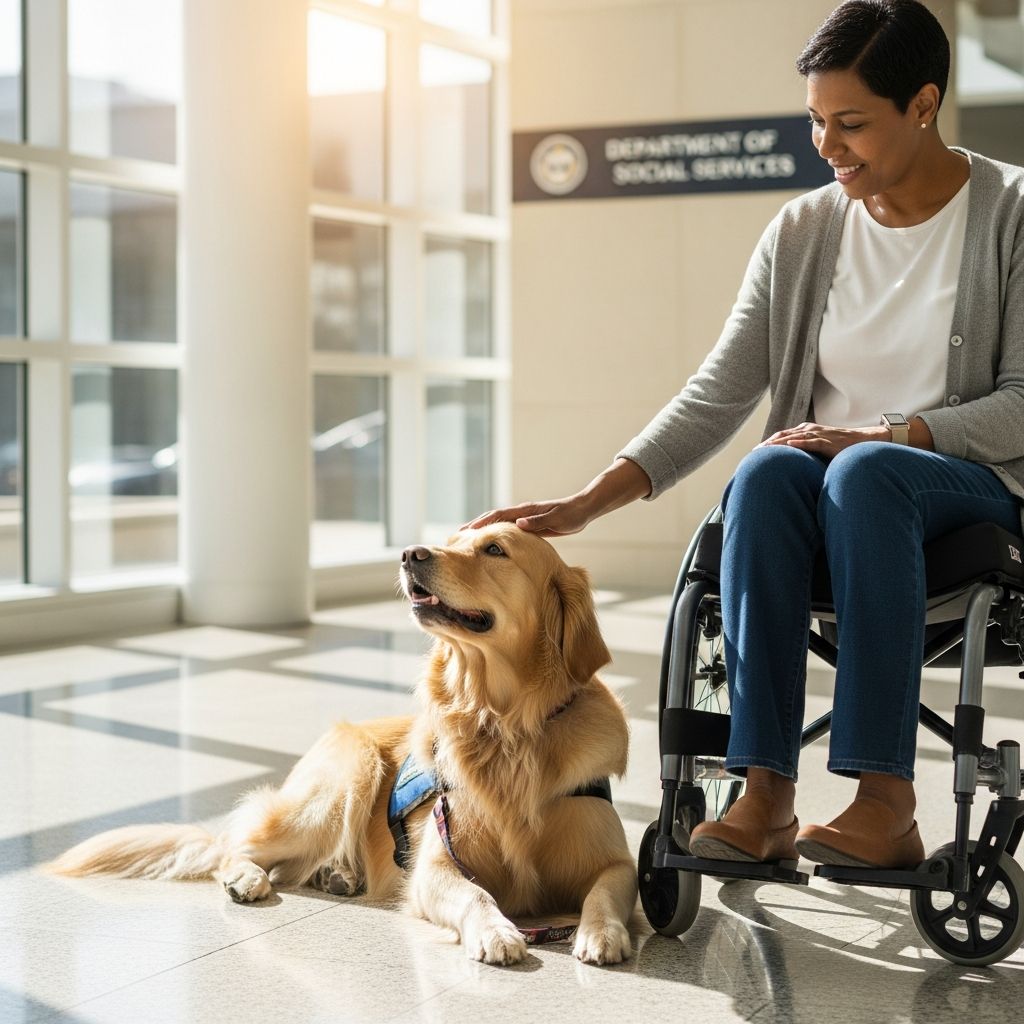
Delaware provides robust legal protections for individuals relying on service dogs and emotional support animals (ESAs) to manage disabilities. These laws ensure access to public spaces, housing, and transportation while imposing penalties for interference or misrepresentation. This guide details key statutes, differences between animal types, and practical compliance steps for residents and businesses.
Defining Service Animals Under Delaware Law
Service animals in Delaware are primarily dogs trained to perform specific tasks for people with disabilities. According to state code, a service dog includes guide dogs for visual impairments, signal dogs for hearing alerts, and others trained for tasks like wheelchair pulling, item retrieval, or minimal protection. The definition emphasizes individual training for physical, sensory, or other disabilities, distinguishing them from pets.
- Guide or signal dogs: Assist with vision or hearing loss by navigating obstacles or signaling sounds.
- Mobility support: Pull wheelchairs or fetch items to aid physical limitations.
- Medical alert: Detect seizures or other health episodes, though state law focuses more on physical tasks.
Delaware aligns with federal Americans with Disabilities Act (ADA) standards but adds state-specific protections for physical disability assistance. Businesses and public venues must recognize these animals without requiring proof of training, except in limited cases where the task is not apparent.
Public Access Protections for Handlers
Individuals with disabilities accompanied by service dogs enjoy full access to public accommodations in Delaware, including restaurants, stores, hotels, and transportation. State law mandates equal facilities, advantages, and privileges, prohibiting denial based on the animal’s presence.
Places of public accommodation cannot charge extra fees for service dogs, though owners remain liable for damages caused by the animal. Staff may ask only two questions: (1) Is the dog a service animal required for a disability? (2) What tasks does it perform? No certification, vest, or ID is legally required.
| Public Venue Type | Access Allowed? | Key Restrictions |
|---|---|---|
| Restaurants & Retail | Yes | No pet fees; hygiene rules apply |
| Hotels & Lodging | Yes | Cleaning deposit possible for damage |
| Hospitals & Clinics | Yes, with limits | Infection control may restrict sterile areas |
| Taxis & Rideshares | Yes | TNC drivers must accommodate per state rules |
Violations trigger complaints to the State Human Relations Commission, with civil penalties from $5,000 to $25,000 based on prior offenses.
Rights of Service Dog Trainers and Dogs in Training
Delaware extends public access to professional trainers working with service dogs in training (SDiT). Trainers and their animals receive the same accommodations as fully trained teams, allowing entry to public spaces for skill development. This includes supermarkets, offices, and transit where real-world exposure builds reliability.
Identification as a training animal may involve vests or tags, but no formal state certification exists. Interfering with training efforts can lead to misdemeanor charges, underscoring the law’s commitment to building a strong assistance animal workforce.
- Trainers must demonstrate the dog is in a recognized program.
- Access mirrors handler rights: no extra fees, full privileges.
- Focus on tasks like alerting, guiding, or retrieving during sessions.
Protections for Emotional Support Animals in Housing
Unlike service dogs, emotional support animals do not require task training but provide therapeutic benefits for mental health conditions. Delaware follows the federal Fair Housing Act (FHA), mandating reasonable housing accommodations for verified ESAs.
Landlords must allow ESAs in no-pet properties without breed/size restrictions or deposits, provided a licensed mental health professional issues a valid letter confirming necessity. Common ESAs include dogs, cats, or other species suited to the disability.
ESA Housing Approval Process
- Obtain ESA letter from LMHP detailing disability and need.
- Submit request to landlord with documentation.
- Landlord approves unless it poses undue burden (rare).
- Owner covers damage; no pet rent allowed.
ESAs lack public access rights, so they cannot accompany owners to stores or workplaces unless also trained as service animals.
Severe Penalties for Harming or Interfering with Service Dogs
Delaware imposes escalating criminal penalties for actions against service dogs, treating them as serious offenses to deter abuse.
| Offense | Penalty Classification | Description |
|---|---|---|
| Interference (obstructing/intimidating) | Class B Misdemeanor | Jeopardizing safety of handler or dog |
| Injuring/Disabling | Class A Misdemeanor | Intentional harm during use |
| Killing | Class D Felony | Intentional act against owned dog |
| Stealing/Wrongful Taking | Class E Felony | Unauthorized possession |
Drivers must exercise extra caution near blind pedestrians with guide dogs, honking only if necessary to avoid collision. Misrepresentation of pets as service animals faces new penalties under recent legislation, protecting legitimate teams.
Transportation and Licensing Exemptions
Service dog owners benefit from exemptions: no county dog license fees for qualified guide, lead, or military service dogs. Alternative ID tags are issued free. Rideshare services (TNCs) cannot discriminate or charge extra for disability-related accommodations, including service animals.
Public transit and taxis follow similar rules, ensuring seamless mobility for handlers.
Distinguishing Assistance Animals: A Comparison
| Category | Training Required | Public Access | Housing Rights | Documentation |
|---|---|---|---|---|
| Service Dog | Yes, task-specific | Full in DE/ADA venues | Yes (FHA/ADA) | No proof needed publicly |
| Emotional Support Animal | No | No | Yes (FHA) | LMHP letter for housing |
| Therapy/Pet | No | No | No special rights | None |
This framework prevents abuse while maximizing support for those in need.
Enforcement Mechanisms and Reporting
Discrimination complaints go to the Delaware State Human Relations Commission, which investigates and conciliates. The Attorney General can enforce criminally, and courts review decisions. Universities like Delaware State allow service animals campus-wide.
Frequently Asked Questions
Can my emotional support cat live in Delaware apartment housing?
Yes, with a valid LMHP letter under FHA; landlords cannot deny or charge pet fees.
Do service dogs need vests or certifications in Delaware?
No, vests are optional; access relies on handler verification, not documentation.
What if a business asks my service dog to leave?
File a complaint with the Human Relations Commission; penalties apply for denial.
Are miniature horses allowed as service animals?
Yes, per ADA if trained, though dogs are primary; Delaware follows suit.
Can I be fined for petting a service dog without permission?
Not directly, but distraction could be interference if it endangers; always ask first.
Do trainers get the same public access as handlers?
Yes, for dogs in training under state law.
This article spans approximately 1,650 words, drawing from official Delaware codes and aligned resources for accuracy.
References
- Delaware Service Dog Laws — USA Service Dog Registration. 2020. https://usaservicedogregistration.com/statelaws/delaware-service-dog-laws/
- Delaware’s Assistance Animal/Guide Dog Laws — Animal Legal & Historical Center. N/A. https://www.animallaw.info/statute/de-assistance-animal-delawares-assistance-animalguide-dog-laws
- Emotional Support Animal Laws in Delaware — US Service Animals. N/A. https://usserviceanimals.org/blog/emotional-support-animal-laws-in-delaware/
- Service Dogs in Training Laws by State — Service Dog Training School. N/A. https://www.servicedogtrainingschool.org/blog/service-dogs-in-training-laws-by-state
- Service Dogs and Emotional Support Animals — Delaware Health and Social Services. N/A. https://dhss.delaware.gov/dph/oaw/sdesa/
- 9 DE Code § 916: Unauthorized acts against a service dog — Justia Law. 2012. https://law.justia.com/codes/delaware/2012/title9/c009/sc01/916/
Similar Articles








Read full bio of medha deb


